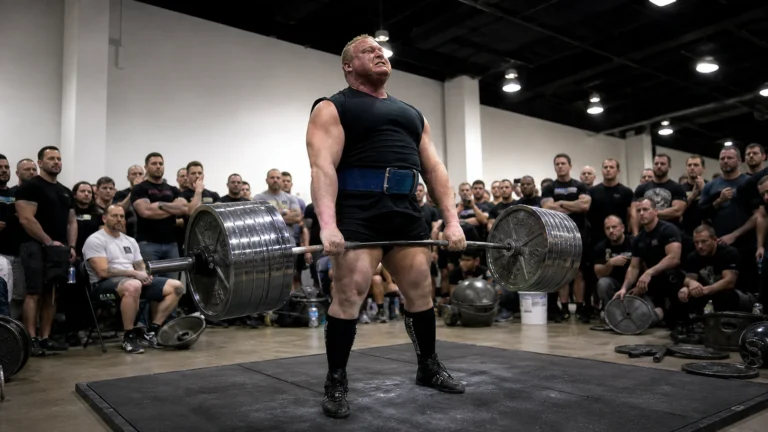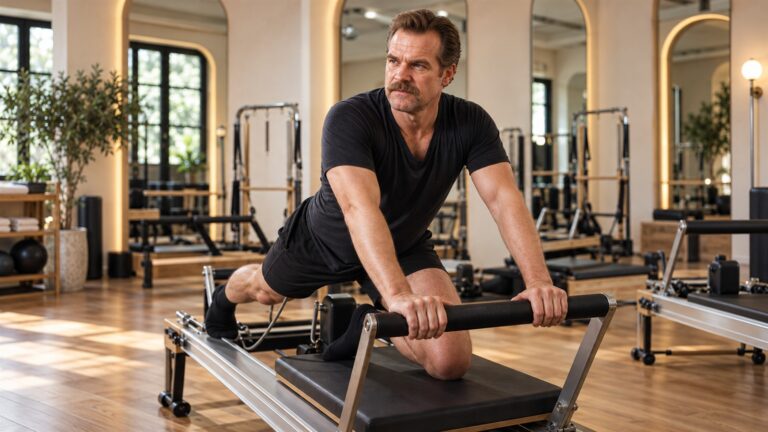

Dave Bautista says he was three weeks back into weight training when he shared his latest look at the work required to play Kratos in Prime Video’s live-action God of War series.
He also said he had two more months to reach the condition he wanted. His short line about training being like riding a bike captures something real about experience, but it should not be mistaken for a guaranteed muscle-building schedule.
Quick answer: Bautista’s background can help him regain technique, confidence, and some previously trained capacity, yet the amount of muscle, strength, and conditioning he can add by a deadline remains individual. The useful story is how an experienced athlete organizes a rebuild without pretending the clock controls biology.
Experience can shorten the learning curve, but it cannot cancel the recovery curve.
What Bautista actually showed
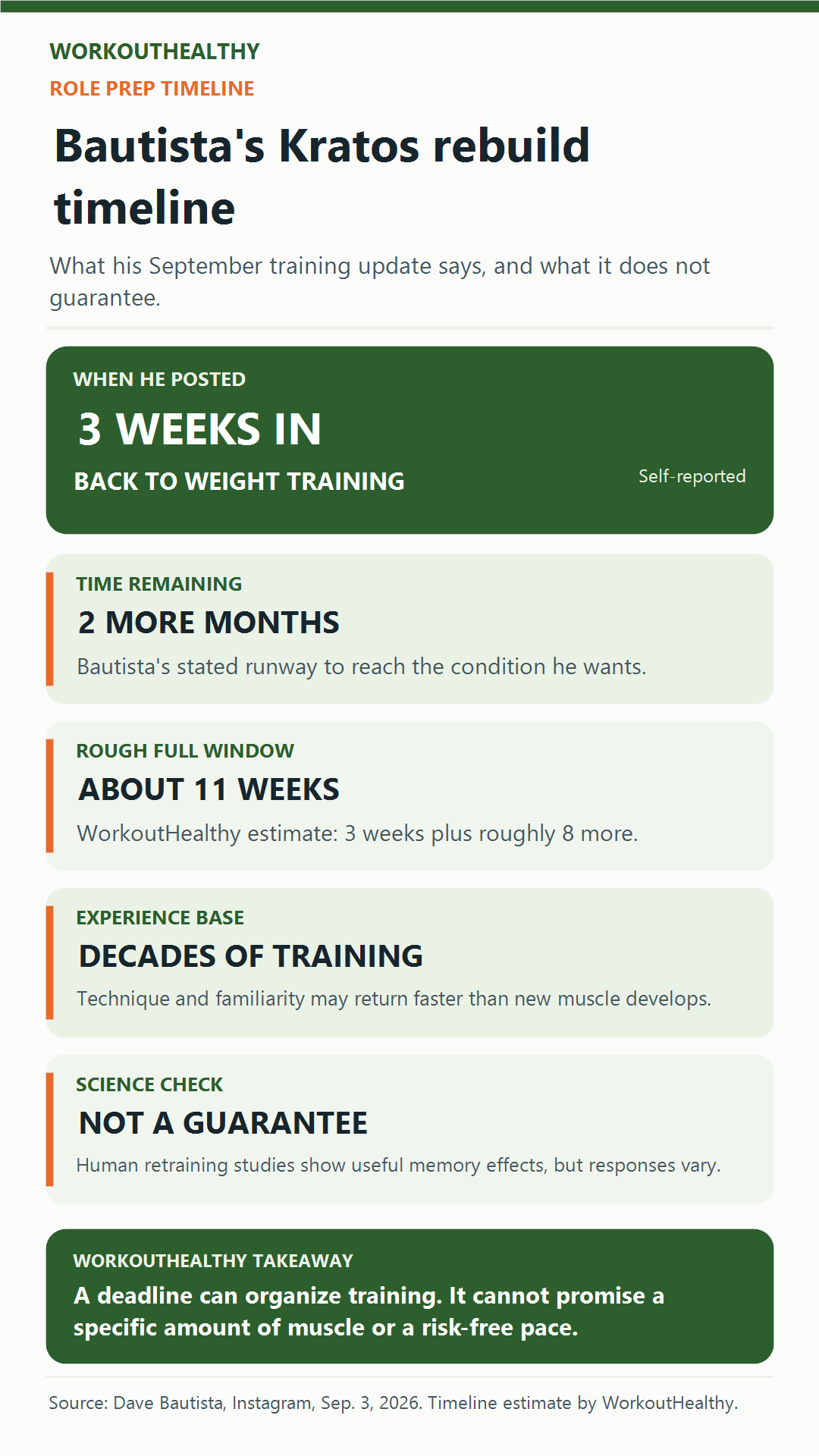
On September 3, 2026, Bautista posted a training update and wrote that he was in his third week of weight training again. He added that he had two more months to get where he needed to be.
The update arrived after Prime Video confirmed him as Kratos for its adaptation of the 2018 God of War story. The series centers on the older warrior and his son Atreus, which makes presence, movement, and character as important as raw size.
Bautista was 57 when he shared the clip, and he brought decades of wrestling and film preparation to the assignment. That history matters because he is not learning how to lift, brace, pose, or perform for a camera for the first time.
It is still important to separate what he said from what viewers inferred. He did not publish a full program, a starting strength test, a body-composition target, or a promised amount of muscle gain.
The most defensible timeline is simple: three weeks completed, about two months remaining, and a role-specific condition he had not yet defined publicly. Everything more precise would be speculation.
Why Kratos requires more than size
Kratos looks powerful, but a live-action performance cannot be built from arm circumference alone. The actor has to move through choreography, repeat takes, wear costume pieces, express fatigue, and remain convincing from multiple camera angles.
That creates competing demands. More muscle may support the silhouette, while too much fatigue, stiffness, or rapidly added body mass could make movement and recovery harder.
The best role-preparation plan therefore starts with the scenes and works backward. Heavy strength work, moderate hypertrophy training, conditioning, movement practice, and stunt rehearsal each solve different production problems.
WorkoutHealthy saw the same distinction in Sebastian Stan’s Winter Soldier training, where a combat-ready look depended on movement and conditioning rather than size alone.
Costume and lighting also change what the audience sees. A physique that reads as powerful on screen may be different from one designed for a bodybuilding stage, where symmetry, posing, and extreme definition receive more attention.
Bautista’s wrestling background gives him an unusual advantage here because his earlier career joined strength, repeated physical performance, and character presentation. The Kratos brief asks for those abilities in a more controlled filming environment.
What like riding a bike can mean
When experienced lifters return after a break, several things can improve before large amounts of new muscle appear. Exercise setup, bracing, bar path, effort judgment, and tolerance for familiar movements can become more efficient again.
That return of skill can make the weights rise quickly during early sessions. It may feel like the body is rebuilding overnight, even when some of the improvement comes from coordination and confidence.
Muscle fullness can also change quickly as training restores glycogen and the water stored with it. The mirror may respond sooner than long-term tissue measurements would.
None of this makes the visual change fake. It means a transformation contains fast and slow layers that should not be confused with one another.
An experienced person may also know which exercises agree with his joints, how much soreness to expect, and when a hard set is becoming unproductive. That judgment can reduce the trial-and-error cost of restarting.
The phrase is useful when it describes remembered practice. It becomes misleading when it is used to promise that every former lifter can regain an old physique on the same calendar.
Strength returns on more than one clock
A rebuild runs on at least three clocks: skill, strength, and visible tissue change. They overlap, but they do not move at the same speed.
The skill clock can move first because the nervous system is revisiting familiar actions. A lifter may feel more coordinated within a small number of sessions, especially on movements practiced for years.
The strength clock includes that skill return plus changes in force production, confidence, and tolerance for heavier loading. It can move quickly at first, then slow as the easy gains from familiarity are exhausted.
The tissue clock is usually harder to read. Muscle size, connective-tissue tolerance, and work capacity need repeated exposure and recovery, while short-term fullness can temporarily exaggerate the visible result.
For an actor, there is also a fourth production clock. Wardrobe fittings, stunt sessions, travel, shoot dates, and scene order may determine which quality has to be ready first.
Daniel Craig’s final Bond preparation offers a related example, because his program emphasized usable movement and recovery around filming demands rather than treating every session as a test of maximum strength. Read the breakdown of why Craig’s Bond training changed.
The muscle-memory evidence is useful, not magical
Human research supports parts of the muscle-memory idea, but it does not reduce the answer to one mechanism. Some studies show that previously trained adults regain strength or size efficiently, while others find mixed evidence for a special hypertrophy advantage.
A 2020 study in older men found that less than eight weeks of retraining restored their earlier one-repetition-maximum strength after a detraining period. That result is interesting, but it came from a controlled group and cannot predict Bautista’s exact response.
Another human study found that strength remained partly elevated after detraining, consistent with a lasting motor-learning effect, yet the previously trained limb did not grow faster than the comparison limb during retraining. The researchers said their data did not provide a rigorous test of the full muscle-memory hypothesis.
Newer proteomic work has identified retained molecular signatures after resistance training and detraining. That is promising biological evidence, but a molecular memory is not the same thing as a guaranteed number of pounds gained by a date.
The practical conclusion is modest. Previous training can improve the starting point and make some capacities easier to recover, while current sleep, nutrition, health, program design, and recovery still determine what happens next.
This is especially important for older trainees because useful experience and changing recovery needs can exist at the same time. Respecting both facts is more accurate than treating age as either a stop sign or an irrelevant number.
The three-clock rebuild check
WorkoutHealthy’s three-clock rebuild check helps separate early progress from long-term adaptation. It tracks skill, load, and recovery rather than asking the mirror to answer every question.
Clock one, skill: record whether setup, range of motion, balance, and technique feel more automatic across comparable sessions. Improvement here can be fast without requiring a dramatic program change.
Clock two, load: track the weight, repetitions, and effort for a small set of stable exercises. Increase only when the same work is controlled and repeatable, not because a deadline is getting closer.
Clock three, recovery: note sleep, joint irritation, soreness, motivation, and readiness for the next exposure. A rising load with steadily worsening recovery is not a complete win.
The check also asks one deadline question: which quality must be ready first? Bautista may need a visual target for a fitting, movement capacity for rehearsals, and repeatable conditioning for long shoot days.
Role prep still has to manage fatigue
A two-month runway can create urgency, but urgency does not make more work automatically productive. Training has to leave enough capacity for rehearsal, travel, costume work, and the next session.
Early in a return, muscles may tolerate more effort than tendons, connective tissue, or familiar joints are ready to repeat. Progressing exercise volume and loading in stages helps the slower systems catch up.
Exercise selection can also protect the goal. Machines, cables, supported rows, split stances, and controlled carries may build useful work without demanding the same recovery cost as constant maximal barbell attempts.
Conditioning belongs in the plan because a powerful character still has to perform repeated action. The right amount supports work capacity, while too much poorly placed intensity can compete with leg recovery and strength sessions.
Mobility is not a separate decorative block. It should address the positions required by the role and the restrictions created by training, costume, old injuries, or long days on set.
That role-driven approach also appears in our look at Pedro Pascal’s mobility training, where staying ready for physical work mattered more than chasing a single gym number.
What regular lifters can borrow
The first lesson is to begin below the maximum work you remember. A former best program belongs to a former training state, while the current body needs a new entry point.
The second lesson is to repeat a small group of stable movements long enough to see whether skill, load, and recovery are improving. Constant exercise changes make a return feel exciting but harder to evaluate.
The third lesson is to build the week around the real goal. Someone returning for general strength may need two or three consistent full-body sessions, while a role or sport can justify more specialized work.
The fourth lesson is to let recovery data change the plan. Persistent joint pain, sleep disruption, unusual fatigue, or declining performance are reasons to adjust volume and seek qualified guidance rather than prove toughness.
Finally, use a deadline to choose priorities, not to force outcomes. The calendar can organize sessions, yet it cannot guarantee a specific physique or erase the cost of rushed progression.
A comeback is strongest when the plan respects what the body remembers and what it has to rebuild.
The bottom line
Dave Bautista’s Kratos update documents an experienced athlete three weeks into a return to weight training with about two more months on his stated clock. It shows momentum, not a completed transformation.
His history may help technique and some strength return efficiently, and human research supports useful memory effects after detraining. The evidence does not promise a certain amount of muscle, a specific visual result, or a risk-free pace.
Start here: choose three repeatable exercises, begin with loads you can control, and track technique, performance, and recovery for four weeks before deciding how quickly to add more work.
Medical disclaimer: This article is general product information, not medical advice. The equipment described here is not a treatment for any condition. If you have an injury, ongoing pain, or a medical condition, talk to a doctor or physical therapist before using any of it.