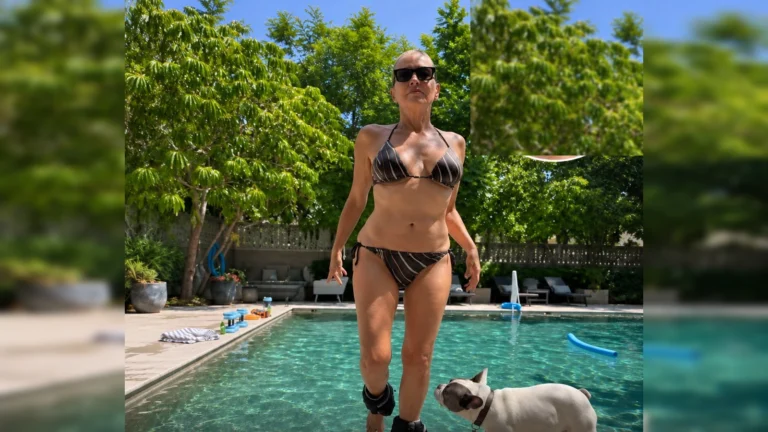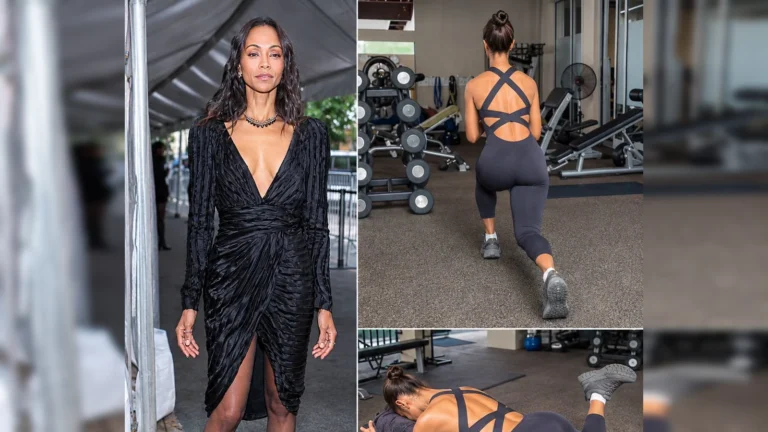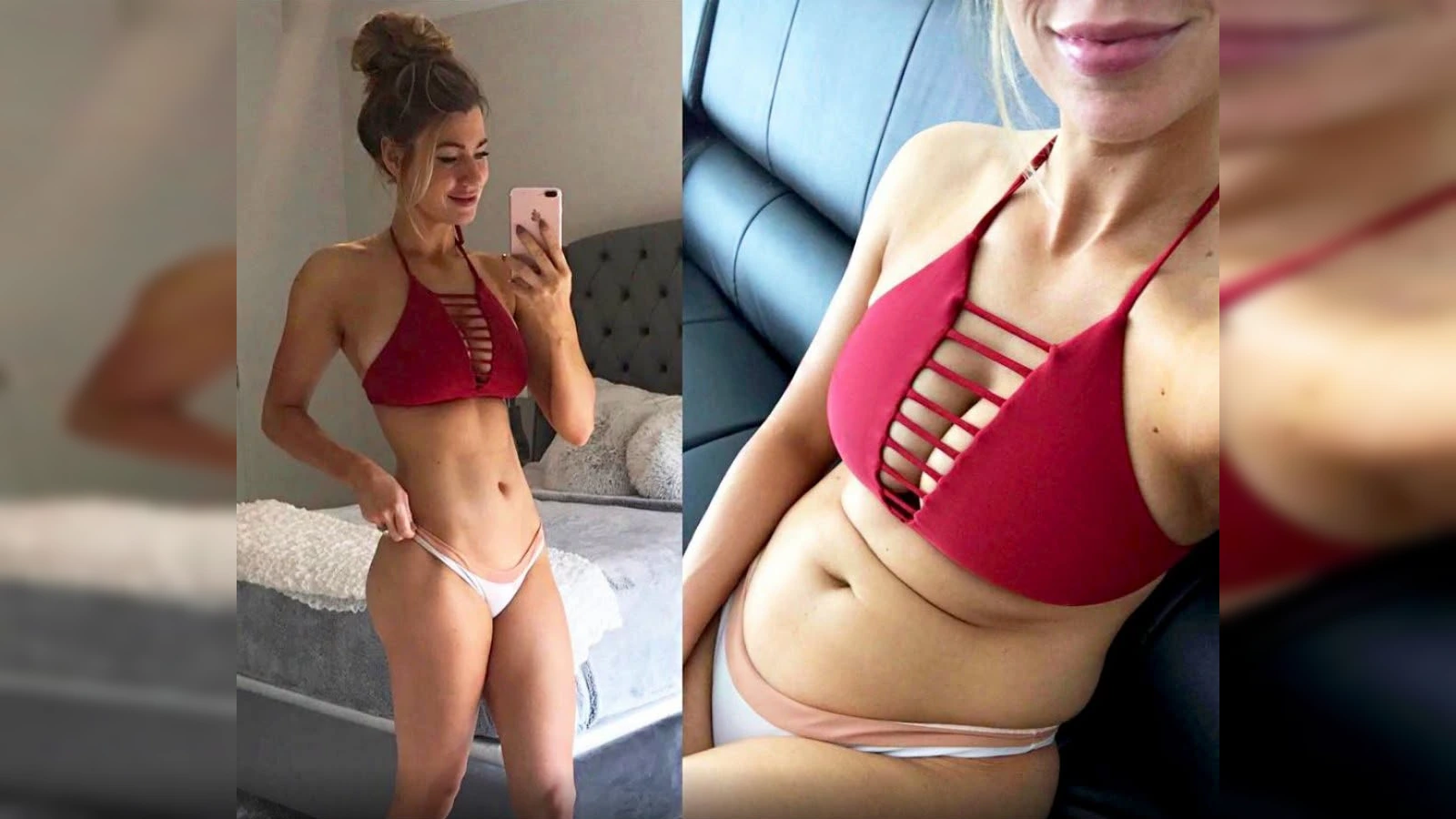

Anna Victoria’s side-by-side photos make a simple point that social feeds often hide: a body can look noticeably different without changing at all.
The fitness creator shared posed and relaxed images taken only minutes apart. Her clothing, body, and day were the same; posture, angle, muscle tension, framing, and the position of the camera were not.
That does not make the posed image dishonest or the relaxed image more “real.” It shows why one selected frame is weak evidence about health, fitness, or what a person looks like throughout an ordinary day.
A photograph can be authentic and still be highly selective.
What the two photos actually show
Reports about Victoria’s 2017 post described the images as being taken on the same day, only minutes apart. In one, she stands, tightens her midsection, and uses a familiar mirror-selfie angle. In the other, she sits back and lets her abdomen rest naturally.
The body did not transform between frames. The presentation did. That distinction is the story.
Victoria later encouraged followers to share similar “two-second transformation” images. Her stated message was not that one side was better. It was that a polished frame should not decide a person’s self-worth.
How posing changes an image
Posture changes where soft tissue sits and how shadows fall. A lifted chest, elongated torso, shifted pelvis, flexed muscles, and overhead or angled lighting can emphasize some contours while minimizing others.
Camera distance and lens perspective matter too. A phone held close to the body can exaggerate whatever is nearest the lens. A frame selected from many attempts adds another layer: viewers see the chosen result, not the discarded variations.
None of these choices requires digital editing. They are ordinary parts of photography, and they explain why comparing your moving, breathing body with someone else’s best still image is an uneven contest.
Why posed does not mean fake
People pose for wedding photos, team pictures, progress updates, and profile images. Enjoying a flattering photograph is not a moral failure. It can be playful, expressive, or simply part of documenting a moment.
The problem begins when viewers treat the pose as a constant physical state or when creators imply that one frame proves a specific diet, workout, supplement, or health outcome.
Our article on Millie Bobby Brown and appearance scrutiny explains a related editorial rule: angle, lighting, expression, and selection can manufacture a transformation that two photos alone cannot verify.
Why relaxed does not mean failure
A fold, roll, or softer outline in a seated position is not evidence that training “stopped working.” Skin and tissue move as the torso bends. Breathing, eating, hydration, clothing, and time of day can also affect appearance.
Turning the relaxed frame into a confession can accidentally preserve the same appearance hierarchy the post is trying to challenge. The goal is not to praise one angle and shame the other. It is to stop asking a single angle to carry a health verdict.
The useful comparison is not “good body versus bad body.” It is “selected frame versus missing context.”
The WorkoutHealthy two-photo context check
When a side-by-side fitness image appears in your feed, ask two questions before drawing a conclusion.
What changed between the frames? Look for posture, muscle tension, camera height, distance, lighting, clothing placement, expression, and whether one image was selected from a longer sequence.
What outcome was actually measured? If there is no verified time interval, training record, clinical result, or comparable measurement, the image can show appearance but not the cause of that appearance.
This is intentionally a two-question check. No infographic was created because a graphic would repeat the original side-by-side creative instead of adding a distinct comparison or calculation.
What the photos cannot prove
Neither image measures strength, endurance, blood pressure, recovery, nutrition, pain, mood, or the quality of someone’s relationship with exercise. A lean-looking frame cannot certify health, and a relaxed frame cannot disprove it.
The same caution applies when strangers make negative judgments. Our coverage of Kelly Ripa and body-shaming explains why a body shown publicly is not an invitation for viewers to set an age or appearance rule.
If fitness imagery is affecting eating, training, or self-worth, reduce exposure and talk with a qualified professional or someone you trust. A feed can be curated; your support should be personal.
A better way to read a fitness feed
Start by treating a post as a piece of media, not a full record of a life. Notice whether the caption names the date, the method, and the limits of the claim. Be cautious when a dramatic image is used to sell a universal explanation.
Follow accounts that discuss function, enjoyment, rest, setbacks, and ordinary variation—not only peak lighting and peak tension. Our guide to recognizing appearance pressure in gym culture offers more questions for separating personal choices from standards imposed on other people.
You can also keep appearance goals without turning them into character tests. A photo can matter to you while still being incomplete evidence about everyone else.
Bottom line
Anna Victoria’s photos did not expose a fake body. They exposed how much a photograph depends on presentation.
The practical lesson is to add context before comparison. Ask what changed between frames and what was actually measured. Then let both images remain ordinary moments instead of treating either one as a final verdict.
This article is for general information only and is not medical advice. If body-image concerns are affecting eating, exercise, or daily life, consider speaking with a qualified health professional.