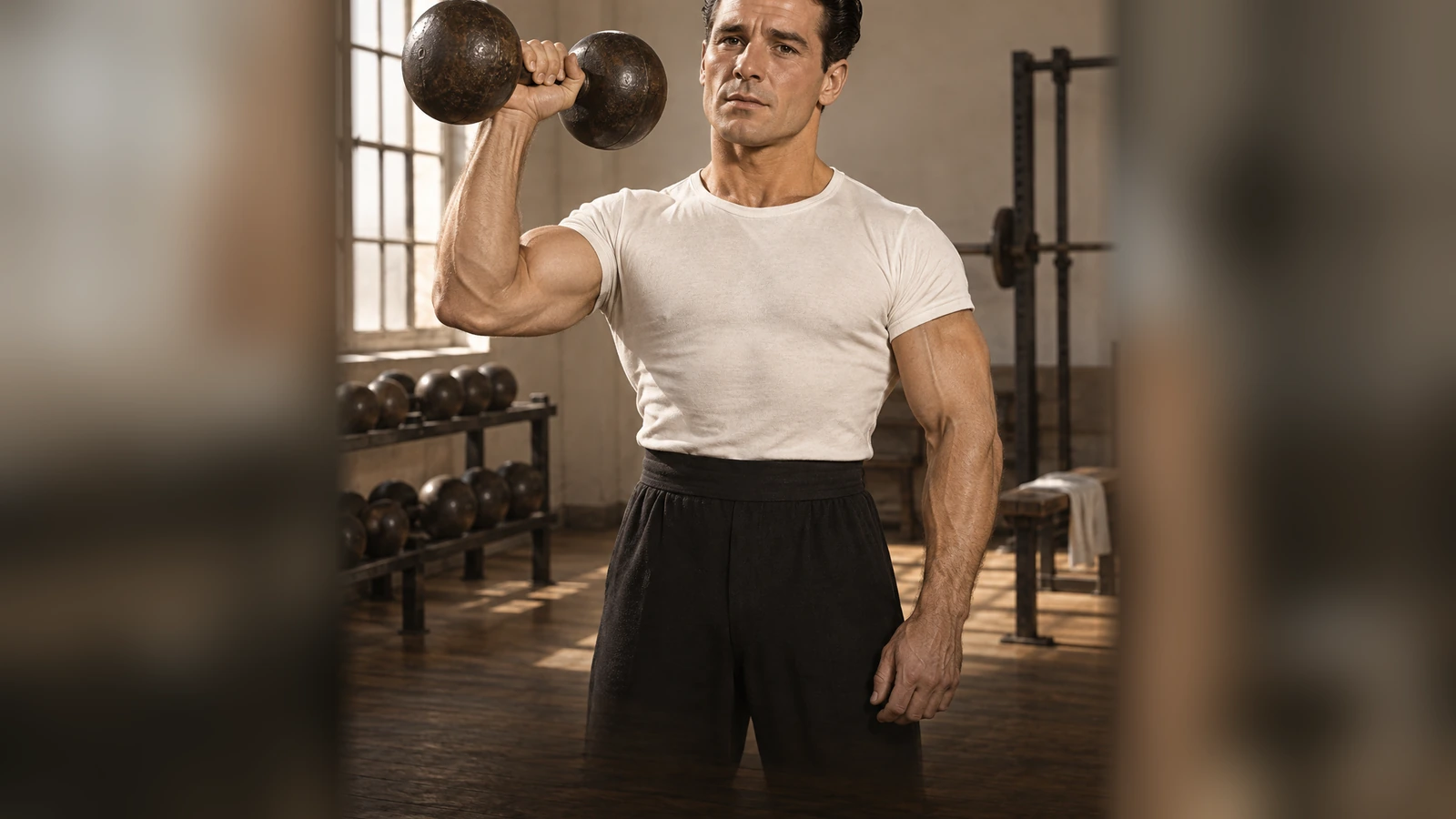

Today, doctors often tell patients to lift weights.
When Jack LaLanne opened his Oakland health club in 1936, many gave the opposite advice.
A popular post says LaLanne brushed off doctors who warned that lifting would cause heart attacks and wreck people’s sex drive.
That story is based on LaLanne’s own memory of the time. The science since then has mostly sided with him.
What LaLanne Said About the Doctors
Wikipedia’s biography of LaLanne includes his recollection of how the medical community reacted.
He recalled that doctors “said that working out with weights would give people heart attacks and they would lose their sex drive.”
The same biography says doctors advised patients to stay away from his club.
It says they called him an exercise “nut” whose programs would make people “muscle-bound” and cause severe medical problems.
We could not trace the recollection to its first published source, such as a specific interview.
So it is best read as LaLanne’s own account, repeated in his biography, rather than a record of what any single doctor said.
Why the Warnings Existed
The fear of being “muscle-bound” was common in that era.
The idea was that big muscles would make people stiff, slow, and less healthy.
Wikipedia also notes that many people then believed lifting would make women look masculine and unattractive.
LaLanne pushed back on that too, by encouraging women to lift.
We could not find a detailed medical paper from the 1930s that explains these warnings, so we will not guess at the reasoning beyond what the biography reports.
Who LaLanne Was
LaLanne was born in 1914 and died on January 23, 2011, at age 96.
Encyclopaedia Britannica says he struggled with poor health as a child and turned his life around after hearing nutritionist Paul Bragg speak.
He went on to host The Jack LaLanne Show, which Britannica says debuted in 1951.
His long, active life became one of his best arguments against the old warnings.
Old warnings can outlive the evidence. It pays to check what the research says now.
What Research Says About Lifting and Heart Health
Modern research points in the opposite direction from those 1930s warnings.
A 2022 meta analysis by Haruki Momma and colleagues reviewed 16 cohort studies of adults.
Muscle strengthening activities were linked with a 10 to 17 percent lower risk of death from any cause.
They were also linked with a lower risk of cardiovascular disease, total cancer, diabetes, and lung cancer.
The greatest risk reduction for death and heart disease showed up at about 30 to 60 minutes of strength work per week.
The authors said the effect of much higher amounts was unclear.
Blood pressure research also supports lifting.
A 2013 meta analysis by Veronique Cornelissen and Neil Smart looked at exercise training and blood pressure.
It concluded that dynamic resistance training lowers both systolic and diastolic blood pressure.
What About Hormones and Sex Drive?
We did not find research showing that normal strength training reduces sex drive in healthy adults.
We also did not find strong research proving that lifting boosts it, so we will not claim that either.
The fair summary is that this old warning has no solid support we could find.
If you notice a real change in libido, talk with a doctor, since many health issues can cause it.
What the Research Does Not Say
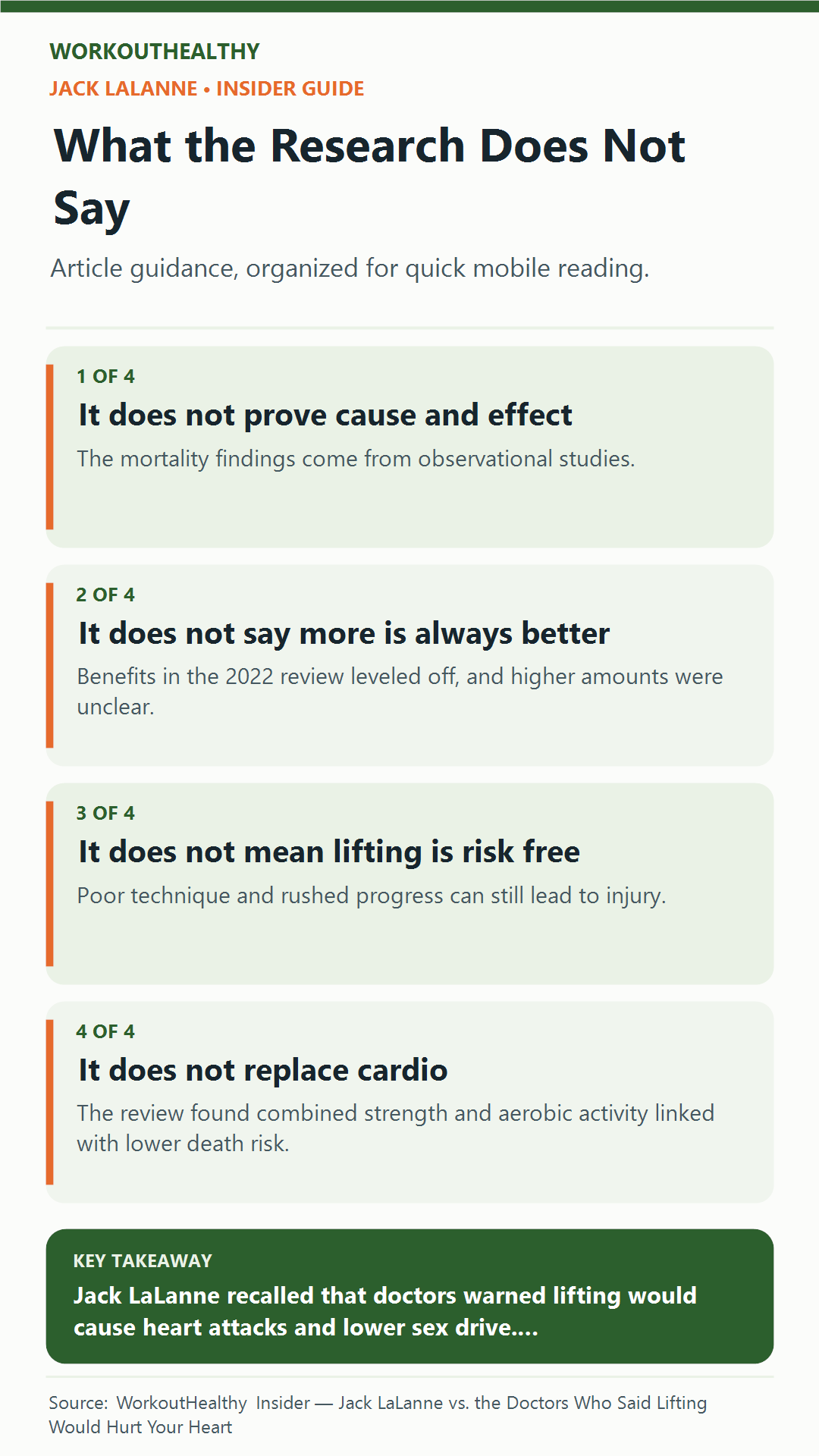
- It does not prove cause and effect. The mortality findings come from observational studies.
- It does not say more is always better. Benefits in the 2022 review leveled off, and higher amounts were unclear.
- It does not mean lifting is risk free. Poor technique and rushed progress can still lead to injury.
- It does not replace cardio. The review found combined strength and aerobic activity linked with lower death risk.
How to Start Lifting With Confidence
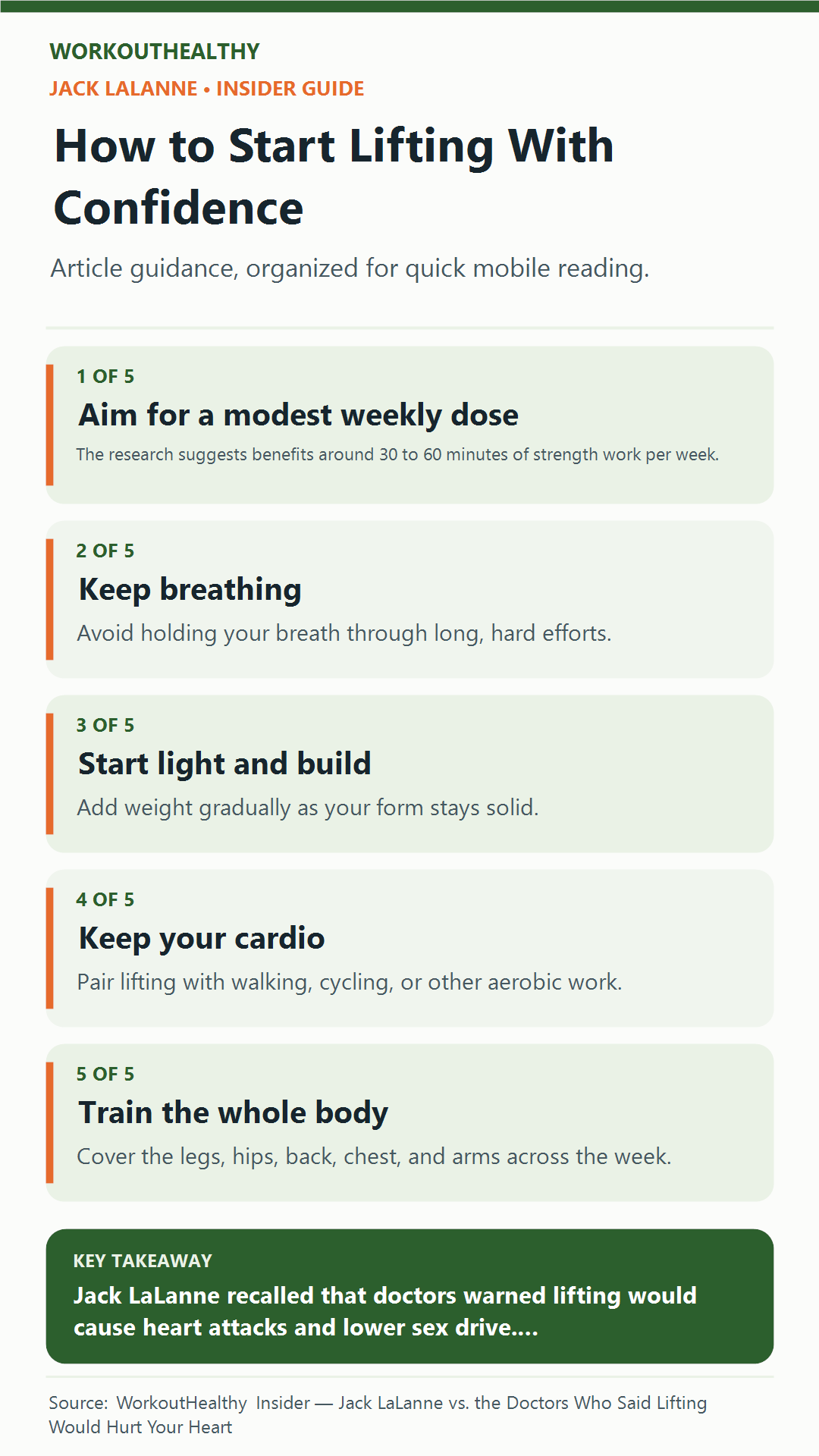
- Aim for a modest weekly dose. The research suggests benefits around 30 to 60 minutes of strength work per week.
- Keep breathing. Avoid holding your breath through long, hard efforts.
- Start light and build. Add weight gradually as your form stays solid.
- Keep your cardio. Pair lifting with walking, cycling, or other aerobic work.
- Train the whole body. Cover the legs, hips, back, chest, and arms across the week.
For a plan by decade, see our guide to a strength plan for your 40s.
Older lifters can learn safe technique in our article on deadlifting after 50.
If you have been told building muscle is complicated, read whether building muscle is really as simple as one coach claims.
A Simple Starter Week
Here is one way a beginner could fit strength work into a normal week.
On Monday, do a short full body session with squats, a row, and a push up variation.
On Wednesday, go for a brisk walk or an easy bike ride.
On Friday, repeat the strength session, trying one or two more reps than last time.
On the weekend, add another walk or active outing with friends or family.
Keep each strength session to about 20 to 30 minutes at first.
That lands close to the weekly range linked with benefits in the 2022 review.
Once the routine feels easy, add a little weight or a third short session.
Who Should Be Careful
People with heart disease, uncontrolled high blood pressure, or a history of stroke should get medical clearance first.
Anyone with chest pain, fainting, or unusual shortness of breath during exercise should stop and see a doctor.
A doctor or physical therapist can help set safe starting loads for people with ongoing health conditions.
The Bottom Line
Jack LaLanne recalled that doctors warned lifting would cause heart attacks and lower sex drive.
Modern research links strength training with lower risk of death and heart disease, and with lower blood pressure.
We found no solid evidence that ordinary lifting harms sex drive.
LaLanne ignored the warnings of his day, and the evidence has largely proved him right.
Want more stories like this? Subscribe to WorkoutHealthy Insider for practical explanations behind popular fitness claims.
References
- Cornelissen, V. A., & Smart, N. A. (2013). Exercise training for blood pressure: A systematic review and meta-analysis. Journal of the American Heart Association, 2(1), e004473. https://doi.org/10.1161/JAHA.112.004473
- Encyclopaedia Britannica. (n.d.). Jack LaLanne. https://www.britannica.com/biography/Jack-LaLanne
- Momma, H., Kawakami, R., Honda, T., & Sawada, S. S. (2022). Muscle-strengthening activities are associated with lower risk and mortality in major non-communicable diseases: A systematic review and meta-analysis of cohort studies. British Journal of Sports Medicine, 56(13), 755 to 763. https://doi.org/10.1136/bjsports-2021-105061
- Wikipedia. (n.d.). Jack LaLanne. https://en.wikipedia.org/wiki/Jack_LaLanne
This article is for general information only and is not medical advice. If you have an injury, ongoing pain, or a medical condition, talk to a doctor or physical therapist before you change how you train or eat.