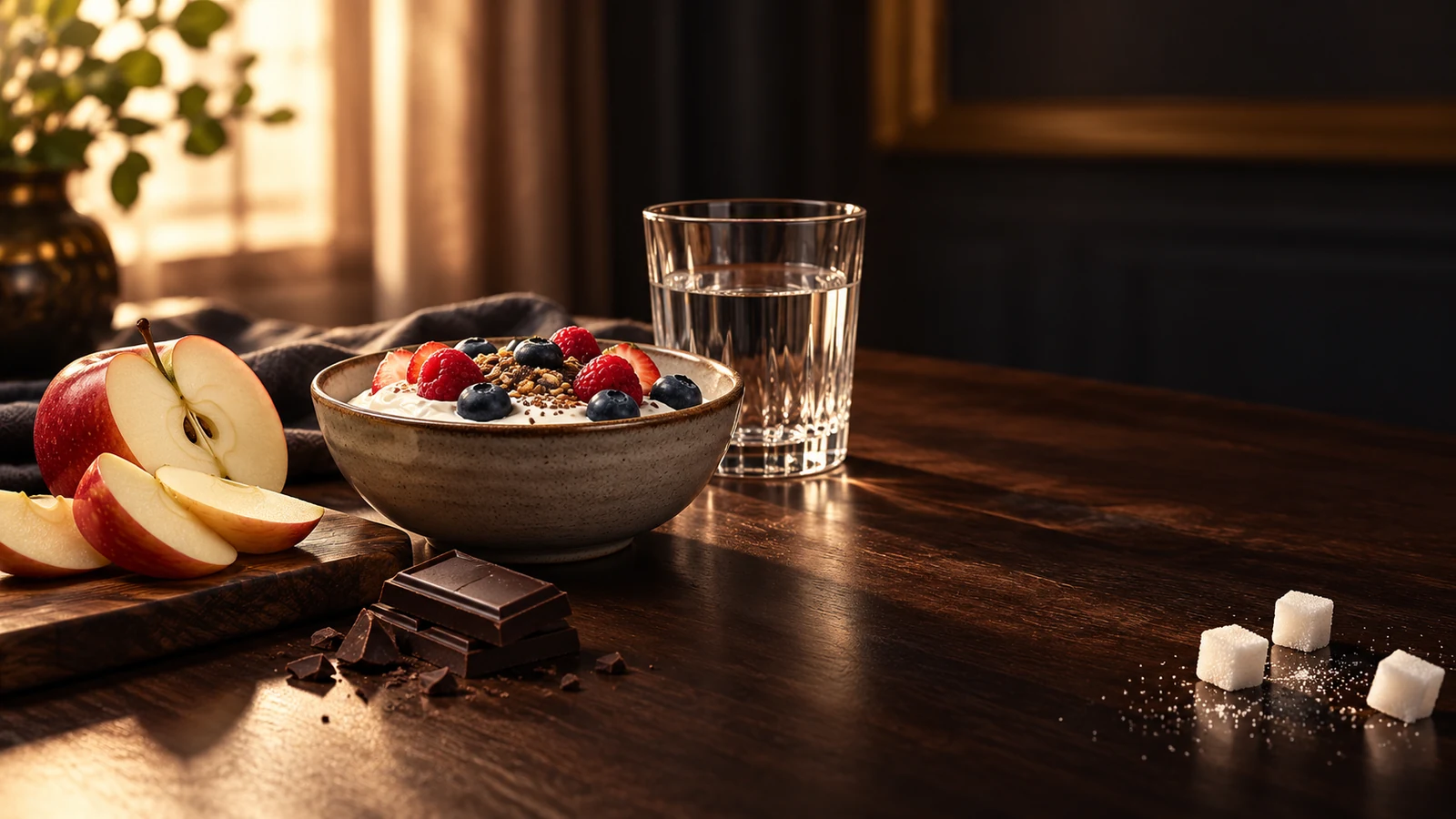

A scheduled WorkoutHealthy post offers five ways to quiet sugar cravings without banning chocolate. That is a useful starting point: a craving does not mean someone has failed, and one dessert does not erase a week of nutritious meals. But the post also promises that 30 grams of breakfast protein steadies blood sugar all day, a glass of water usually erases a craving in ten minutes, and fruit makes candy less appealing. Those are stronger claims than the evidence supports.
Food cravings have many possible triggers, including appetite, habit, stress, sleep, food availability, and the pleasure of a particular taste. There is no single trick that works every time. The most useful plan is to notice the pattern, meet real food needs, and make room for enjoyment without turning a snack into a moral test. Here is what the five tips can and cannot do.
A craving is information about what you want right now. It is not proof that you lack discipline.
1. Build a Satisfying Breakfast
Protein can help make a meal satisfying, particularly when breakfast would otherwise be too small to last until lunch. In a randomized crossover study of 27 women, a higher-protein breakfast reduced reported food cravings relative to a higher-carbohydrate breakfast during a short observation period. The same study found that short sleep increased hunger, and neither breakfast condition changed lunch or daily energy intake. It does not establish a universal morning dose or an all-day blood-sugar effect.
Another randomized trial of young women with overweight or obesity found that a protein-rich breakfast increased fullness before lunch, while total daily energy intake did not differ significantly across the tested breakfasts. Both studies are limited to particular groups and meal designs. They support trying a satisfying breakfast; they do not prove that exactly 30 grams is the threshold for every adult.
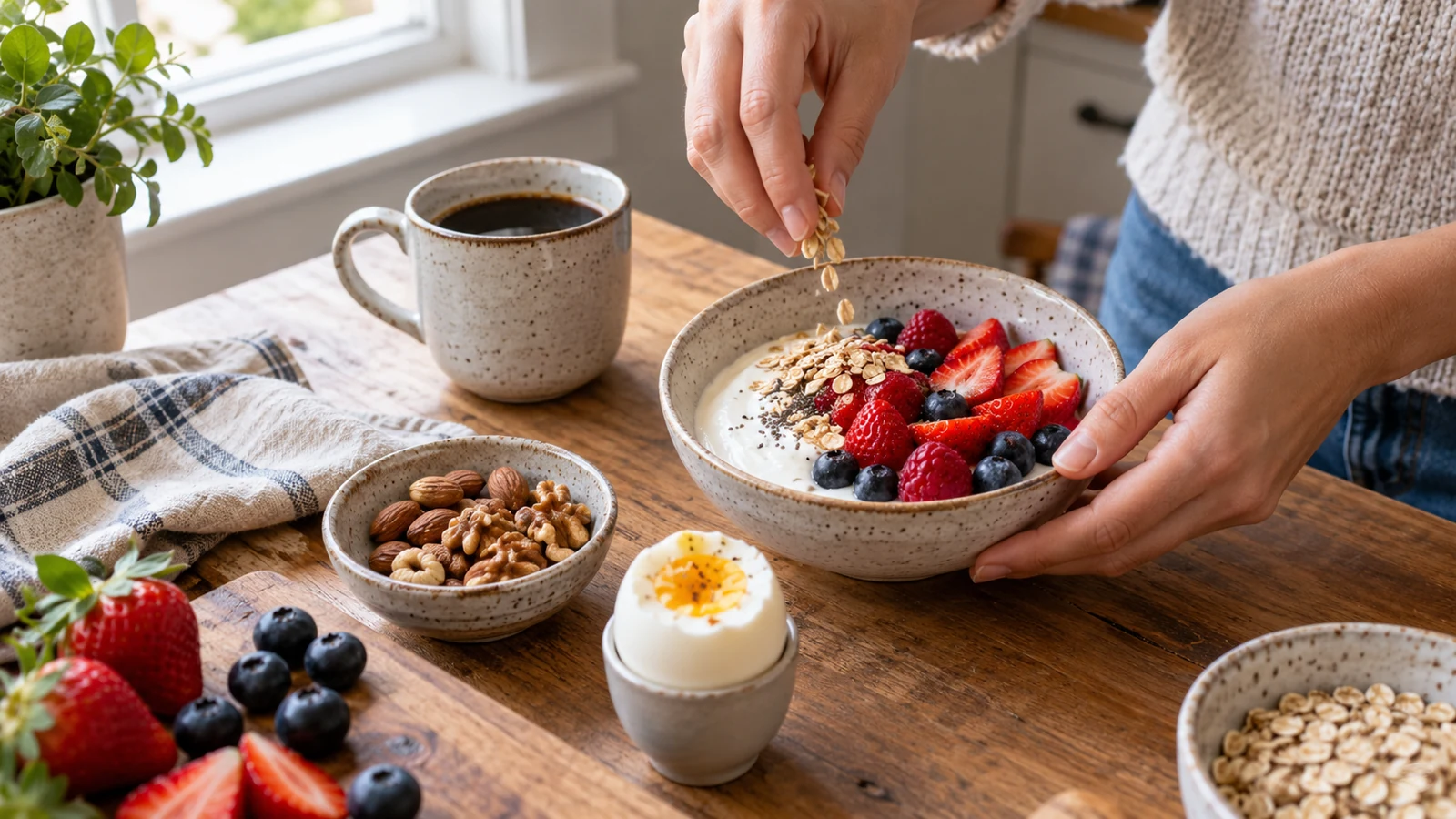
Try a breakfast you enjoy with a protein food and a fiber-containing food: Greek yogurt with berries and oats, eggs with whole-grain toast and fruit, or tofu with vegetables and a tortilla. If breakfast is not part of your routine, the evidence does not require adding it solely to prevent a future craving. If you manage diabetes or another condition that affects meal planning, use your individualized nutrition advice rather than an internet gram target.
The original post describes a carb-heavy breakfast as an inevitable insulin spike and crash. Carbohydrate sources differ, mixed meals differ, and people differ. A piece of fruit or a bowl of oats is not interchangeable with a sugary drink. Our morning-habits evidence check examines the same 30-gram promise in a broader routine.
2. Check Hydration Without a Ten-Minute Rule
Water is a reasonable first choice when you are thirsty. It is also a useful replacement for a sugar-sweetened drink if reducing added sugar is your goal. A glass can create a pause to notice whether you want food, fluid, or simply a break. But drinking water is not a reliable method for making a genuine food craving vanish, and waiting exactly ten minutes has no established magic effect.
The claim that the brain “confuses” thirst with hunger is too broad for a universal tactic. One small laboratory study found that the way food and water were consumed affected hunger and thirst reports; it was not a trial showing that water removes most sweet cravings. If you skipped lunch and now feel hungry, eat something. Using water to avoid needed food can leave you less satisfied later.
Daily fluid needs change with activity, temperature, body size, and health conditions. NIH guidance recommends paying attention to thirst and drinking fluids through the day. People with a medically prescribed fluid limit should follow their care plan. If you want chocolate after a glass of water, the glass did not fail; it simply answered a different need.
3. Choose Whole Fruit When It Appeals
An apple, orange, or bowl of berries can be an appealing sweet snack. Whole fruit brings fiber and nutrients along with naturally occurring sugars. CDC guidance notes that whole fruit generally gives more fiber than juice, which can help with fullness. It can be an easy choice to keep on hand for the afternoon.
Fruit does not work as a required checkpoint before candy. There is no good reason to promise that an apple will usually erase a desire for a chocolate bar. Sometimes a person wants the fruit; sometimes the person wants the chocolate; sometimes they would enjoy both. Listening to that difference may be more useful than making a rigid rule.
It also helps to distinguish added sugars from sugars naturally present in intact fruit. The American Heart Association’s added-sugar guidance targets sugar added during processing or preparation, not a reason to fear ordinary fruit. Pairing fruit with yogurt, nuts, or another satisfying food can make a more substantial snack when you are hungry. A fruit-only tactic is unlikely to meet a real meal need.
4. Protect Sleep, but Avoid Hormone Shortcuts
Sleep belongs in a craving conversation. In a randomized crossover trial of 24 healthy young adults, three short nights increased sweet-taste preference, active ghrelin, and energy intake compared with a longer-sleep condition. Leptin did not differ. Another controlled study of 27 women found that curtailed sleep increased hunger and reduced fullness. These findings suggest that poor sleep can change appetite for some people.
They do not justify the claim that every tired person’s ghrelin always rises and leptin always “plummets.” The hormone response depends on the protocol and the person. A more recent synthesis of human trials notes that appetite is more complicated than one pair of hormones. It is reasonable to protect sleep because sleep supports health and daily function, without making it a guaranteed cure for cravings.
The CDC recommends at least seven hours of sleep for adults aged 18 to 60, while individual needs and sleep quality vary. A consistent schedule, a wind-down routine, and a bedroom that supports sleep are more practical starting points than blaming a snack on a single biomarker. Shift workers, new parents, and people with insomnia may need a different approach. Our sleep and recovery guide explores why simple hormone stories rarely explain the whole result.
5. Leave Room for a Treat
For many people, an approach that allows enjoyable foods is easier to live with than an absolute ban. You can choose a piece of chocolate, notice whether you enjoy it, and move on without declaring the day “ruined.” This is a flexible habit, not a claim that every forbidden food necessarily becomes an obsession or that a measured portion works for everyone.
The language of control matters. Someone who has a history of binge eating or an eating disorder may find “just have a small, controlled portion” unhelpful or distressing. They deserve individualized support, not a stricter social-media rule. If cravings feel intense, frequent, or tied to distress, a registered dietitian or qualified mental-health professional can help examine what is happening.
A balanced eating pattern still leaves space to consider added sugar. The American Heart Association recommends keeping added sugars below about 6% of daily calories and offers simple reference amounts of about 25 grams a day for most women and 36 grams for most men. These are population-level benchmarks, not a personal prescription or a reason to count every gram of fruit sugar.
A Practical Craving Check
When a craving arrives, ask five questions in a calm order. First, are you physically hungry or overdue for a meal? If so, eat a meal or filling snack. Second, are you thirsty? Drink if you are. Third, do you want something sweet specifically? Fruit, chocolate, yogurt, or another food may fit. Fourth, are you tired or stressed? Rest or a pause may help, even if you still choose food. Fifth, does this pattern keep repeating at the same time? Adjust the earlier meal, sleep window, or snack availability instead of relying on willpower at 3 p.m.
Consider an example: you ate a light lunch at noon and want candy at four. A glass of water may be welcome, but the long gap suggests a substantial snack might serve you better. Greek yogurt with berries and a few pieces of chocolate could answer both hunger and taste. If lunch was satisfying and the craving is simply for a favorite dessert, enjoying a portion is also a reasonable choice. Neither example is a clinical protocol.
For a week, notice the timing, context, and outcome of one recurring craving without scoring yourself. You may discover that bringing a snack to work matters more than changing breakfast grams. Another person may notice that a late bedtime leaves them reaching for quick energy. A pattern gives you something specific to change. It does not identify a moral weakness.
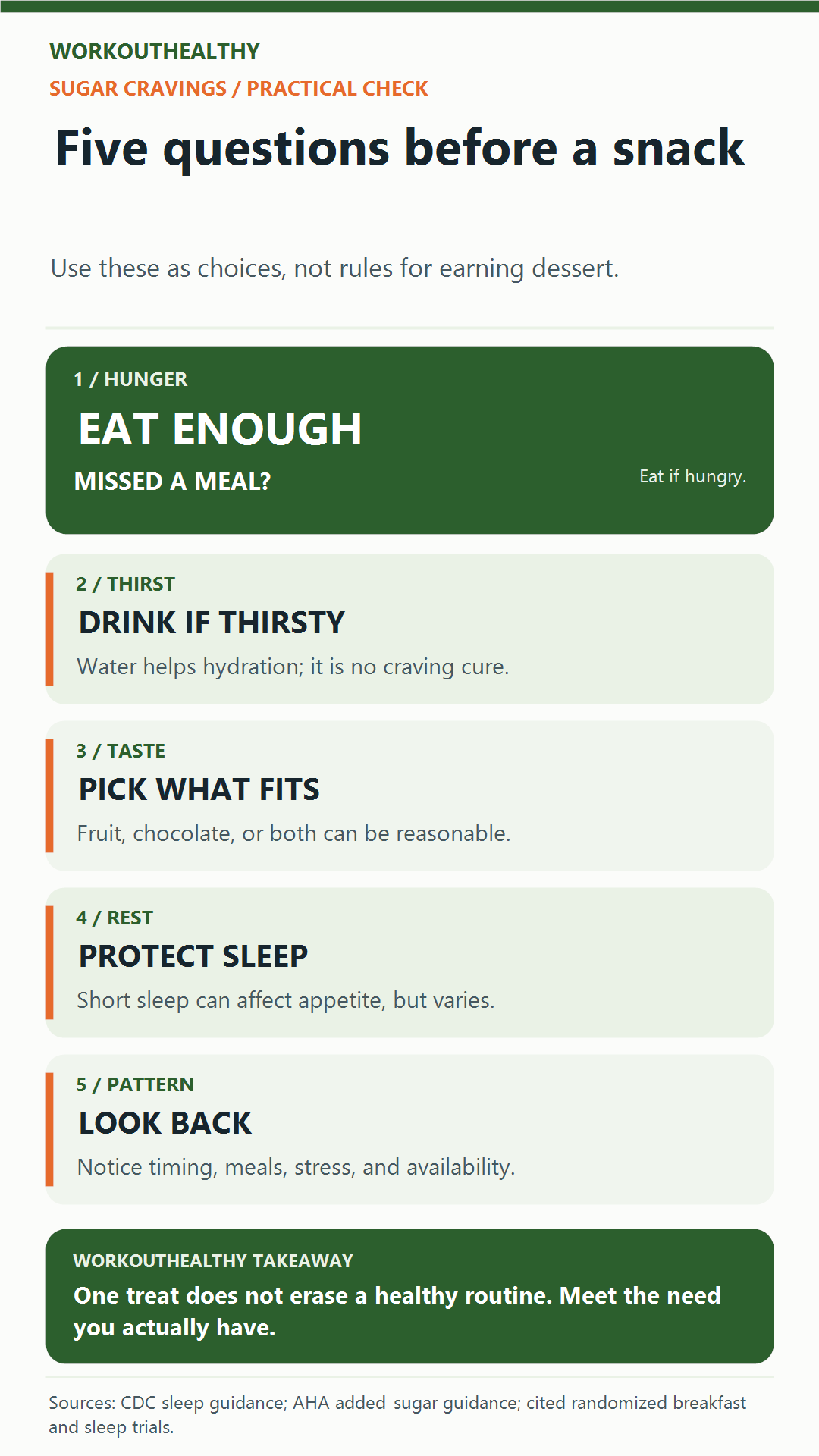
The useful question is not “How do I defeat this craving?” but “What would satisfy me and support the rest of my day?”
What an Added-Sugar Target Means
Suppose a packaged bar lists 12 grams of added sugars per serving. That is 48 calories from added sugar because each gram supplies about four calories. Against the AHA’s 25-gram reference amount, 12 grams is 48%; against its 36-gram reference, it is about 33%. Those percentages are simple WorkoutHealthy calculations, not clinical limits for an individual.
Read the serving size as well as the added-sugar line. A package may contain two servings, while a piece of intact fruit will not have “added sugars” just because it tastes sweet. A label is information for choices across a day; it should not turn a snack into a pass-or-fail test. If tracking numbers is stressful or harmful for you, use a less numerical approach with appropriate professional support.
The Takeaway
A satisfying breakfast, fluids when thirsty, whole fruit, enough sleep, and flexibility around treats can all have a place in a healthy routine. The viral version oversells certainty. No specific protein dose steadies everyone’s blood sugar all day; water does not reliably erase cravings in ten minutes; fruit is an option rather than a gate; and sleep affects appetite through more than a simple ghrelin-leptin switch.
Use the five ideas as experiments. Keep the ones that make meals more satisfying and daily life easier. If the craving persists, eat what you need, enjoy what you choose, and look for the pattern behind it. That is a more durable strategy than fighting a piece of chocolate.
Sources and Further Reading
- Randomized study of protein-rich breakfast, short sleep, and cravings
- Randomized trial of a protein-rich breakfast and satiety
- NIH: Hydrating for Health
- Laboratory study of food, water, hunger, and thirst
- CDC: How to use fruits and vegetables to help manage weight
- Randomized trial of short sleep and sweet-taste preference
- Synthesis of controlled sleep-restriction trials
- CDC: About Sleep
- American Heart Association: Added Sugars
Get the next verified fitness story.
Five practical fitness stories worth your time, every Friday.
One email a week. No product pitches. Unsubscribe in one click.
Health disclaimer: This article is general information, not medical or individualized nutrition advice. Food and fluid needs vary. If you have diabetes, a fluid restriction, an eating disorder, or persistent distress around food, seek guidance from an appropriate qualified professional.