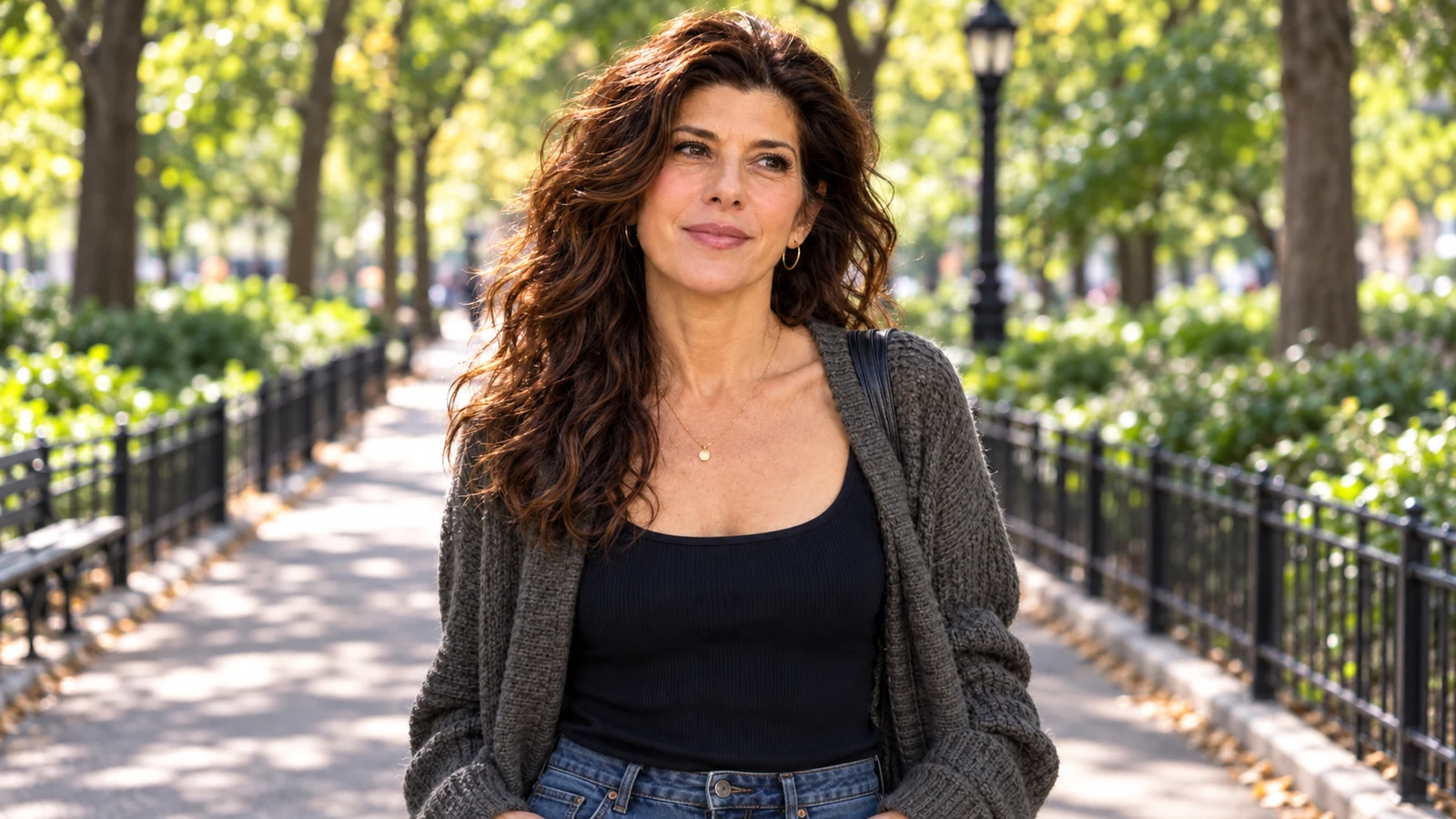

Marisa Tomei recently described a routine built around walking, time outdoors, and sleep.
In a September 2026 interview with PEOPLE, the 61-year-old actor said she exercises but does not go to the gym.
That distinction matters.
A gym is one place to move, but it is not the definition of exercise.
Her account is a personal preference, not a formula for looking younger or a complete record of everything she does.
The useful question is what her example can teach a reader who struggles to keep a formal workout schedule.
The answer begins with consistency, then adds the kinds of activity walking alone may miss.
A gym is a place. The useful habit is movement you can keep doing.
What Tomei actually said
PEOPLE reported that Tomei favors functional movement such as walking.
She also spoke about needing sleep and time in nature.
Those are the parts of her routine she chose to share publicly.
She did not give a weekly step count, a walking pace, or a detailed strength plan in that interview.
It would be a mistake to turn her comments into an exact prescription or claim that a particular habit explains her appearance.
The interview also discussed her supplement company.
That business context is relevant to how the story was presented, but her comments do not establish that a supplement is needed to walk, sleep well, or stay active.
This article makes no product recommendation.
Her phrasing separates exercise from a membership or a room full of machines.
Walking to do something, spending time outside, and moving through daily life can feel less like a scheduled session.
They still require effort and regularity if they are meant to build fitness.
The most honest reading is modest: Tomei says this approach suits her.
Readers can borrow the principle of choosing movement they can repeat without assuming her choices will produce the same results for everyone.
Why walking counts as exercise
Walking can be aerobic activity when the pace raises your breathing and heart rate.
The CDC names brisk walking as one example of moderate-intensity activity.
The exact effort varies by person, so one person’s easy stroll may be another person’s meaningful workout.
Moderate effort is often described as a pace where talking remains possible but singing becomes difficult.
A leisurely walk still breaks up sitting and can be a useful starting point.
It simply may not contribute the same amount toward an aerobic target.
Walking also has practical advantages.
It usually needs no booking, specialized equipment, or commute.
A short walk after a meal, a longer park route, or a walk with a friend may fit a day that has no room for a gym trip.
The CDC says adults can spread activity across the week rather than complete it in one session.
That flexibility is the strength of a walking habit.
It creates more chances to begin again when work, weather, or family disrupts a plan.
Walking is not a contest with gym training.
A person who enjoys lifting can keep lifting and still use walks for additional movement.
A person who dislikes the gym can build a solid aerobic base outside it.
The part walking may not cover
Walking is valuable, but it does not automatically replace muscle-strengthening work.
U.S. guidance calls for adults to get at least two days of activity that works major muscle groups each week, alongside aerobic movement.
That work can happen outside a commercial gym.
Body-weight movements, resistance bands, and other forms of resistance can make muscles work harder than usual.
The exact choice depends on ability, access, and comfort.
Strength matters because daily function asks for more than steady forward motion.
Getting out of a chair, carrying groceries, climbing stairs, and maintaining posture all call on muscle capacity.
The National Institute on Aging also emphasizes balance as people get older.
An enjoyable walking routine can be the anchor of an activity plan while brief strength and balance work fill its gaps.
Readers should avoid assuming Tomei skips these activities.
The interview simply did not give enough detail to tell.
If a new movement causes pain, dizziness, or unusual symptoms, the sensible step is to stop and discuss it with a qualified clinician.
Fitness advice built from an interview cannot account for a person’s medical history.
Sleep is part of the story, not a shortcut
Tomei told PEOPLE she likes plenty of sleep.
That is a preference she described, not evidence that sleep alone explains her health, appearance, or career stamina.
The CDC recommends seven to nine hours of sleep for adults aged 61 to 64.
The number is a population guideline, not a guarantee that every person feels best at the same point in the range.
Sleep and movement can support one another.
Regular physical activity is associated with better sleep quality, while a rested person may find it easier to follow through on planned activity.
Neither relationship is a reason to make a precise claim about Tomei’s physiology.
A practical sleep routine starts with a consistent opportunity to sleep and a schedule that is realistic for work and home life.
Someone with persistent insomnia, heavy snoring, or daytime sleepiness should seek medical advice rather than simply trying to sleep longer.
The lesson is to keep recovery in the plan.
Adding more exercise while leaving no time to rest may be hard to sustain, especially when the activity itself is meant to improve quality of life.
The routine that fits your life has a better chance of surviving next week.
What time outdoors can add
Tomei also described a need to be in nature.
Her comment is personal and does not prove that a park walk is medically superior to every indoor option.
An outdoor route can nevertheless make walking more appealing.
A pleasant setting, a destination, or company may turn a task into something worth repeating.
That behavioral advantage can matter more than a perfect plan that rarely happens.
Outdoor movement is not equally easy for everyone.
Weather, traffic, unsafe paths, air quality, disability, and caregiving can all limit access.
An indoor corridor, mall, or accessible community space can serve the same basic goal of moving more.
People sometimes frame outdoor exercise as an all-or-nothing lifestyle identity.
It does not need to be one.
A ten-minute walk on a suitable day can coexist with indoor options when conditions change.
Choose a route that feels safe, bring water when conditions warrant it, and adjust for heat, cold, and mobility needs.
Those simple details make repetition more likely than a dramatic once-a-month outing.
A flexible weekly template
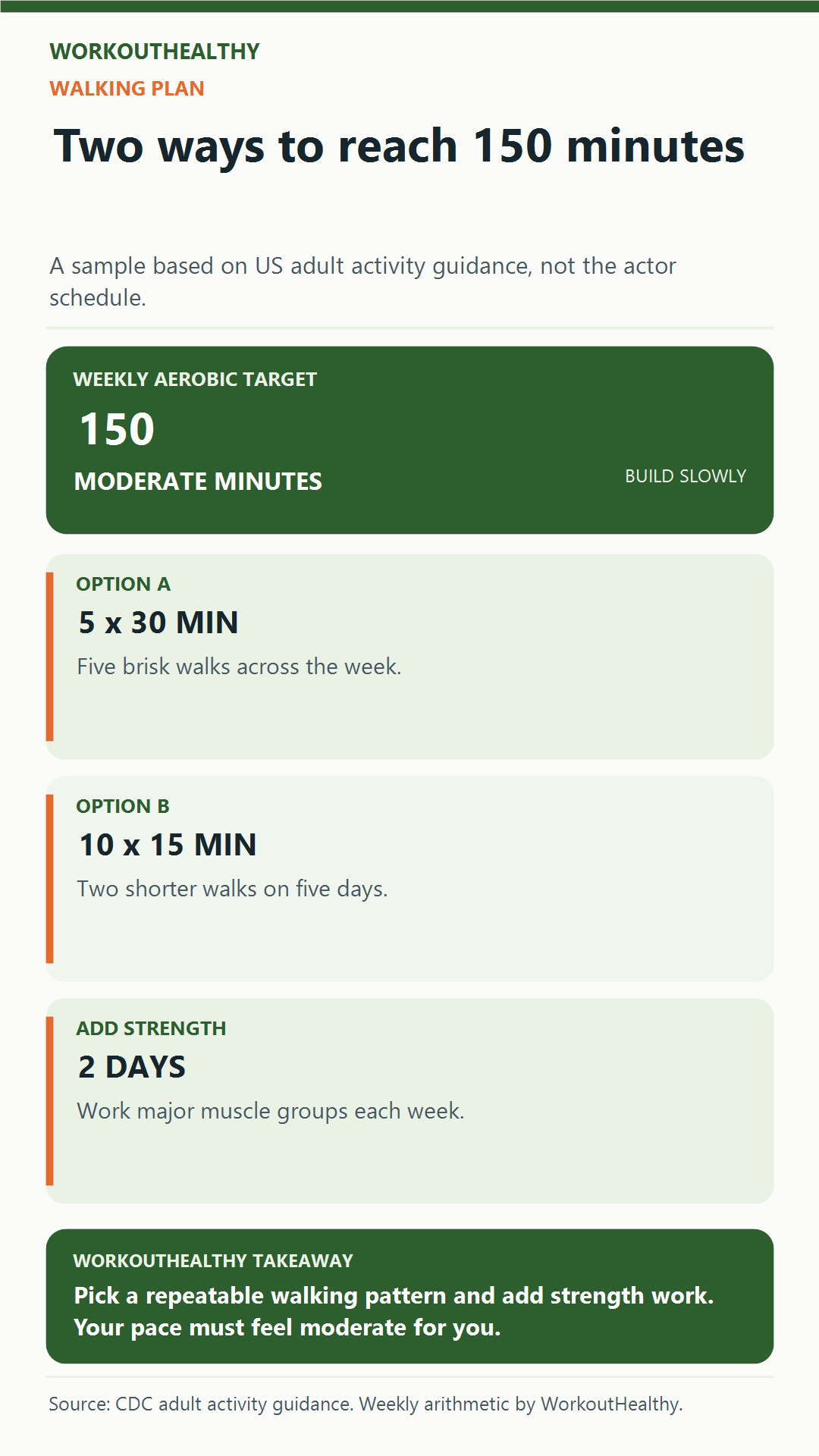
Here is a WorkoutHealthy planning example, not Tomei’s reported schedule.
It starts with the federal aerobic target of 150 minutes of moderate activity and adds two muscle-strengthening days.
One option is five 30-minute brisk walks across the week.
A second is ten 15-minute walks, perhaps before work and after dinner on five days.
Both add to 150 minutes if the walking is actually moderate for the person doing it.
Someone starting from very little activity does not need to jump straight to that total.
The CDC advises beginning with small amounts and building gradually.
A comfortable walk that can be repeated is a better first step than a demanding schedule that falls apart.
Place two brief strength sessions on days that work for your energy and recovery.
They can be at home if the movements are appropriate for you.
Balance practice can be added where it is safe and supported.
This template is a planning tool, not a claim that Tomei follows it.
It shows how her preference for ordinary movement can sit alongside evidence-based activity guidance without turning her interview into a workout program.
How to make the habit stick
Start by naming an activity you do not dread.
Walking is one option, but dancing, cycling, swimming, or an accessible seated activity may fit someone else better.
The goal is a pattern you can return to.
Attach the activity to a repeatable cue.
A lunch break, a call with a friend, or the trip to a nearby errand can provide a starting point.
The cue should make the first five minutes easy to begin.
Plan for interruptions before they happen.
Have an indoor route for bad weather and a shorter version for busy days.
A smaller session keeps a routine alive when the full plan is not possible.
Track what helps rather than only counting steps.
Notice whether a route feels pleasant, whether the time of day works, and whether you can recover comfortably.
If a plan repeatedly collides with life, change the plan.
For readers over 50 who want another perspective on practical movement, our article on chair squats after 60 discusses strength and function.
The aim is to choose useful activity, not imitate a celebrity.
The limits of a celebrity routine
A short interview can reveal a preference, but it cannot reveal a person’s full training history, medical care, genetic background, work demands, or access to support.
Those missing pieces matter when readers compare themselves with a public figure.
Appearance is especially poor evidence for a health method.
Lighting, styling, age, body composition, and many other factors shape how someone looks.
No walking schedule can promise the same appearance as Tomei.
The better takeaway is the distinction between location and behavior.
A gym may be a great tool for some people.
Others can meet meaningful activity goals in neighborhoods, parks, homes, or community spaces.
Walking remains one piece of a broader picture.
Strength, balance, sleep, and suitable professional care matter too.
Our guide to two weekly strength sessions offers another way to think about maintaining function.
Tomei’s comments may help someone release an unhelpful rule that exercise must look a certain way.
Keep the freedom, then build an activity mix around your own health, ability, and schedule.
For more on our sourcing and image approach to public figures, see how we cover celebrity fitness.
Medical disclaimer: This article is general product information, not medical advice. The equipment described here is not a treatment for any condition. If you have an injury, ongoing pain, or a medical condition, talk to a doctor or physical therapist before using any of it.