
Machine Gun Kelly did not describe his gym work as a search for a conventional bodybuilding look. In a 2020 training feature, the musician, whose legal name is Colson Baker, said he wanted his body and mind ready for high-energy concerts that could run for two hours.
That makes the viral idea partly right: his reason for training went beyond the mirror. However, there is no reliable source showing that he began exercising solely for mental strength, or that he called exercise an act of self-respect. Those are motivational interpretations, not verified quotes.
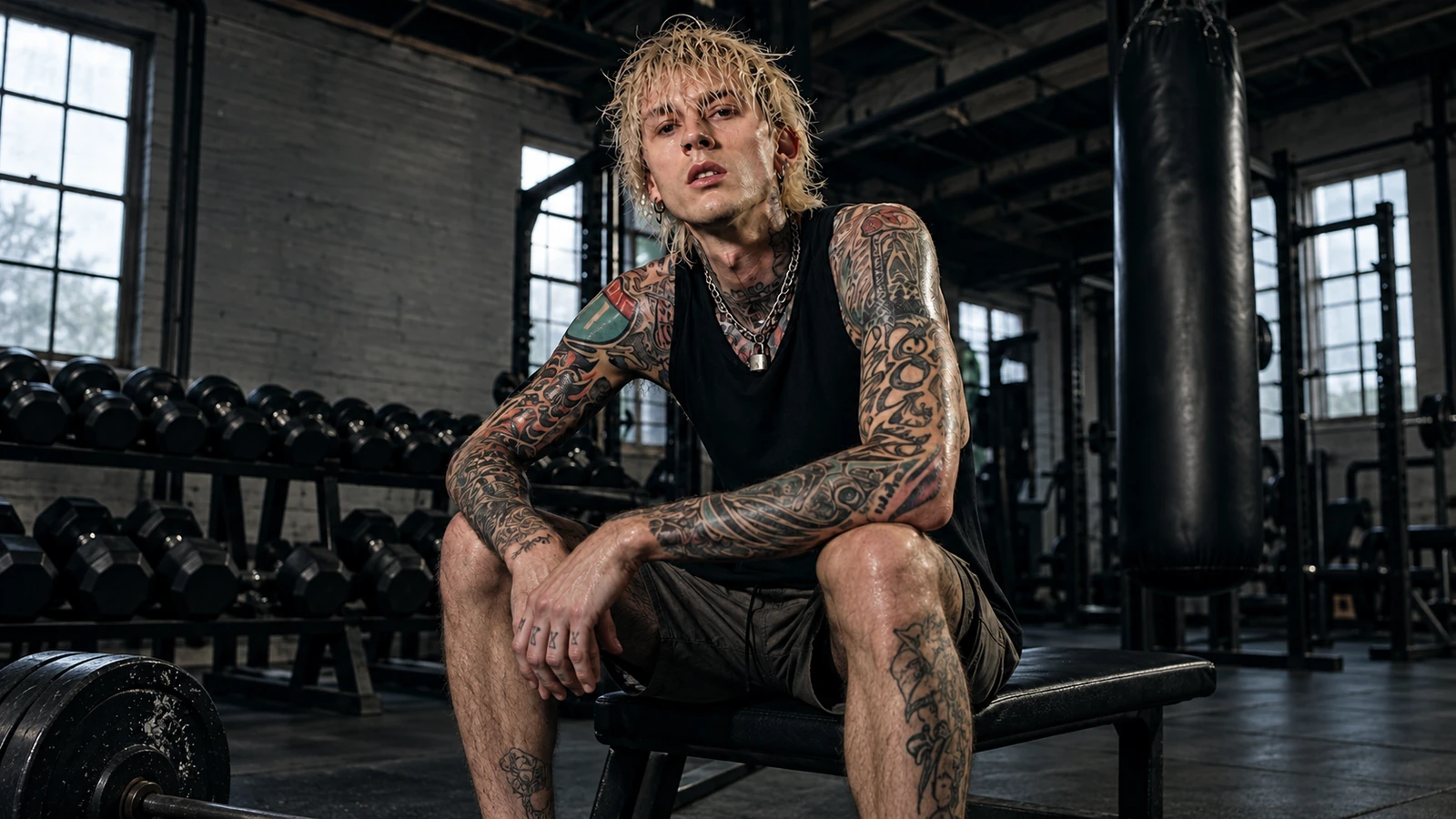
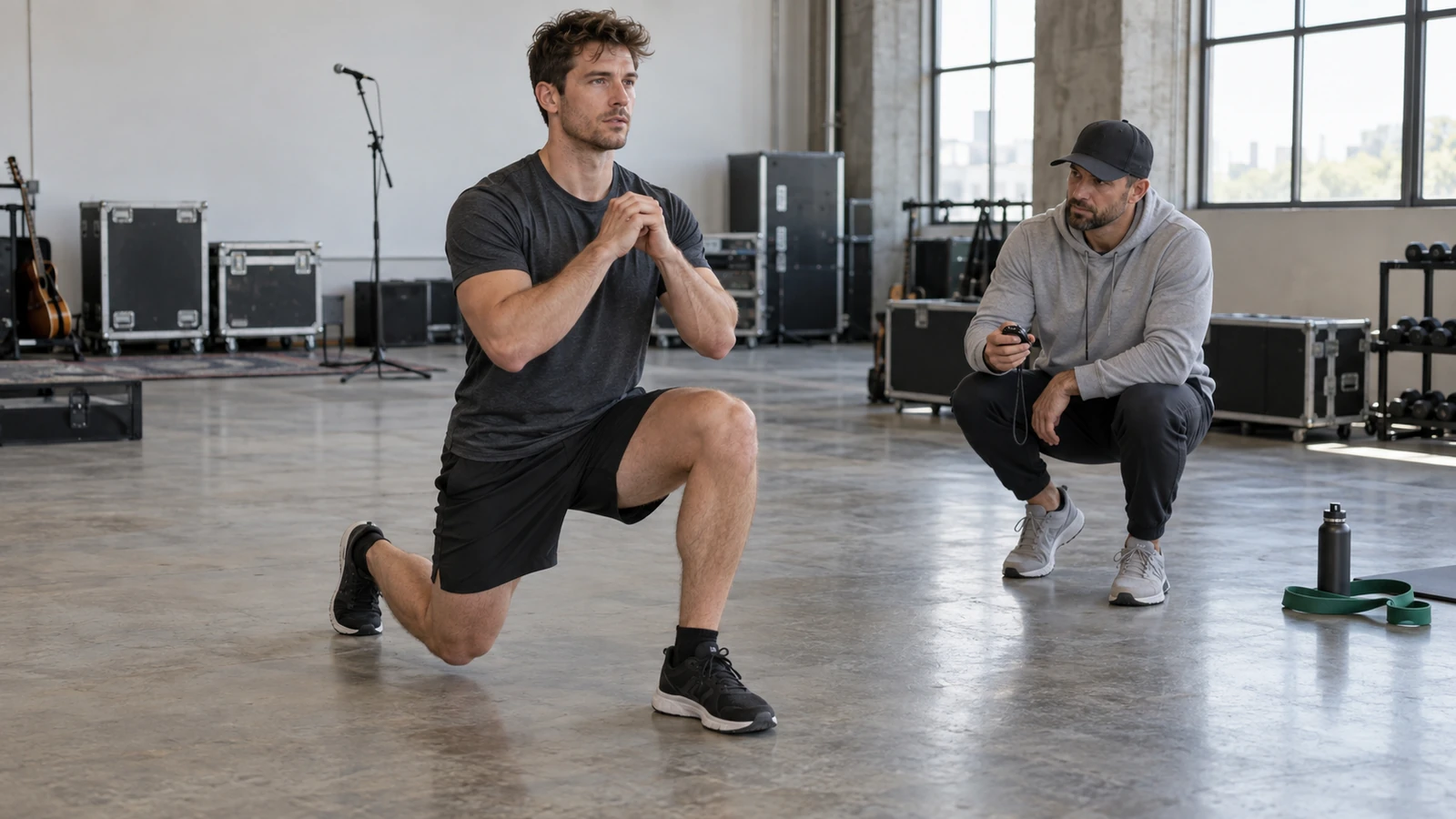
Image note: The featured gym scene is an AI-enhanced editorial illustration, not a documentary photograph of Baker or an endorsement.
His Documented Goal Was Better Stage Performance
Men’s Health reported that Baker began working with Los Angeles trainer Nic Shimonek after a background that mostly involved pickup basketball. By 2020, he was training five days per week to build muscle, stamina, posture, and explosive athletic ability.
The reason was practical. His concerts combined singing and rapping with climbing stage structures, jumping from speakers, and moving almost continuously. A performer who cannot recover between bursts of effort may lose vocal control, timing, or coordination before the show ends.
Baker told the magazine that he did not want to become only a more muscular version of himself. He cared about the moments onstage that would define his live performance, which is a much more specific goal than chasing a general celebrity physique.
That distinction matters because a useful program starts with a real demand. A singer preparing for a long tour needs repeatable power, joint tolerance, aerobic capacity, and enough strength to control his body onstage. A recreational trainee may need strength for work, parenting, hiking, or simply feeling capable in daily life.
The best reason to train is not necessarily the most dramatic one. It is the reason that helps a person choose an appropriate plan and return to it consistently.
What His Weekly Training Actually Included
The reported week contained two upper-body sessions, two lower-body sessions, and an active recovery day. That is a recognizable strength-and-conditioning structure, not a mysterious celebrity method.
One total-body session included offset-stance deadlifts, incline presses with round Fatbell weights, pushup shoulder taps, and a seated row paired with explosive Jammer-arm work. The trainer adjusted pressing equipment because years of guitar playing had left Baker with wrist discomfort.
A short road circuit used a Spider-Man lunge with rotation, shoulder-tap pushups, and staggered-stance squats. The published format called for 40 seconds of work, 20 seconds of rest, and four rounds.
These movements cover several useful qualities. The lunge adds hip mobility and trunk rotation, the pushup challenges pressing strength and shoulder stability, and the staggered squat creates a lower-body task that can be performed in limited space.
Still, a magazine circuit is not a complete prescription for every reader. Exercise choice, range of motion, work interval, and number of rounds should match a person’s experience, health, and current capacity.
A beginner could perform fewer rounds, elevate the hands for pushups, shorten the lunge range, and rest longer. Progress comes from an appropriate challenge repeated over time, not from copying the visible struggle of a trained performer.
The Mental Benefit Was a Result, Not a Medical Claim
Baker made a brief connection between physical and mental state. He said that when he felt good physically and mentally, he and the band wanted to play more.
That statement supports a personal experience of energy and readiness. It does not establish that exercise replaced therapy, medication, addiction treatment, or professional mental health care.
Research does show that regular physical activity can support mood, sleep, cognitive function, and stress management for many people. The federal Physical Activity Guidelines also associate activity with immediate and long-term health benefits, while emphasizing that people should build toward a sustainable weekly pattern.
The effect is not identical for everyone. A hard session can feel calming to one person and overwhelming to another, especially when sleep, pain, food intake, substance use, or an underlying health condition changes the response.
Exercise is therefore best described as one tool that may support mental well-being. It is not proof of character, and it is not a stand-alone cure for depression, anxiety, trauma, or addiction.
Mental toughness is also specific to the situation being practiced. Finishing a difficult set may teach a person to stay composed under physical effort, but it does not automatically create the skills needed for grief, panic, relationship conflict, or substance recovery. Those challenges may require different support, including counseling, medication, community, or structured treatment.
The gym can provide a predictable place to practice attention and follow-through. Its value is strongest when that experience is described honestly instead of being used as evidence that anyone should be able to think their way out of illness.
Consistency Does Not Require Loving Every Session
Shimonek described a love-hate relationship between Baker and the workouts. The musician disliked some of the demanding work but appreciated what it allowed his body to do.
That is more realistic than the idea that the right motivation makes every workout feel rewarding. Long-term training includes ordinary days when energy is low, progress is hard to see, and the session is shortened to fit a busy schedule.
Consistency means keeping the overall pattern alive. It can include reducing the load, replacing a painful movement, doing ten minutes instead of forty, or taking a recovery day before fatigue creates a larger problem.
Our guide to why rest days help build muscle explains why adaptation happens between hard sessions. The account of maintaining strength while traveling also shows how a small, repeatable plan can be more useful than an ideal routine that rarely happens.
For Baker, active recovery sat inside the weekly plan rather than outside it. That is a better model of discipline than treating exhaustion as the only evidence of effort.
A Performance Goal Can Make Training More Meaningful
Appearance goals are not automatically shallow, but they are difficult to control precisely. Lighting, hydration, camera angles, genetics, and short-term body changes can make visual progress hard to judge.
A performance goal gives clearer feedback. A person can track whether a set weight feels easier, whether stairs cause less breathlessness, whether a concert can be completed with better energy, or whether a road circuit requires fewer breaks.
Those wins can strengthen confidence because they are tied to actions. The trainee practiced a skill, recovered, and returned with greater capacity.
This is one reason our review of circuit training benefits focuses on measurable fitness rather than promises about a certain look. A circuit can improve work capacity when its exercises and pace fit the person using it.
Baker’s program also connected training to something he valued: performing. Readers can use the same principle without copying his schedule by choosing a goal that matters in their own lives.
How to Build a Better Reason to Exercise
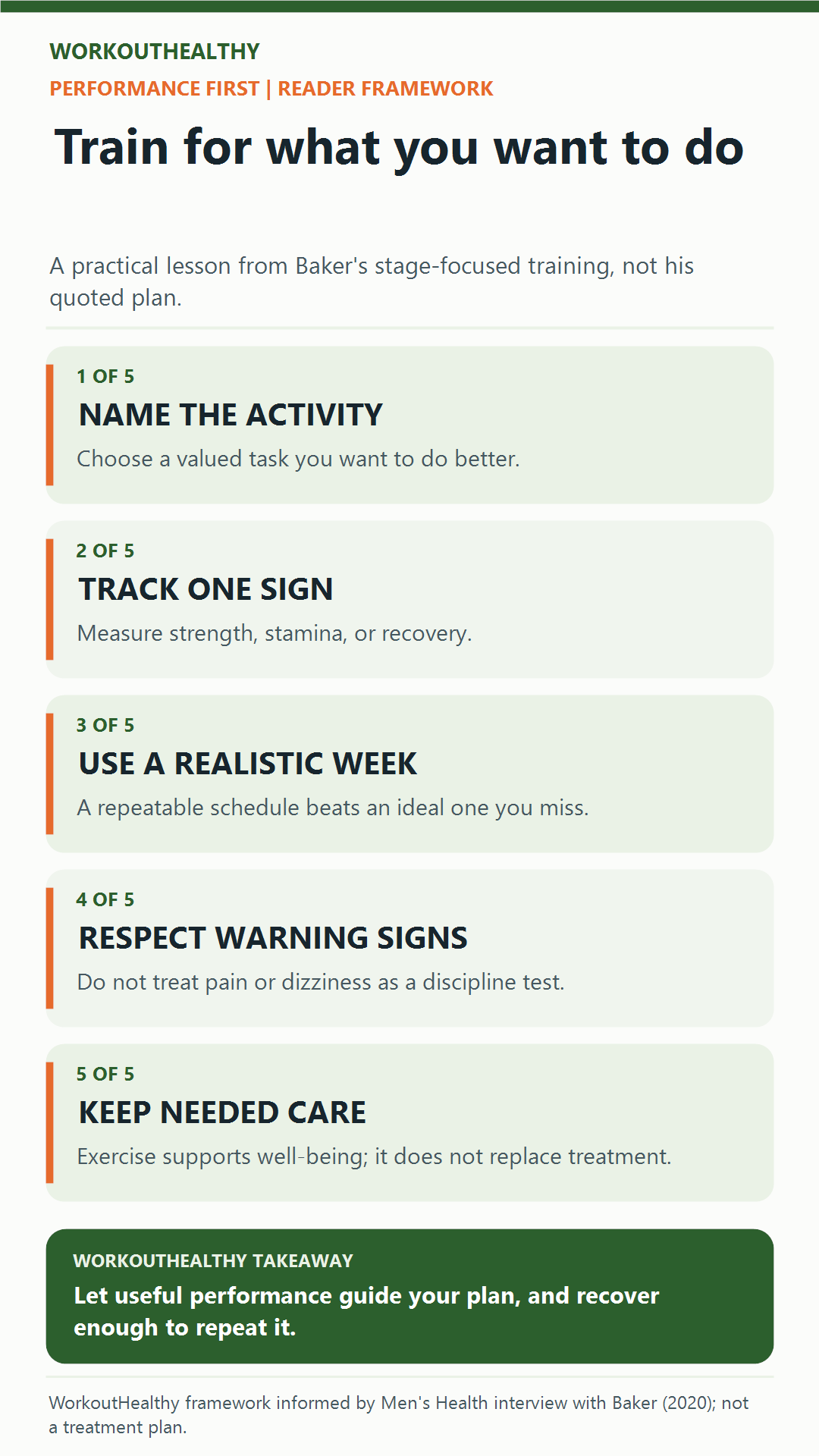
- Name the activity you want to do better. It might be carrying groceries, playing a sport, finishing a hike, or working without back fatigue.
- Choose one measurable sign of progress. Track repetitions, walking time, load, range of motion, or recovery between efforts.
- Use a schedule that survives busy weeks. Two reliable sessions can beat five sessions that disappear after ten days.
- Separate discomfort from injury. Muscle effort is expected, but sharp pain, sudden weakness, chest pressure, or unusual dizziness should not be treated as a test of discipline.
- Keep mental health care in the plan when needed. Exercise can support care, but it should not be used to shame someone away from qualified help.
A person does not need a perfect emotional reason before starting. Often the meaning develops after several weeks of noticing that the body can learn and adapt.
The question can move from how a workout changes appearance to what it makes possible. That shift is useful because ability tends to provide more kinds of progress than a mirror does.
The Caption’s Best Idea Still Needs Accurate Language
The viral caption says Baker started training for mental strength rather than abs or attention. The available reporting does not verify that origin story, and it should not be presented as his direct explanation.
What is documented is still meaningful. He trained to become stronger and more durable for a physically demanding performance, and he associated feeling physically good with feeling mentally good.
That supports a practical lesson without inventing a quote. Training can become easier to sustain when it serves a valued part of life, and improvements in energy, confidence, and mood may follow.
The honest version is less sweeping than the social post, but more useful. Build a body that helps you do what matters, let progress reinforce the habit, and use professional care when a mental health problem needs more than a workout.
Get the next evidence check.
Five practical fitness stories worth your time, every Friday.
One email a week. No product pitches. Unsubscribe in one click.
References
- Berra, L. (2020). How Machine Gun Kelly trains as hard as he performs. Men’s Health.
- U.S. Department of Health and Human Services. (2018). Physical Activity Guidelines for Americans, second edition.
- Centers for Disease Control and Prevention. (2025). Benefits of physical activity.
Medical disclaimer: This article is for general information only and is not medical advice. If you have an injury, ongoing pain, or a medical condition, talk to a doctor or physical therapist before you change how you train or eat.