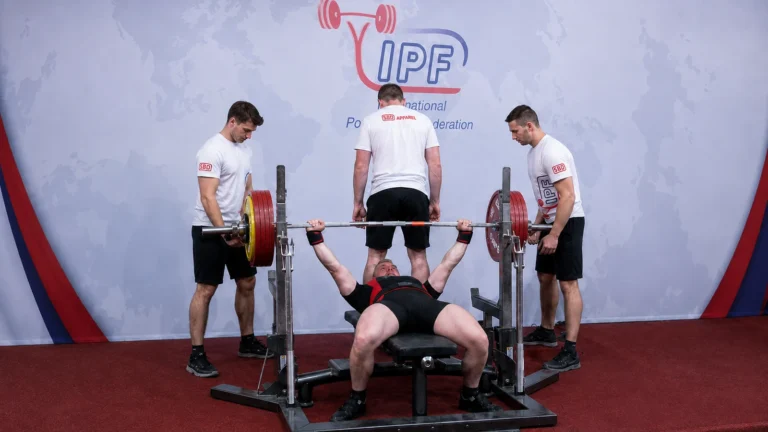

Every gym has a moment nobody wants to be part of.
Someone loads a bar past what they can handle, the form falls apart, and the room goes quiet.
Compilation channels have built whole libraries out of those clips.
The injuries behind them are real, and most of them were avoidable.
Emergency department data shows how common this is.
A study in The American Journal of Sports Medicine reviewed weight training injuries from 1990 to 2007 and estimated about 970,801 injuries treated in United States emergency departments across those years.
Below are nine ego lifting habits that send people to the ER, and the one rule that prevents almost all of them.
1. Loading a Bar You Cannot Control
This is the root of most of the rest.
Ego lifting is not lifting heavy.
It is lifting heavier than you can control for the reps you planned.
The moment the weight is controlling you, the exercise has stopped and damage control has started.
Heavy is fine. Out of control is not. The difference is whether you decide when the set ends.
2. Benching Alone Without Safeties
In that same national dataset, the most common mechanism of injury was weights dropping on the person, which accounted for about 65.5 percent of cases.
A barbell pinning a lifter on a bench is exactly that scenario.
Free weights accounted for about 90.4 percent of the injuries in that study.
A spotter, safety bars, or a rack with pins removes most of this risk for free.
If you train alone, set the safeties at chest height before you start.
3. Ripping Deadlifts With a Rounding Back

The lower trunk was one of the most commonly injured areas in that data, at about 19.7 percent of cases.
Sprains and strains were the most common diagnosis overall, at roughly 46.1 percent.
A back that rounds hard under a heavy bar is the classic version.
The fix is unglamorous.
Drop the weight, brace your midsection, and stop the set when your position changes.
If you want alternatives that load the hinge with less risk, our guide to deadlift alternatives by goal covers several.
4. Quarter Squats With a Loaded Bar
Piling on plates and dipping a few inches looks impressive on camera.
It puts a load on your spine and knees that your legs never earned.
It also trains almost nothing useful through the range that matters.
Use a weight you can take through a full, controlled range.
Our squat alternatives guide can help if depth is limited by mobility or pain.
5. Skipping Collars So You Can “Bail”
Plates sliding off one end of a bar is not an escape plan.
It is how a loaded bar flips, and how plates land on feet.
In the same dataset, foot injuries were far more common in women, at about 22.9 percent of their cases compared with 11 percent for men.
Use collars, and learn to bail properly inside a rack instead.
6. Max Attempts With No Warm Up
A cold single at 95 percent is a gamble with bad odds.
Warm up sets are not wasted work.
They raise tissue temperature, rehearse the movement, and tell you what kind of day your body is having.
If the warm up feels heavy, that is information, and the top set should change.
7. Bouncing, Heaving, and Using Momentum
Kipping a barbell curl, bouncing a bench press off the chest, or throwing a row with the whole back is how a heavy weight gets moved by tissue that was not meant to move it.
A 2017 review in Sports Medicine looked at injuries across the weight training sports, including weightlifting, powerlifting, bodybuilding, strongman, and CrossFit.
The shoulder, lower back, knee, elbow, and wrist or hand were generally the most commonly injured areas.
Strains, tendinitis, and sprains were the most common injury types.
Those are exactly the tissues that absorb the load when momentum takes over a lift.
8. Ignoring Pain Because People Are Watching
An audience makes people finish sets they should have dumped.
Pain during a lift is not a test of character.
Sharp pain, a pop, or a sudden loss of strength means the set is over.
Very few gym injuries are caused by stopping early.
Racking the bar and trying again next week costs you nothing.
A torn muscle costs you months.
9. Copying the Strongest Person in the Room
The person moving huge weight usually has years of practice, a program, and a base you cannot see.
Copying their working weights skips all of that.
Copy their consistency instead, and their willingness to do boring warm ups.
Most strong lifters spend the majority of their sets well below their best numbers.
That part actually transfers.
The One Rule That Prevents Almost All of This
Here it is.
Never take a set with a weight you could not stop, control, or rack safely if the last rep went badly.
In practice that means leaving 1 to 3 good reps in reserve on most sets.
It means using safeties or a spotter any time you cannot escape the bar.
And it means the weight goes up only when your technique stays the same.
Almost every clip in those compilation videos breaks that one rule.
Ego Lifting Is Not the Same as Training Heavy
This list is not an argument for training light.
That same 2017 review found the weight training sports have relatively low injury rates compared with common team sports.
Bodybuilding came out lowest, at roughly 0.12 to 0.7 injuries per lifter per year.
Strongman and Highland Games were at the higher end, which fits the odd objects and awkward loads those sports use.
Competitive lifters train heavier than almost anyone in a commercial gym, and they get hurt less often than people assume.
The difference is not the weight on the bar.
It is the years of technique, the warm up, the program, and knowing when a set is done.
A Four Week Way to Add Weight Safely
If you want to move up without joining a compilation video, do it on a schedule.
- Week 1: pick a weight you can do for your target reps with 3 reps left in reserve.
- Week 2: same weight, add a rep or a set.
- Week 3: add the smallest jump available, usually 5 pounds on upper body lifts or 10 on lower body lifts.
- Week 4: repeat week 3’s weight and clean up the technique before jumping again.
If your form changes, stay at that weight another week.
Boring progress compounds.
Rushed progress ends on a phone screen.
Who Gets Hurt, According to the Data
The 1990 to 2007 national dataset paints a useful picture.
The average injured person was 27.6 years old, and 82.3 percent were male.
The upper trunk was the most commonly injured area, at roughly 25.3 percent.
Free weights were involved in about 90.4 percent of injuries, and people using free weights had a much higher share of fractures and dislocations than people using machines.
Adults 55 and older were injured relatively more often on machines.
None of that means machines are safe and barbells are dangerous.
It means the way the equipment is used, and the load chosen, is what decides the outcome.
What This Evidence Does Not Prove
Emergency department data counts injuries that were serious enough for an ER visit.
It does not count the strains people rest at home, so the real number is higher.
It also does not tell us how many people were lifting in total, so it cannot give an injury rate per hour of training.
The dataset ends in 2007, before the rise of home gyms and social media lifting.
And none of this proves that lifting is dangerous, since strength training has a strong safety record when it is programmed and supervised well.
How to Train Heavy Without the Drama
- Warm up with 3 to 5 progressively heavier sets before a top set.
- Use a rack with pins, or a spotter, for anything over your head or across your chest.
- Add weight in small jumps, such as 5 pounds on upper body lifts.
- Film a set now and then instead of guessing about your form.
- Keep most sets short of failure and save true limits for planned test days.
- Re rack your plates and clear the floor around you.
A simple training log makes the jumps obvious and keeps ego out of the decision.
When to Stop and Get Checked Out
- A pop, snap, or tearing sensation during a lift.
- Sharp joint pain, or pain that changes how you walk.
- Numbness, tingling, or weakness down an arm or leg.
- Swelling that comes on quickly after a session.
- Any head impact, chest pain, or fainting.
See a doctor or physical therapist for pain that lasts more than a few days or keeps coming back in the same spot.
Nobody remembers the set you skipped. Everybody remembers the one that hurt you.
Watch the Original Video
Want more training advice grounded in real data? Subscribe to WorkoutHealthy Insider for practical explanations behind popular fitness claims.
References
Keogh, J. W. L., & Winwood, P. W. (2017). The epidemiology of injuries across the weight-training sports. Sports Medicine, 47(3), 479 to 501. https://doi.org/10.1007/s40279-016-0575-0
Kerr, Z. Y., Collins, C. L., & Comstock, R. D. (2010). Epidemiology of weight training-related injuries presenting to United States emergency departments, 1990 to 2007. The American Journal of Sports Medicine, 38(4), 765 to 771. https://doi.org/10.1177/0363546509351560
This article is for general information only and is not medical advice. If you have an injury, ongoing pain, or a medical condition, talk to a doctor or physical therapist before you change how you train or eat.