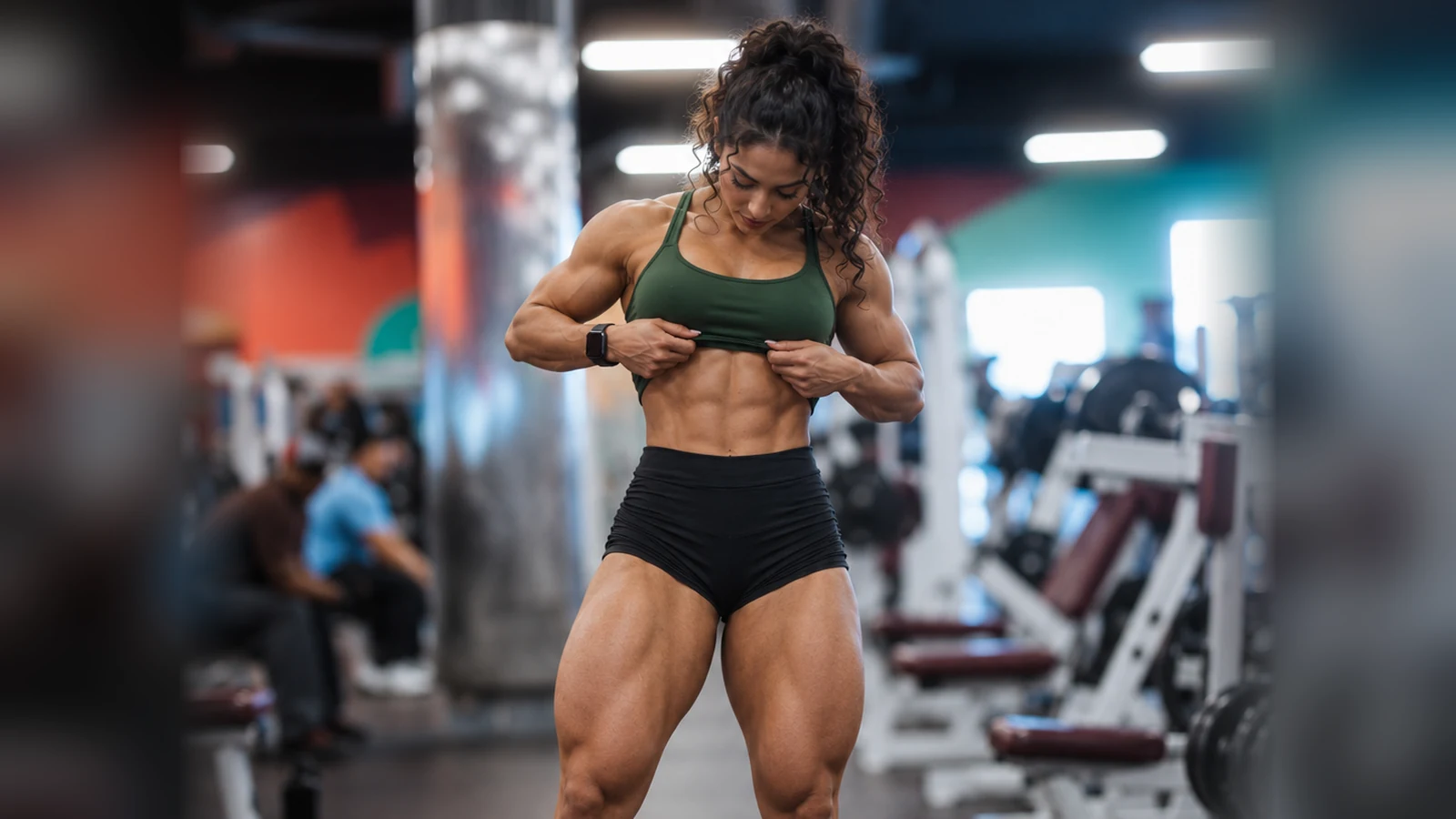

Plenty of women skip the weight room for one reason.
They are worried lifting will make them look bulky.
It is one of the most stubborn fears in fitness, and it keeps a lot of people away from one of the most useful types of exercise there is.
The YouTube channel Juice & Toya tackled this in a video called “Overcome the Myth of Getting Bulky With Strength Training.”
Their core point matches what the research shows.
Getting visibly big takes years of focused training and eating, not a few sets of squats a week.
Here are six versions of the “bulky” fear, where each one comes from, and what the evidence actually says.
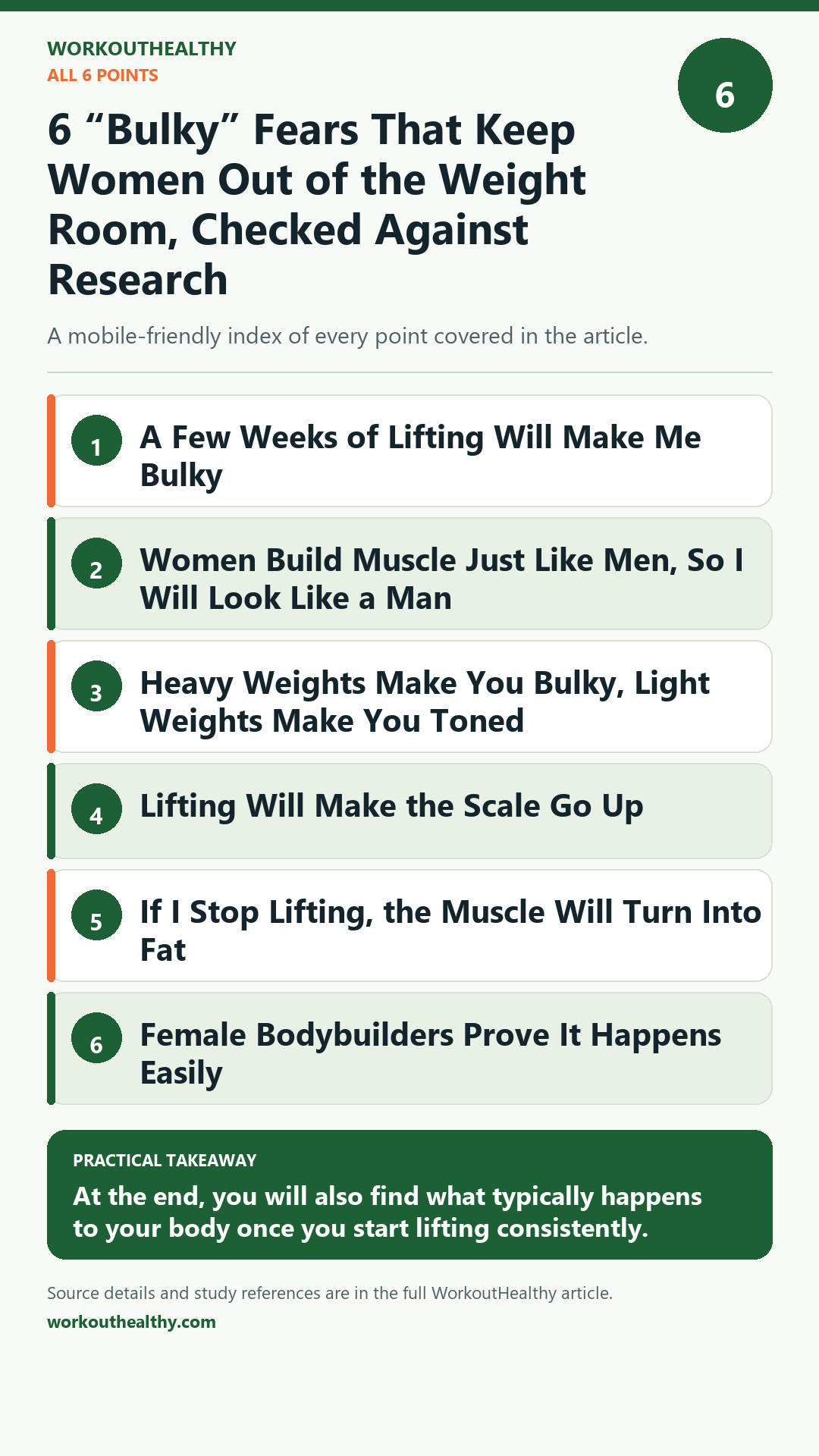
At the end, you will also find what typically happens to your body once you start lifting consistently.
Fear 1: “A Few Weeks of Lifting Will Make Me Bulky”
Muscle grows slowly.
Much slower than most people expect.
A widely cited 2012 review in Current Sports Medicine Reports summed up typical results from about 10 weeks of strength training in adults.
People gained roughly 1.4 kilograms of lean weight, which is about 3 pounds.
They also lost about 1.8 kilograms of fat, which is about 4 pounds.
So the typical early result is a little more muscle and a little less fat.
That tends to make a body look firmer, not bigger.
Three pounds of muscle spread across your whole body does not make you bulky. It makes you stronger.
Fear 2: “Women Build Muscle Just Like Men, So I Will Look Like a Man”
This fear has a twist, because part of it is true.
A 2020 review in the Journal of Strength and Conditioning Research compared men and women doing the same strength programs.
In terms of percentage change, muscle growth was about the same for both sexes.
Women actually made larger percentage gains in upper body strength.
But here is the key detail.
Men, on average, start with more muscle mass.
So the same percentage gain adds more total size for a typical man than for a typical woman.
Women also have much lower testosterone levels on average, which is one reason big muscle gains are harder to come by.
For more on this, read our article on whether men and women need different workouts.
Fear 3: “Heavy Weights Make You Bulky, Light Weights Make You Toned”
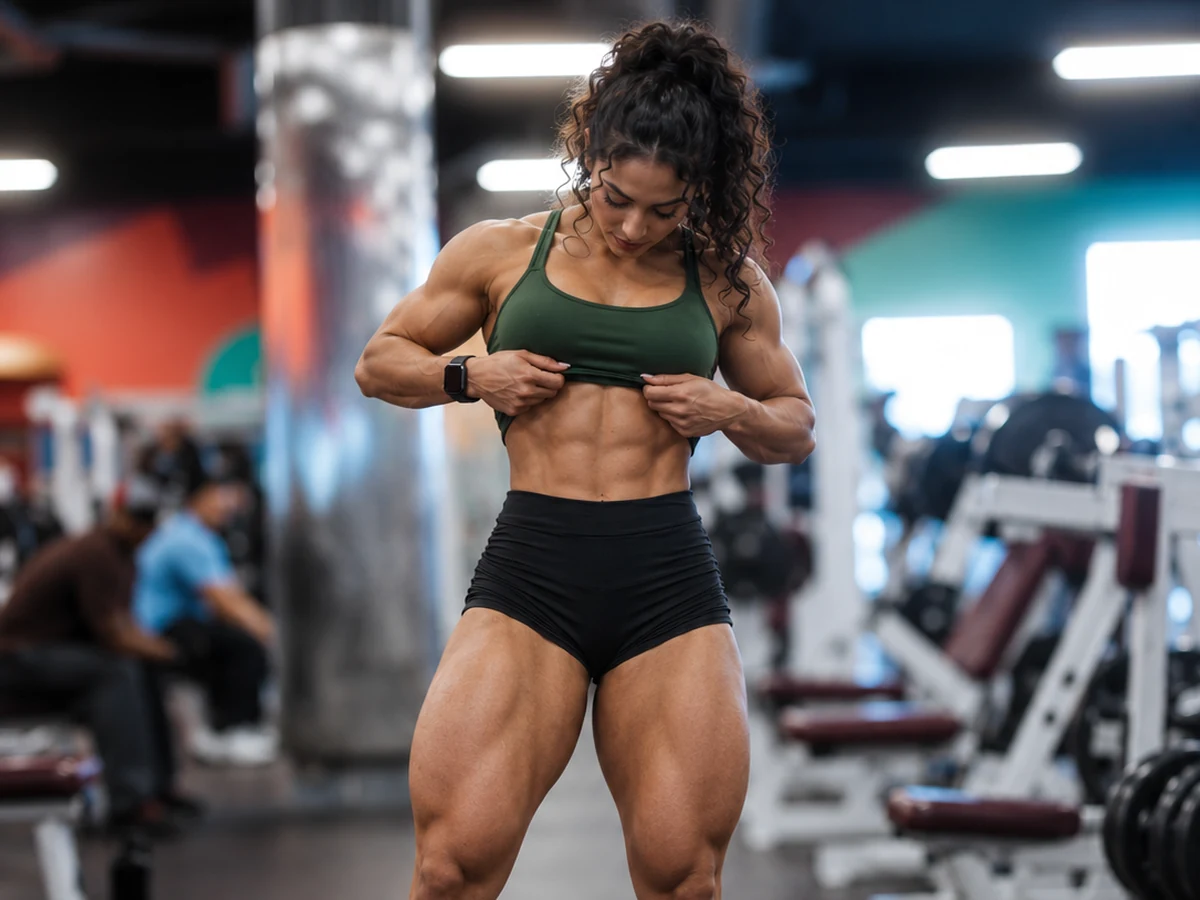
There is no special “toning” weight.
What people call a toned look is usually just some muscle with a lower amount of body fat on top.
Both light and heavy weights can build muscle when sets are challenging.
Heavier weights tend to build strength faster.
If you pick up tiny dumbbells and never make them harder, you will not see much change at all.
The real goal is to make your workouts gradually harder over time, whether that means more weight, more reps, or better control.
Fear 4: “Lifting Will Make the Scale Go Up”
It might, a little, at first.
Muscle takes up less space than the same weight of fat, and new lifters can hold a bit more water in working muscles.
That can make the scale look stuck or tick up slightly, even while your waist gets smaller.
A 2022 review in Sports Medicine pooled 54 studies of healthy adults doing full body strength training.
Lifters lowered their body fat percentage by about 1.5 points compared with people who did not exercise, and they also reduced visceral fat.
That is why measuring your waist or checking how your clothes fit tells you more than the scale does.
Fear 5: “If I Stop Lifting, the Muscle Will Turn Into Fat”
This one is simply not possible.
Muscle and fat are two different types of tissue.
One cannot turn into the other.
What can happen is that you lose some muscle when you stop training, and gain fat if you keep eating the same amount while moving less.
That can look like a swap, but it is really two separate changes.
Fear 6: “Female Bodybuilders Prove It Happens Easily”
Competitive bodybuilders are the best proof of how hard it is.
They train for years, often six days a week.
They follow careful eating plans built to grow muscle, then strict diets to show it off on stage.
Stage looks also depend on tanning, lighting, posing, and very low body fat that is held for only a short time.
Some competitors also use performance enhancing drugs, which the average gym goer does not.
Comparing a normal routine to that is like worrying that a jog around the block will turn you into an Olympic marathoner.
Where the Bulky Fear Came From
Researchers have looked at why so many women avoid lifting.
A 2010 set of studies in the journal Sex Roles found a cultural gap between women and strength goals in popular messaging.
In one study, women felt more worried about being judged while lifting weights in public than while doing cardio.
The more worried they felt, the less they wanted to lift.
The researchers concluded that the social setting of the gym played a big part in keeping women out of the weight room.
In other words, the fear is less about muscle and more about messaging and comfort.
What Actually Happens When You Lift Consistently
A common question is what happens after a full year of steady lifting.
No single study tracks that exact timeline for every woman, since results depend on age, food, sleep, and the program.
But the research points to a clear general pattern.
The first few weeks. Strength often climbs quickly, largely because your nervous system learns the movements.
The first few months. Small amounts of muscle are added, and some fat is lost, often with little change on the scale.
Later in the year. Clothes may fit differently, everyday tasks feel easier, and your lifts keep improving if you keep making the workouts harder.
The 2012 review also linked strength training to better blood sugar control, lower resting blood pressure, and higher bone mineral density.
Strength training can matter even more with age.
Our article on muscle loss after menopause explains why protein alone is not enough.
What This Evidence Does Not Prove
The 2012 review describes average results, and individual results vary a lot.
The 2020 review compared relative gains, not how muscular people looked.
Most of the studies behind these reviews lasted weeks or months, not years.
None of this research can promise a specific look for any one person.
And some women do want to build a lot of muscle, which is a perfectly good goal that simply takes more time and effort.
What It Takes to Build a Lot of Muscle on Purpose
It helps to see what the “bulky” look actually requires.
Women who set out to build a lot of muscle usually do most of the following, for years.
- Train each muscle group hard two or more times a week.
- Add weight or reps steadily, with a written plan.
- Eat more calories than they burn for long stretches.
- Hit a high protein target every single day.
- Prioritize sleep and recovery like it is part of the job.
Even with all of that, gains slow down after the first year or two.
That is why building a lot of muscle is usually a project measured in years, not months.
If you train two or three times a week and eat normally, you are simply not doing what bulking takes.
That is good news if bulk is what worries you.
Common Mistakes Women Make When They Start Lifting
- Using weights so light that the last reps feel easy.
- Doing only lower body or only “problem area” exercises.
- Switching programs every week, so nothing gets better.
- Eating too little protein to support new muscle.
- Judging progress by the scale alone.
Most of these are easy to fix.
Write down your workouts, make them a little harder over time, and give a program at least 8 to 12 weeks before you judge it.
Who Should Talk to a Doctor First
Most healthy women can start a basic strength routine safely.
Check with a doctor first if you are pregnant or recently postpartum.
The same goes for osteoporosis, heart disease, uncontrolled blood pressure, or a recent injury.
A physical therapist can help if you have joint pain or a past injury.
A Simple Starter Plan
- Train 2 to 3 days a week on non consecutive days.
- Pick 5 to 6 moves: a squat, a hinge like a deadlift, a push, a pull, a lunge, and a carry or plank.
- Do 2 to 3 sets of 8 to 12 reps.
- Choose a weight that leaves only 1 to 3 good reps in the tank on your last set.
- Add a little weight or a rep when that last set starts to feel easier.
- Track your lifts and your waist measurement every few weeks.
Lifting may also help more than your body.
See our look at whether lifting weights keeps your brain young.
Strong is not a size. It is a skill you build one workout at a time.
Watch the Original Video
Want more myth busting, backed by real studies? Subscribe to WorkoutHealthy Insider for practical explanations behind popular fitness claims.
References
Roberts, B. M., Nuckols, G., & Krieger, J. W. (2020). Sex differences in resistance training: A systematic review and meta-analysis. Journal of Strength and Conditioning Research, 34(5), 1448 to 1460. https://doi.org/10.1519/JSC.0000000000003521
Salvatore, J., & Marecek, J. (2010). Gender in the gym: Evaluation concerns as barriers to women’s weight lifting. Sex Roles, 63(7), 556 to 567. https://doi.org/10.1007/s11199-010-9800-8
Westcott, W. L. (2012). Resistance training is medicine: Effects of strength training on health. Current Sports Medicine Reports, 11(4), 209 to 216. https://doi.org/10.1249/JSR.0b013e31825dabb8
Wewege, M. A., Desai, I., Honey, C., Coorie, B., Jones, M. D., Clifford, B. K., Leake, H. B., & Hagstrom, A. D. (2022). The effect of resistance training in healthy adults on body fat percentage, fat mass and visceral fat: A systematic review and meta-analysis. Sports Medicine, 52(2), 287 to 300. https://doi.org/10.1007/s40279-021-01562-2
This article is for general information only and is not medical advice. If you have an injury, ongoing pain, or a medical condition, talk to a doctor or physical therapist before you change how you train or eat.