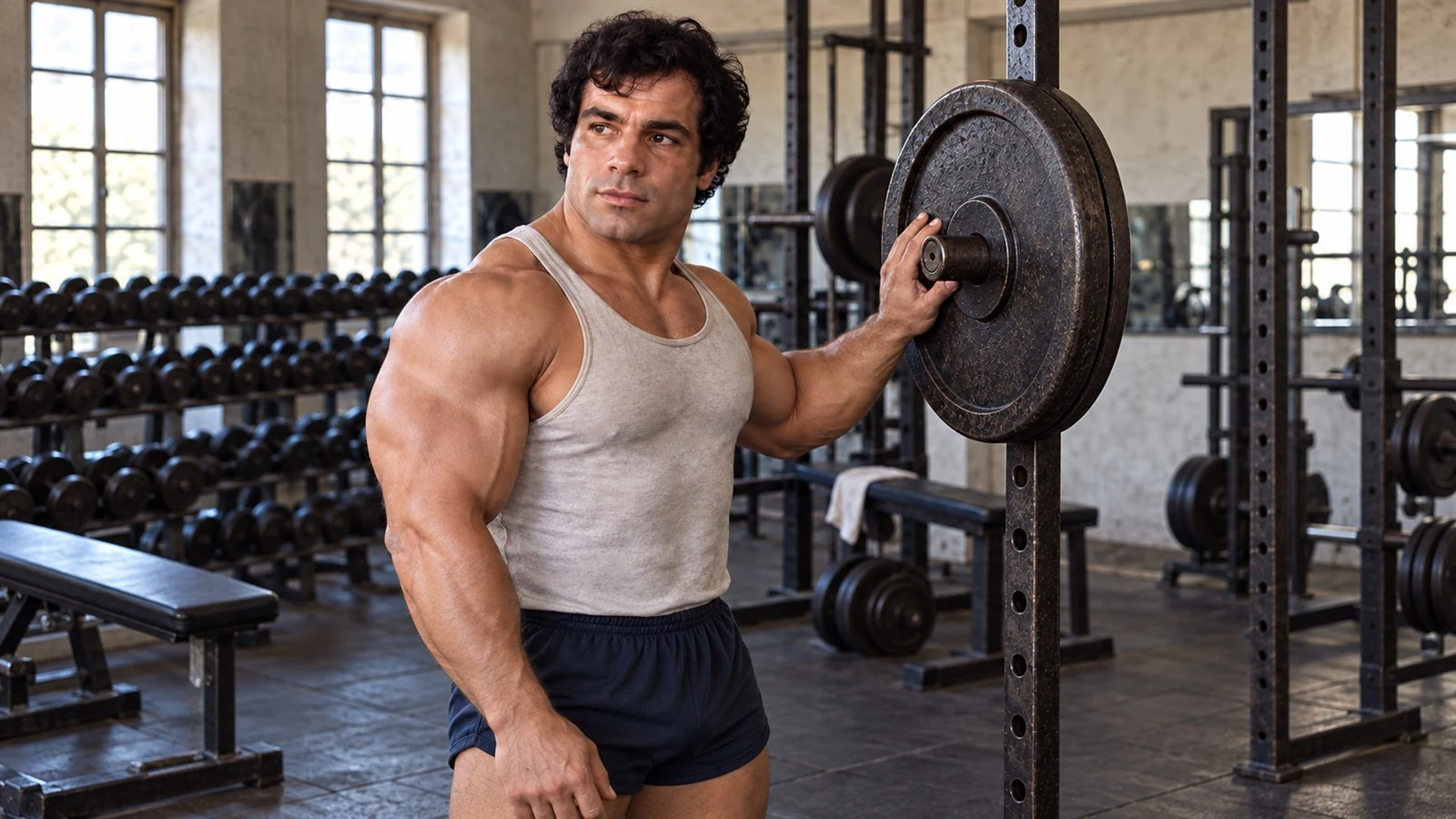

Franco Columbu won the Mr. Olympia title twice, in 1976 and 1981.
He stood about 5 feet 5 inches tall and was known as one of the strongest bodybuilders of his time.
A widely shared post says he built strength first and chased size second.
That idea still has a lot going for it, as long as you understand what strength work can and cannot do for your muscles.
Who Franco Columbu Was
Columbu was born in 1941 in Ollolai, on the Italian island of Sardinia.
He boxed before moving into weightlifting and bodybuilding.
He met Arnold Schwarzenegger in 1965 at a contest in Stuttgart, Germany. The two became lifelong friends and training partners.
Columbu won the IFBB Mr. Europe and Mr. Universe titles in 1970, then Mr. Olympia overall in 1976 and again in 1981.
He also earned a chiropractic degree in 1977 and wrote several training books, including Winning Bodybuilding that same year.
Columbu died in 2019 at age 78.
Arnold Schwarzenegger later recalled meeting him at his first competition in 1965.
In that recollection, Arnold identified the man he met as a powerlifter.
That firsthand memory supports the social post’s core point: Columbu had a strength-sport identity before he became famous for bodybuilding.
It does not establish that Columbu followed a formal two-stage plan in which he stopped pursuing muscle size until he reached a particular strength target.
Remembering a competitor as a powerlifter is evidence about his background, not a week-by-week training diary.
His long partnership with Schwarzenegger also makes the anecdote memorable, but friendship is not proof of a specific program.
The useful lesson is to separate the well-documented career sequence from a precise training prescription that the available source does not spell out.
The Strength Numbers Behind the Story
Columbu’s lifts are a big reason the strength first story sticks.
Profiles often repeat impressive bench, squat, and deadlift numbers for him.
Those figures vary by account and do not come from one consistent, independently verified competition record.
They are better read as reports of his reputation than as certified lifts to copy or compare with modern meet results.
The more secure point is that he competed in strength events as well as bodybuilding.
He also entered the first World’s Strongest Man contest in 1977 and placed fifth against men far heavier than he was.
During that event he dislocated his knee while carrying a refrigerator on his back.
Checking the Strength First Claim
The broad idea is well supported by his record.
Columbu was a strength athlete who became a bodybuilder, and his heavy lifting clearly came along with him.
What we could not confirm is a precise plan from Winning Bodybuilding that says “get strong first, then add size work.”
So it is fair to say strength was the base of his physique. It is less certain that he followed a strict two stage plan.
Strength and size can support each other; neither has to be completed before the other begins.
What Research Says About Strength and Size
A 2021 review by Schoenfeld and colleagues looked at the old “repetition continuum.”
That theory says heavy loads build strength, moderate loads build size, and light loads build endurance.
The authors wrote that current research fails to support some of the theory’s assumptions.
They proposed a new view in which muscle adaptations can be gained across a wide range of loads.
A 2018 review by Suchomel and colleagues looked at why strength matters for athletes.
It noted that strength depends on both muscle size and how well the nervous system drives the muscle.
The review also said weaker athletes should focus on building strength before emphasizing power training.
What the Research Does Not Prove
Neither paper tested a strength phase followed by a size phase in bodybuilders.
The Schoenfeld review actually argues that you do not need heavy loads to grow muscle.
That means a strength base is helpful, not mandatory, for building a bigger physique.
The Suchomel review is also about athletic performance, not stage appearance.
So the fair reading is simple. Getting stronger helps you handle more work, and more work over time supports growth.
How to Use a Strength Base Today
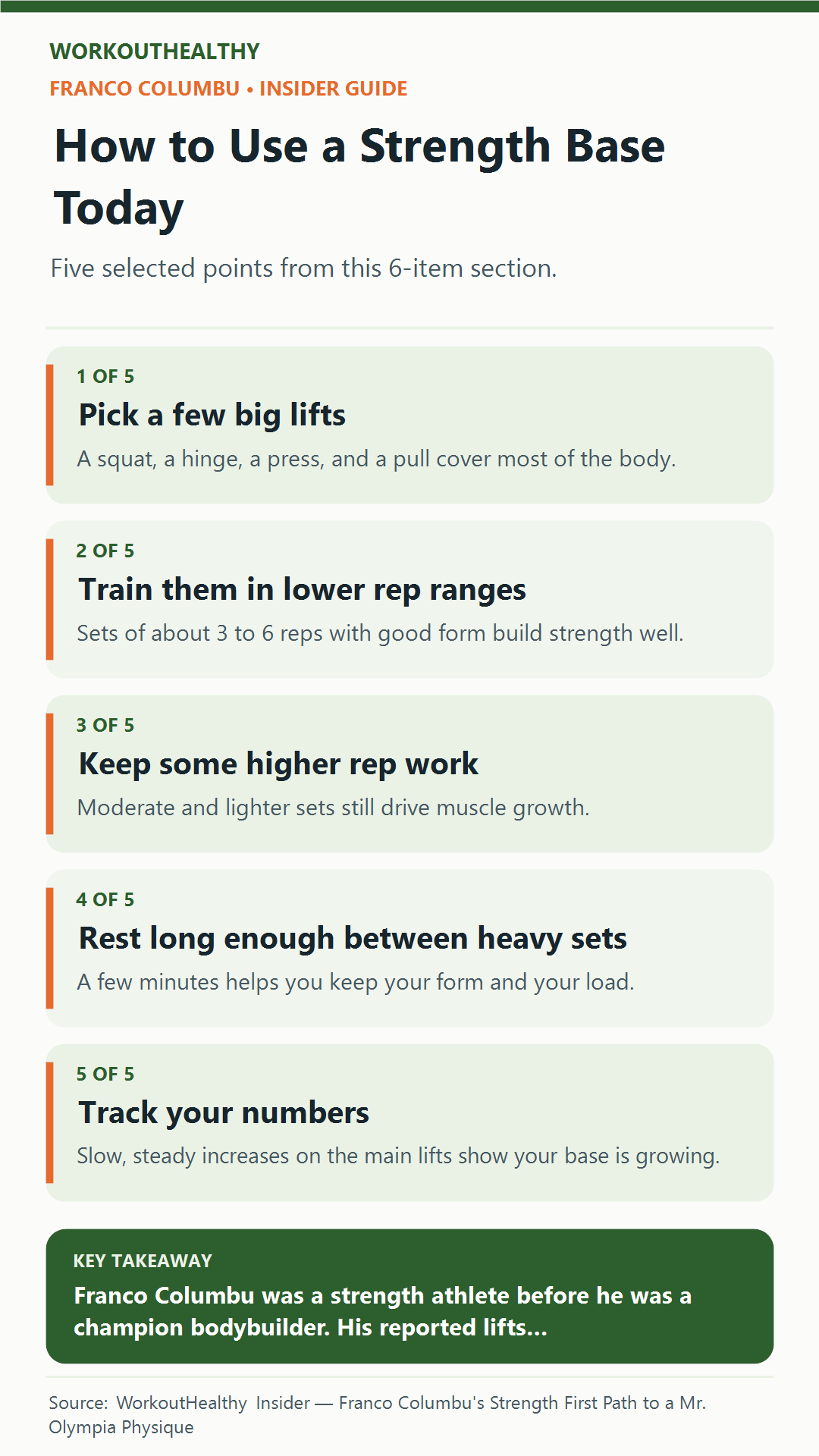
- Pick a few big lifts. A squat, a hinge, a press, and a pull cover most of the body.
- Train them in lower rep ranges. Sets of about 3 to 6 reps with good form build strength well.
- Keep some higher rep work. Moderate and lighter sets still drive muscle growth.
- Rest long enough between heavy sets. A few minutes helps you keep your form and your load.
- Track your numbers. Slow, steady increases on the main lifts show your base is growing.
- Shift the mix over time. As your strength rises, you can add more size focused sets.
If you are starting out thin, our guide to gaining muscle when you are skinny shows how strength and eating habits fit together.
If a barbell hinge does not suit you yet, our list of deadlift alternatives by goal offers other ways to build a strong back side.
A Simple Way to Split the Work
Here is an illustrative four-week decision rule, not a reconstruction of Columbu’s own program.
Assume a healthy adult already knows how to squat, hinge, press, and pull safely.
Choose one main lift per session and record its load, repetitions, and how many more clean reps felt possible.
For that main lift, try three work sets of five repetitions with two to five minutes of rest.
Keep about two technically sound repetitions in reserve rather than grinding to failure.
Afterward, choose two accessory exercises for the same broad movement pattern.
Perform two or three sets of eight to fifteen repetitions on each accessory, with a controlled range of motion.
In a three-session week, three main-lift sets per session produce nine heavy work sets across the week.
Two accessories at two sets apiece add twelve moderate-repetition sets across those three sessions.
That is twenty-one total working sets, but the number is only an arithmetic example.
It is not a universal volume target: muscle groups, recovery, and prior training history change the right dose.
At the end of each week, compare the main lift with your first session.
If all fifteen planned reps were clean and you had room for more, make a small load increase next time.
If technique deteriorated or soreness disrupted the next session, keep the load or reduce the work.
If the main lift improves but an intended muscle is not getting enough work, add a modest accessory set rather than turning every lift into a max attempt.
This approach makes strength a measurable anchor while leaving room for muscle-building volume.
Use a stronger main lift as a checkpoint, not as proof that every muscle received enough work.
The original-value calculation is transparent: three sessions times seven working sets per session equals twenty-one.
Changing either the session count or accessory dose changes that total immediately.
A beginner may need fewer sets, while an experienced lifter may distribute more work across the week.
That is why the decision rule follows performance and recovery, not an exact number borrowed from a champion.
Common Mistakes
- Testing maxes too often. Strength grows from steady practice, not from constant one rep tests.
- Dropping all size work. Pure low rep training can leave some muscles undertrained.
- Chasing his numbers. Columbu was an elite athlete with years of practice behind his lifts.
- Ignoring technique. Heavy loads magnify small form errors.
Who Should Be Careful
People with back, knee, or shoulder problems should get guidance before lifting heavy.
Beginners should spend a few weeks learning the lifts with light weights first.
Older lifters can still build strength, but they usually do better with smaller jumps in weight.
A training plan becomes safer when it is scaled to a person rather than copied from a champion.
Start with an exercise variation you can repeat without losing balance or range of motion.
Use a load you can control through every planned repetition, and stop a set when technique changes noticeably.
Sharp pain, new numbness, or a symptom that persists after exercise deserves medical evaluation, not a tougher mindset.
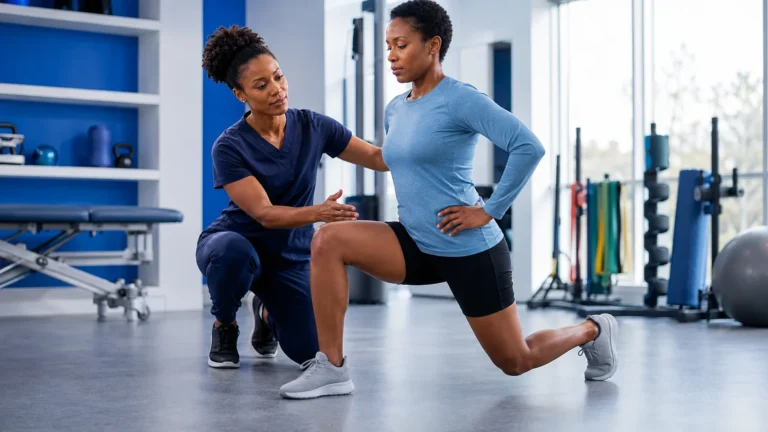
Someone returning after an injury may need a physical therapist to decide which movements and loads are appropriate.
Recovery is part of the decision rule too.
If a heavy session makes ordinary activity or the next workout worse, reduce the load or total sets before adding more work.
Columbu’s results came from an exceptional athlete with years of practice; they do not define a safe starting point for the average reader.
For a look at what serious strength looks like at the top level, see our breakdown of Russel Orhii’s 338 kilogram squat.
The Bottom Line
Franco Columbu was a strength athlete before he was a champion bodybuilder.
His reported lifts show that strength stayed at the heart of his training.
Research supports strength as a foundation, while showing that muscle can grow across many rep ranges.
Use a strength base to make your size work more productive, not as a replacement for it.
Want more stories like this? Subscribe to WorkoutHealthy Insider for practical explanations behind popular fitness claims.
This article is for general information only and is not medical advice. If you have an injury, ongoing pain, or a medical condition, talk to a doctor or physical therapist before you change how you train or eat.