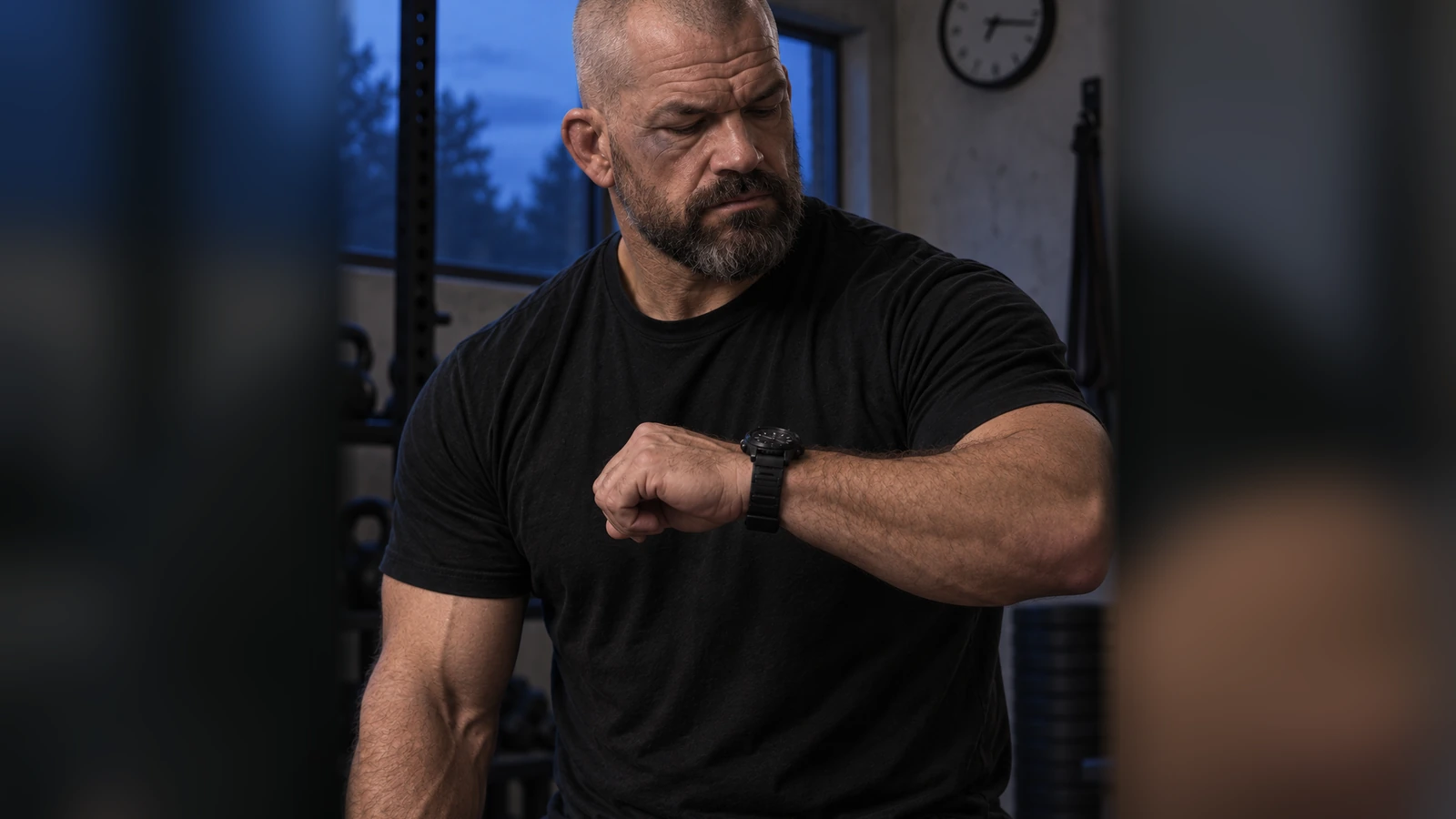

Jocko Willink is famous for a photo he has posted many times: his watch, showing a time around 4:30 in the morning.
The former Navy SEAL officer uses that early start as a daily statement about discipline.
The popular version of his advice is to wake up before your competition to gain a mental and time advantage.
There is truth in that. But the research on sleep adds an important condition.
Who Jocko Willink Is
Willink is a retired Navy SEAL officer who led special operations units in Iraq.
After leaving the Navy, he co-founded a leadership consulting firm and wrote several books, including Extreme Ownership and Discipline Equals Freedom.
He also hosts a long running podcast about leadership, discipline, and training.
What He Actually Says About Waking Early
In a 2017 Business Insider interview with Richard Feloni, Willink explained his 4:30 a.m. alarm.
He described waking early as a way to “get a head start on everyone else that’s still sleeping.”
He said that extra productive time is “a huge piece to moving your life forward.”
That is close to the popular version, though his words are about everyone still asleep, not rivals in particular.
The same report described his habit of photographing his watch after he wakes and posting it online.
It works as a public promise. If the photo does not appear, people notice.
His workout usually lasts about an hour, rotating through pulling, pushing, lifting, and squatting days.
Why the Head Start Idea Can Work
The early hours are quiet for most people.
There are fewer calls, fewer messages, and fewer chances for the day to take over your plans.
Training in that window means the workout is done before anything else can push it aside.
There is also a mental side.
Starting the day with a finished task can set a confident tone for what follows.
None of that requires a 4:30 alarm, though. The same logic works at 6:00 if that fits your life.
The Part Most People Skip: Sleep
The same interview included a detail that matters a lot.
Willink said he usually does not need more than five or six hours of sleep.
He also advised against running on empty. His fix was to go to bed earlier, not to cut sleep.
That second point is the one most people should copy.
In 2015, the American Academy of Sleep Medicine and the Sleep Research Society issued a joint consensus statement.
It said adults should get seven or more hours of sleep per night on a regular basis.
Many adults who try to live on five or six hours pay for it in mood, focus, and recovery.
So Willink’s own sleep total is not a target for the average person.
Waking early is a schedule change, not a sleep cut. Move the whole night, not just the alarm.
Can a Night Owl Become an Early Riser?
Many people read about 4:30 alarms and assume their body will never cooperate.
A 2019 study led by Elise Facer-Childs tested whether night owls could shift their timing.
The study included 22 healthy people with late sleep patterns.
For three weeks, the experimental group woke two to three hours earlier and went to bed two to three hours earlier.
They got morning light, limited evening light, kept consistent sleep times, and followed set meal times.
On average, their sleep and wake times moved about two hours earlier.
Importantly, the shift had no negative effect on how long they slept.
Participants also reported less depression and stress, and less daytime sleepiness.
Their morning reaction time and grip strength improved too.
What the Evidence Does Not Show
The study was small and short, with just 22 people over three weeks.
It shifted people earlier by about two hours, not to a 4:30 alarm.
It did not test whether waking earlier makes people more successful than their rivals.
The benefits came with full sleep protected. They did not come from sleeping less.
How to Wake Earlier Without Losing Sleep
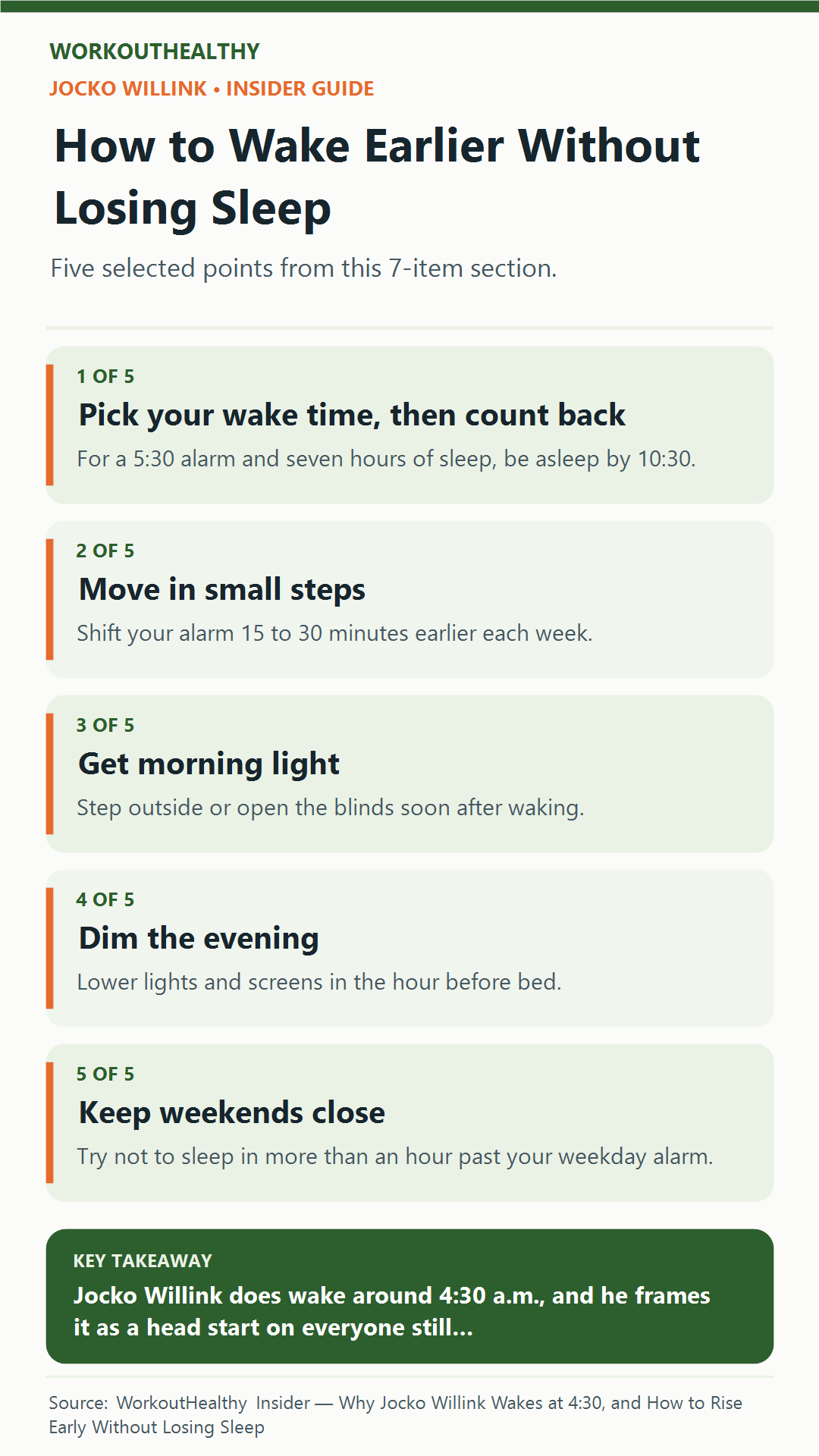
- Pick your wake time, then count back. For a 5:30 alarm and seven hours of sleep, be asleep by 10:30.
- Move in small steps. Shift your alarm 15 to 30 minutes earlier each week.
- Get morning light. Step outside or open the blinds soon after waking.
- Dim the evening. Lower lights and screens in the hour before bed.
- Keep weekends close. Try not to sleep in more than an hour past your weekday alarm.
- Use a commitment device. Willink uses a watch photo. A text to a training partner works too.
- Keep the workout short. An hour or less is enough, and many good sessions take 30 to 45 minutes.
If you only have a short window, a circuit style workout can cover a lot in little time.
If you are building a routine in midlife, our strength plan for your 40s is a practical starting point.
Common Mistakes
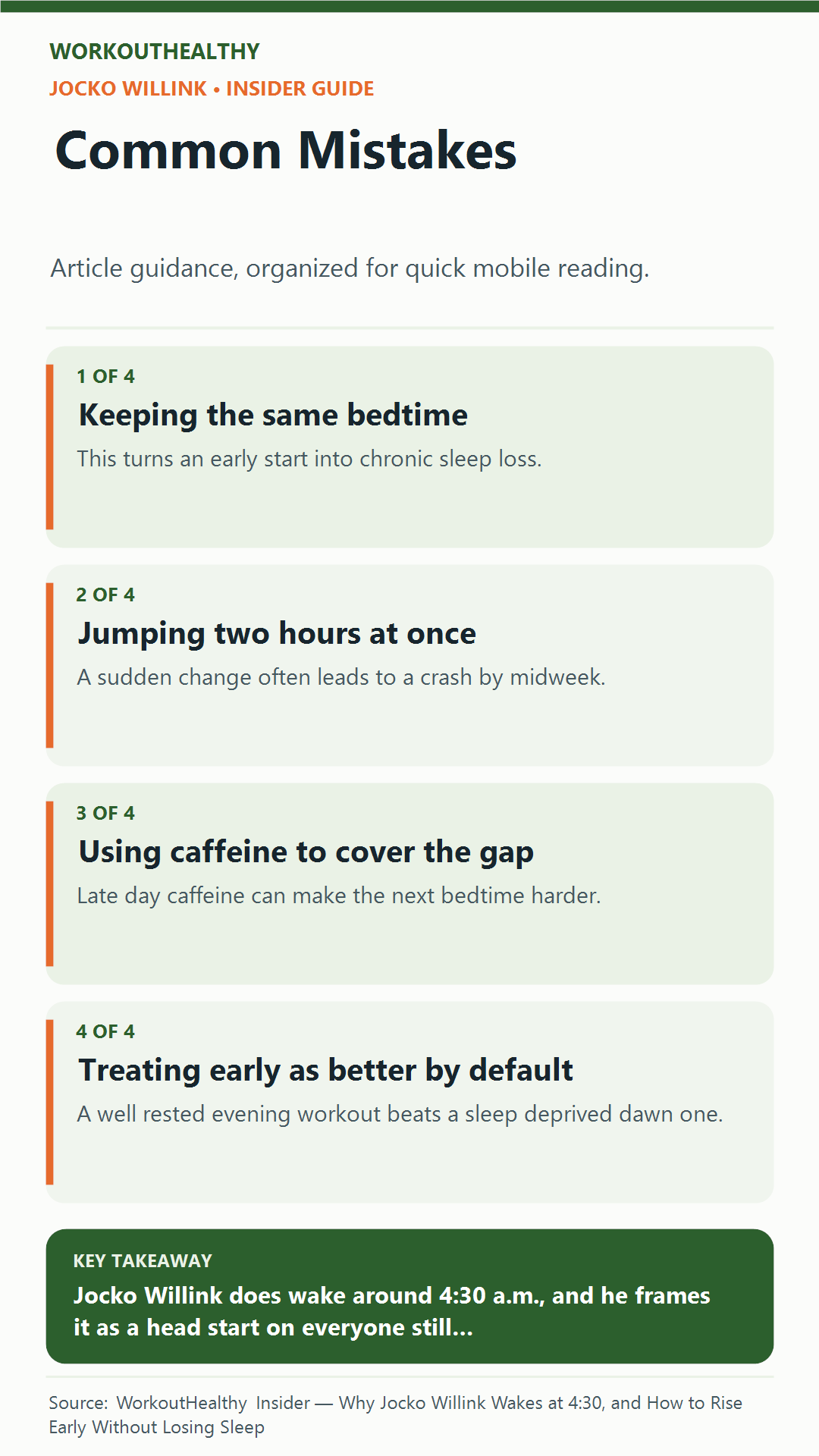
- Keeping the same bedtime. This turns an early start into chronic sleep loss.
- Jumping two hours at once. A sudden change often leads to a crash by midweek.
- Using caffeine to cover the gap. Late day caffeine can make the next bedtime harder.
- Treating early as better by default. A well rested evening workout beats a sleep deprived dawn one.
Who Should Be Careful
People with insomnia, sleep apnea, or other sleep disorders should talk to a doctor before changing their schedule.
Shift workers and new parents may not be able to control their sleep window.
Anyone who feels constantly tired after switching to early workouts should take that as a sign to adjust.
The Bottom Line
Jocko Willink does wake around 4:30 a.m., and he frames it as a head start on everyone still asleep.
He also says to go to bed earlier rather than run on empty.
Research suggests many night owls can shift earlier and feel better, as long as total sleep stays intact.
If you want his edge, move your whole night earlier. Do not just shorten it.
Want more stories like this? Subscribe to WorkoutHealthy Insider for practical explanations behind popular fitness claims.
References
- Facer-Childs, E. R., Middleton, B., Skene, D. J., & Bagshaw, A. P. (2019). Resetting the late timing of “night owls” has a positive impact on mental health and performance. Sleep Medicine, 60, 236 to 247. https://doi.org/10.1016/j.sleep.2019.05.001
- Feloni, R. (2017, November 13). A retired Navy SEAL commander who wakes up at 4:30 a.m. shares his morning routine. Business Insider.
- Watson, N. F., Badr, M. S., Belenky, G., et al. (2015). Recommended amount of sleep for a healthy adult: A joint consensus statement of the American Academy of Sleep Medicine and Sleep Research Society. Journal of Clinical Sleep Medicine, 11(6), 591 to 592. https://doi.org/10.5664/jcsm.4758
- Willink, J. (2017). Discipline equals freedom: Field manual. St. Martin’s Press.
This article is for general information only and is not medical advice. If you have an injury, ongoing pain, or a medical condition, talk to a doctor or physical therapist before you change how you train or eat.