
Who Catherine Zeta-Jones Is and What She Has Managed for Over a Decade
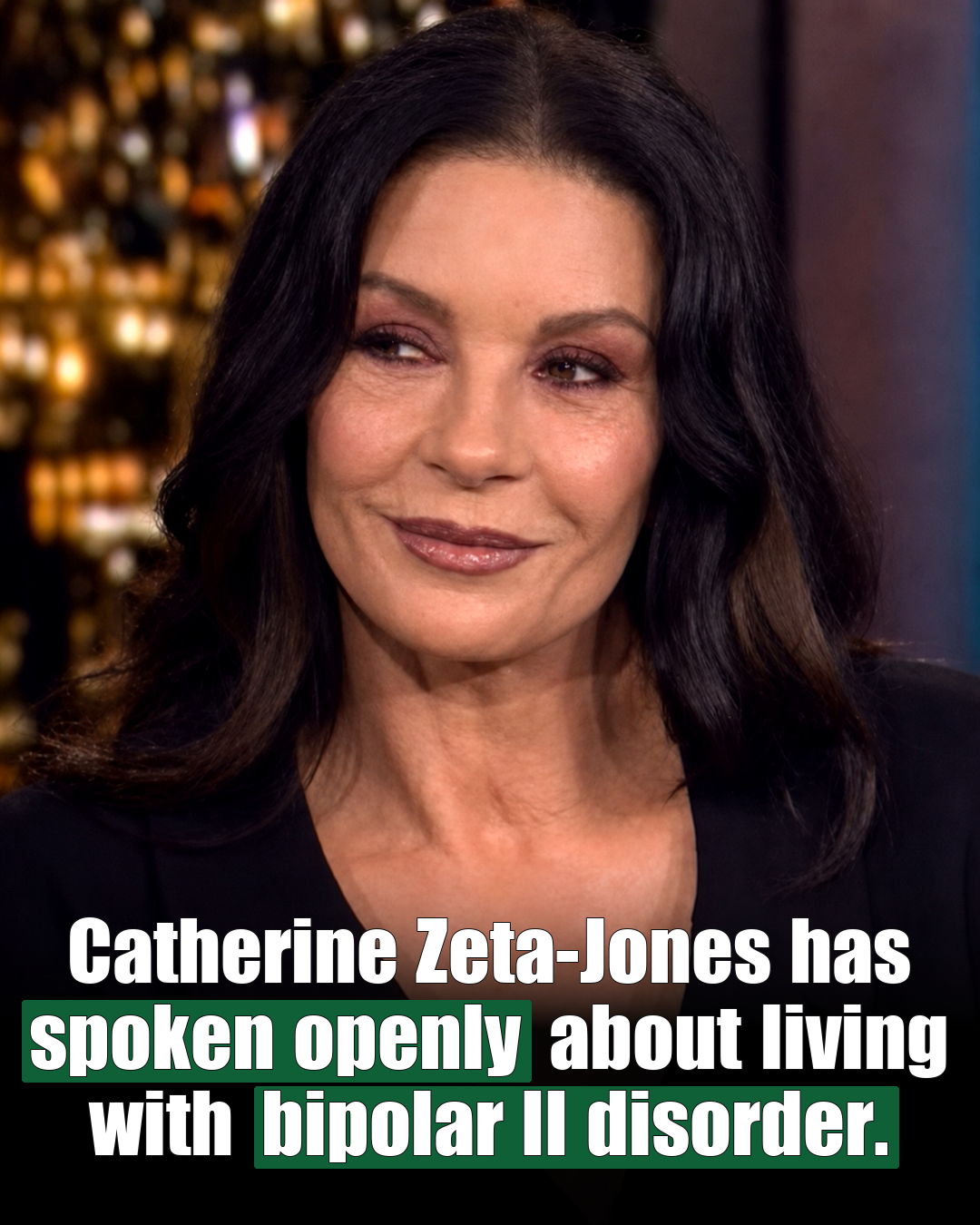
Catherine Zeta-Jones has won an Academy Award, built a decades long film career, and, more recently, found a whole new generation of fans playing Morticia Addams on Netflix’s “Wednesday.”
She has also lived with bipolar II disorder in full public view since 2011.
Zeta-Jones is 56 years old as of this writing. She is alive, working steadily, and currently has multiple projects in production, including the indie film “The Gallerist” alongside Natalie Portman and Jenna Ortega.
She is also set to star in and executive produce “Kill Jackie,” a thriller series filming in her hometown of Swansea, Wales.
This article looks at what happened when she went public with her bipolar II diagnosis, what she has said about it since, and what current research shows about exercise as part of managing bipolar disorder.
What Actually Happened: Going Public in 2011
In 2010, Zeta-Jones’s husband, actor Michael Douglas, was diagnosed with stage 4 throat cancer.
The stress of that period, she has said, became a trigger for her own mental health.
“When you get sideswiped like that [with Michael’s illness] it’s an obvious trigger for your balance to be a little bit off.”
Catherine Zeta-Jones, quoted by Hello! magazine
In April 2011, she checked into a mental health treatment facility. Her publicist confirmed at the time that she was being treated for bipolar II disorder.
Bipolar II is a specific type of bipolar disorder marked by depressive episodes and milder elevated mood episodes called hypomania, rather than the full blown mania seen in bipolar I.
She returned to treatment again in 2013, during a period when she and Douglas also briefly separated under the combined weight of his cancer recovery and her own health.
The couple reconciled in 2014. Douglas later described their relationship as stronger for having gone through it.
Since then, Zeta-Jones has continued acting steadily, including a well reviewed run as Morticia Addams that critics singled out again in the show’s 2025 second season.
Her Own Words on Privacy and Speaking Out
Zeta-Jones has never been fully comfortable being a public face for bipolar disorder, and she has said so directly, more than once.
“I’m not the kind of person who likes to shout out my personal issues from the rooftops.”
Catherine Zeta-Jones, to InStyle
She has described her reluctance as partly cultural, tied to how she was raised in Wales.
“I never wanted to be as open about it as I was. I have a British stiff-upper-lip mentality.”
Catherine Zeta-Jones, to The Telegraph
On “Good Morning America” in 2012, she was even more blunt about how tired the constant questions had made her.
“I am sick of talking about it, I never wanted to be the poster child for this.”
Catherine Zeta-Jones, on Good Morning America
Even with that reluctance, she has offered a message that reads as genuinely reassuring rather than performative.
“Everyone has things going on, and we deal with them the best we can.”
Catherine Zeta-Jones, quoted by Hello! magazine
That tension, not wanting to be a spokesperson while still being honest when asked, is itself a real and common experience for people managing a mental health condition in public.
What Bipolar II Disorder Actually Is
Bipolar II disorder involves cycling between depressive episodes and hypomanic episodes.
Hypomania is a real, distinct state, not just “feeling good.” It can include elevated mood, less need for sleep, racing thoughts, and increased energy, but without the severe impairment or psychosis that can occur in full mania.
The depressive episodes in bipolar II are often the more disabling and longer lasting part of the condition for most patients.
Treatment typically combines medication, usually mood stabilizers, with psychotherapy and lifestyle management, including sleep regulation, since sleep disruption is a well documented trigger for mood episodes.
Major life stress, the kind Zeta-Jones has described experiencing during her husband’s cancer treatment, is a recognized risk factor for episodes in people who already have bipolar disorder.
Like most chronic mental health conditions, bipolar disorder is typically managed over a lifetime rather than cured, which is consistent with Zeta-Jones needing renewed treatment in both 2011 and 2013.
What Research Says About Exercise and Bipolar Disorder
Exercise is often recommended as part of managing mood disorders, but bipolar disorder is a special case that deserves more nuance than a blanket “exercise helps” statement.
A 2025 systematic review and meta-analysis in Frontiers in Psychiatry, led by Xue Li, pooled data from seven randomized controlled trials involving 576 people with bipolar disorder.
The researchers found that exercise significantly improved depressive symptoms and anxiety symptoms in people with bipolar disorder.
The best results came from sessions of 60 minutes or less, done more than five times a week, over programs lasting 12 weeks or less.
But the same review found no clear effect of exercise on manic symptoms specifically, calling that result inconclusive.
More importantly, the researchers flagged a real safety concern. High intensity exercise, like marathon training or intense interval workouts, may help trigger manic episodes in some people with bipolar disorder, likely by overactivating the body’s stress response and disrupting sleep.
Lower intensity activities, like yoga, tai chi inspired movement, and walking, did not show this same risk in the studies reviewed.
A separate, larger 2022 study in the International Journal of Bipolar Disorders, led by Malin Svensson, tracked nearly 400,000 people in Sweden over 21 years, comparing long distance ski race participants to the general population.
Regular, sustained physical activity, of the kind required to train for and complete a long endurance race, was associated with a 54 percent lower long term risk of developing bipolar disorder in the first place.
What This Evidence Does Not Prove
Neither study followed Zeta-Jones specifically, and neither can say what role, if any, exercise has played in her own management of bipolar II disorder.
The Li review’s authors were upfront that overall evidence quality was low, and they cautioned against overinterpreting the results.
The Svensson study is observational, and its own authors noted a complicating pattern: among women specifically, faster race times were linked to a higher, not lower, risk of bipolar disorder.
The researchers suspected this reflects reverse causation, meaning people with an underlying vulnerability to bipolar disorder may be drawn toward more intense activity, rather than intense activity causing the condition.
Together, these findings support moderate, consistent activity as a reasonable part of managing mood, while cautioning against assuming more intensity is always better for this specific population.
None of this research suggests exercise can replace medication or psychotherapy for a diagnosed mood disorder.
Who Should Talk to a Doctor First
Anyone diagnosed with bipolar I or bipolar II disorder should talk with their psychiatrist before starting a new, more intense exercise program, given the documented link between high intensity training and mania risk.
Anyone noticing signs of hypomania or mania, including a reduced need for sleep, racing thoughts, or unusually elevated energy after starting a new fitness routine, should contact their care team promptly rather than assuming it is simply a good mood.
People managing bipolar disorder who are also going through a major life stressor, the way Zeta-Jones has described, should consider checking in with their psychiatrist proactively, since stress is a known trigger for episodes.
Anyone supporting a partner or family member with bipolar disorder should know that stress from a shared crisis, like a serious illness in the family, can affect the mental health of the person with bipolar disorder in ways that need direct attention, not just sympathy.
None of this article is a substitute for a full psychiatric evaluation and an individualized treatment plan from a qualified mental health professional.
How to Support Mental Health Alongside Physical Health
Start low and steady, not high and fast. The research above favors moderate sessions, done consistently, over intense, occasional pushes.
Prioritize sleep as part of any fitness plan. Sleep disruption is one of the most well documented triggers for mood episodes in bipolar disorder, and intense evening workouts can interfere with it.
Consider low intensity options first. Activities like yoga showed benefit without the mania related concerns tied to high intensity training in the research above.
Track mood alongside activity, not just workouts alongside a calendar. Noticing a mood shift after a change in training intensity is useful information to bring to a psychiatrist.
Keep a consistent care team in the loop. Zeta-Jones has needed renewed treatment more than once over the years, which reflects the ongoing nature of bipolar disorder, not a failure of earlier treatment.
Manage stress deliberately, not just physically. Our piece on how stress affects the body covers some of the physical mechanisms behind why major life stress can throw off both mood and overall health.
Respect a person’s right to privacy about their own diagnosis. Zeta-Jones’s own words make clear that being honest about a condition does not require being its permanent spokesperson.
Remember that a full, demanding public career and a chronic mental health condition are not mutually exclusive.
Zeta-Jones has spent 15 years proving that in real time, in one of the most scrutinized industries there is.
References
- ABC News, “Catherine Zeta-Jones Sheds Light on Bipolar II Disorder”: abcnews.com
- Hello!, “Catherine Zeta-Jones’ serious health condition she never wants to talk about,” October 2022: hellomagazine.com
- NBC News, “Zeta-Jones says no need to suffer silently with bipolar disorder”: nbcnews.com
- Deadline, “Catherine Zeta-Jones to Star in Tate Taylor’s Movie ‘Cupid’,” February 2026: deadline.com
- Li, X., Liu, F., Ding, F., Ma, X., & Zhu, Y. (2025). Exercise interventions for depressive, manic, and anxiety symptoms in bipolar disorder: A systematic review and meta-analysis. Frontiers in Psychiatry, 16, 1648008. doi.org/10.3389/fpsyt.2025.1648008
- Svensson, M., Erhardt, S., Hållmarker, U., James, S., & Deierborg, T. (2022). A physically active lifestyle is associated with lower long-term incidence of bipolar disorder in a population-based, large-scale study. International Journal of Bipolar Disorders, 10, 26. doi.org/10.1186/s40345-022-00272-6
This article is for general informational purposes only and is not a substitute for professional medical advice, diagnosis, or treatment. If you are managing bipolar disorder or another mental health condition, talk to a qualified psychiatrist or mental health provider before making changes to your treatment or exercise routine.