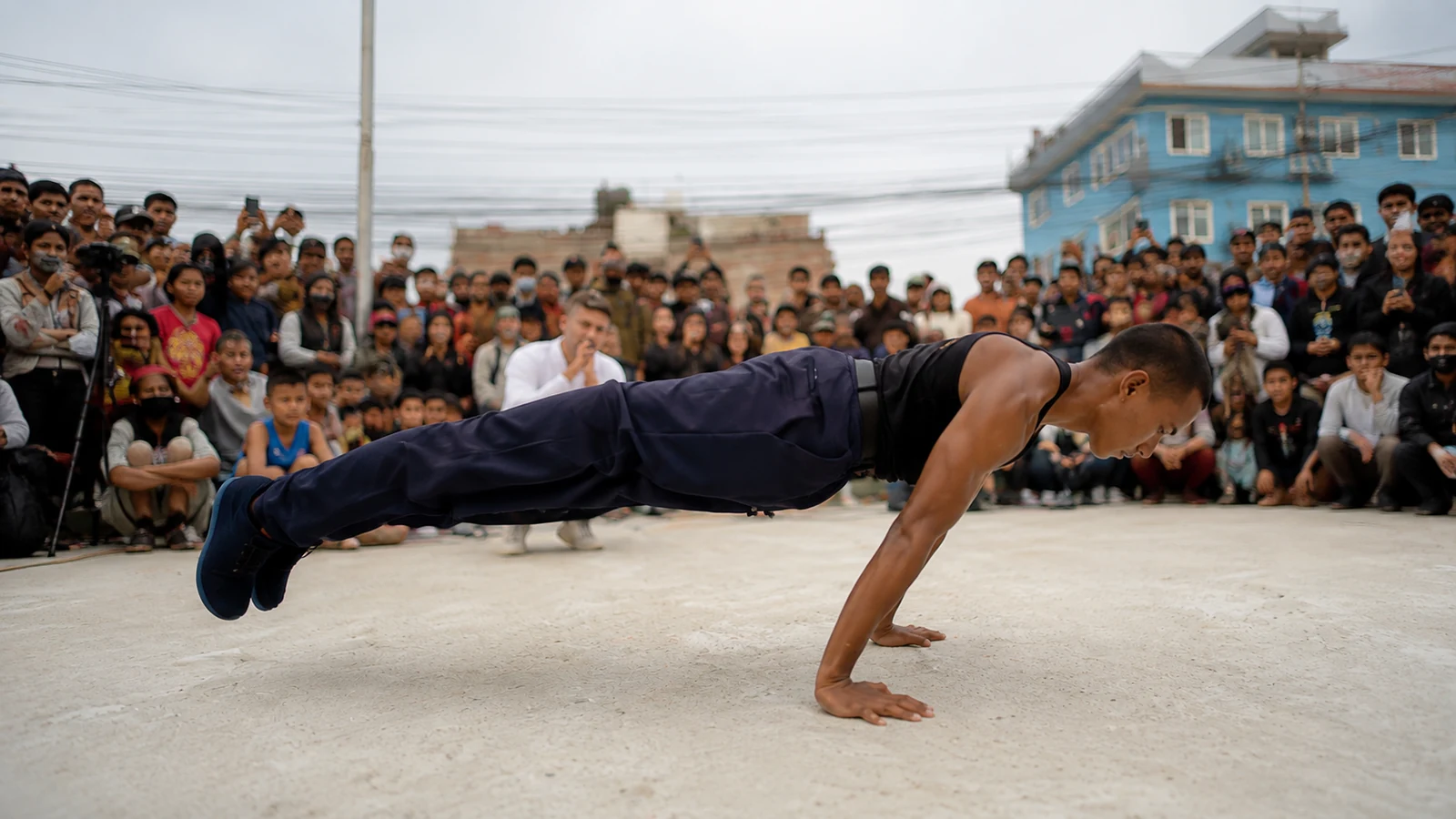

Most people cannot hold a planche for one second.
Ram Narayan Chaudhary held the position and pumped out push-ups inside it, 37 of them, in a single minute.
Guinness World Records lists it as an official record.
The number is real. The video is real.
What is worth slowing down on is not just the number, but what that position actually demands from a human body, and how far short of it almost every trained lifter falls.
What Chaudhary Actually Did, and What We Verified
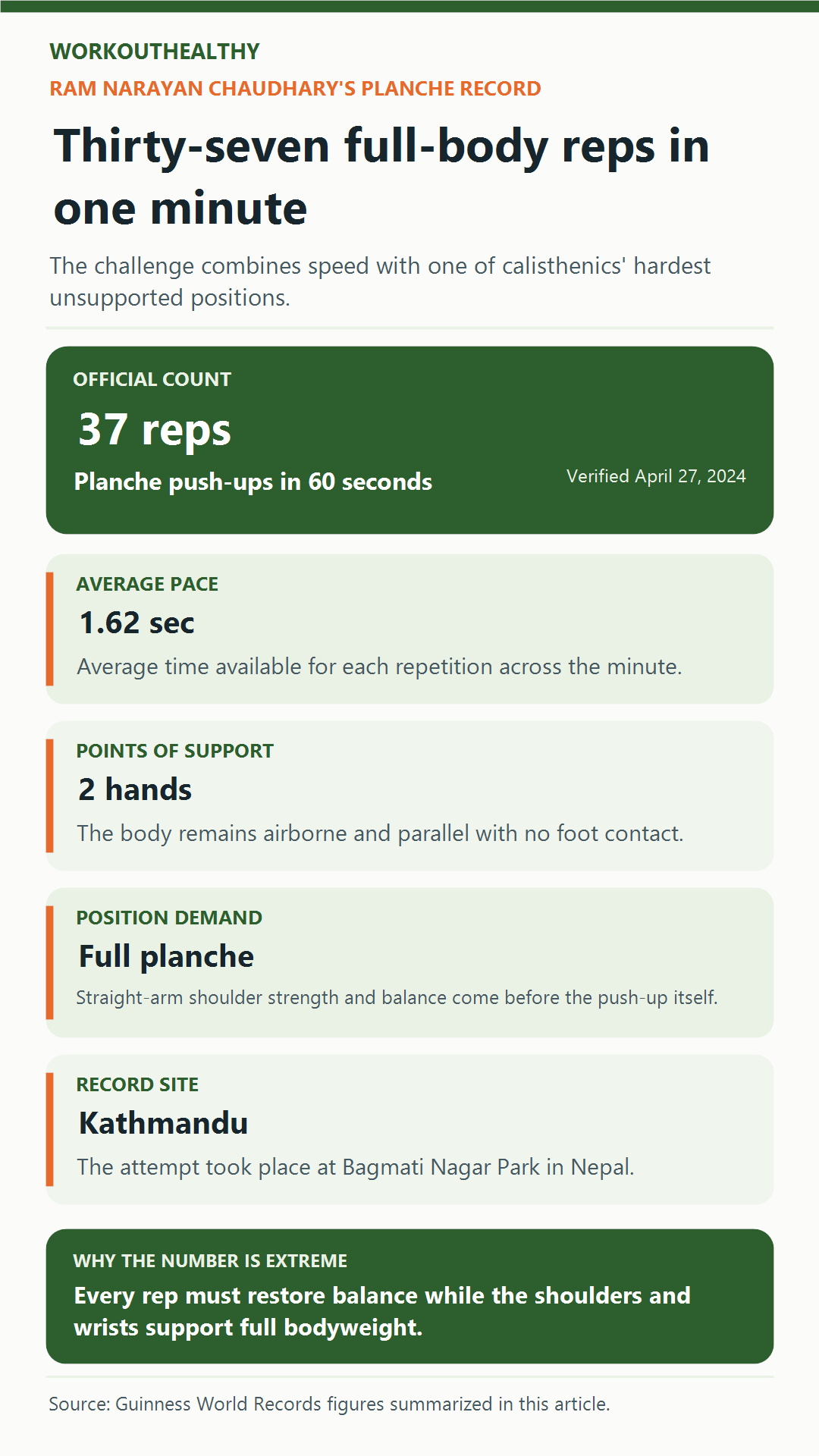
On 27 April 2024, in Bagmati Nagar Park in Kathmandu, Nepal, Chaudhary completed 37 planche push-ups in 60 seconds.
Guinness World Records confirmed the attempt and lists it on its own site as record number 117449, titled “Most planche push ups in one minute.”
That listing is the primary source.
It states his name, his country, the date, the location, and the count.
It also gives a short background note.
According to Guinness’s own page, Chaudhary was born with a condition that left his bones weak, which led to multiple fractures growing up.
He rebuilt his body over years of training and now uses record attempts to encourage other people facing physical setbacks.
Some of his own social media posts describe using a wheelchair as a child.
That specific detail comes from his personal accounts, not from Guinness’s own record page, so we are naming the source rather than presenting it as an independently confirmed fact.
Guinness also lists a separate, older record in a different classification, for planche push-ups by a limb-different athlete, held by Temur Dadiani of Georgia at 36 reps since 2014.
That is a different record category, not a lineage Chaudhary broke.
We mention it only because it shows Guinness tracks more than one version of this challenge.
The workbook behind this article flagged a source video, and it matches a real Guinness-linked short showing the attempt.
You can watch it later in this article.
What we could not do, and want to be honest about, is independently verify Chaudhary’s rep count frame by frame or confirm every biographical detail beyond what Guinness itself published.
We are reporting what a recognized verification body has listed, not adding claims of our own on top of it.
Why a Planche Alone Is Already One of the Hardest Holds in Fitness
Before anyone adds a single push-up rep, just holding a planche is an advanced calisthenics skill on its own.
A full planche means the entire body is parallel to the ground, supported only by the hands, with straight arms and no part of the body touching anything else.
Your center of mass has to sit almost directly over your hands.
Any drift forward or backward and the position collapses instantly.
That balance requirement is why most people who can bench press heavy weight still cannot hold a planche for even a second.
Strength alone does not solve the problem.
The body also has to control where that strength gets applied, moment to moment, through the shoulders and wrists.
Doing push-ups inside that position multiplies the demand.
Every rep means briefly losing and regaining that balance while the arms bend and straighten under full bodyweight load.
A planche is not a stronger push-up.
It is a balance skill that happens to also require enormous strength, and most people never get past the balance part.
The Muscles Carrying 37 Reps of Full Bodyweight
A 2023 systematic review in the journal Sports looked at 37 separate studies on gymnastics still rings elements, including straight-arm strength holds closely related to the planche, like the iron cross and support scale.
The researchers noted that these holds demand very high muscular coordination across the shoulder girdle, something they said is best evaluated through electromyography, which measures electrical activity in working muscles.
In these straight-arm positions, the shoulder muscles and the muscles that stabilize the shoulder blade are doing constant, heavy work to keep the joint from folding.
One of the biggest players is the serratus anterior, a muscle along the side of the ribs that wraps the shoulder blade and keeps it flat against the back.
A 2022 scoping review in the journal Shoulder & Elbow pulled together 30 studies on push-up variations and found that harder variants consistently drove up activity in this muscle and in the chest, shoulders, and triceps.
The same review found that standard push-ups already produce high serratus anterior activity.
That is one reason coaches use graduated push-up work as a stepping stone toward planche training rather than skipping straight to holds.
The wrists take real load too.
In a planche push-up, the entire body’s weight passes through two relatively small joints that were not built to be a primary weight-bearing structure the way the hips or ankles are.
A 2018 study in the Journal of Hand Therapy compared how force moves through the wrist during push-ups performed with the wrist bent back versus kept in a more neutral position.
That distinction matters directly for planche training, since planche work often asks for a fully bent-back wrist under a shifted, forward bodyweight load.
The core is not a passenger either.
Keeping the body in one straight, rigid line during a planche push-up takes constant abdominal and lower back bracing.
It is the same kind of full-body tension that shows up in a hard plank, just under far more shoulder and wrist load at the same time.
Straight-Arm Strength Doesn’t Come From a Bigger Bench Press
It is tempting to assume that a strong presser could just try a planche and figure it out.
Real coaching experience, and the research on ring strength skills, says otherwise.
Bent-arm pressing, the kind used in a standard bench or floor press, keeps the elbow joint doing a lot of the work throughout the lift.
A planche keeps the arm locked straight the entire time.
That shifts almost all the joint control onto the shoulder and shoulder blade instead of sharing it with a bending elbow.
Researchers studying the iron cross, a related straight-arm gymnastics skill, have looked at how bench press strength relates to straight-arm hold strength.
They generally treat the two as connected but distinct qualities, not the same skill in a different shape.
This is a big part of why competitive gymnasts and calisthenics athletes train straight-arm holds directly for months or years, rather than assuming general pressing strength will transfer on its own.
A big number on a bench press is a useful base.
It is not a shortcut past planche-specific training.
How Real Calisthenics Athletes Build Toward a Planche
Nobody goes from zero to a full planche in a single training block, and nobody goes straight to doing push-ups inside one.
Coaches in the calisthenics community generally teach the skill through a small number of recognized stages, each one moving the body’s center of mass further from the hips.
The first stage is usually a tuck planche, where the knees are pulled tight to the chest, which keeps the body’s weight close and manageable.
From there, athletes typically move to an advanced tuck, where the hips open slightly and the knees drift away from the chest, adding more leverage against the shoulders.
After that comes a straddle planche, where the legs spread wide instead of staying together.
Spreading the legs actually reduces the leverage demand compared to full-leg positions at the same stage.
The final stage is the full planche, legs together and fully extended.
It is the position that puts the most leverage on the shoulders of any variation.
Most people training seriously toward a full planche hold spend well over a year on this progression.
Many spend several years, well before they ever attempt a single push-up rep inside the position.
Elite performers like Chaudhary, who can string together dozens of push-ups in that position, sit far outside what years of normal recreational training typically produces.
What the Science Doesn’t Actually Prove
It is worth being direct about the limits of the research here.
Most published studies measure muscle activity or joint loading during a single hold or a single push-up rep, in a lab, usually on trained but non-elite participants.
There is not a body of published research that specifically measured Chaudhary’s own 37-rep set.
There is no independent study proving exactly how his particular result was physically achieved.
The science in this article explains why a planche push-up is generally so demanding on the shoulders, core, and wrists.
It does not explain, and cannot explain, one specific athlete’s individual performance.
Anyone telling you a viral fitness video proves a precise physiological mechanism is usually overstating what a short clip and a general body of research can actually show together.
The Injury Risk Hiding Inside Every Rushed Planche Attempt
The most common mistake is trying to shortcut the progression by attempting a straddle or full planche before the shoulders and wrists are ready.
Because the wrist sits under so much of the load in a bent-back position, wrist pain and irritation are two of the most frequently reported issues among people training planche skills without enough preparation.
Shoulder impingement and strain are the other common problem.
This tends to show up when someone tries to force a lower, more advanced position before the shoulder blade muscles can actually stabilize it.
A lot of that risk comes from ego, not ignorance.
People understand the progression exists and skip stages anyway because the earlier stages feel slow.
Training the wrist through gradual, controlled range of motion work before adding planche-style loading is one of the more overlooked steps in most home training plans.
Anyone with a prior wrist injury, a shoulder that already clicks or catches under load, a diagnosed connective tissue condition, or any current joint pain should treat planche training as something to approach only with professional guidance, not a home project to push through discomfort on.
If you are still building your general strength base, working with a qualified coach or trainer before you ever load a planche position is a reasonable, low-risk way to learn how your own shoulders and wrists tolerate this kind of work.
A Progression You Could Realistically Start This Week
None of this requires chasing 37 reps.
It just requires starting in the right place.
Begin with wrist preparation, not planche work.
Spend a few minutes, several days a week, moving through gentle wrist flexion and extension stretches and light weight-bearing holds on flat hands.
Next, build a genuine plank.
Hold a strict front plank for 30 to 60 seconds with a flat back before adding any planche lean at all.
Add a planche lean from your knees.
Get into a kneeling push-up position, then lean your shoulders forward over your hands while keeping your back flat, holding for a few seconds at a time.
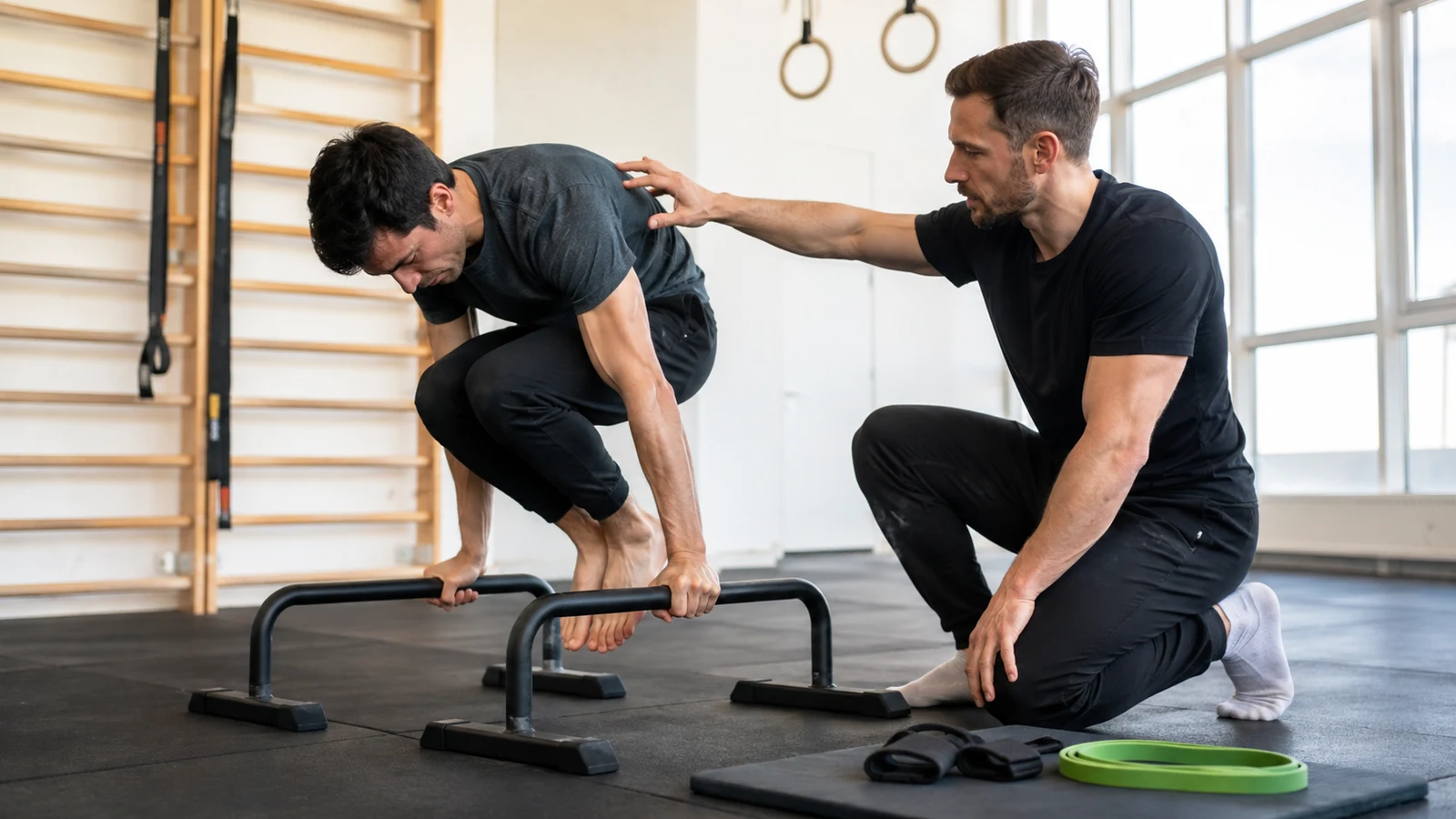
Progress to a tuck planche hold off the floor.
From a low squat with hands planted, lift your feet slightly and pull your knees toward your chest, keeping your arms straight, and hold for as long as good form lasts.
Add scapular pushes inside that tuck.
While holding the tuck position, practice pushing the floor away and letting your shoulder blades round forward and back, which builds the exact serratus anterior strength the research points to.
Only once a tuck hold feels stable for 15 to 20 seconds should you experiment with a single small push-up rep inside it, not a full set, just one controlled rep to test where you are.
Progress from there only when the current stage feels genuinely solid, not just possible on a good day.
Expect this to take months.
Expect a full planche, if you get there at all, to take considerably longer.
The people who eventually do impossible looking reps almost always spent years doing boring, patient ones first.
Watch the Video
Chaudhary’s record is not the only Guinness push-up story WorkoutHealthy has checked against the record holder’s own listing.
DonnaJean Wilde’s push-up world record is built on volume and pacing rather than a near-impossible position, which makes for a useful contrast in what “hardest” can mean in the same exercise family.
Guinness verifies plenty of records outside typical strength sports, too, including Edith Connor’s record for oldest female competitive bodybuilder, another one we checked directly against Guinness’s own page before writing about it.
Curious how far real training science actually stretches behind a viral feat. Subscribe to WorkoutHealthy Insider for practical explanations behind popular fitness claims.
References
Guinness World Records. (2024). Most planche push ups in one minute. Retrieved September 2, 2026, from https://www.guinnessworldrecords.com/world-records/117449-most-planche-push-ups-in-one-minute
Kowalski, K. L., Connelly, D. M., Jakobi, J. M., & Sadi, J. (2022). Shoulder electromyography activity during push-up variations: A scoping review. Shoulder & Elbow, 14(3), 325 to 339. https://doi.org/10.1177/17585732211019373
Malíř, R., Chrudimský, J., Šteffl, M., & Stastny, P. (2023). A systematic review of dynamic, kinematic, and muscle activity during gymnastic still rings elements. Sports, 11(3), 50. https://doi.org/10.3390/sports11030050
Polovinets, O., Wolf, A., & Wollstein, R. (2018). Force transmission through the wrist during performance of push-ups on a hyperextended and a neutral wrist. Journal of Hand Therapy, 31(3), 322 to 330. https://doi.org/10.1016/j.jht.2017.04.005
This article is for general information only and is not medical advice. If you have an injury, ongoing pain, or a medical condition, talk to a doctor or physical therapist before you change how you train or eat.