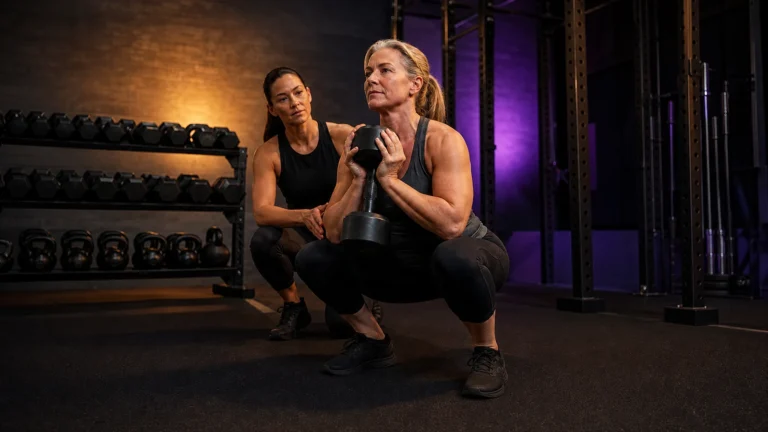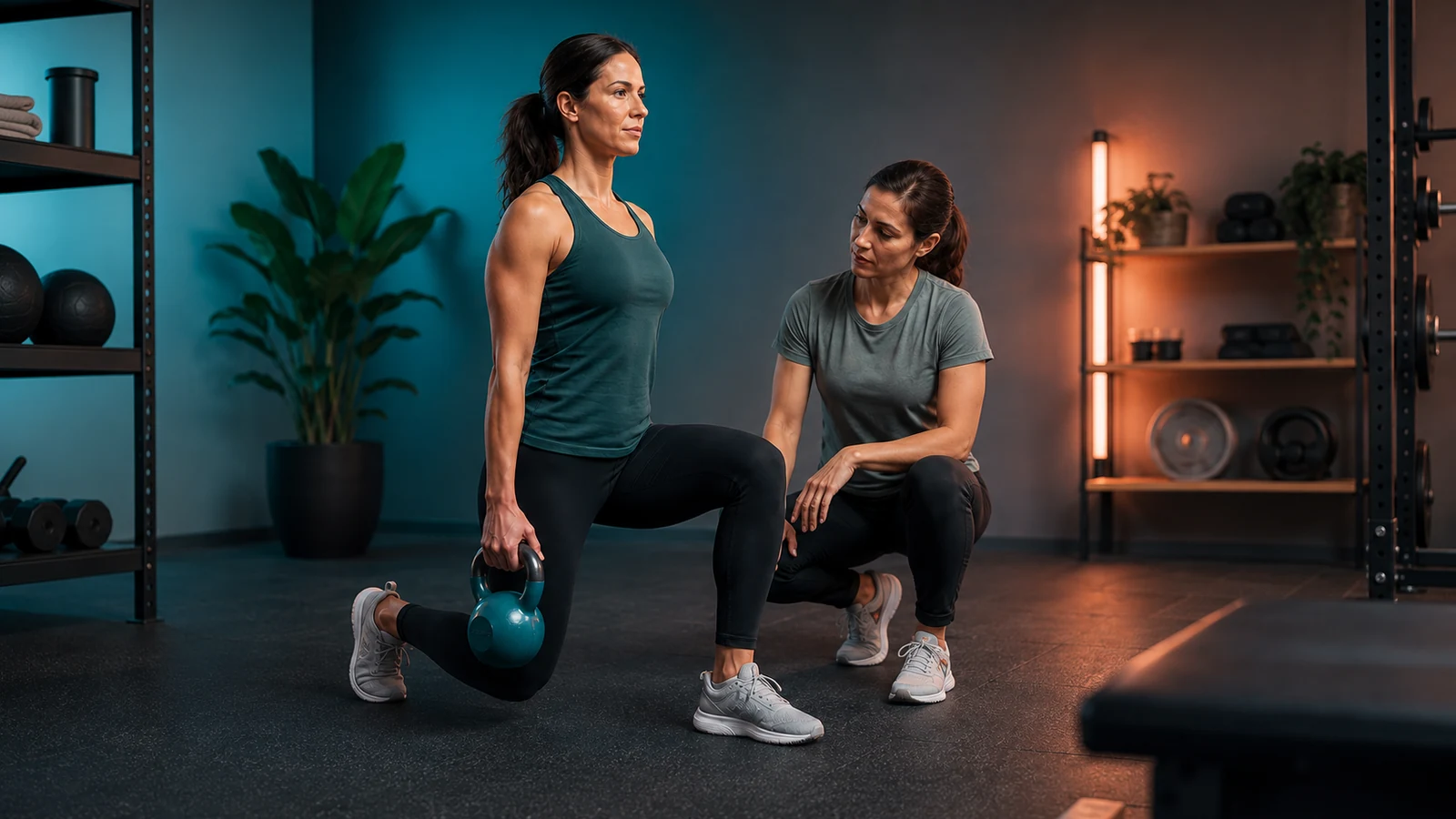

Ask a female athlete whether she has ever leaked urine during a hard set of box jumps, a heavy squat, or a full tumbling pass, and many will answer yes without much surprise.
Ask whether anyone on her medical or coaching team ever screened for it, and the answer is usually no.
That gap between how common the symptom is and how rarely anyone asks about it is drawing real attention in sports medicine right now.
On the Birth Healing Summit Podcast, host Lynn Schulte spoke with pelvic health physiotherapist and researcher Gráinne Donnelly about her newly edited sports medicine and pelvic-floor textbook. The episode description frames pelvic health as a routine part of athletic care, not only a postpartum concern.
Pelvic floor screening belongs in athletic care generally, not only in postpartum checkups.
That framing lines up with a body of published research that has been building for decades, even though it rarely reaches everyday athletes or the coaches working with them.
This article looks at what that research actually shows about pelvic floor dysfunction and urinary incontinence in athletes, including athletes who have never been pregnant, and what a smarter, capacity based approach to screening and return to activity could look like.
What Pelvic Floor Dysfunction Actually Means
The pelvic floor is a group of muscles that stretches like a sling from the pubic bone to the tailbone.
It supports the bladder, uterus, and rectum, and it works together with the diaphragm and deep abdominal muscles to manage pressure inside the trunk.
Pelvic floor dysfunction is a broad term that includes stress urinary incontinence, urge incontinence, pelvic organ prolapse, and pelvic pain.
Stress urinary incontinence, leaking urine during a cough, a jump, or a heavy lift, is the form that shows up most often in athletic populations.
It happens when the pressure pushing down on the bladder during exertion is greater than the pelvic floor’s ability to hold that pressure closed.
A widely cited review in the journal Sports Medicine describes this as a mechanical mismatch between load and capacity, not simply a sign of weak muscles (Bø, 2004).
That distinction matters, because it reframes the issue as a training and load question instead of only a medical diagnosis.
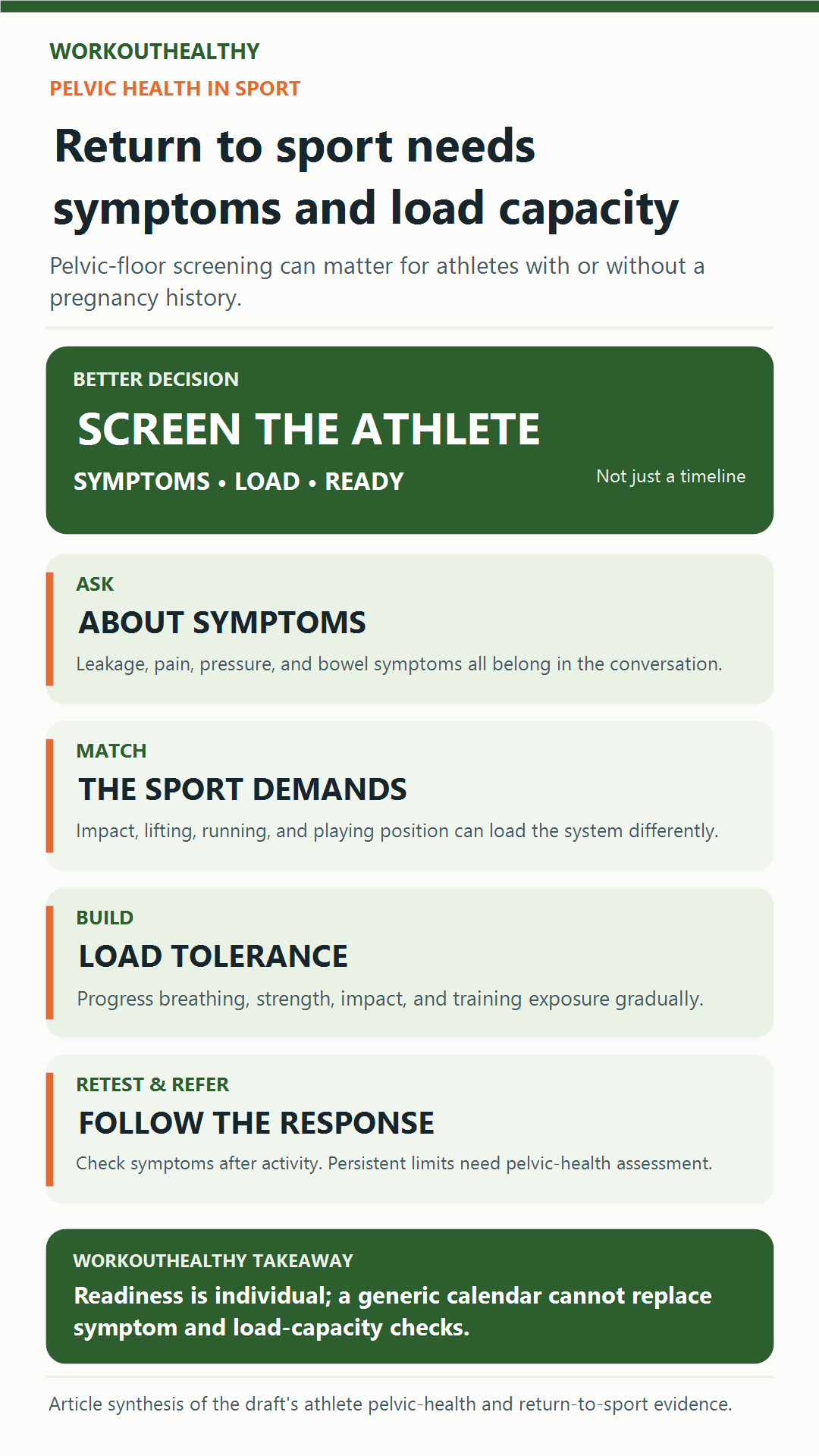
Leakage is only one possible symptom. Pelvic pain or pressure and bowel symptoms also belong in a clinical conversation, because they can alter training tolerance even when an athlete has never been pregnant. An assessment should ask which movements trigger symptoms, how they respond during and after activity, and what the athlete’s specific sport and playing position require. These are individualized screening considerations, not a validated one-size-fits-all test.
How Common Is This in Athletes Who Have Never Been Pregnant
The idea that pelvic floor problems belong to postpartum women alone does not hold up against the data.
A 2024 mixed methods study looked specifically at nulliparous female elite athletes, meaning athletes who have never given birth (Gan et al., 2024).
The researchers found that urinary incontinence was common in this group.
Many athletes in the study normalized the symptom as an unavoidable part of their sport rather than something worth mentioning to a provider.
Participants described modifying their training, timing bathroom trips around workouts, and using pads during competition, all without ever raising the issue with a coach or physician.
Earlier research pointed in the same direction.
A retrospective cohort study of female Olympians found that a history of prolonged high-impact training was associated with a higher rate of urinary incontinence later in life, independent of childbirth (Nygaard, 1997).
That single finding matters, because it separates the impact-loading question from the pregnancy question entirely.
Two athletes can face the same underlying risk for very different reasons.
Why High-Impact Sports Put Extra Load on the Pelvic Floor
Running, jumping, and heavy lifting all generate downward force through the trunk with every landing or every rep.
Every time a foot strikes the ground during a run, or a gymnast lands a tumbling pass, the impact travels upward through the body and briefly spikes the pressure inside the abdomen and pelvis.
The pelvic floor has to respond to that pressure spike almost instantly, contracting in coordination with the diaphragm to keep everything supported.
Sports that repeat this pattern at high volume, including gymnastics, trampolining, distance running, and CrossFit-style training, ask the pelvic floor to perform this job thousands of times in a single session.
The Sports Medicine review named above specifically identifies high-impact sport, heavy resistance training, and repeated jumping as activities that place unusually high demand on pelvic floor function (Bø, 2004).
A pelvic floor built to handle daily walking and stairs is not automatically built to handle the repeated, high-force loading of elite-level jumping, running, or lifting.
The “Load Capacity” Idea, Borrowed From the Rest of Sports Medicine
Sports medicine already uses a well established idea for tendons, bones, and joints.
Injury risk rises when the load placed on a tissue exceeds what that tissue is currently capable of handling.
That same logic underlies modern ACL rehabilitation, tendon return-to-run protocols, and bone stress injury management.
Applying that framework to the pelvic floor is a relatively new idea in mainstream sports medicine, even though pelvic health physical therapists have used versions of it for years.
Instead of asking only how many weeks have passed, a capacity based approach asks whether this specific athlete’s pelvic floor can currently handle this specific load.
That second question accounts for training history, current symptoms, and how gradually the load has increased, not just time on a calendar.
Why a Generic Timeline Falls Short
Much of the existing guidance for returning to high-impact activity, especially running, has historically centered on a fixed number of weeks after childbirth.
A 2022 paper on postpartum running readiness argued that this calendar based approach misses the point, because recovery depends on far more than time (Donnelly et al., 2022).
The authors described a whole systems model that weighs musculoskeletal healing, pelvic floor symptoms, breathing mechanics, sleep, and psychological readiness together.
Under that model, nobody gets cleared at six weeks simply because six weeks have passed.
That same logic applies just as directly to an athlete who has never been pregnant but has ramped up mileage, added plyometrics, or returned from a long layoff.
Two athletes at the exact same week of training can have very different pelvic floor capacity, depending on how they got there.
What This Evidence Does Not Prove
None of this research shows that every athlete who trains hard will develop pelvic floor dysfunction.
Most of the incontinence research in this area is observational, meaning it can show an association between high-impact training and symptoms without proving that training alone causes the problem in every case.
Individual factors such as connective tissue characteristics, prior pregnancy, pelvic surgery, and baseline pelvic floor strength all influence risk as well.
The research also does not support avoiding high-impact training altogether out of caution.
The Sports Medicine review is explicit that exercise itself is not the enemy, and that many elite athletes with excellent pelvic floor function train at very high impact loads without symptoms (Bø, 2004).
The goal of screening is identifying who needs support, not discouraging hard training in general.
Common Mistakes Athletes, Coaches, and Clinicians Make
The first common mistake is treating leakage as normal simply because it is common.
Common and normal are not the same thing.
Both of the studies discussed above found that athletes frequently stayed silent because they assumed nothing could be done about it.
The second mistake is screening only postpartum athletes, which misses the nulliparous population entirely, exactly the gap the Gan et al. study identified.
The third mistake is clearing an athlete to return to full training based only on time elapsed since an injury, a delivery, or a break, without checking actual pelvic floor function.
The fourth mistake is assuming pelvic floor work means only Kegel exercises.
Coordination, relaxation, and breathing mechanics often matter just as much as raw strength.
Who Should Get a Pelvic Floor Screening
Any athlete who notices leaking during jumping, running, lifting, or coughing is a reasonable candidate for a screening conversation, regardless of whether she has given birth.
Athletes returning to high-impact training after a pregnancy, a long injury layoff, or a significant increase in training volume are also good candidates.
Athletes in sports with very high jump or impact volume, including gymnastics, cheerleading, trampolining, distance running, and CrossFit-style training, may benefit from a baseline screening even without current symptoms.
A pelvic health physical therapist is trained specifically for this kind of evaluation.
That evaluation can assess pelvic floor strength, coordination, and how the muscles respond under the kind of load a specific sport demands.
A Practical Approach to Screening and Return to Activity
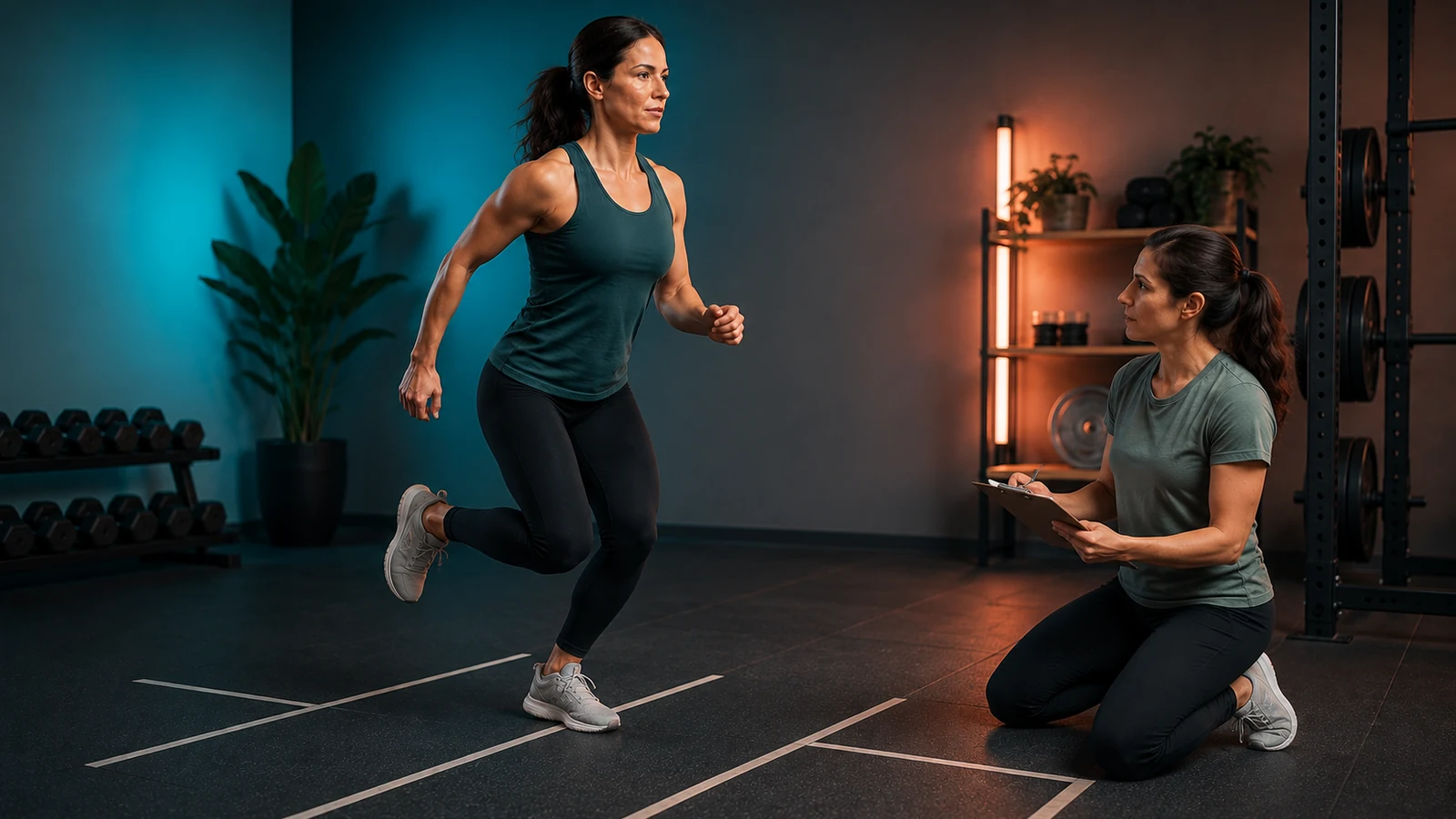
A useful starting point is a simple, direct conversation, asking whether an athlete has ever leaked urine or felt pelvic heaviness during training.
From there, a pelvic health physical therapist can perform an assessment of pelvic floor strength, endurance, and coordination, not just a strength test in isolation.
Training should be reintroduced gradually, adding impact and load in stages rather than jumping straight back into full volume running or plyometrics.
For sports built around jump training, the same gradual-loading logic covered in this research on what plyometric jump training actually does to the body applies just as much to pelvic floor readiness as it does to muscle adaptation.
Cross-training with lower-impact options during a rebuilding phase can maintain fitness while impact volume is reduced.
Pilates research is one example worth understanding before assuming it automatically substitutes for dedicated pelvic floor work.
Even a simple, controllable activity like jumping rope can be used in small, monitored doses to test impact tolerance before returning to full sport-specific volume.
The right question is not how many weeks have passed since delivery or injury. The right question is whether this specific pelvic floor can currently handle this specific load.
Progress should be tracked by symptoms, not just by the calendar.
Fewer leaks at higher training loads over time is the real marker of rebuilt capacity.
For athletes weighing how to structure a broader return to training, comparing options like weightlifting against running can help build a program that respects current pelvic floor capacity while still making real progress.
If symptoms do not improve with a structured program, or if leaking is frequent, painful, or comes with pelvic pressure or pain, that is a signal to see a pelvic health physical therapist or physician directly rather than trying to train through it.
Watch the Original Video
Pelvic floor health deserves the same evidence-based attention as any other part of athletic performance. Subscribe to WorkoutHealthy Insider for practical explanations behind popular fitness claims.
References
Bø, K. (2004). Urinary incontinence, pelvic floor dysfunction, exercise and sport. Sports Medicine, 34(7), 451 to 464. https://doi.org/10.2165/00007256-200434070-00004
Donnelly, G. M., Brockwell, E., Rankin, A., & Moore, I. S. (2022). Beyond the musculoskeletal system: Considering whole-systems readiness for running postpartum. Journal of Women’s Health Physical Therapy, 46(1), 48 to 56. https://doi.org/10.1097/jwh.0000000000000218
Gan, Z. S., Bilger, A., & Smith, A. L. (2024). Urinary incontinence in nulliparous female elite athletes: A mixed methods exploration. Urogynecology, 30(11), 929 to 937. https://doi.org/10.1097/spv.0000000000001573
Nygaard, I. (1997). Does prolonged high-impact activity contribute to later urinary incontinence? A retrospective cohort study of female Olympians. Obstetrics & Gynecology, 90(5), 718 to 722. https://doi.org/10.1016/s0029-7844(97)00436-5
This article is for general information only and is not medical advice. If you have an injury, ongoing pain, or a medical condition, talk to a doctor or physical therapist before you change how you train or eat.