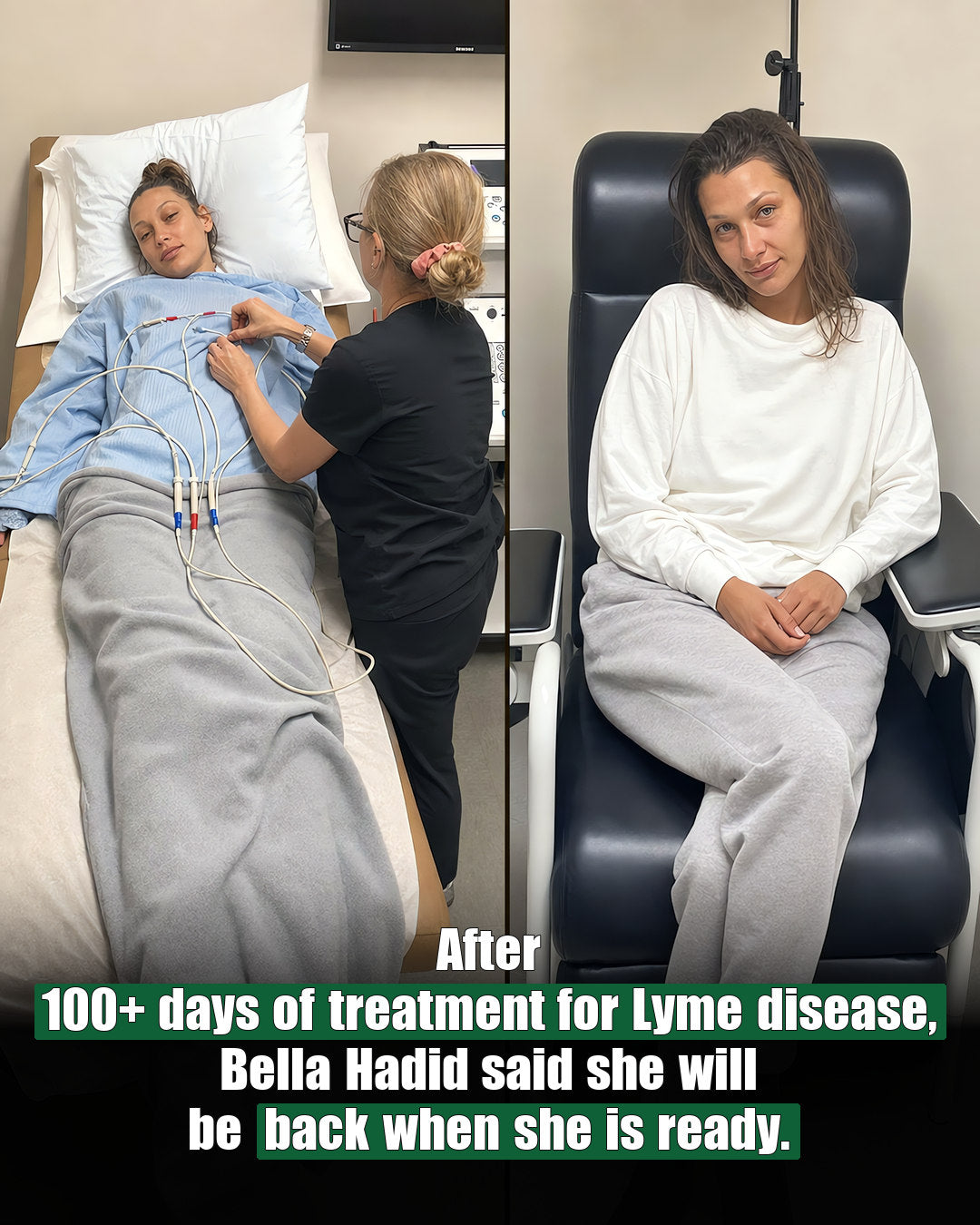

Who Bella Hadid Is and What She Is Living With
Bella Hadid has spent more than a decade as one of the most recognized faces in fashion, walking runways for brands like Saint Laurent and Victoria’s Secret.
For almost the entire span of that career, she has also been managing chronic Lyme disease.
Hadid is 29 years old as of this writing. She is alive, working, and still navigating a condition that has shaped nearly half her life.
She was diagnosed with Lyme disease in 2012, as a teenager, along with her mother Yolanda and her brother Anwar.
Fourteen years later, she is still managing flare ups, including one as recently as June 2026, just months before this article was written.
This article looks at what she has said about that ongoing reality, what pacing actually means for someone with a chronic illness, and what current research shows about it.
What Actually Happened: A Chronic Illness in Very Public View
Hadid’s Lyme disease has followed a pattern familiar to many people with chronic illness: long stretches of relative stability, interrupted by flare ups that can arrive with little warning.
In 2023, she underwent more than 100 days of treatment for Lyme disease and related co-infections after a routine root canal triggered a serious flare.
She missed major events that year, including the Met Gala and Paris Fashion Week, and stepped back from much of her public modeling work.
She gradually returned. By 2025, she had walked select shows for Saint Laurent and made an appearance at the Cannes Film Festival.
In September 2025, she posted about a personal milestone: her first day back in a gym in a long time.
“First day in the gym in a long time! Just walking but still! Getting my stamina back.”
Bella Hadid, via Instagram Stories
That same month, she was hospitalized, with photos showing medical equipment including oxygen and IV lines.
Weeks later, she still walked in the Victoria’s Secret Fashion Show, though she was honest about what that cost her.
“my stamina is not up yet after the whole hospital sitch but I tried my best”
Bella Hadid, responding to a fan on TikTok
Then, in June 2026, she shared another flare up, describing severe exhaustion that required 11 or more hours of sleep a night plus multiple naps, along with shortness of breath and trouble concentrating.
Her Own Words on Living With a Body That Does Not Cooperate
Hadid has described the emotional whiplash of chronic illness in language that will sound familiar to anyone managing a long term condition.
“You fight. You finally have a few good days…and then a flare-up comes back.”
Bella Hadid, June 2026
She has also described what a hard day physically feels like before it even fully begins.
“You wake up with anxiety already living in your body. Physical pain before your feet even touch the floor.”
Bella Hadid
She has been candid that treatment has not solved the problem, even after trying many different approaches.
“Took every protocol from any and every doctor I’ve seen. Still nothing helping.”
Bella Hadid
What stands out in her recent updates is how she measures progress now. Not by whether symptoms disappear, but by small, real functional wins.
“I took a shower without fainting tho… so again, if you know you know… that felt like a really big accomplishment for me today.”
Bella Hadid
During an earlier flare up, she summed up her approach to pacing in five words.
“I’ll be back when I’m ready”
Bella Hadid, 2023
What Chronic Lyme Symptoms and Pacing Actually Involve
Lyme disease is caused by bacteria spread through tick bites, and most cases resolve with a course of antibiotics.
But some patients continue to have symptoms like fatigue, joint pain, and cognitive difficulty for months or years after treatment, a pattern doctors call post treatment Lyme disease syndrome, or PTLDS.
A 2023 review published in Chronic Diseases and Translational Medicine, by researchers Natalie Bai and Christie Richardson, compared PTLDS directly against myalgic encephalomyelitis, also known as chronic fatigue syndrome, or ME/CFS.
The two conditions share a lot of overlapping biology and symptoms, including profound fatigue that does not improve with rest and often worsens after physical or mental exertion.
That worsening after activity has a specific name in the research literature: post exertional malaise.
It is different from normal tiredness after a hard workout. It can hit hours or days later, and it can be triggered by activity that would be completely unremarkable for someone without the condition.
Pacing is the strategy many patients and clinicians use to manage this: deliberately staying within a person’s actual energy limits, rather than pushing through fatigue the way healthy people are often taught to do.
What Research Says About Pacing
Pacing sounds simple in theory, but researchers have worked to actually measure whether it helps.
A 2024 systematic review and meta-analysis in the journal Fatigue: Biomedicine, Health & Behavior, led by Nilihan Sanal-Hayes, pooled results from five studies on pacing interventions for ME/CFS, including two randomized controlled trials.
The researchers found that pacing produced only small improvements in physical function and pain, changes they described as trivial.
Fatigue itself showed a larger improvement, but the result did not reach statistical significance across the pooled studies.
The authors’ honest conclusion was that pacing likely does provide some benefit, particularly for fatigue, but that the existing evidence base is not yet strong enough to support firm clinical guidelines.
That is a more modest finding than the strong “pacing works” message often repeated in patient communities, and it is worth reporting accurately rather than overselling it.
What This Evidence Does Not Prove
Hadid has Lyme disease specifically, not a formal ME/CFS diagnosis, and the research above was conducted in ME/CFS patients because that is where most of the pacing research currently exists.
The overlap in symptoms and biology described by Bai and Richardson’s review is a reasonable basis for applying similar strategies, but it is not the same as direct evidence in a Lyme disease population.
The pacing research itself is also limited by small sample sizes and inconsistent methods across studies, which is exactly why the Sanal-Hayes review called for more high quality trials.
None of this research suggests pacing is a cure, or that it will work the same way for every patient.
Hadid’s own account makes that clear. She has tried “every protocol from any and every doctor” she has seen, and flare ups still return, sometimes without an obvious trigger.
Chronic illness management, based on both the science and her lived experience, looks more like an ongoing, imperfect negotiation with the body than a fixable problem with one right answer.
Who Should Talk to a Doctor First
Anyone with symptoms of fatigue, joint pain, or cognitive fog that persist for weeks after a tick bite or a Lyme diagnosis should follow up with a doctor rather than assuming it will resolve on its own.
Anyone experiencing post exertional malaise, where symptoms clearly worsen a day or more after physical or mental effort, should mention this specifically to their doctor, since it changes what kind of activity plan makes sense.
People managing any chronic illness who notice repeated flare ups after specific triggers, like Hadid’s root canal in 2023, should discuss those patterns with their care team rather than dismissing them as a coincidence.
Anyone experiencing symptoms severe enough to affect breathing, fainting, or basic daily functioning, the way Hadid has described, should seek medical care rather than trying to push through alone.
Family members and partners of someone managing a chronic illness can benefit from learning about post exertional malaise specifically, since it often gets mistaken for a person simply being out of shape or unmotivated.
None of this article is a substitute for an actual evaluation and personalized treatment plan from a qualified healthcare provider familiar with chronic Lyme disease and related conditions.
How to Practice Pacing If You Are Managing a Chronic Illness
Track your energy, not just your schedule. Simple daily notes on fatigue, pain, and any activity that preceded a bad day can reveal patterns that are hard to see in the moment.
Build in rest before you feel like you need it, not after. Waiting until exhaustion hits often means the recovery period afterward is longer and harder.
Break big tasks into smaller pieces with real breaks between them, rather than pushing through a single long effort.
Expect setbacks that are not your fault. A flare up after a good stretch is common with chronic illness, and it does not mean you did pacing wrong.
Redefine what counts as progress. Hadid’s own example, a shower managed without fainting, is a real reminder that meaningful wins on a hard day look different than they do on a good one.
Move within your limits, not past them.
A short, easy walk on a good day can be appropriate even for someone managing significant fatigue, but always at a pace your body sets, not a schedule.
Watch how stress compounds physical symptoms. Chronic illness and chronic stress interact in ways that can make each other worse, and our piece on stress and immune function covers some of that connection.
Build a care team that takes your symptoms seriously. Hadid has described trying protocols “from any and every doctor,” and finding clinicians who listen carefully matters as much as any specific treatment.
Give yourself permission to say no. Hadid’s own words on this are as good as any medical advice: she comes back when she is ready, not on anyone else’s timeline.
References
- Tyla, “Bella Hadid shares tearful health update on ‘debilitating’ disease which affects several celebrities,” June 2026: tyla.com
- USA TODAY/Yahoo, “Bella Hadid shares health update after hospitalization: ‘Stamina is not up yet’,” October 2025: yahoo.com
- Hola!, “Bella Hadid’s health update: Model shares first steps back into her normal routine,” September 2025: hola.com
- Us Weekly, “Bella Hadid’s Lyme Disease Battle in Her Own Words”: usmagazine.com
- Bai, N. A., & Richardson, C. S. (2023). Posttreatment Lyme disease syndrome and myalgic encephalomyelitis/chronic fatigue syndrome: A systematic review and comparison of pathogenesis. Chronic Diseases and Translational Medicine, 9(3), 183 to 190. doi.org/10.1002/cdt3.74
- Sanal-Hayes, N. E. M., Mclaughlin, M., Mair, J. L., Ormerod, J., Carless, D., Meach, R., Hilliard, N., Ingram, J., Sculthorpe, N. F., & Hayes, L. D. (2024). ‘Pacing’ for management of myalgic encephalomyelitis/chronic fatigue syndrome (ME/CFS): a systematic review and meta-analysis. Fatigue: Biomedicine, Health & Behavior, 13(1), 36 to 53. doi.org/10.1080/21641846.2024.2433390
This article is for general informational purposes only and is not a substitute for professional medical advice, diagnosis, or treatment. If you are managing Lyme disease, chronic fatigue, or another chronic illness, talk to a qualified healthcare provider before making changes to your treatment or activity level.