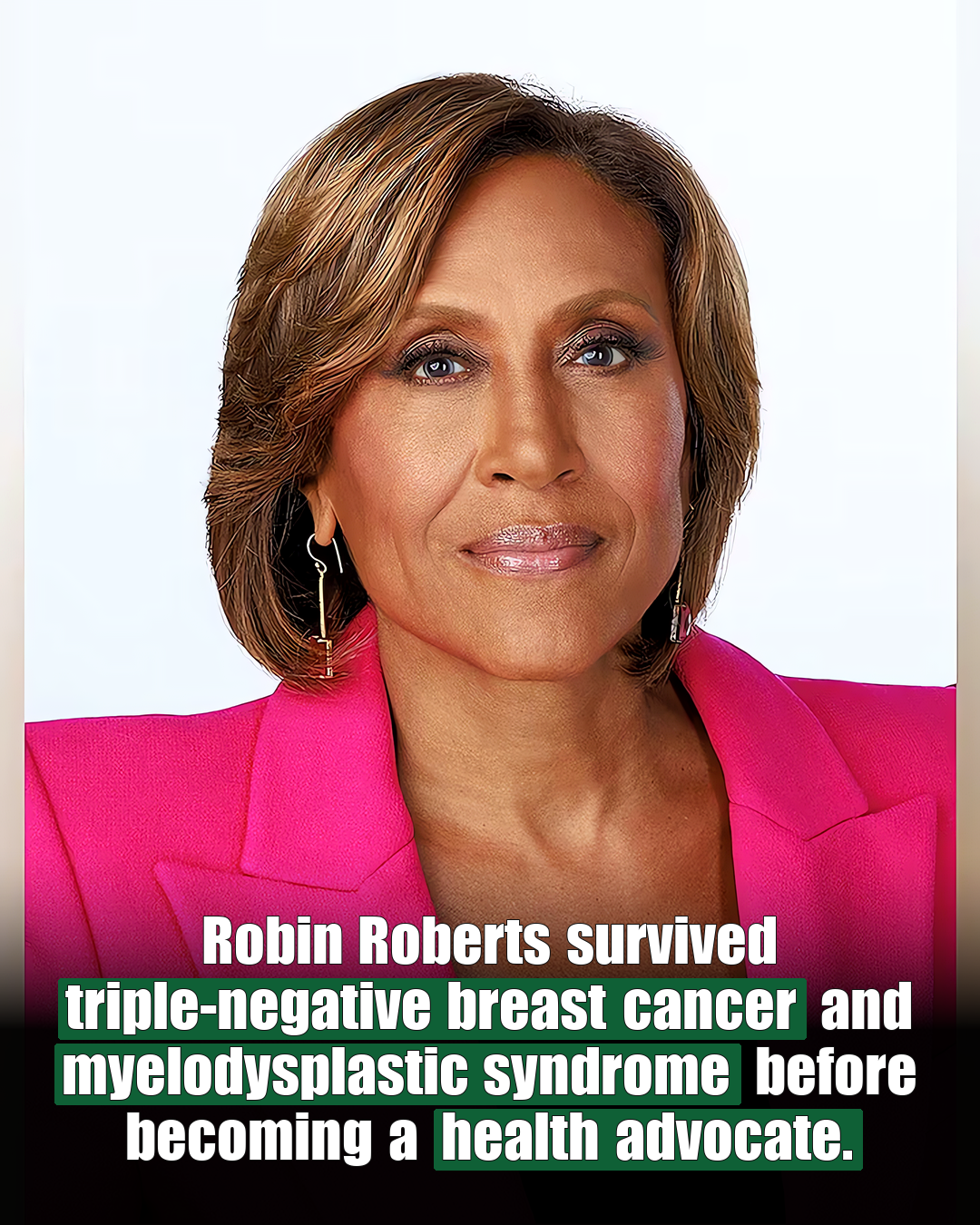

Robin Roberts has survived cancer twice. She has said, in her own words, that surviving was never really the goal.
“I don’t want to survive going through something like this, I want to thrive,” she has said about her recovery.
Her story spans two serious illnesses, a bone marrow transplant, and years of public advocacy.
It is also a useful window into what current research actually says, and does not say, about movement and exercise for people recovering from cancer.
Who Robin Roberts Is and Her Real Health History
Roberts is a longtime co-anchor of ABC’s Good Morning America. She has held that role for years and remains an active, visible presence on the show as of 2026, including a June 2026 stretch away from the anchor desk to film a Lifetime movie, a work trip rather than a health related absence.
In 2007, Roberts found a lump during a routine self-check. That discovery led to a diagnosis of triple negative breast cancer, a form of the disease she was successfully treated for.
Five years later, in 2012, doctors diagnosed her with myelodysplastic syndrome, known as MDS. This second illness can sometimes develop as a rare, delayed complication of earlier chemotherapy.
Treating MDS required a bone marrow transplant. Roberts received donor marrow from her sister, Sally-Ann, after ten days of chemotherapy to prepare her body for the transplant.
Recovery required roughly 100 days of isolation. That gave her rebuilt immune system time to strengthen before she could safely return to normal life.
She has since marked multiple years past that transplant, and she has spoken often about how significant that milestone felt to her.
Roberts has used her platform to executive produce documentary programming about transplant patients, and she continues to speak publicly about both illnesses whenever health topics come up on GMA.
She has anchored GMA since 2005. Across that career, she has interviewed presidents, athletes, and cultural figures on national television.
Her health story has become part of how many viewers know her, alongside her decades of daily reporting.
That combination, a familiar national broadcaster willing to speak candidly about cancer and a bone marrow transplant, has made her one of the more visible cancer survivorship voices in American media.
What MDS and Cancer Recovery Actually Involve, in Plain Terms
Triple negative breast cancer is a type of breast cancer. It does not have three specific receptors doctors usually target with hormone based treatments.
That absence makes it typically harder to treat than some other, more common breast cancer types, since fewer targeted treatment options exist for it.
MDS is a group of disorders where the bone marrow does not make enough healthy blood cells.
Bone marrow is the soft tissue inside bones. It is responsible for producing red cells, white cells, and platelets, the building blocks of healthy blood.
A bone marrow transplant replaces damaged marrow with healthy donor cells. Doctors first use chemotherapy to clear out the existing, unhealthy marrow, then infuse the donor’s healthy stem cells, which travel to the bone and begin producing normal blood cells again.
This process is intense on the body. Patients typically have almost no functioning immune system for a period of weeks, which is why extended isolation is standard practice during recovery.
What Current Research Says About Exercise for Transplant Survivors
A 2021 systematic review and meta-analysis published in the journal Physical Therapy looked specifically at exercise for people who had undergone bone marrow or stem cell transplantation.
Researcher Shaza Abo and colleagues reviewed 27 different patient groups. Together, those groups covered 2,432 participants.
The review found meaningful benefits. Exercise improved how far people could walk in six minutes by an average of 29 meters, a common measure of functional capacity.
It also found moderate quality evidence that exercise improved overall quality of life scores. Fatigue, one of the most common and disruptive symptoms during recovery, also improved with structured exercise.
There was even lower quality evidence suggesting exercise programs were linked to modestly shorter hospital stays.
The authors concluded that exercise is generally safe for this population. They recommended that transplant centers build it into standard care rather than treating it as optional extra support.
Robin Roberts’ Own Words on Recovery and Movement
Roberts has spoken often about how her recovery reshaped her relationship with her body and her health habits.
She has said: “I exercise and do things now not because I want to but because I can.” That distinction reflects how differently she has come to see movement after facing two serious illnesses.
She has also emphasized sleep as central to her recovery and ongoing health, saying: “Sleep, my friends, it’s not a luxury, it’s a necessity.”
Roberts has been just as direct about the mental side of illness. She has said: “Everything I have faced is as much mental as it is physical,” a theme she returns to often when discussing both her cancer and her MDS diagnosis.
She has described the bone marrow transplant itself in especially personal terms, calling it “a rebirth” and saying she felt she was “getting another chance at life.”
What This Evidence Does Not Prove
The transplant exercise research is encouraging, but it does not mean exercise treats or cures MDS, prevents a recurrence, or replaces any part of standard medical treatment.
The 2021 review combined data from studies with different exercise types, different intensities, and different timing relative to a patient’s transplant.
That mix makes it hard to say exactly which specific program works best for a specific patient at a specific point in recovery.
Roberts’ own daily routine, including a very early wake time and specific meditation practice, reflects her personal preferences.
It is not a medical prescription that applies to every survivor. Her circumstances as a public figure with significant support resources also are not the same as most patients’.
The research also cannot say whether exercise would have changed the course of her illnesses.
It speaks to recovery support and quality of life, not to prevention or cure.
Why Self-Advocacy Matters as Much as Any Workout
Roberts found her own breast cancer because of a routine self-check, not because a screening caught it first.
She has repeated this point often in her advocacy work, treating it as a core part of her message to other women.
She has said: “We know our bodies. I detected my breast cancer because I regularly did a breast check.”
She has also pushed others toward the same habit of self-advocacy.
She has said: “As women, we have to be our best advocates. Women have to be their own advocates.”
Roberts has connected her own experience to a broader message about organ and marrow donation as well, saying: “I know firsthand how someone stepping up can save a life,” a direct reference to her sister’s donation.
Who Should Talk to a Doctor First
Anyone currently in active cancer treatment should get clearance from their oncology team before starting or changing an exercise routine.
Treatment side effects vary widely and can change safe activity levels from week to week.
People who have had a bone marrow or stem cell transplant should talk with their transplant team specifically, since low blood counts and graft versus host disease, a complication where donor cells react against the patient’s body, can both limit safe activity.
Anyone experiencing unusual fatigue, easy bruising, or unexplained bleeding should raise it with a doctor promptly rather than pushing through it, since these can be signs that blood counts need medical attention.
Cancer survivors well past active treatment should still loop in their doctor before starting a new, more intense exercise program, especially if it has been years since their last checkup.
A Practical Section for Readers
People affected by cancer, whether personally or through a family member, can take a few general, evidence-informed steps.
- Regular self-checks, like the breast self-exam that led to Roberts’ own diagnosis, remain a reasonable habit alongside recommended screenings, not a replacement for them.
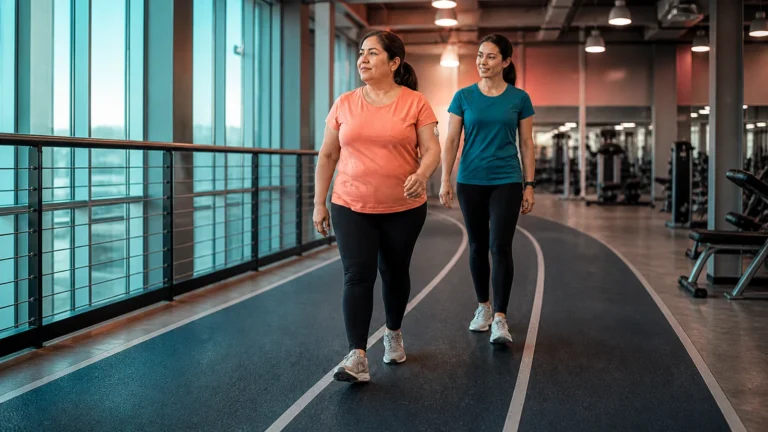
- If cleared for activity, start with low intensity movement, like short walks, and build up gradually as energy and blood counts allow.
- Track fatigue and other symptoms day to day, since energy can vary significantly during and after treatment.
- Prioritize sleep as part of recovery, not as an afterthought, since disrupted sleep is common during and after cancer treatment.
- Ask your care team directly about exercise. Many cancer centers now have exercise oncology programs designed specifically for this population.
- Consider becoming a registered bone marrow or stem cell donor, since the need for donor matches remains high and Roberts’ own recovery depended on finding one.
- Lean on family and close support during recovery. Roberts has credited her sister’s donation, and her wider family’s support, as central to her own outcome.
- Treat mental health support as a real part of recovery, not an optional extra, in line with Roberts’ own repeated point that illness is as much mental as physical.
Roberts’ story is not really about a single workout routine or wake up time. It is about what she has said matters more: showing up for your own health, being honest about what a recovery actually takes, and treating both the body and the mind as part of the same fight.
References
SurvivorNet, “I Don’t Want to Survive, I Want to Thrive: GMA Anchor and Two-Time Cancer Survivor Robin Roberts Gives Update on Her Health.”
Parade, “Robin Roberts on Surviving Two Life-Threatening Illnesses and What Healthy Looks Like,” October 2018.
Parade, “Why Robin Roberts Urges Women to Be Their Greatest Health Advocates,” October 2021.
Parade, “Robin Roberts Is on Hiatus From Good Morning America,” June 2026.
Abo, S., et al. (2021). “People With Hematological Malignancies Treated With Bone Marrow Transplantation Have Improved Function, Quality of Life, and Fatigue Following Exercise Intervention: A Systematic Review and Meta-Analysis.” Physical Therapy, 101(8), pzab130.
This article is for general information only and is not personalized medical advice. Exercise needs during and after cancer treatment vary widely by diagnosis, treatment type, and individual health status. Talk with your oncology or transplant care team before starting or changing an exercise routine.