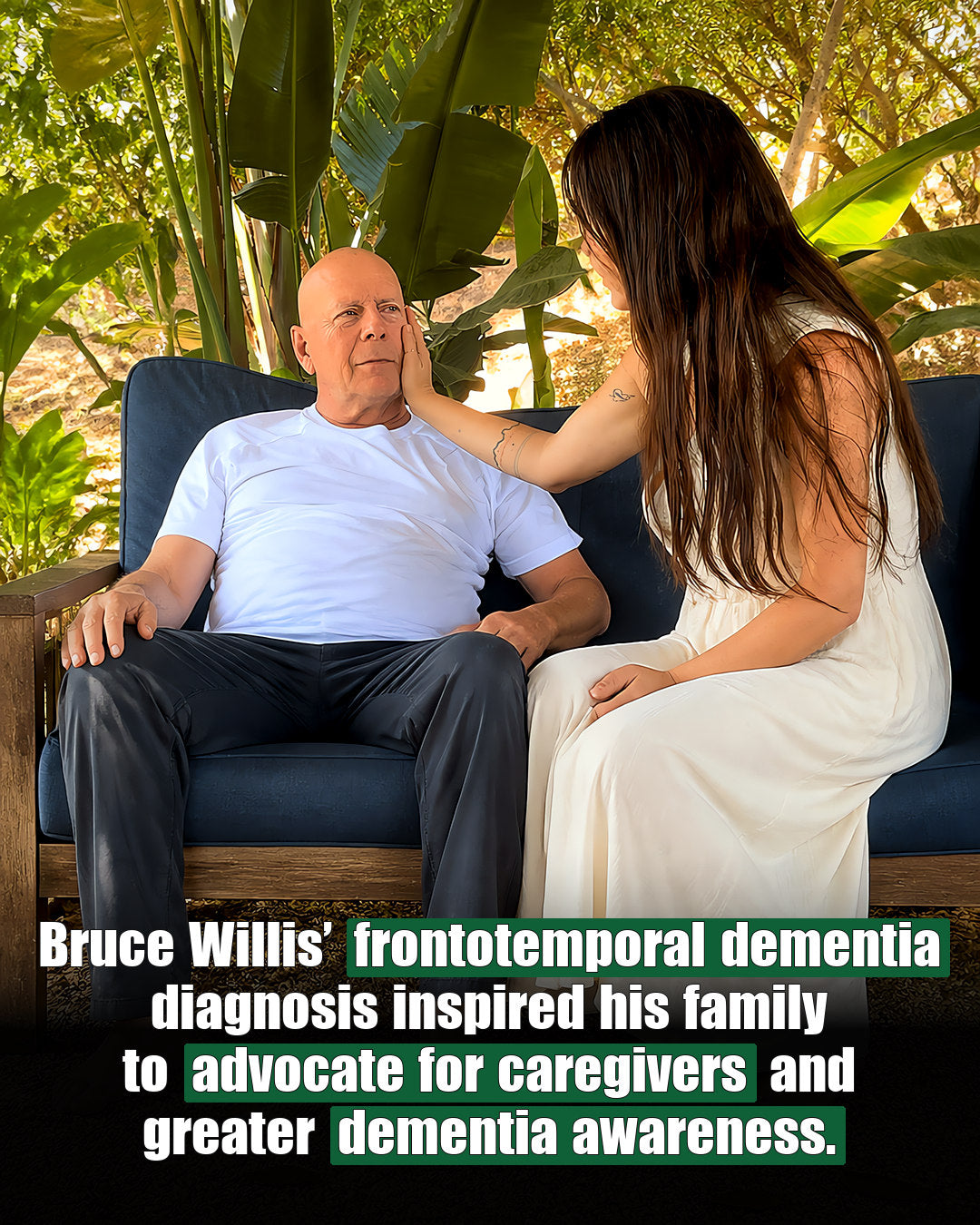

Who Bruce Willis Is and What His Family Is Actually Facing
Bruce Willis built a decades long film career on roles in “Die Hard,” “Pulp Fiction,” and “The Sixth Sense.”
He is 71 years old and alive today. He lives at home with his wife, Emma Heming Willis, under full time care, according to multiple family statements.
In March 2022, Willis and his family announced he was stepping away from acting because of a diagnosis of aphasia, a condition that affects a person’s ability to use and understand language.
Nearly a year later, in February 2023, the family shared a harder update. Doctors had identified the actual cause behind his aphasia as frontotemporal dementia, often shortened to FTD.
This article looks at what frontotemporal dementia actually is, what current research says about movement and physical activity for people living with it, and what Willis’s own family has said publicly about his condition and their approach to caring for him.
What Frontotemporal Dementia Actually Is
Frontotemporal dementia is a group of brain disorders. It happens when nerve cells in the frontal and temporal lobes of the brain break down and die.
The frontal lobe sits behind the forehead and helps control personality, judgment, and behavior. The temporal lobes, near the ears, help control language and understanding.
Because FTD often starts in those areas, early symptoms usually involve changes in personality, behavior, or language, rather than memory loss, according to the Association for Frontotemporal Degeneration, known as AFTD.
That is a key difference from Alzheimer’s disease, where memory loss is usually the first and most noticeable symptom.
AFTD describes several distinct forms of FTD. Willis was diagnosed with a language focused form, primary progressive aphasia, that affected his speech before doctors identified the broader FTD diagnosis behind it.
FTD is also unusually common in people under 60. AFTD’s own statement on the Willis diagnosis noted that “for people under 60, FTD is the most common form of dementia,” and that it is likely more widespread than official numbers suggest, since it often takes years to diagnose correctly.
There is currently no cure or disease slowing treatment for FTD. Care instead focuses on managing symptoms and supporting quality of life for as long as possible.
How Willis’s Diagnosis and Public Story Unfolded
Willis’s family first described his condition publicly as aphasia in March 2022, without naming a specific underlying cause at that time.
The February 2023 update named frontotemporal dementia directly. In their statement, the family said they hoped increased awareness would speed up research into a disease with “no treatments” currently available.
Since then, family members have given periodic updates rather than a single ongoing narrative, which is common for families managing a progressive condition.
In October 2024, Emma Heming Willis described the early confusion around his symptoms this way, in comments reported by Today.com.
“As his language started changing, it was just a part of a stutter. Never in a million years would I think it would be a form of dementia.”
Emma Heming Willis, quoted by Today.com, October 2024
By 2025, family members were describing his condition as relatively stable, with meaningful moments still possible day to day.
What Current Medical Understanding Says About Movement and Activity in Dementia
Research specifically on exercise and FTD is still limited, since FTD itself is a less common and less studied form of dementia compared to Alzheimer’s disease.
Most of the available exercise research comes from the broader dementia field, which includes Alzheimer’s disease, vascular dementia, and other related conditions.
Across that broader research base, physical activity is one of the more consistently studied nonmedication supports for people living with dementia.
A 2026 review in the journal Frontiers in Dementia found that exercise produces what the authors called “modest but meaningful benefits” for people with dementia.
The clearest gains showed up in executive function, attention, mobility, balance, and daily living tasks.
The review also found reduced depressive symptoms, agitation, and anxiety across several trials.
That review was direct about a limit that matters here.
Exercise “does not halt disease progression,” even though it may delay functional decline when it starts early in the disease course.
The same review looked specifically at FTD, not just dementia in general.
It found the evidence base for FTD specifically “remains scarce” compared to Alzheimer’s disease.
Early findings suggest activity may help preserve mobility, support cardiovascular fitness, and reduce certain behavioral symptoms.
The authors were also clear that more controlled research is still needed before firm FTD specific guidance can be written.
This lines up with broader research on exercise and brain health in adults without dementia, though the two bodies of evidence answer different questions.
Caregiver wellbeing is also part of this picture. Caring for someone with a progressive brain disease is physically and emotionally demanding, and general research on caregiver health consistently points to caregivers’ own activity levels and support systems as meaningful factors in how well they cope over time.
What the Willis Family Has Said About Care and Daily Life
Willis’s family has been unusually open about the practical, daily side of his care, not just the diagnosis itself.
In comments reported by People and shared widely in August 2025, Emma Heming Willis described his physical condition directly.
“Bruce is still very mobile. Bruce is in really great health overall, it’s just his brain that is failing him.”
Emma Heming Willis, reported August 2025
That distinction matters. FTD primarily affects behavior, language, and judgment in its early and middle stages, which means many patients, including Willis, remain physically mobile well into the disease’s course.
Willis’s daughter Rumer has also spoken publicly about the emotional side of his condition. Speaking on the Inside Edit podcast, she described a kind of gentleness that has emerged in her father even as other things have changed.
“There’s a sweetness, just a tenderness that maybe being Bruce Willis might not have allowed him in a certain way.”
Rumer Willis, on the Inside Edit podcast, May 2026
Demi Moore, Willis’s former wife and co-parent to three of his daughters, described his condition in December 2024 as “a very stable place at the moment,” while stressing the importance of meeting him where he is rather than expecting him to be who he used to be.
What This Evidence Does Not Prove
It is important to be honest about the limits of what is currently known here.
Willis’s family has not published details of a specific exercise or physical therapy program he follows, so this article cannot describe his personal routine the way it can for a public figure who has shared that detail directly.
Most of the strongest exercise research in dementia comes from studies of Alzheimer’s disease and general dementia populations, not FTD specifically.
The 2026 Frontiers in Dementia review confirmed that the FTD specific evidence base is still thin.
That means findings about mood, agitation, or daily function benefits from exercise in dementia overall may not apply in exactly the same way to FTD, which affects the brain differently than Alzheimer’s does.
Exercise does not reverse the underlying degeneration that causes FTD, and current evidence does not show that it stops disease progression either.
No current treatment, physical or medical, changes that basic fact.
Family reports that someone is “stable” or “still very mobile” describe a single point in time.
FTD is a progressive condition, and its course varies significantly from person to person.
Who Should Talk to a Doctor First
Anyone noticing a loved one’s personality, judgment, or language changing in ways that feel out of character should raise it with a doctor rather than assuming it is normal aging or stress.
A neurologist, ideally one with experience in dementia care, is the right starting point for a proper diagnostic workup, since FTD symptoms can be mistaken for depression, a psychiatric condition, or a stroke.
Anyone already caring for a person with a confirmed FTD diagnosis should involve a physical therapist or occupational therapist experienced with dementia before starting any new activity or exercise routine for that person.
Sudden changes in mobility, swallowing, or balance in someone with FTD should be reported to their care team quickly, since these can signal disease progression that changes what activities are safe.
Caregivers themselves should also talk to their own doctor about their physical and emotional wellbeing.
Caregiver burden is a real, documented health risk, not just an emotional strain.
Nothing in this article is a substitute for a real diagnosis or a personalized care plan from a qualified medical team.
How Caregivers Can Approach Movement and Daily Activity Safely
Most readers supporting a loved one with FTD will not find a single research based playbook for this specific disease, since the evidence base is still developing.
Start with what a doctor or dementia care specialist actually recommends for that person’s specific stage and symptoms, rather than a general fitness plan found online.
Keep movement simple and familiar. Routines the person already knows, like a regular walk or familiar chores, tend to be easier to follow than new, complex exercises.
Build activity into daily life rather than treating it as a separate task. Gardening, light housework, and short walks all count as meaningful physical activity.
Watch for safety risks as the disease progresses. Balance, coordination, and judgment can all change over time, so activities that were safe a year ago may need adjusting.
Involve the person as much as they are able to participate. Maintaining some sense of choice and routine can support wellbeing even as other abilities change.
Take care of your own physical health as a caregiver. Staying active yourself is not a luxury here. It is one of the more consistent factors linked to better caregiver coping over the long haul.
Lean on organizations built for this specific disease. AFTD offers a helpline and educational resources built specifically around FTD, rather than dementia in general, which can be more directly useful for families navigating this particular diagnosis.
This general guidance is not medical advice for any individual reader or family. Anyone caring for someone with FTD should build a movement and daily activity plan directly with that person’s own doctor or care team.
References
- Association for Frontotemporal Degeneration (AFTD), Willis family statement, February 2023: theaftd.org
- Frontiers in Dementia, “Physical activity and exercise in dementia: clinical relevance and emerging insights,” 2026: frontiersin.org
- Today.com, “Bruce Willis Dementia Battle Update: Is His Condition Worsening?”: today.com
- Men’s Journal, “Bruce Willis’ Daughter Releases Heartbreaking Update on His Dementia Battle”: mensjournal.com
- Variety, “Bruce Willis ‘Doesn’t Know’ He Has Dementia, Recognizes His Family”: variety.com
- Boston University Center for Brain Recovery, “Understanding Primary Progressive Aphasia, Bruce Willis and Wendy Williams’s Diagnoses”: bu.edu
This article is for general informational purposes only and is not a substitute for professional medical advice, diagnosis, or treatment. Always talk with a qualified healthcare provider or dementia care specialist before starting a new exercise or activity plan for yourself or someone you care for.