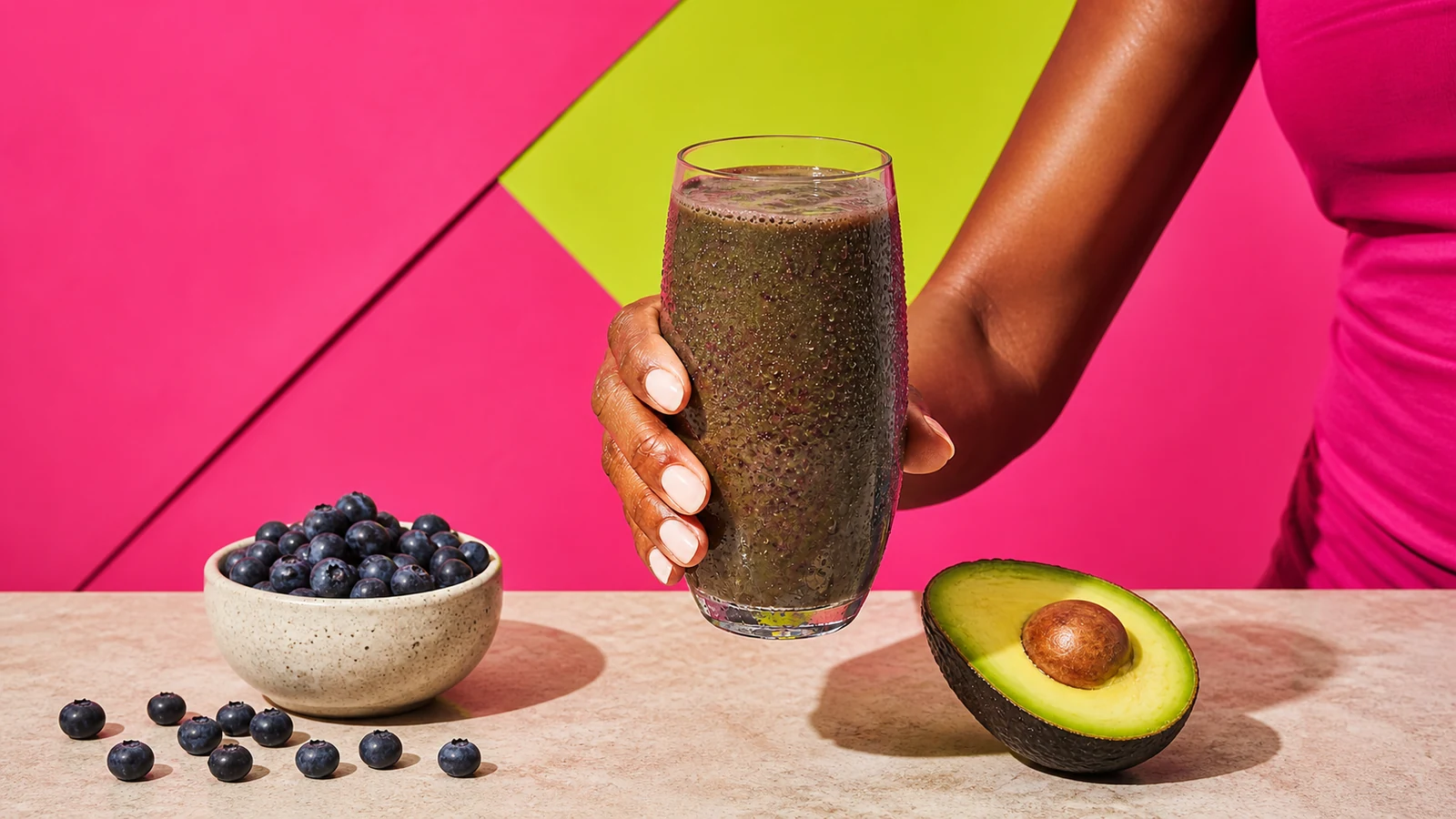

People searching for smoothies for elderly adults often need more than a list of supposedly anti-aging ingredients. A useful smoothie has foods the person enjoys, an amount and texture they can use safely, and a place in the rest of their meals.
Below are three one-glass recipe examples with exact ingredient amounts and simple substitutions. They are editorial kitchen ideas, not medically tailored recipes or lab-tested nutrition formulas.
Three Smoothies for Older Adults to Try
Use pasteurized dairy products and wash fresh fruit and greens before blending. Frozen fruit may be easier to keep on hand, and extra liquid can thin a blend to your preference if you do not have a prescribed swallowing texture.
1. Berry, Yogurt and Flax
- 3/4 cup plain pasteurized Greek yogurt
- 1/2 cup fresh or frozen berries
- 1/2 cup pasteurized milk or unsweetened fortified soy drink
- 1 tablespoon ground flaxseed
Blend the milk and yogurt first, then add the berries and flax and blend until smooth. This makes about one glass; the exact yield and nutrients depend on the products you use.
For a dairy-free version, use a plain fortified soy yogurt and soy drink after checking their labels. Protein content varies by brand, so a plant substitution is not automatically nutritionally identical to Greek yogurt.
2. Peach and Oat
- 3/4 cup plain pasteurized yogurt
- 1/2 cup sliced peaches, fresh, frozen, or canned in juice and drained
- 1/4 cup quick oats
- 1/2 cup pasteurized milk or a tolerated alternative
Blend the oats with the liquid first, then add yogurt and peaches. Let the drink stand briefly if you prefer softer oats, and thin it with more liquid if needed.
If you dislike oats, leave them out and have a grain food separately. The smoothie can be part of breakfast or a snack without needing to replace every other food group.
3. Banana and Peanut Butter
- 3/4 cup plain pasteurized Greek yogurt
- 1/2 small banana
- 1 tablespoon smooth peanut butter
- 1/2 cup pasteurized milk or a tolerated alternative
Blend until the peanut butter is fully mixed and no sticky lumps remain. Use a different tolerated nut or seed butter if peanut is an allergy concern, and check the package for allergens.
These amounts are starting examples rather than calorie, carbohydrate, protein or weight targets. If you need a prescribed nutrition plan, a registered dietitian can calculate and adapt one with your medical history and actual product labels.
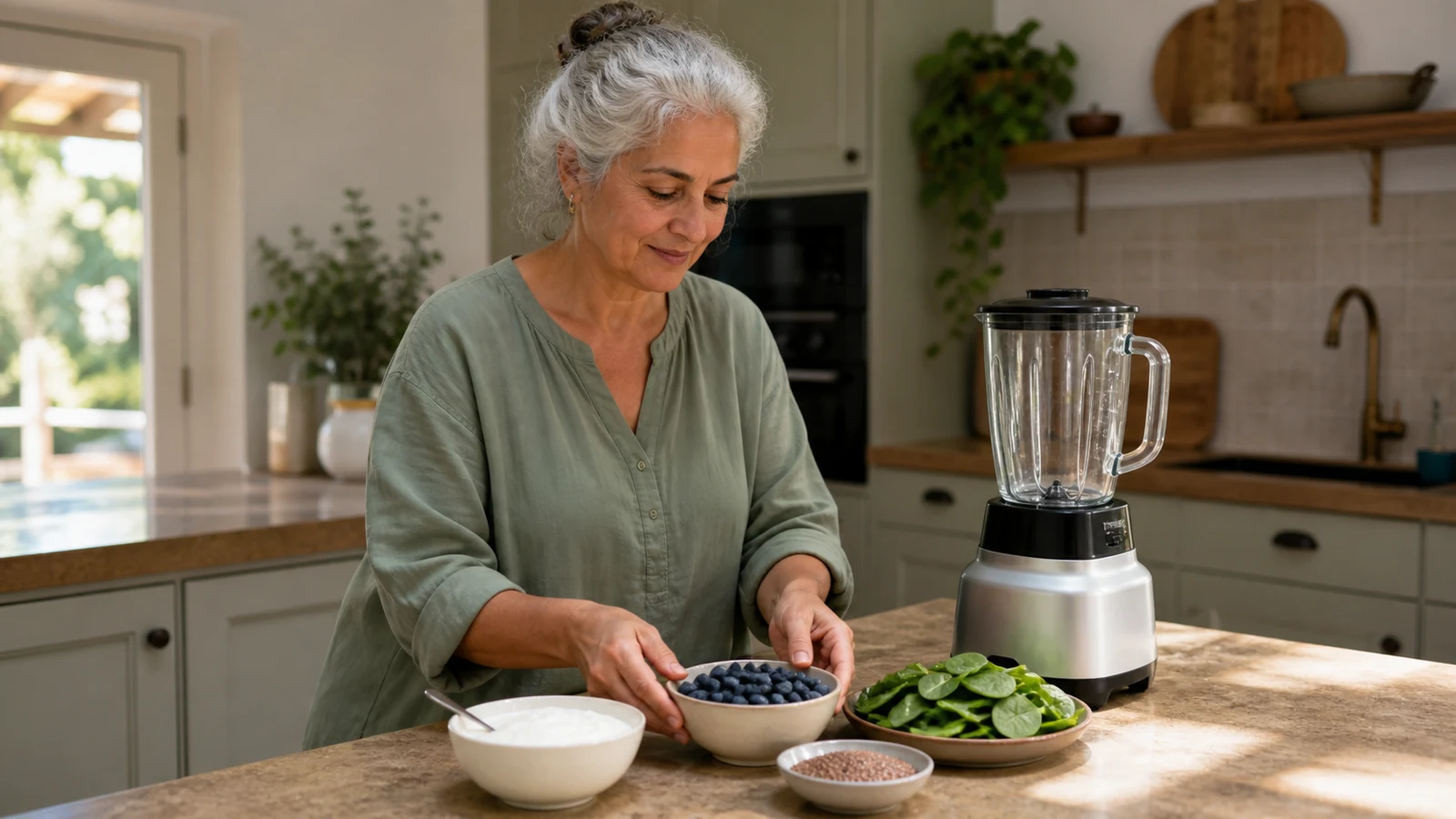
A Quick Ingredient and Label Checklist
The NIH National Institute on Aging recommends variety across fruit, vegetables, protein foods, grains and dairy or fortified alternatives. A smoothie can combine some of these, while the rest of the day’s food still matters.
| Check | Why it matters | Practical choice |
|---|---|---|
| Protein source | Yogurt, milk, fortified soy foods and some other ingredients contribute different amounts. | Read the package protein line; a fruit-only blend will have a different profile. |
| Fruit and drink base | Fruit portions, sweetened yogurt and juice change total carbohydrate and taste. | Choose a combination that suits the person; check labels if carbohydrates matter to a care plan. |
| Texture | A smooth appearance does not establish a safe consistency for swallowing difficulties. | Follow a speech-language therapist’s prescribed texture instead of relying on a generic recipe. |
| Allergens and medicines | Milk, soy, nuts, vitamin K-rich greens and supplements may matter for some people. | Check labels and ask a clinician or dietitian before changing a medically restricted diet. |
| Food safety | Older adults can be at higher risk from foodborne illness. | Use pasteurized milk/yogurt, wash produce, refrigerate promptly and avoid ingredients that are unsafe for the person. |
Someone with diabetes may need individualized carbohydrate guidance, and kidney disease can change suitable protein, potassium or fluid choices. Those needs cannot be settled by a universal “healthy aging” smoothie formula.
If you take warfarin, the NIH Office of Dietary Supplements recommends keeping vitamin K intake consistent rather than suddenly adding large daily servings of spinach or kale. If swallowing is difficult, the NHS advises individualized assessment; a standard smoothie thickness may be unsafe.
What the Ingredient Research Shows
One controlled wild-blueberry trial randomized 66 healthy adults aged 65 to 80 to daily freeze-dried blueberry powder or a matched placebo for 12 weeks; 61 completed it, and 54 were included in the per-protocol analysis. Researchers reported differences in selected vascular and cognitive measures, although a delayed-recall result favored placebo. The study did not test any recipe here or show that an ordinary berry serving reverses aging.
A prospective study of leafy greens associated higher usual intake with slower cognitive-score decline. It was observational and cannot establish that adding a handful of spinach to a smoothie improves memory.
A review of protein intake and sarcopenia also drew on observational evidence. It supports attention to adequate protein across the overall diet, but does not make a scoop of powder a proven treatment for muscle loss.
Fiber-rich fruit, oats and seeds can contribute to a varied eating pattern. None of the source studies combines these ingredients into a trial of a daily “anti-aging” drink, and no one smoothie is a substitute for appropriate medical care or a varied diet.
What the 73-Year-Old Creator Drinks
The Ageless Fitness Lifestyle video features a 73-year-old’s personal smoothie habit with berries, protein powder, leafy greens, and a source of fat such as flax or nut butter. Her experience can inspire an ingredient combination, but it is not evidence that the recipe caused her energy, digestion, memory or healthy aging.
Common Questions
Does a smoothie need protein powder?
No. Yogurt, milk, fortified soy foods and other tolerated foods can add protein, while powder may be convenient for someone whose dietitian recommends it.
Can a smoothie replace breakfast?
It depends on the smoothie and the rest of the person’s food needs. A dietitian can help when appetite is limited or a meal replacement is part of medical care.
Is every smoothie safe for swallowing problems?
No. Required liquid thickness is individualized, and blending does not guarantee the prescribed consistency.
For broader activity context, our walking guide addresses movement separately from nutrition. Neither habit alone can promise a particular aging outcome.
Get the next evidence check. Subscribe to WorkoutHealthy Insider for practical explanations behind popular nutrition claims.
References
National Institute on Aging. Healthy meal planning: tips for older adults.
Food and Drug Administration. People at risk of foodborne illness.
Wood, E., et al. (2023). Wild blueberry polyphenols in healthy older individuals: randomized trial. American Journal of Clinical Nutrition.
Morris, M. C., et al. (2018). Nutrients and bioactives in green leafy vegetables and cognitive decline. Neurology.
Coelho-Junior, H. J., et al. (2022). Protein intake and sarcopenia in older adults. International Journal of Environmental Research and Public Health.
NIH Office of Dietary Supplements. Vitamin K and warfarin guidance; NHS. Swallowing-problem guidance.
This article offers general food ideas and is not individualized nutrition or medical advice. Ask a registered dietitian or health professional about allergies, medication interactions, swallowing problems, diabetes, kidney disease, or other medical diets.