
Quick answer: A high-protein breakfast for seniors can be built around yogurt, eggs, tofu or another suitable protein food. Choose an amount that fits your eating plan, check the actual portion and keep breakfast’s role in perspective: it is not a proven standalone treatment for muscle loss.
Below are three practical meal-building examples, transparent protein arithmetic and the research limits behind breakfast-timing claims. There is no single breakfast protein target that suits every older adult.
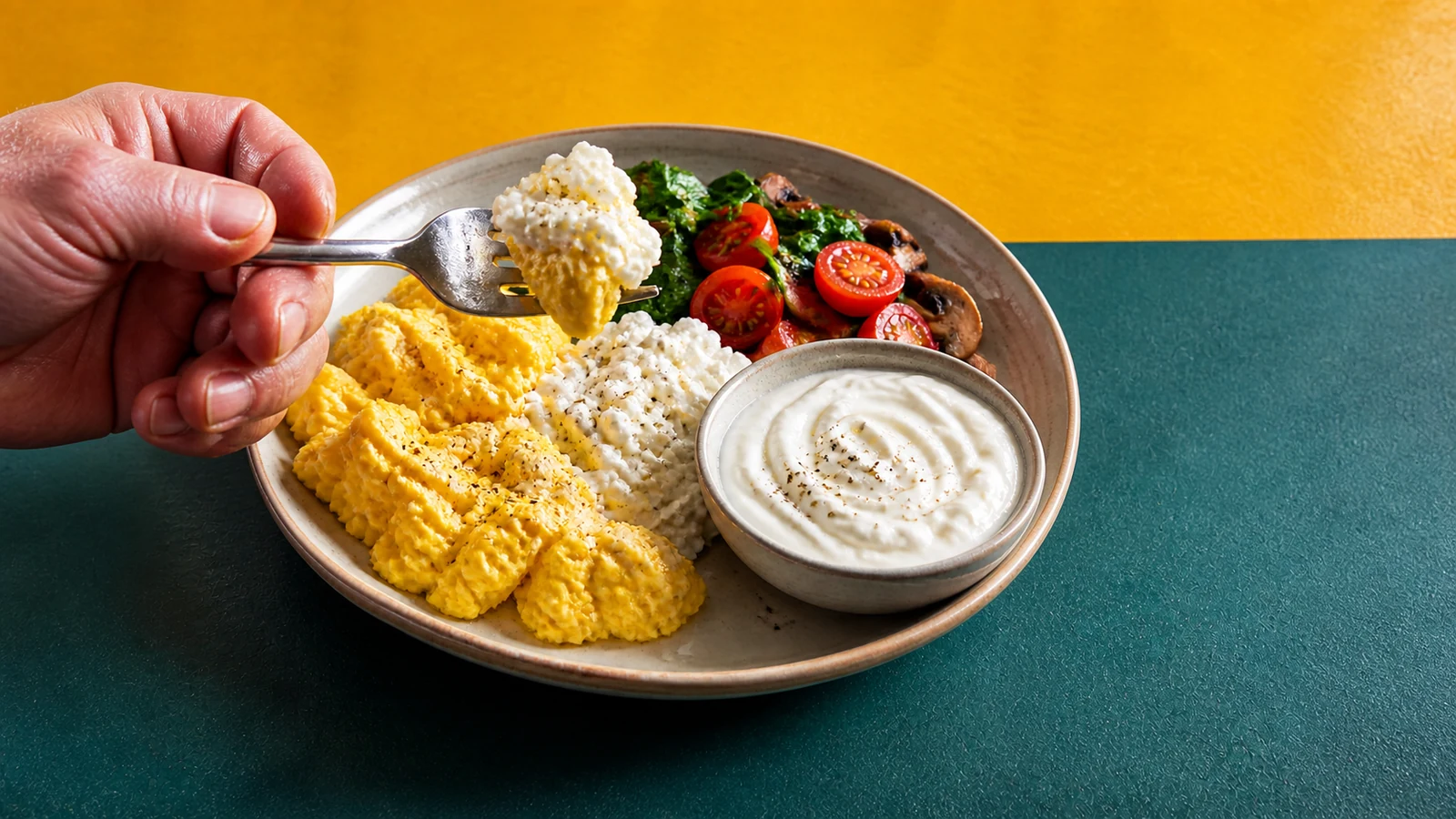
Image context: The featured breakfast plate illustrates food choices. It does not document a tested recipe, a measured protein serving or a meal that is suitable for every medical condition.
Three High-Protein Breakfast Options to Build From
These are editorial assembly examples, not kitchen-tested recipes or nutritionally complete meal prescriptions. The protein subtotals count only the named ingredients and portions, using the specific label examples explained below.
| Breakfast format | Example protein ingredients | Counted subtotal | Ways to complete the plate |
|---|---|---|---|
| Cool yogurt bowl and drink | 170 g of the example plain Greek yogurt, plus 240 mL of the example unsweetened soy drink. | 18 + 8 = 26 g. | Add fruit and a grain you enjoy; count their nutrients separately if tracking. |
| Eggs with a savory yogurt side | Two of the example large eggs, plus 85 g of the example plain Greek yogurt. | 2 × 6 + 9 = 21 g. | Serve with cooked vegetables and toast, according to your preferences and eating plan. |
| Tofu breakfast plate | 182 g of the example super-firm tofu, equal to two labeled 91 g servings. | 2 × 14 = 28 g. | Pair with vegetables and a grain; follow the tofu package’s preparation instructions. |
The totals are examples, not goals you must reach or proof that one format is best. They also do not describe all the calories, carbohydrate, fat, fiber, sodium or other nutrients in the finished meal.
1. Cool yogurt bowl and drink
Put the measured yogurt in a bowl and add fruit you enjoy, such as washed berries or sliced banana. Serve the soy drink alongside, with a grain food if it fits your usual breakfast.
This format needs no stove and lets you keep ingredients separate if you dislike mixed textures. Check the products’ allergen and storage information.
2. Eggs with a savory yogurt side
Prepare the eggs with vegetables you already use, cooking the eggs fully rather than leaving them runny. Serve the measured yogurt separately, with herbs or seasoning if desired.
The yogurt is an optional food combination, not a required addition to eggs. If you change the ingredients or eat a different portion, recalculate the subtotal rather than keeping the printed number.
3. Tofu breakfast plate
Measure the tofu before preparation and follow its package directions for cooking and storage. Serve it with cooked vegetables, a grain food and seasoning you enjoy.
For a different tofu product, recalculate from its own label. Do not carry the example’s protein number to a replacement.
Check the Portion Before You Count the Protein
The FDA explains that Nutrition Facts amounts refer to the labeled serving. That serving describes an amount people typically consume; it is not a recommendation for how much you should eat.
These US manufacturer label examples demonstrate the arithmetic rather than endorse brands. The package in your kitchen is the relevant reference, because products and portions can differ.
| Label example | Labeled serving used | Protein |
|---|---|---|
| FAGE Total Plain 0%, tub serving | 3/4 cup, 170 g. | 18 g. |
| Silk Unsweet Soymilk | 1 cup, 240 mL. | 8 g. |
| Eggland’s Best Classic large egg | 1 egg, 50 g. | 6 g. |
| Nasoya High Protein Super Firm Vacuum Pack | 1/5 piece, 91 g. | 14 g. |
For a partial serving, multiply the label’s protein by the fraction you eat. Half of the example 170 g yogurt serving is 85 g and supplies half of 18 g, or 9 g.
The food’s weight and its protein weight are different numbers. Eating 170 g of yogurt does not mean eating 170 g of protein.
The example yogurt’s 150 g individual container lists 16 g protein. The tub’s 18 g figure does not apply to every cup.
Likewise, replacing soy drink with an almond, oat or other drink does not preserve an 8 g contribution automatically. Check the replacement’s serving size and protein line.
Make Breakfast Usable When Appetite or Preparation Is a Barrier
A good-looking meal is only useful if you can obtain, prepare and enjoy it. Before buying ingredients, consider the practical obstacle: cooking effort, package size, taste, chewing difficulty or a small morning appetite.
- Little preparation time: Use a ready-to-serve protein food you tolerate and add familiar foods around it.
- A large portion feels unappealing: Start the planning conversation with the amount you can comfortably eat, and count that actual amount.
- Food waste: Compare the number of portions you will use with the package size, rather than assuming the biggest container is the best purchase.
- A plant-based preference: Check a tofu, bean or soy product’s actual label instead of applying a dairy or egg estimate.
Persistent poor appetite, unintended weight loss or chewing problems deserve professional assessment; seek prompt medical advice for new swallowing difficulty. A soft food is not automatically safe for someone with a swallowing disorder, and this guide does not replace an advised texture or fluid plan.
Do not judge the whole day’s nutrition by a breakfast protein subtotal. Bring your usual meals and any treatment restrictions to a clinician or registered dietitian when you need an individualized plan.
Breakfast and Muscle Loss
A 2026 review included seven randomized trials and 305 adults aged 60 or older. It found no clear pooled lean-mass or strength advantage, with low or very low certainty depending on the outcome.
Lean mass used five trials and 181 participants; grip strength used six and 274. Several interventions supplied other meals too, preventing an isolated breakfast-timing comparison.
Possible reductions in daily food intake, particularly in analyses without exercise, were uncertain. Fuller is not automatically better for someone struggling to eat enough; these findings do not prove breakfast or protein useless.
The Short Feeding Study
Mamerow and colleagues studied eight healthy adults aged 25 to 55, averaging about 37. Each followed two seven-day diets separated by a washout.
Planned breakfast/lunch/dinner protein was roughly 30/30/30 g versus 10/15/65 g, around 90 g daily. Daily totals were similar, not identical; these rounded research conditions are not personal meal targets.
Even distribution produced higher 24-hour muscle protein synthesis, a measured muscle-building process. Synthesis and breakdown could not be measured concurrently; this was not long-term muscle retention or strength after 60.
Keep the Food-Safety Details With the Meal
FDA egg-safety guidance is especially relevant because older adults have greater risk of severe foodborne illness. Cook eggs until the whites and yolks are firm, and keep scrambled eggs from remaining runny.
Egg-containing dishes should reach 160°F, and refrigerated cooked egg dishes should be reheated to 165°F. Use a food thermometer for those temperatures rather than relying on a photograph.
Keep eggs refrigerated at 40°F or below. Refrigerate cooked eggs and egg dishes within two hours, or within one hour when the surrounding temperature is above 90°F.

Follow the storage directions on your yogurt, soy drink and tofu. Wash unwashed produce under running water and keep raw egg contact away from ready-to-eat ingredients.
When Does the Breakfast Plan Need Individual Advice?
With chronic kidney disease, ask your healthcare team about protein amount and sources. Needs vary; dialysis may require more protein than nondialysis care.
Prescribed diets, allergy advice and diabetes meal or medication plans take priority. Protein arithmetic cannot establish personal suitability.
Unexplained weakness, unintended weight loss or poor intake needs assessment. A breakfast change does not diagnose sarcopenia or replace an activity or treatment plan.
A Simple Breakfast Planning Card
Write down one breakfast you would actually enjoy, then answer these questions. This is an editorial planning aid, not a clinical assessment.
- Which protein food and exact package am I using?
- What portion will I actually eat, and how does that compare with its label?
- What other foods complete the meal for my preferences and eating plan?
- What preparation, storage, allergy or clinical restriction do I need to account for?
Fictional Pat records 18 g for a 150 g yogurt cup. Its own label says 16 g; the corrected subtotal uses that value.
That small correction is useful regardless of whether a headline makes a dramatic muscle claim. A realistic meal and an honest portion count provide a better starting point for a nutrition discussion.
References
- Ikeda et al. (2026). Food Science & Nutrition, 14, e72171. Original review.
- Mamerow et al. (2014). Journal of Nutrition, 144, 876 to 880. Original study.
- US Food and Drug Administration. How to understand and use the Nutrition Facts label; What you need to know about egg safety; and Selecting and serving produce safely.
- National Institute of Diabetes and Digestive and Kidney Diseases. (2025). Healthy eating for adults with chronic kidney disease.
- National Health Service. (2023). Dysphagia (swallowing problems).
Medical disclaimer: This article provides general nutrition information, not a personal protein prescription or treatment plan. Discuss medical conditions, poor intake, unintended weight loss and dietary restrictions with your treating clinician or registered dietitian.