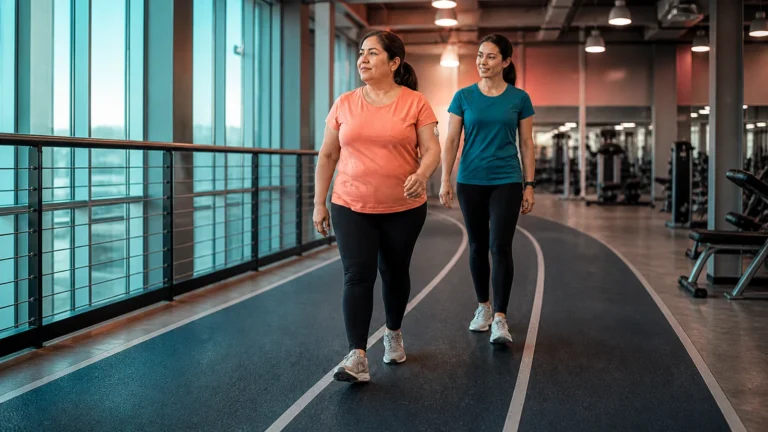

National Cancer Survivors Month falls every June.
A video from the YouTube channel Cancer Fitness marked the occasion with a presentation on exercise and breast cancer.
The talk was delivered as part of an Advocacy Monthly Meeting hosted by the National Breast Cancer Coalition.
Its core message was simple.
Clinical guidance also supports tailored aerobic and resistance exercise during active treatment with curative intent to help reduce fatigue and preserve function, provided the oncology team considers it safe for the individual. That is a supportive part of care, not a cancer treatment or a guarantee of improved survival.
Movement matters long after active treatment ends.
That claim deserves a closer look at the actual published research behind it.
What the Video Claims
The video is framed around National Cancer Survivors Month, a recognition observed every June.
It comes from Cancer Fitness, a YouTube channel with the handle Cancer_Fitness_Org.
The channel presented at an Advocacy Monthly Meeting run by the National Breast Cancer Coalition.
That organization describes its mission as ending breast cancer through advocacy, education, policy, and research.
This review could not confirm a named presenter, a specific clinical license, or an exercise oncology certification tied to the person speaking in the video.
What is confirmed is the channel name, its YouTube handle, and the organizational setting of the talk.
The general message of the presentation is that breast cancer survivors benefit from staying physically active once treatment ends.
That broad idea lines up with a large body of published research.
The specific details spoken in the video were not independently verified for this article, since no transcript or cited source list was available to check them against.
Instead, this article builds its case directly from peer reviewed studies on breast cancer survivorship and exercise.
What Real Research Shows About Physical Activity and Recurrence Risk
One of the most cited studies in this field followed thousands of women previously treated for breast cancer.
Holmes and colleagues published their findings in JAMA in 2005.
Researchers tracked physical activity levels among women already diagnosed with the disease.
Women who kept up a regular walking habit after diagnosis had a lower risk of dying from breast cancer than women who stayed largely inactive.
The benefit showed up most clearly among women whose tumors were hormone receptor positive.
This was an observational study, not a randomized trial.
That distinction matters, and this article returns to it later.
Even so, the finding has been influential because it lines up with similar patterns seen in other cancer survivor groups.
Women who stayed physically active after a breast cancer diagnosis had a lower risk of dying from the disease than women who remained largely inactive.
None of this means exercise cures cancer or replaces treatment.
It means physical activity is one factor among many that researchers have linked to survivorship outcomes.
What Real Research Shows About Exercise and Heart Health During and After Treatment
Some breast cancer treatments carry a real cardiovascular cost.
Jones and colleagues reviewed this problem in the Journal of the American College of Cardiology in 2007.
Certain chemotherapy drugs, including anthracyclines, can injure heart muscle.
HER2 targeted drugs carry their own cardiac risks, separate from chemotherapy.
Radiation aimed at the left side of the chest can add to that risk over time.
Doctors call this combined effect cardiotoxicity.
It is one reason cardiology and oncology now work together in a distinct field called cardio-oncology.
A 2018 meta-analysis in the Journal of Clinical Oncology looked at whether structured exercise helps.
Scott and colleagues pooled results from many exercise trials in cancer patients, including breast cancer survivors.
Structured exercise therapy improved cardiorespiratory fitness more than usual care did.
Cardiorespiratory fitness is a strong predictor of long term health in cancer survivors.
Better fitness after treatment is linked to a lower burden from the cardiovascular side effects tied to certain cancer drugs.
What Real Research Shows About Bone Density and Hormone Therapy
Many women with hormone receptor positive breast cancer take an aromatase inhibitor for years after treatment.
These drugs lower estrogen levels throughout the body.
Estrogen helps protect bone, so lowering it can speed up bone loss.
This raises the risk of low bone density and fracture in survivors who take these medications long term.
Winters-Stone and colleagues studied this problem directly.
Their randomized controlled trial was published in Breast Cancer Research and Treatment in 2011.
Postmenopausal breast cancer survivors were assigned to either a structured strength training program or a stretching control group.
The strength training group preserved bone mineral density at the hip and spine better than the stretching group did.
Participants doing strength training also gained muscle mass and strength over the course of the study.
The stretching group, by contrast, continued to lose bone density over the same period.
This trial is one of the clearer pieces of evidence that resistance training can offset a specific, drug related side effect of breast cancer treatment.
What Real Research Shows About Quality of Life in Survivorship
The video’s presentation also touched on quality of life, not just survival statistics.
That focus has real support in the research literature.
Mishra and colleagues conducted a large Cochrane systematic review published in 2012.
They analyzed dozens of randomized trials testing exercise programs in cancer survivors.
Exercise programs were linked to improvements in overall quality of life compared with no exercise.
Survivors who exercised reported less fatigue on average.
They also reported better physical functioning and emotional wellbeing across several of the pooled trials.
These improvements showed up across different cancer types, including breast cancer.
In 2022, the American Society of Clinical Oncology published a formal guideline on this topic.
Ligibel and colleagues, writing for ASCO, recommended structured exercise for people during and after cancer treatment.
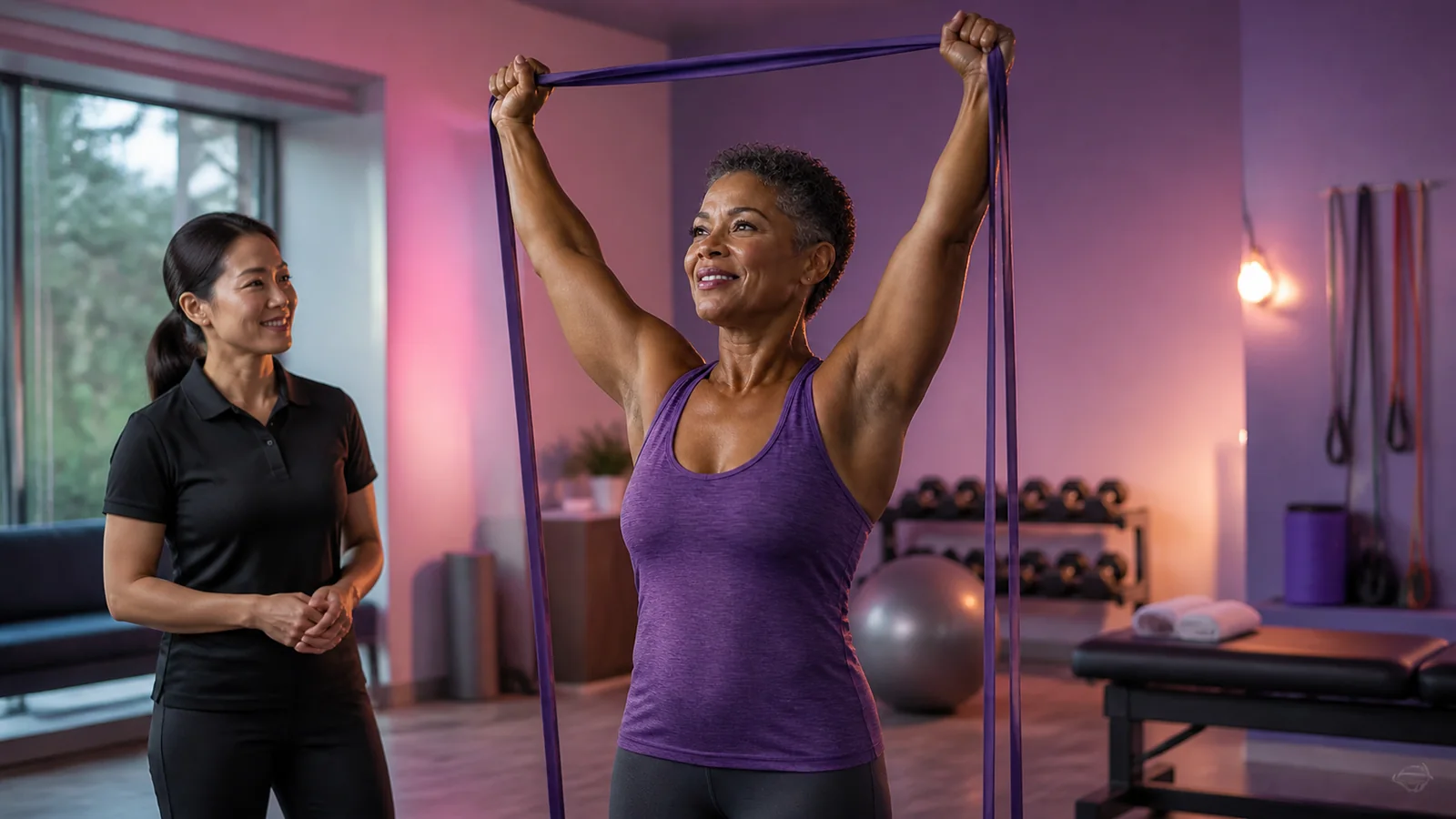
The guideline calls for a combination of aerobic activity and resistance training, tailored to each patient’s situation.
It also calls for referral to an exercise professional trained in oncology when one is available.
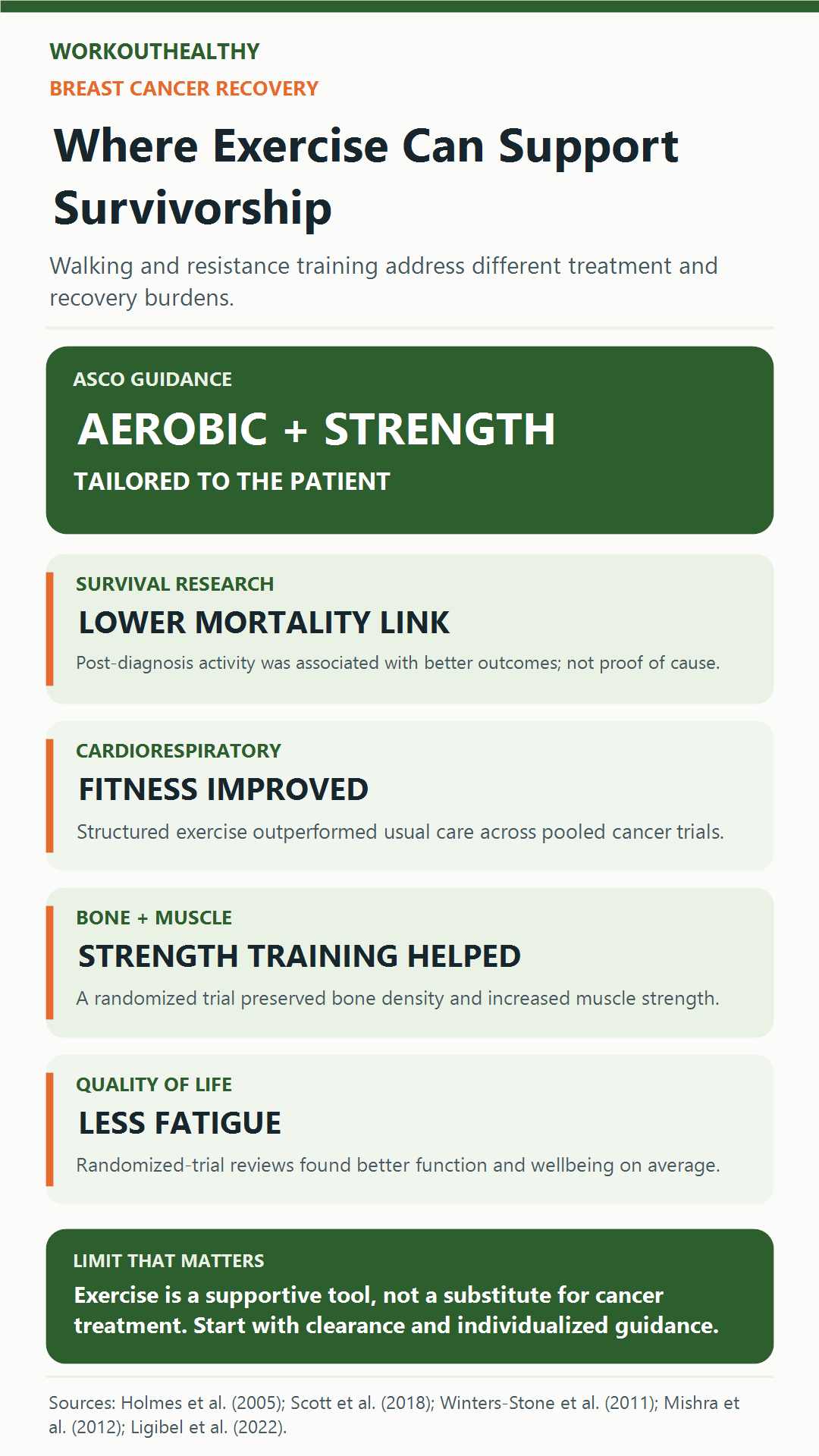
A major cancer guideline now recommends structured exercise, combining aerobic activity and resistance training, for people during and after cancer treatment.
The Mechanism
Researchers do not point to one single mechanism behind these findings.
Several plausible pathways likely work together.
Aerobic exercise trains the heart and lungs to work more efficiently.
That conditioning effect helps offset some of the cardiovascular strain caused by certain cancer treatments.
Resistance training places mechanical load on bone.
Bone responds to that load by maintaining or building density, which can counter the bone loss caused by low estrogen levels.
Muscle tissue also tends to shrink during and after cancer treatment, a pattern seen across many serious illnesses.
Strength training directly counters that muscle loss.
Exercise is also linked to lower chronic inflammation throughout the body.
Chronic inflammation has been studied as one biological pathway connecting inactivity to worse cancer outcomes.
Exercise additionally supports better sleep and mood in many survivors.
Better sleep and mood can make it easier to stick with follow up care and medication schedules.
None of these mechanisms alone fully explains the survival differences seen in observational research.
Together, they offer a reasonable biological explanation for why activity keeps showing up as a positive factor in survivorship studies.
What This Evidence Does Not Prove
The Holmes study on recurrence and survival was observational, not a randomized trial.
Women were not randomly assigned to exercise or inactivity.
It is possible that healthier women were simply more able to exercise in the first place.
Researchers call this reverse causation, and it is a real limitation of observational data.
The strength training bone density trial was smaller and specific to postmenopausal survivors.
Its results may not fully apply to premenopausal women or to men with breast cancer.
The quality of life review pooled many different trial designs, exercise types, and cancer stages together.
That mix makes it hard to say exactly how much exercise, at what intensity, produces the biggest benefit.
None of this research shows that exercise can replace chemotherapy, radiation, surgery, or hormone therapy.
None of it shows that exercise alone prevents a cancer recurrence.
The video’s own specific claims were not independently verified in this article.
Readers should treat exercise as a supportive tool, not a substitute for prescribed cancer treatment.
Who Should Work With a Clinical Team
Anyone in active breast cancer treatment should talk with their oncology team before starting a new exercise program.
This matters even more for anyone who has had cardiotoxic chemotherapy or HER2 targeted therapy.
A cardio-oncology specialist can screen for heart strain before someone increases aerobic intensity.
Anyone taking an aromatase inhibitor should ask their doctor about a bone density scan before starting a strength training program.
A physical therapist or certified exercise oncology specialist can help build a program suited to a person’s specific treatment history.
This is especially true for survivors managing lymphedema risk, joint pain from hormone therapy, or lingering fatigue.
People with implanted ports, recent surgical sites, or ongoing radiation treatment need individualized guidance on which movements are safe.
A structured, supervised start is safer than guessing based on a general fitness video, however well intentioned that video is.
Working with a clinical team does not slow progress.
It usually makes steady progress possible without unnecessary setbacks.
A Practical Takeaway
Once a doctor has cleared someone for exercise, the ASCO guideline offers a reasonable starting framework.
It points toward a mix of aerobic activity and resistance training most weeks.
Aerobic activity does not have to mean running or intense cardio machines.
Walking counts, and it is one of the most studied forms of activity in survivorship research.
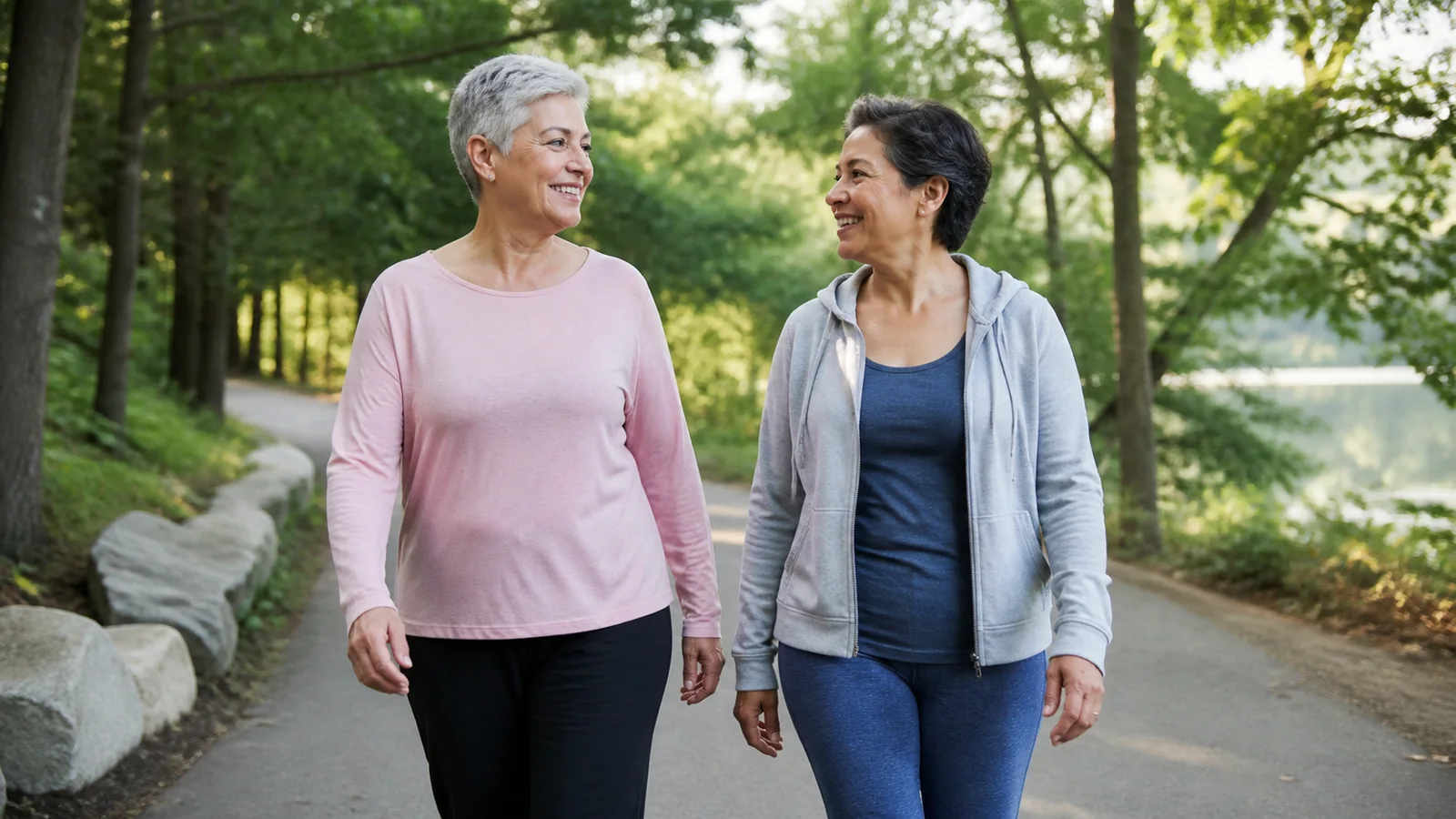
For general guidance on building a walking habit, our breakdown of how many miles you should walk a day covers pacing for people just getting back into movement.
Research tying daily step counts to longer term health outcomes, covered in our piece on daily steps and mortality, offers useful context for why consistency matters more than intensity.
Resistance training should start light, with close attention to how the body responds.
Two sessions a week focused on major muscle groups matches what several of the studies above actually tested.
Our look at whether lifting weights keeps your brain young explains some of the broader research on resistance training in older or recovering adults.
Muscle loss is common during any long, demanding medical treatment, not just cancer care.
Our article on losing weight and muscle mass explains why preserving muscle matters during recovery.
Progress should be slow and steady, guided by energy levels, blood counts, and any restrictions from a treatment team.
The goal is not to chase a specific number.
The goal is building a sustainable habit that a clinical team has signed off on.
Watch the video
Want more like this? Subscribe to WorkoutHealthy Insider for practical explanations behind popular fitness claims.
References
Holmes, M. D., Chen, W. Y., Feskanich, D., Kroenke, C. H., & Colditz, G. A. (2005). Physical activity and survival after breast cancer diagnosis. JAMA, 293(20), 2479 to 2486. https://doi.org/10.1001/jama.293.20.2479
Jones, L. W., Haykowsky, M. J., Swartz, J. J., Douglas, P. S., & Mackey, J. R. (2007). Early breast cancer therapy and cardiovascular injury. Journal of the American College of Cardiology, 50(15), 1435 to 1441. https://doi.org/10.1016/j.jacc.2007.06.037
Ligibel, J. A., Bohlke, K., May, A. M., Clinton, S. K., Demark-Wahnefried, W., Gilchrist, S. C., Irwin, M. L., Late, M., Mansfield, S., Marshall, T. F., Meyerhardt, J. A., Thomson, C. A., Wood, W. A., & Alfano, C. M. (2022). Exercise, diet, and weight management during cancer treatment: ASCO guideline. Journal of Clinical Oncology, 40(22), 2491 to 2507. https://doi.org/10.1200/JCO.22.00687
Mishra, S. I., Scherer, R. W., Geigle, P. M., Berlanstein, D. R., Topaloglu, O., Gotay, C. C., & Snyder, C. (2012). Exercise interventions on health-related quality of life for cancer survivors. Cochrane Database of Systematic Reviews, 2012(8), Article CD007566. https://doi.org/10.1002/14651858.CD007566.pub2
Scott, J. M., Zabor, E. C., Schwitzer, E., Koelwyn, G. J., Adams, S. C., Nilsen, T. S., Moskowitz, C. S., Matsoukas, K., Iyengar, N. M., Dang, C. T., & Jones, L. W. (2018). Efficacy of exercise therapy on cardiorespiratory fitness in patients with cancer: A systematic review and meta-analysis. Journal of Clinical Oncology, 36(22), 2297 to 2305. https://doi.org/10.1200/JCO.2017.77.5809
Winters-Stone, K. M., Dobek, J., Nail, L., Bennett, J. A., Leo, M. C., Naik, A., & Schwartz, A. (2011). Strength training stops bone loss and builds muscle in postmenopausal breast cancer survivors: A randomized, controlled trial. Breast Cancer Research and Treatment, 127(2), 447 to 456. https://doi.org/10.1007/s10549-011-1444-z
This article is for general information only and is not medical advice. If you have an injury, ongoing pain, or a medical condition, talk to a doctor or physical therapist before you change how you train or eat.