
How much protein do you need to build muscle? The often-cited 1.6 grams per kilogram of body weight per day, or about 0.73 grams per pound, is a resistance-training model estimate for fat-free-mass gains, not a demonstrated intake ceiling.
That is a model estimate, not a minimum everyone must reach or a ceiling no one can benefit from exceeding.
Training, health, age, and the food pattern around protein all matter. The calculation below helps explain the research number without setting an individual diet plan.
What does 1.6 grams per kilogram look like?
To reproduce the research reference, convert pounds to kilograms by dividing by 2.205, then multiply kilograms by 1.6. Rounded examples are shown beside the adult protein Recommended Dietary Allowance of 0.8 g/kg/day so the two numbers are not mistaken for the same purpose.
| Example body weight | Converted kilograms | 0.8 g/kg adult RDA calculation | 1.6 g/kg research reference |
|---|---|---|---|
| 120 lb | 54.4 kg | about 44 g/day | about 87 g/day |
| 160 lb | 72.6 kg | about 58 g/day | about 116 g/day |
| 200 lb | 90.7 kg | about 73 g/day | about 145 g/day |
These are arithmetic examples, not recommended intakes for people at those weights. A registered dietitian can consider medical conditions, overall food intake, and training when an individual number is needed.
Why the RDA and muscle-building studies give different numbers
The 0.8 g/kg/day adult RDA is an adequacy reference intended to cover nearly all generally healthy adults. It was not developed to maximize resistance-training gains, so calling it “too low” for everyone confuses different questions.
Morton and colleagues’ 2018 meta-analysis included 49 studies and 1,863 participants; protein supplementation modestly increased resistance-training gains in fat-free mass and strength on average.
The model of fat-free-mass gains used 42 study arms and 723 participants, estimating a 1.62 g/kg/day breakpoint with a 95% confidence interval of 1.03 to 2.20. Its two-segment fit explained more variation than a straight line, but the authors reported it as not statistically significant (p=0.079).
The 2020 correction discloses coauthor Brad Schoenfeld’s advisory-board role with sports-supplement manufacturer Dymatize Nutrition during the paper’s preparation and at the notice date. It provides no replacement numerical analysis.
The model did not establish one precise personal threshold or show that more protein could never help in a different setting. It also assessed training and protein together; protein alone cannot substitute for the progressive training that supplied the stimulus.
What should matter before meal timing?
First consider whether the overall eating pattern supplies enough protein alongside a repeatable resistance program. Our muscle-building basics guide explains why the training stimulus and its progression matter alongside food.
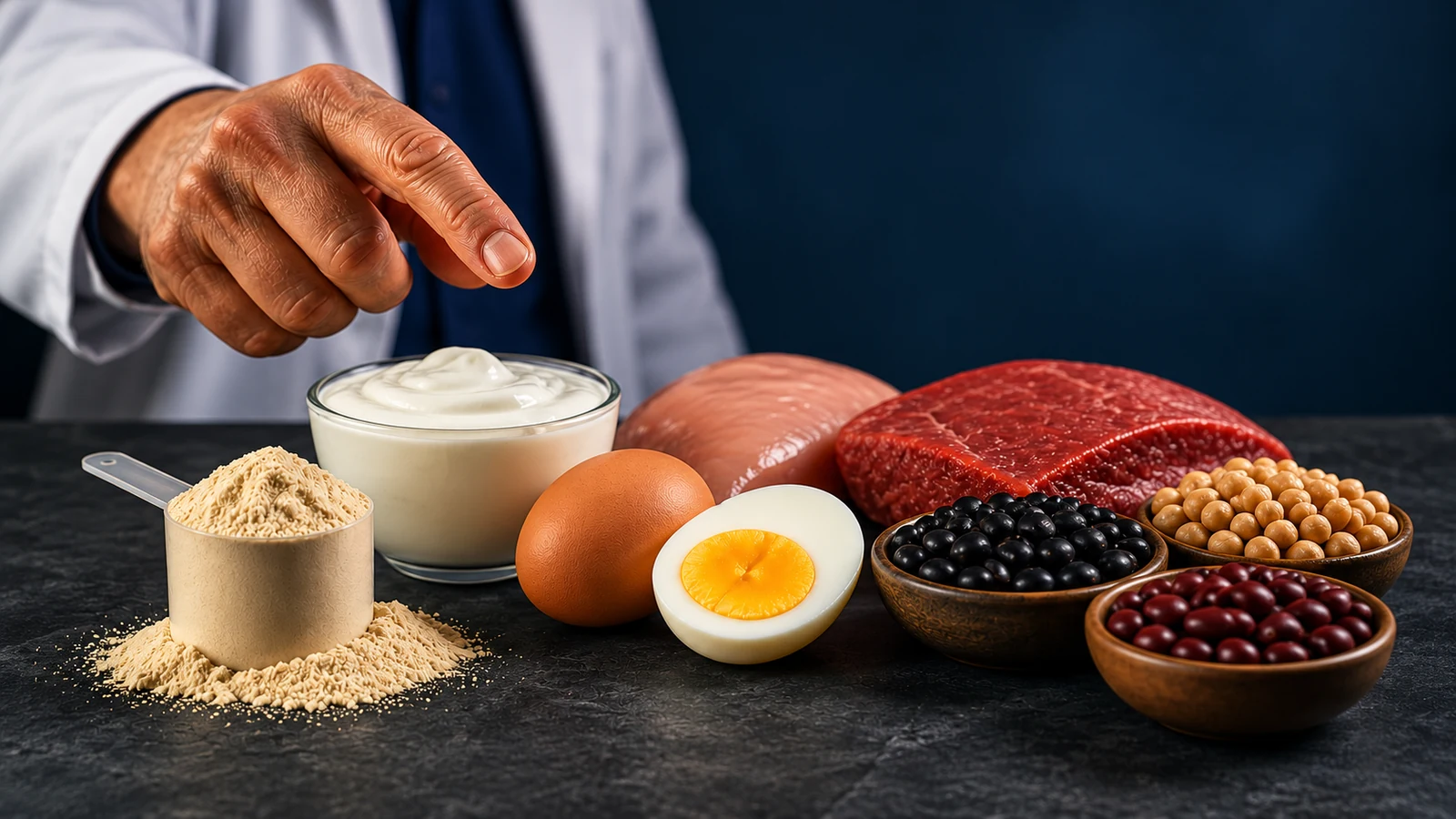
Protein can come from dairy, eggs, fish, meat, soy foods, beans, lentils, and other foods; supplements are optional. Different foods have different amino-acid profiles and amounts per serving, so a varied pattern is more informative than treating one food or powder as mandatory.
Age, energy availability, and health status may change how a study average applies. The 2018 meta-analysis cannot answer every question about older adults, medical diets, or people intentionally losing weight.
Is there a 20-gram protein cap per meal?
An acute laboratory comparison does not by itself set a personal meal limit. A 2009 leg-exercise experiment found little additional short-term muscle-protein-synthesis response from 40 versus 20 grams of egg protein in young men, but that result belongs to its specific workout, dose, population, and observation window.
Another 2013 experiment with 24 trained men compared the same 80 grams of whey divided into eight small, four medium, or two large servings during 12 hours after leg exercise. The four-serving pattern produced the highest synthesis measure in that setting, but a short-term laboratory response does not prove that every person must eat on that schedule to grow muscle.
In a different 2023 post-exercise study, 100 grams of protein produced a larger, longer anabolic response than 25 grams over 12 hours. That experimental dose is not a suggested meal size; it shows why the phrase “anything above 20 grams is wasted” is inaccurate.

Use a meal record to organize questions about the protein foods, portions and meal times in your usual eating pattern. For individual guidance, discuss that record and your training plan with a registered dietitian rather than adopting one laboratory schedule as your meal plan.
What the Phillips video can and cannot establish
The Exercise Science video features researcher Stuart Phillips and discusses protein amount, timing, and food choices. We could not independently verify a full transcript, so the numerical claims in this article come from linked research rather than unattributed quotations from him.
Phillips co-authored the Morton review and the earlier dose-response research, but even strong studies measure defined groups and outcomes. Their estimates should not be converted into a promise of muscle gain for a viewer who follows a single number.
When an individual plan matters
People with kidney disease or another condition affecting protein recommendations should consult their clinician or a registered dietitian before increasing intake. Pregnancy, adolescence, older age, medication, and changes in body weight can also change what advice is appropriate.
Neither a nutrition label nor the table above diagnoses a deficiency or proves an intake is safe for a particular person. The useful takeaway is to distinguish the general adult adequacy RDA, the average resistance-training research estimate, and a personalized clinical recommendation.
Sources
- National Academies, adult protein Dietary Reference Intakes.
- Morton et al. (2018), resistance training and protein meta-analysis.
- Morton et al. (2020), correction adding an advisory-board disclosure.
- Moore et al. (2009), post-exercise egg-protein dose-response experiment.
- Areta et al. (2013), protein-distribution experiment.
- Trommelen et al. (2023), 25- versus 100-gram post-exercise response experiment.
Medical disclaimer: This article is general nutrition and fitness information, not medical advice or a personal protein prescription. If you have kidney disease or another condition that affects protein needs, consult a qualified clinician or registered dietitian before changing your intake.