
Thumb pain from scrolling is a reason to change the task, not a diagnosis by itself. Pain at the thumb side of the wrist can fit de Quervain’s tendinopathy, but a clinician may find a joint, nerve, injury or other tendon problem instead.
A useful first step is to describe the painful task and check whether symptoms need medical attention. The guidance below separates those decisions from the question of what caused the condition.
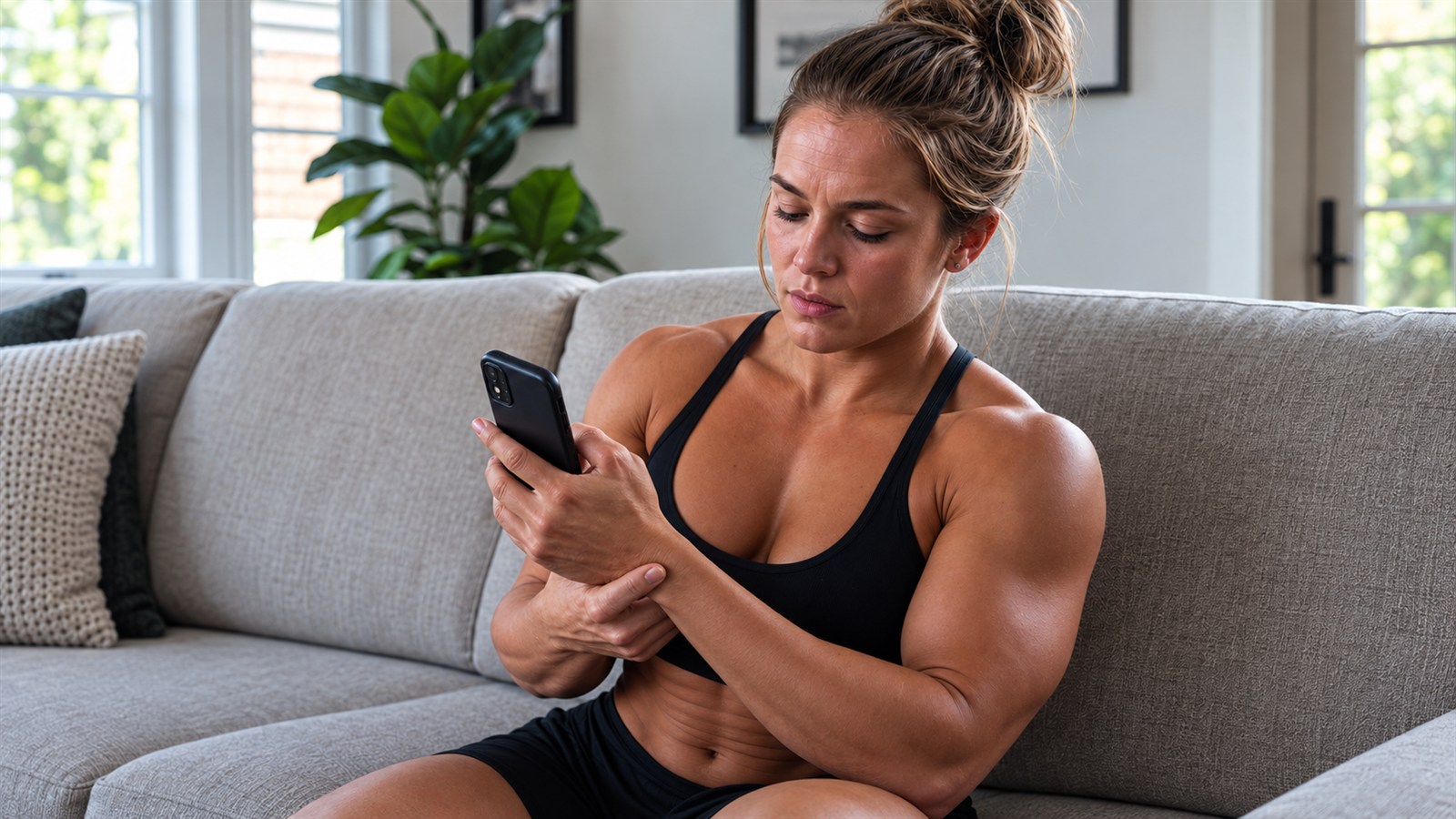
The featured image illustrates phone use and wrist discomfort; it is not a clinical photograph confirming the model has de Quervain’s or showing a diagnostic test.
When to seek help for thumb pain
The NHS thumb-pain guide advises urgent assessment for severe pain; feeling faint, dizzy or sick from pain; inability to move the thumb or hold things; changed thumb shape or colour; or loss of feeling in part or all of the hand. It also lists a snap, grinding or popping sound during injury.
For pain that limits ordinary activities, worsens, keeps returning or has not improved after two weeks of home care, the same guide advises a clinician visit. Tingling or reduced sensation and diabetes are additional reasons to seek advice; these are source-attributed care signs, not a diagnosis from scrolling.
Do not wait for a grip change to solve an injury or concerning symptoms. In an urgent situation, use the appropriate urgent-care or emergency service where you live.
Change the painful task, one variable at a time
Support the phone with two hands or a stand, then try scrolling with an index finger instead of reaching repeatedly with the thumb. Voice input can replace long stretches of thumb typing.
If a session makes the wrist more painful, stop or switch tasks. The Gloucestershire NHS hand-therapy guide advises adapting painful activities and taking breaks during gripping, rather than a fixed prevention timer.
Write down the task, how long you did it, discomfort during it, and how the wrist felt afterward. This short log may reveal whether scrolling, typing, lifting, childcare or another hand task contributes more than you expected.
Use a comfortable wrist position rather than forcing one supposedly perfect angle. A case or grip accessory may help one person but make another person’s reach wider.
A change that makes phone use easier is useful even if the device did not originally cause the problem. If the pain keeps worsening or ordinary tasks become difficult, arrange an assessment instead of repeatedly trying more gadgets.
Does scrolling cause de Quervain’s?
Some smartphone studies report an association between heavier use and thumb-side wrist symptoms or positive clinical tests. The 2020 review of smartphone use and de Quervain’s is relevant, but much of this evidence is observational.
When phone use and symptoms are measured at roughly the same time, the study cannot tell whether the phone caused the condition, whether pain changed how someone uses the phone, or whether another activity matters. A systematic review of repetitive manual work likewise distinguished association from proof of cause.
The useful response is symptom-guided activity modification, not a claim that every thumb ache is a phone injury. Gardening, tools, sports, training, childcare and other demands may load the same area.
Why a self-test cannot choose treatment
The Gloucestershire hand-therapy guide describes gradual strengthening once pain has begun to settle, with advice from a hand therapist. It does not supply one stretch, exercise dose or self-test that selects treatment for every painful thumb.
Write down what happens during ordinary gripping, work, childcare or training and bring those observations to the assessment. Avoid performing a painful test simply to fill in the record.
Thumb pain has several possible causes, so the task that aggravates it does not name the diagnosis. A clinician can put the history and examination together and decide whether further investigation is appropriate.
If a clinician confirms de Quervain’s
Care often starts by changing painful activities and managing load. The NHS guide describes a thumb-and-wrist splint, suitable pain relief and gradual exercise after symptoms settle as options that may be discussed for an individual case.
A 2023 review of 30 treatment studies examined options for people with diagnosed de Quervain’s. Its authors suggested considering corticosteroid injection with short thumb-spica immobilization as first-line care, while reporting that adding immobilization produced statistically but not clinically significant functional benefits in the relevant comparisons.
This is a clinician-directed treatment finding, not instructions to inject, splint or immobilize your own thumb. It also does not prove that a phone posture or timer prevents the condition.
Recovery may require changing more than scrolling. Hand therapy can account for lifting, cooking, work and childcare, since the same wrist is used across the whole day.
Copy a task record for the appointment
This blank record is an editorial communication aid, not a validated symptom scale or an experiment to provoke pain. Include tasks you already perform and the instructions your clinician has given you.
| Field | Your notes | Why include it? |
|---|---|---|
| Task and equipment | ____ | Distinguish scrolling, typing, tools, lifting and other demands. |
| Location and timing of symptoms | ____ | Describe the experience without assigning a cause. |
| Ordinary activity affected | ____ | Explain what is becoming difficult. |
| Change already made | ____ | Record support, input method or another adjustment. |
| What happened afterward | ____ | Report the response without calling it proof of treatment. |
| Existing advice and questions | ____ | Keep professional instructions alongside your observations. |
For example, a fictional note might say, “Dictating the long message reduced thumb typing, but opening jars still hurt.” That is a useful report of two tasks, not proof the phone caused or cured a tendon condition.
A record that includes the whole day can be more informative than a screen-time total alone. Bring it to a qualified professional if symptoms persist or affect normal hand use.
A practical next step
For thumb pain from scrolling, reduce the movement that reliably aggravates it and look at all the other hand tasks in your day. Keep location and warning signs in view so a different condition is not missed.
If symptoms persist, worsen or limit normal use, get a clinical assessment. There is no proven universal phone grip, break interval or stretch that prevents de Quervain’s for everyone.
Get the next evidence check.
Five practical fitness stories worth your time, every Friday.
One email a week. No product pitches. Unsubscribe in one click.
References
- NHS. Thumb pain: care and assessment guidance.
- Gloucestershire Hospitals NHS Foundation Trust. De Quervain’s syndrome of the wrist.
- Morgan, S. D. J., et al. (2020). A review of de Quervain’s stenosing tenovaginitis in the context of smartphone use. Journal of Hand Surgery Asian-Pacific Volume.
- Stahl, S., et al. (2013). Systematic review and meta-analysis on the work-related cause of de Quervain tenosynovitis. Plastic and Reconstructive Surgery.
- Challoumas, D., et al. (2023). Management of de Quervain tenosynovitis: A systematic review and network meta-analysis. JAMA Network Open.
Medical disclaimer: This article is general information, not a diagnosis or personal treatment plan. Seek qualified care for persistent pain, injury, numbness, weakness or limits in normal hand use.