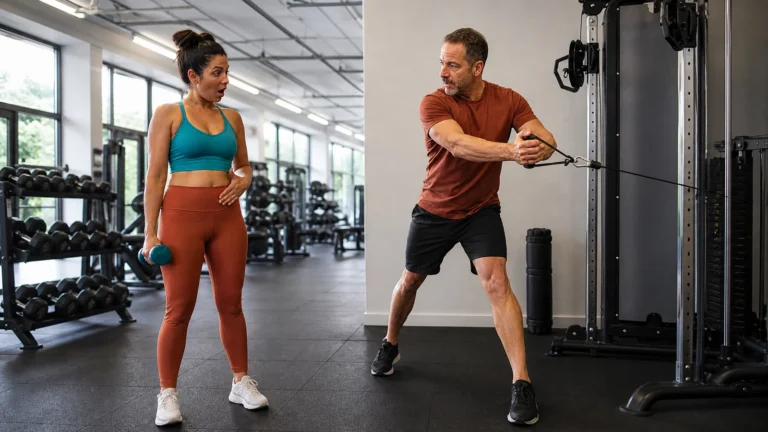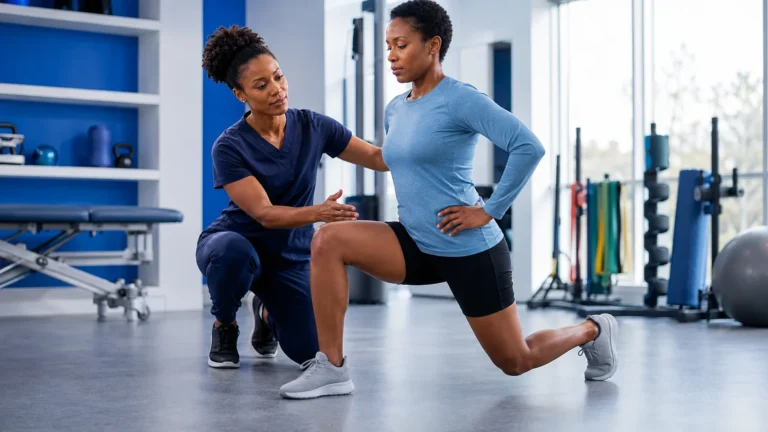

Hiring a personal trainer can be one of the best fitness decisions you ever make.
It can also be an expensive habit that never quite pays off.
The difference often comes down to things nobody mentions during the free consultation.
Fitness creator Sean Nalewanyj put it bluntly in a video titled “Why 90% of Personal Trainers Are a Waste of Money.”
That number is his opinion, not a measured statistic.
But the concern behind it is fair.
A trainer earns more when you keep booking sessions, even if you could train well on your own.
That does not make trainers dishonest.
Plenty of them work hard to make clients independent.
Still, it helps to know the eight things a trainer may not tell you up front, and what the research actually says about paying for one.
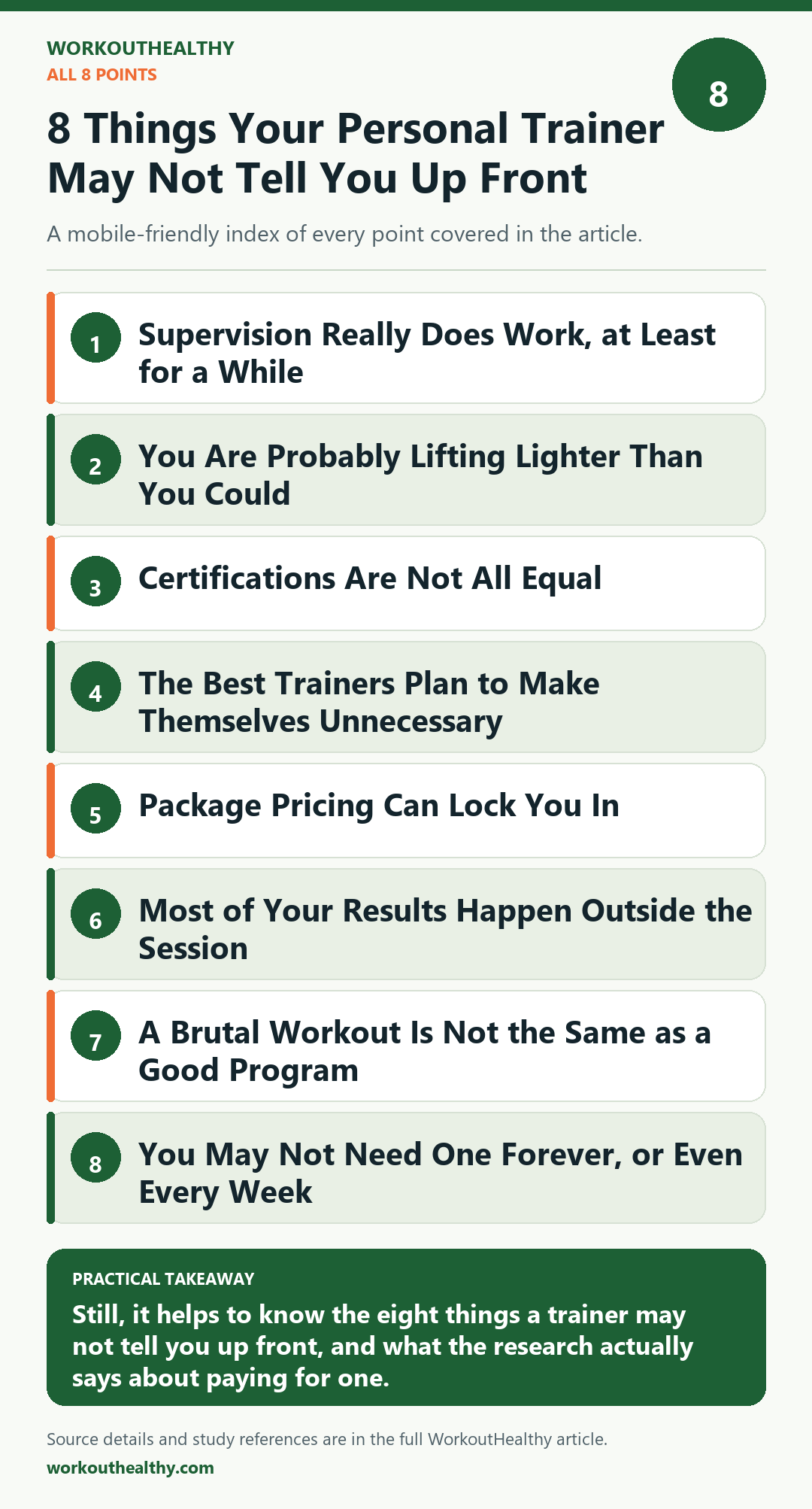
1. Supervision Really Does Work, at Least for a While
Here is the good news for trainers first.
A 2000 study in Medicine and Science in Sports and Exercise followed moderately trained lifters for 12 weeks of heavy strength training.
One group trained with a personal trainer watching every session, and the other trained on its own with the same program.
The supervised group improved its squat by about 33 percent and its bench press by about 22 percent.
The unsupervised group improved by about 25 percent and 15 percent.
The researchers said the main reason was simple.
The supervised group added weight faster and more consistently.
A good trainer’s biggest value is often not a secret exercise. It is making sure you actually push.
2. You Are Probably Lifting Lighter Than You Could
Most people pick weights that feel comfortable, not weights that challenge them.
A 2008 study asked 46 trained women to choose a weight they would normally use for 10 reps on four machines.
Women who trained with a personal trainer picked about 51 percent of their one rep max on average.
Women who trained alone picked about 42 percent.
A 2017 study of 21 trained adults found the same pattern, with trainer clients choosing loads 12 to 27 percent heavier depending on the exercise.
Even the trainer groups chose loads well below their true limits.
So a trainer can help, but you can also learn to push harder yourself.
3. Certifications Are Not All Equal

“Certified personal trainer” can mean very different things.
Some certificates require serious study and a proctored exam.
Others ask for far less.
In the United States, a useful quality check is whether the certification is accredited by the National Commission for Certifying Agencies, often called NCCA.
Ask which certification your trainer holds, and look it up.
A college degree in exercise science or kinesiology is another good sign, though it is not required to be a great coach.
4. The Best Trainers Plan to Make Themselves Unnecessary
This is the point the video’s title hints at.
A trainer who teaches you well should, over time, need to see you less often.
There is no single secret phrase that every trainer uses to keep clients around.
But watch for a pattern.
If you keep hearing that you are “not ready” to train alone, with no clear plan or timeline, ask why.
A good trainer should be able to tell you what skills you still need and roughly when you will have them.
Some clients do want a trainer for the long run, for motivation or accountability, and that is a fine choice.
It just should be your choice, made with clear eyes.
5. Package Pricing Can Lock You In
Many gyms sell sessions in packages.
The bigger the package, the lower the price per session.
That can be a fair deal.
It also means you pay for months of sessions before you know if the fit is right.
Before you sign, ask about the cancellation policy, whether unused sessions expire, and whether you can start with a small package.
Read the contract, not just the sales sheet.
6. Most of Your Results Happen Outside the Session
Two or three hours a week with a trainer is a small slice of your week.
Your food, sleep, stress, and daily steps fill the rest.
A trainer can coach you on those things, but only you can do them.
There are 168 hours in a week.
Even three training sessions leave more than 160 hours that your trainer never sees.
That is where most habits are built or broken.
If a trainer never asks about your eating, sleeping, or activity outside the gym, you are missing a big part of what you are paying for.
7. A Brutal Workout Is Not the Same as a Good Program
Some trainers make every session exhausting because it feels productive.
You leave soaked and sore, so it seems like you got your money’s worth.
But being tired is not the same as making progress.
A good program has a clear plan to add weight, reps, or difficulty over weeks and months.
It also includes easier days and rest.
Ask your trainer to show you how your workouts are supposed to progress.
Our 7 point training program audit is a quick way to check any plan, including one a trainer wrote.
8. You May Not Need One Forever, or Even Every Week
A trainer is not all or nothing.
Many people get great value from a short block of sessions to learn form, then check in once a month.
Small group training, semi private sessions, and online coaching usually cost less per hour.
A few well timed sessions can do more for you than a year of weekly appointments without a plan.
If you are still deciding, our full guide on whether you need a personal trainer and how to hire one walks through the options.
What the Research Actually Shows
Put the studies together and a clear picture forms.
Supervision tends to lead to heavier training loads.
Heavier, well progressed loads tend to lead to more strength.
That benefit showed up even in people who already had training experience.
Beginners were not the focus of these studies, though they likely have the most to gain from coaching on form.
In other words, a trainer’s value is largely about effort and progression, not magic exercises.
That is also good news if you cannot afford one.
You can copy much of that benefit by tracking your lifts and adding weight on purpose.
What This Evidence Does Not Prove
These studies were small, with dozens of people rather than thousands.
They measured strength and training loads, not long term health, body fat, or injury rates.
They did not compare good trainers with bad trainers.
The trainers in research studies are often well qualified, which may not match the average gym.
And none of these studies can tell you whether a specific trainer is worth their price.
Signs Your Trainer Is Worth the Money
- They ask about your goals, injuries, and schedule before the first workout.
- They write down or track your lifts every session.
- Your weights or reps go up over time.
- They explain why you are doing each exercise.
- They coach your form with clear, simple cues.
- They talk about food, sleep, and activity outside the gym.
- They can describe a plan for you to train more independently.
A few missed boxes are normal.
Most missed boxes are a sign to ask questions or look elsewhere.
Questions to Ask Before You Hire Anyone
- Which certification do you hold, and is it NCCA accredited?
- How long have you been training clients?
- How will you track my progress?
- What happens if I need to cancel or pause?
- Do you offer a single session or a small starter package?
- How would you help me train on my own later?
A good trainer will be glad you asked.
A trainer who dodges these questions, or pushes you to sign a large package on the spot, is showing you how the rest of the relationship may go.
When You Need More Than a Trainer
A personal trainer is not a medical provider.
If you have pain, a recent injury, or a condition like heart disease or diabetes, talk to your doctor first.
A physical therapist may be the better first step for pain or injury rehab.
For people with complex health conditions, a clinical exercise physiologist can be a good fit.
A trainer can then take over once you are cleared for regular exercise.
How to Get Trainer Level Results on Your Own
If you train alone, you can still borrow the habits that make supervision work.
- Write down every set, rep, and weight.
- Choose weights that leave only 1 to 3 good reps in the tank on your last set.
- Add a little weight or a rep when your last set feels easier.
- Film a set now and then to check your form.
- Train with a partner who will push you.
A training log that records the right details does a lot of the work a trainer’s clipboard does.
You do not need someone watching you forever. You need a plan and the honesty to push.
Watch the Original Video
Want honest answers to common fitness questions? Subscribe to WorkoutHealthy Insider for practical explanations behind popular fitness claims.
References
Dias, M. R. C., Simão, R. F., Saavedra, F. J. F., & Ratamess, N. A. (2017). Influence of a personal trainer on self-selected loading during resistance exercise. Journal of Strength and Conditioning Research, 31(7), 1925 to 1930. https://doi.org/10.1519/JSC.0000000000001663
Mazzetti, S. A., Kraemer, W. J., Volek, J. S., Duncan, N. D., Ratamess, N. A., Gómez, A. L., Newton, R. U., Häkkinen, K., & Fleck, S. J. (2000). The influence of direct supervision of resistance training on strength performance. Medicine & Science in Sports & Exercise, 32(6), 1175 to 1184. https://doi.org/10.1097/00005768-200006000-00023
Ratamess, N. A., Faigenbaum, A. D., Hoffman, J. R., & Kang, J. (2008). Self-selected resistance training intensity in healthy women: The influence of a personal trainer. Journal of Strength and Conditioning Research, 22(1), 103 to 111. https://doi.org/10.1519/JSC.0b013e31815f29cc
This article is for general information only and is not medical advice. If you have an injury, ongoing pain, or a medical condition, talk to a doctor or physical therapist before you change how you train or eat.