
Yes, people over 70 can build muscle with resistance training, although the size and speed of change vary. A famous eight-week nursing-home study found a large strength gain and a much smaller, separately measured increase in thigh muscle size.
The distinction matters because “174 percent stronger” does not mean “174 percent more muscle.” This guide separates muscle size, strength, and everyday function before applying the result to an ordinary beginner.
Can you build muscle after 70? An evidence ledger
| Question | What was measured | What the result means | What it cannot promise |
|---|---|---|---|
| Did muscle size increase? | Mid-thigh muscle area in the 1990 Fiatarone study | Area increased an average 9.0% among a very small supervised group. | Every reader will gain 9%, or the change was whole-body muscle mass. |
| Did strength improve? | Knee-extension strength in nine people who finished that study | Average strength rose 174% from baseline. | Strength and muscle size rose by the same percentage, or all adults over 70 can expect this gain. |
| Did function change? | Tandem gait speed in that study; mobility disability in a separate LIFE trial | Some measured movement outcomes improved under those studied programs. | The five moves in a video reproduce either study’s functional result. |
These are different outcomes from different measures and populations. The rows are a reading guide, not a scorecard for your own body or a program prescription.
The nine-person result behind the headline
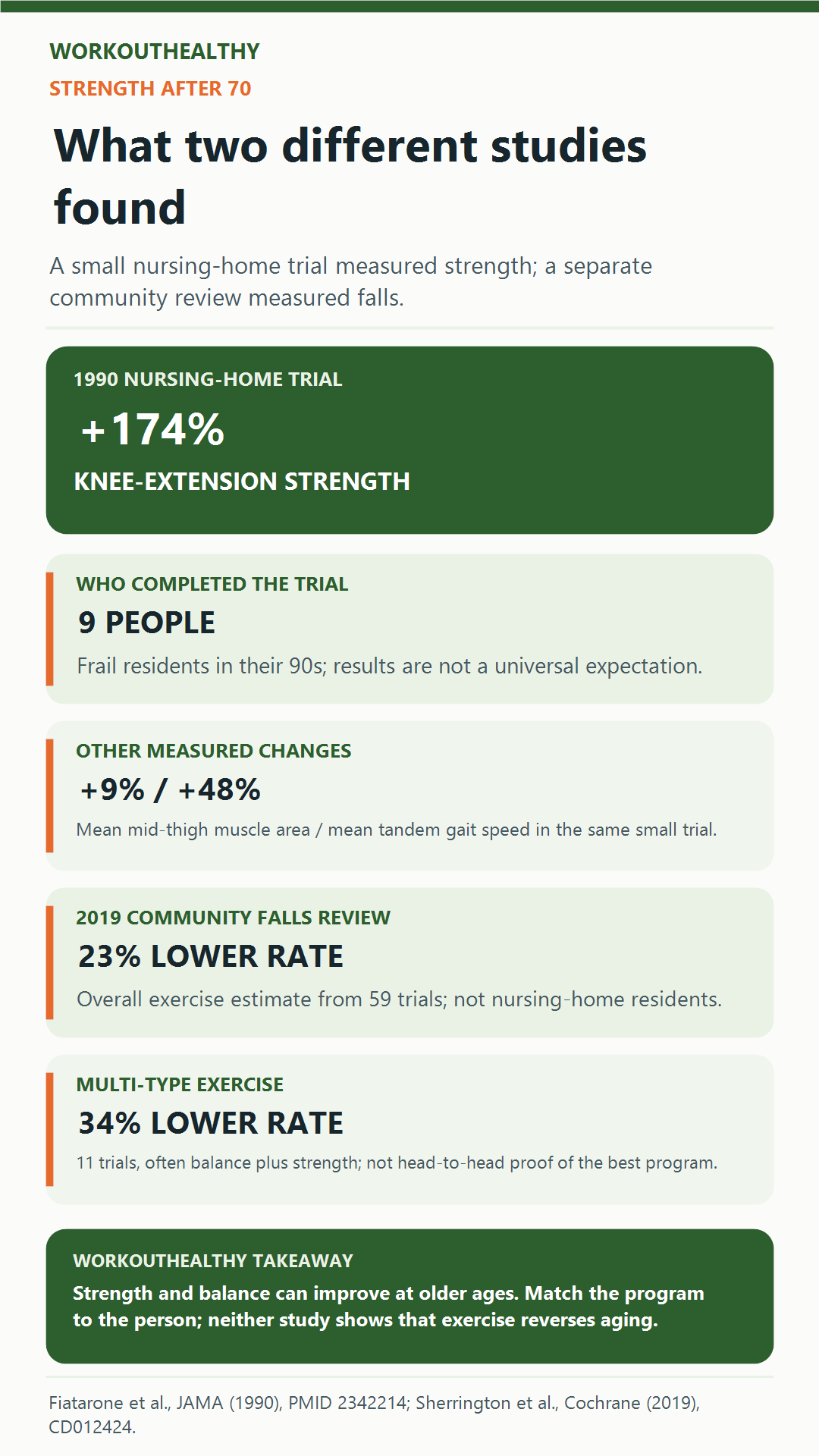
The 1990 Fiatarone study enrolled ten frail nursing-home residents with an average age near 90, and nine completed eight weeks of high-intensity, supervised resistance training. Mean strength gain among completers was 174% with substantial variation, while measured mid-thigh muscle area increased 9.0% on average.
Mean tandem gait speed also improved 48% in this small study. The report had no randomized no-exercise comparison group, so it is a striking demonstration of retained capacity in this setting, not a reliable forecast for every individual.
The after-60 lifting article discusses a different Fiatarone trial from 1994 with 100 participants and a 113% versus 3% strength comparison. Those two trials should not be merged into one result.
What stronger muscles do and do not tell us about daily life
A stronger knee extension is a real measured change, but it is not the same as independently getting out of a chair, climbing stairs, or avoiding a fall. Function depends on strength alongside balance, endurance, coordination, illness, and the environment.
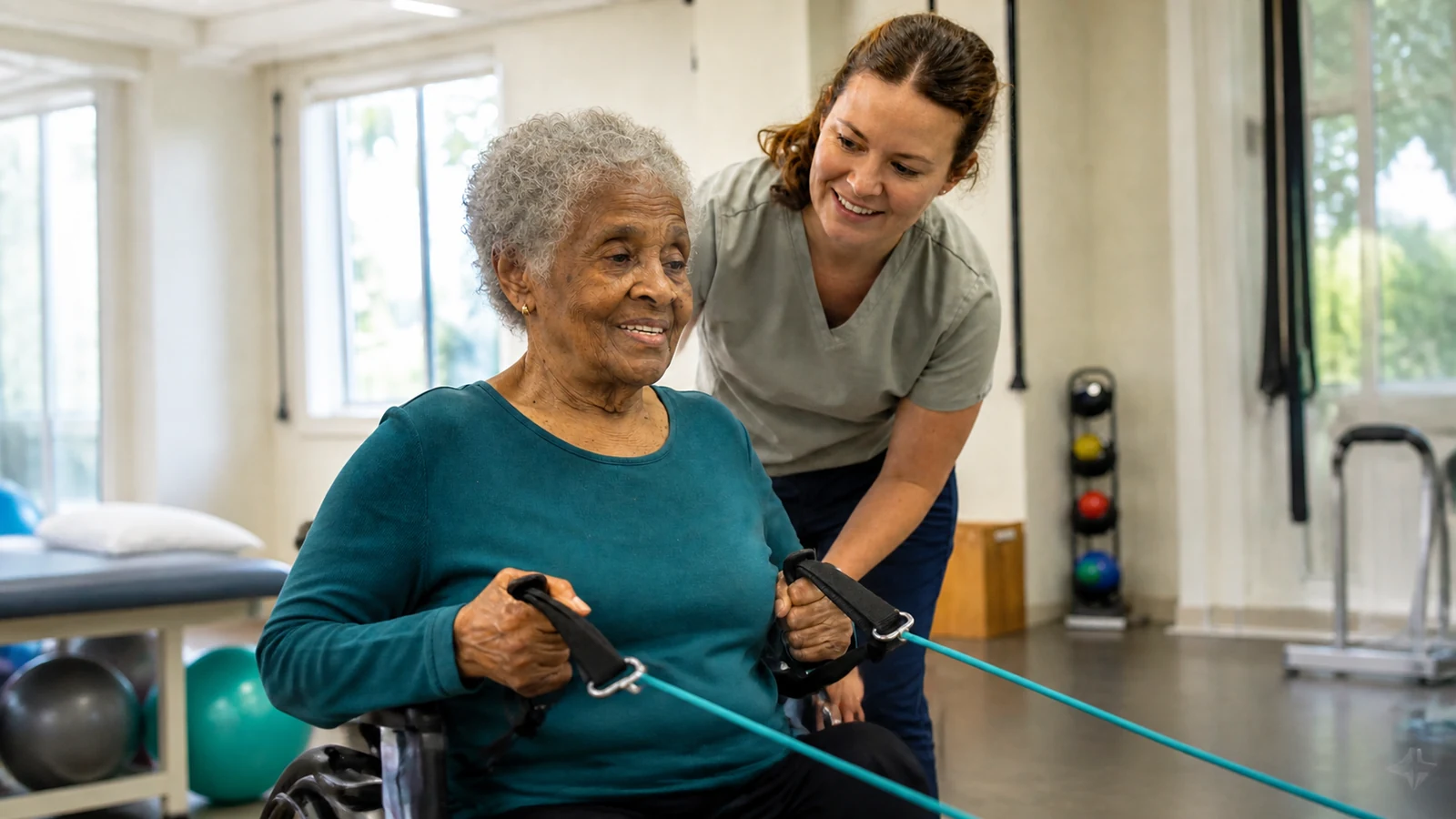
The LIFE randomized trial studied 1,635 adults aged 70 to 89 who were sedentary and had physical limitations but could walk 400 meters at entry. A structured activity program combining walking, resistance and flexibility work reduced major mobility disability compared with a health-education program over follow-up.
LIFE did not isolate muscle growth as the cause of that result. It answers a different question from the nine-person strength study and was not a test of a five-exercise online routine.
The 2019 Cochrane review pooled 108 trials and 23,407 community-dwelling older adults. Exercise programs reduced fall rates overall, but its program-level outcome cannot be assigned to this article’s video or a single exercise.
How to begin without copying the nursing-home protocol
The 1990 study used closely supervised, high-intensity training in a frail group. Starting at that intensity without assessment would misunderstand the finding.
For general beginner decisions, identify a few movements you want to improve, such as rising from a chair or carrying a manageable object. Begin with a comfortable version, get feedback on form where possible, and make only a small change when sessions feel controlled and recovery is satisfactory.
Age is not the only factor in that choice. Pain, balance, medication effects, prior injury, health conditions, and starting activity differ widely among adults over 70.
The federal older-adult activity guide recommends a mix of aerobic, muscle-strengthening and balance activity, with a slow start after inactivity. A separate article about starting to lift later in life examines additional older-adult strength evidence.
For someone with unintentional weight loss, new weakness, repeated falls, or a recent fracture, clinical and nutrition assessment may matter alongside exercise. Do not assume a training plan alone explains or solves those changes.
What about the “only five exercises” video?
The Psychology Explainer video uses “reverse aging” language and says only five exercises are needed after 70. The primary studies above measure selected strength, size, mobility or fall outcomes; none tests whether those five moves reverse biological aging.
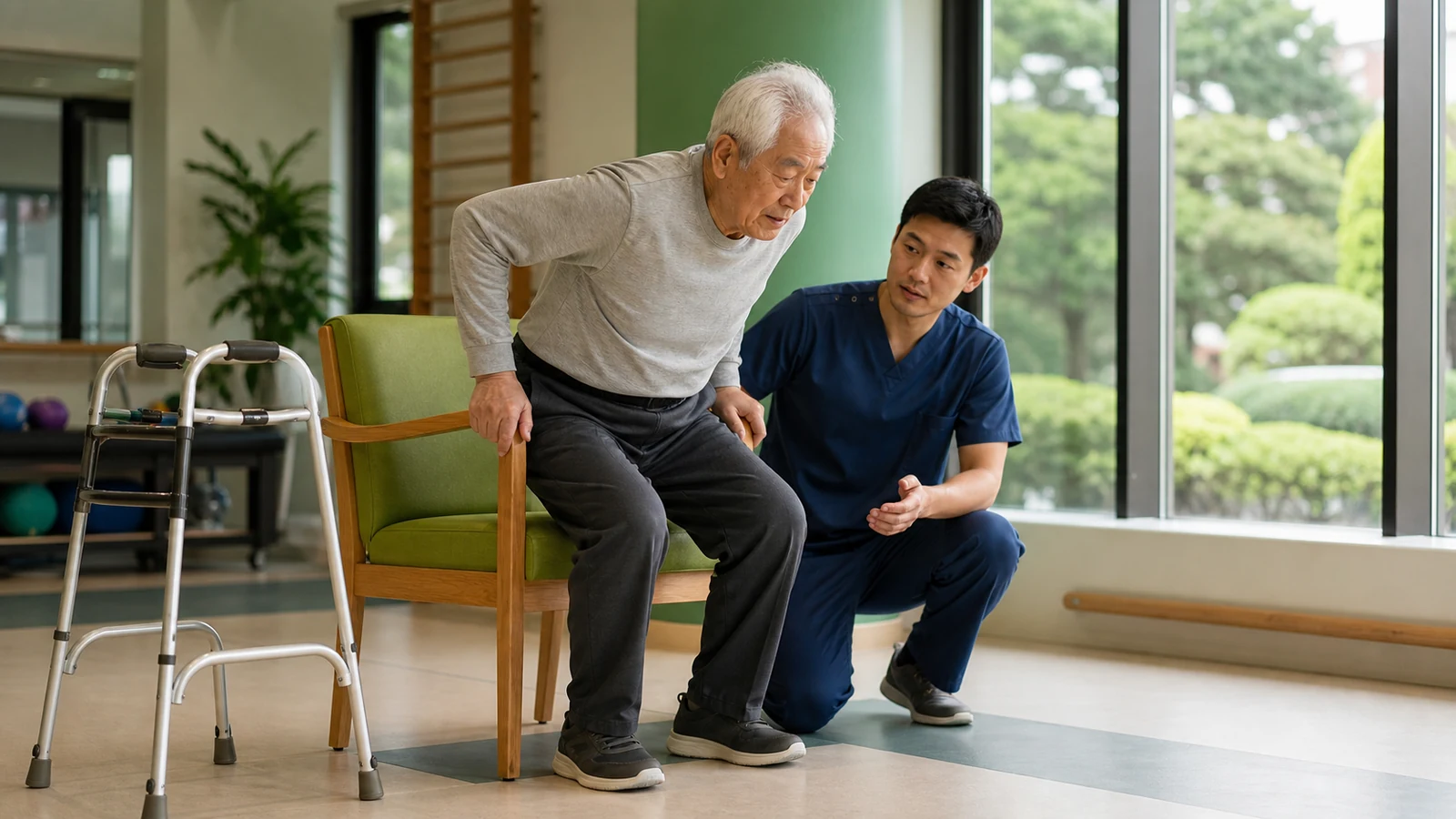
A person with stable balance, a person using a walker, and a person recovering from a fracture may require different movement choices. The useful message is that older muscle can respond to training, while the plan should be tailored to the person.
We retain the video so readers can compare its claim with the study populations and measures. The video’s title is not a substitute for a source describing what was actually tested.
When individual advice matters
Seek advice from a clinician or physical therapist before changing training if you have recent falls, a fracture or surgery recovery, significant pain, marked balance trouble, or a condition that changes exercise tolerance. The clinician can help distinguish a normal starting challenge from a symptom that needs assessment.
Stop activity and seek urgent medical care for chest pain, fainting, or severe or unusual breathlessness. An online guide cannot clear someone to exercise through new symptoms.
Watch the video
Sources
- Fiatarone et al., 1990 study of supervised strength training in nonagenarians.
- Pahor et al., 2014 LIFE randomized mobility trial.
- Sherrington et al., 2019 Cochrane fall-prevention review.
- Office of Disease Prevention and Health Promotion, older-adult activity guidance.
This article is for general information only and is not medical advice. If you have an injury, ongoing pain, or a medical condition, ask a clinician or physical therapist about an activity plan that fits you.