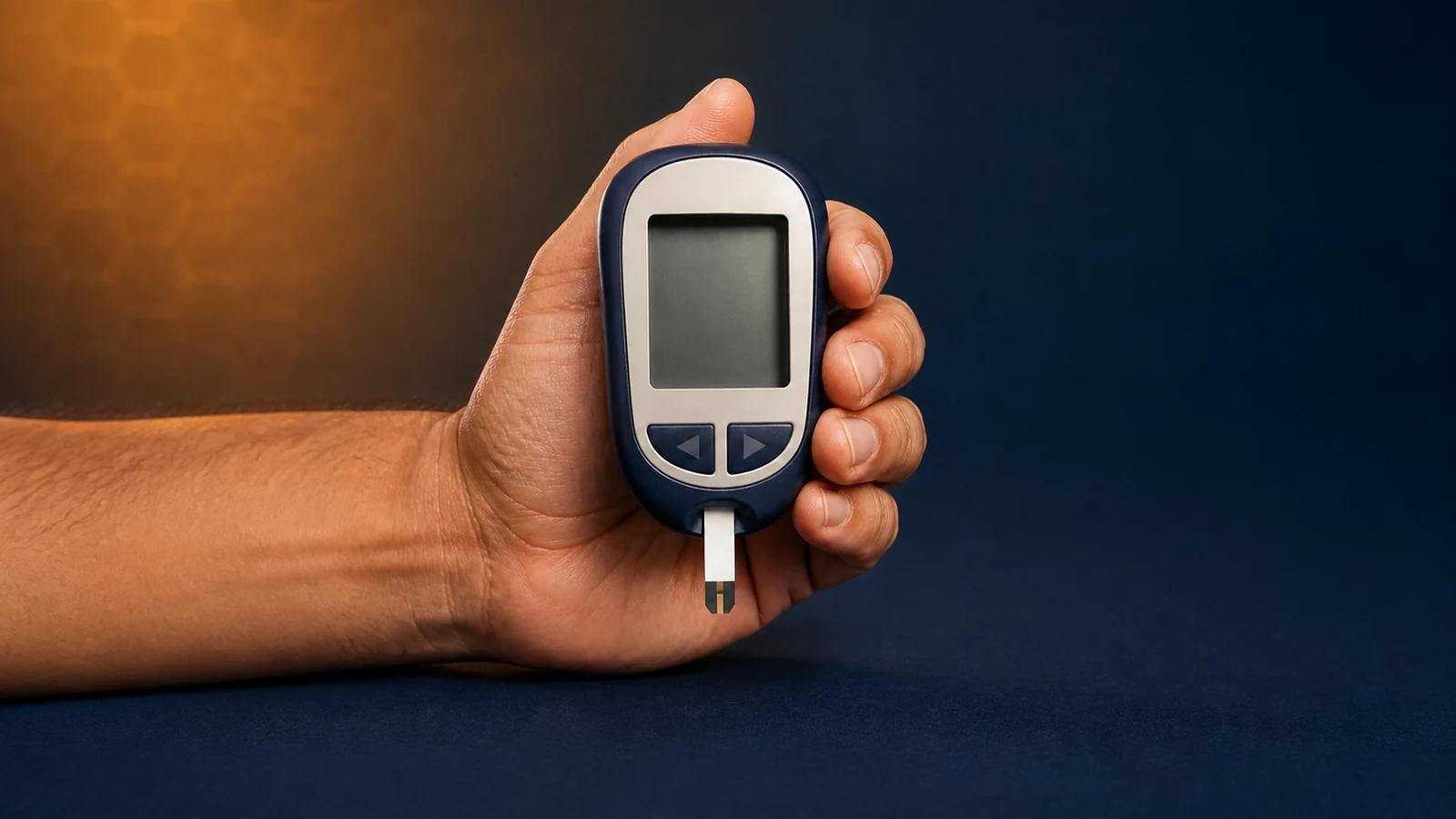

Type 2 diabetes remission is possible for some people. Glucose can rise again; follow-up remains necessary.
The most useful way to judge a reversal claim is to check the glucose measure, medication status, assessment date and study population. Start by asking who was counted and what counted as success.
What type 2 diabetes remission means
The international ADA-led consensus uses HbA1c below 6.5%, persisting for at least three months without usual glucose-lowering medication, as the usual remission criterion. A healthcare team confirms whether the criteria and test timing apply.
HbA1c reflects average glucose over roughly three months; one reading on a home meter cannot establish remission. Better insulin sensitivity, lower glucose while taking medication and remission are useful but different descriptions.
| What is reported | What it can establish |
|---|---|
| A lower glucose reading after activity | A change at that measurement, not a medication-free three-month remission outcome |
| HbA1c improving during treatment | Improved glucose management, which can be valuable even if the formal remission definition is not met |
| A clinician confirms remission | The relevant glucose, medication and timing criteria are met; ongoing care still matters |
Do not stop medication to qualify for a label. Treatment decisions belong with your diabetes team, including when a medicine has benefits beyond lowering glucose.
What DiRECT actually tested
DiRECT tested a structured weight-management program delivered through UK primary care practices. Practices, rather than individual participants, were randomized to the intervention or usual care.
The trial recruited adults aged 20 to 65 with type 2 diabetes diagnosed within the previous six years, BMI 27 to 45 and no current insulin use. These selection criteria limit how directly its results apply to someone with a different history.
The program included formula diet replacement, food reintroduction, weight-maintenance support and protocol-managed medication changes with monitoring. It was not an unsupervised list of foods or a test of ten independent habits.
At the 12-month assessment, 68 of 149 intervention participants, about 46%, met the study’s remission definition, compared with six of 149, about 4%, receiving usual care. The study used at least two months off diabetes medication, rather than the later consensus’s three-month criterion.
Twelve months was the assessment point, not a requirement to have spent twelve continuous months in remission. The formula diet and medication protocol describe research procedures, not instructions to copy at home.
Read the one-, two- and five-year numbers with their denominators
The two-year report found remission in 53 of 149 intervention participants, about 36%. It assessed remission separately at the one- and two-year visits, so those percentages do not show uninterrupted remission between visits.
| Assessment | Reported intervention result | Who is in the denominator? |
|---|---|---|
| One year | 68/149, about 46% | Original intervention intention-to-treat population |
| Two years | 53/149, about 36% | Original intervention intention-to-treat population |
| Five years | 11/85, about 13% | Extension participants assessed at five years, a selected continued-support subset |
In the five-year extension report, 101 of the original 149 intervention participants were still engaged at two years; 95 consented to the extension, and 85 contributed the reported five-year assessment. Eleven of those 85 were in remission.
That 13% is not the percentage of all 149 original intervention participants. The changing group also means the table should not be read as a continuous survival curve for the same people.
The extension also reported that 26% of those in remission at year two remained in remission at year five. That is a different question, with a different starting group, from the 11/85 result.
Why a large routine-care study reported 2.9%
A Kaiser Permanente research summary describes a record-based study of 556,758 adults with type 2 diabetes who had not had bariatric surgery. Researchers identified remission in 16,016 people, about 2.9%.
The summary also reports that nearly 37% of those who entered remission needed glucose-lowering medication again over the following three years. Entering remission and maintaining it are separate outcomes.
This study observed routine care across a much broader population; it did not assign everyone to DiRECT’s program. Comparing 2.9% with 46% as if they were two estimates of the same treatment would ignore selection, treatment and follow-up differences.
Neither percentage predicts your personal chance. The comparison shows why details about the population and its support belong beside any impressive result.
What the ten-habits video can and cannot establish
The original Type 2 Diabetes Revolution video uses a ten-habits reversal title. Its published description combines the creator’s own glucose claims, habit suggestions, supplement promotions and a medical-information disclaimer.
Those are statements in a video description, not independently verified lab records, a medication history or a controlled remission outcome. This article does not validate the creator’s private health results or reproduce a personal regimen.
A study showing that exercise lowers HbA1c also does not establish that a particular habit list causes remission. Keep the outcome in view: glucose improvement, medication-free remission and long-term health are related questions with different evidence requirements.
Why medication-free is not the only worthwhile goal
The October 2026 ADA/EASD management consensus emphasizes individualized care and outcomes beyond glucose alone, including cardiovascular and kidney risk. It identifies broadening the concept of remission as an area for further consideration, not permission to abandon treatment.
Some people will benefit from continued medication even when glucose improves. A formal remission label should not outrank an appropriate treatment plan, daily wellbeing or prevention of complications.
The same consensus does not recommend specific dietary supplements for glycemic management. A supplement promotion beside a reversal story is not a substitute for evidence that the product produces remission.
Take a clearer question to your diabetes team
Use the prompts below to turn an online success story into a useful conversation. They are an editorial appointment aid, not a diagnostic checklist or a personal diet plan.
- Definition: Are we discussing improved glucose control, formal remission or another health goal?
- Measurement: Which tests and dates would establish the outcome in my situation?
- Treatment: What must remain supervised if eating, weight or physical activity changes?
- Support: What structured nutrition and diabetes-education options are realistic and appropriate for me?
- Maintenance: How will we monitor glucose, complications and a possible return of diabetes?
The remission consensus recommends reassessment at least yearly together with routine complication screening. Keep the monitoring schedule your own team sets, which may require more frequent checks.
Remission is a meaningful possibility, not a measure of discipline or a promise made by ten habits. The strongest next step is a clear, supported plan for your health, with the evidence and medication decisions kept together.
Medical disclaimer: This article provides general information about type 2 diabetes remission, not a diagnosis, individual diet prescription or medication plan. Do not stop or change diabetes treatment without your healthcare team’s guidance.