
The STRUETH twin study offers a useful answer for people who feel stuck: the training mode must match the outcome being measured.
Resistance training raised leg strength far more than endurance training, while endurance training raised aerobic fitness far more than resistance training.
The researchers also found that a low response to one mode did not reliably predict a low response to the other.
That supports a planned change when progress stalls, but it does not prove that everyone has a fixed biological label or that random program hopping will rescue every plateau.
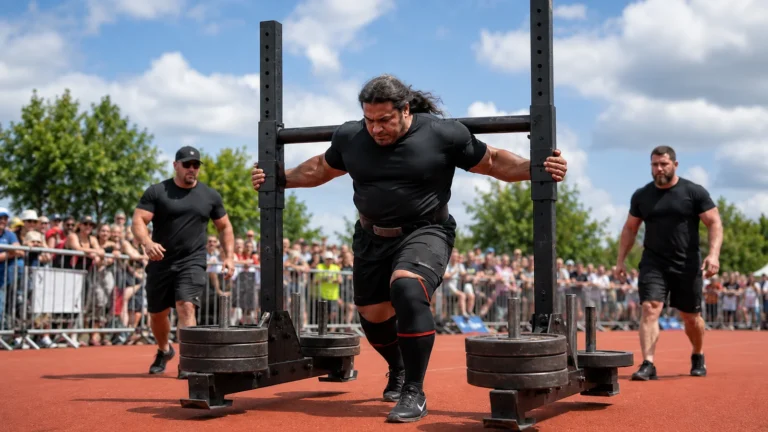
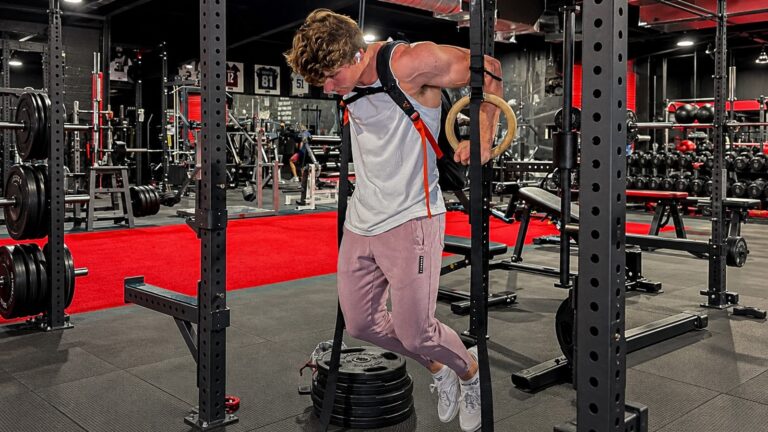
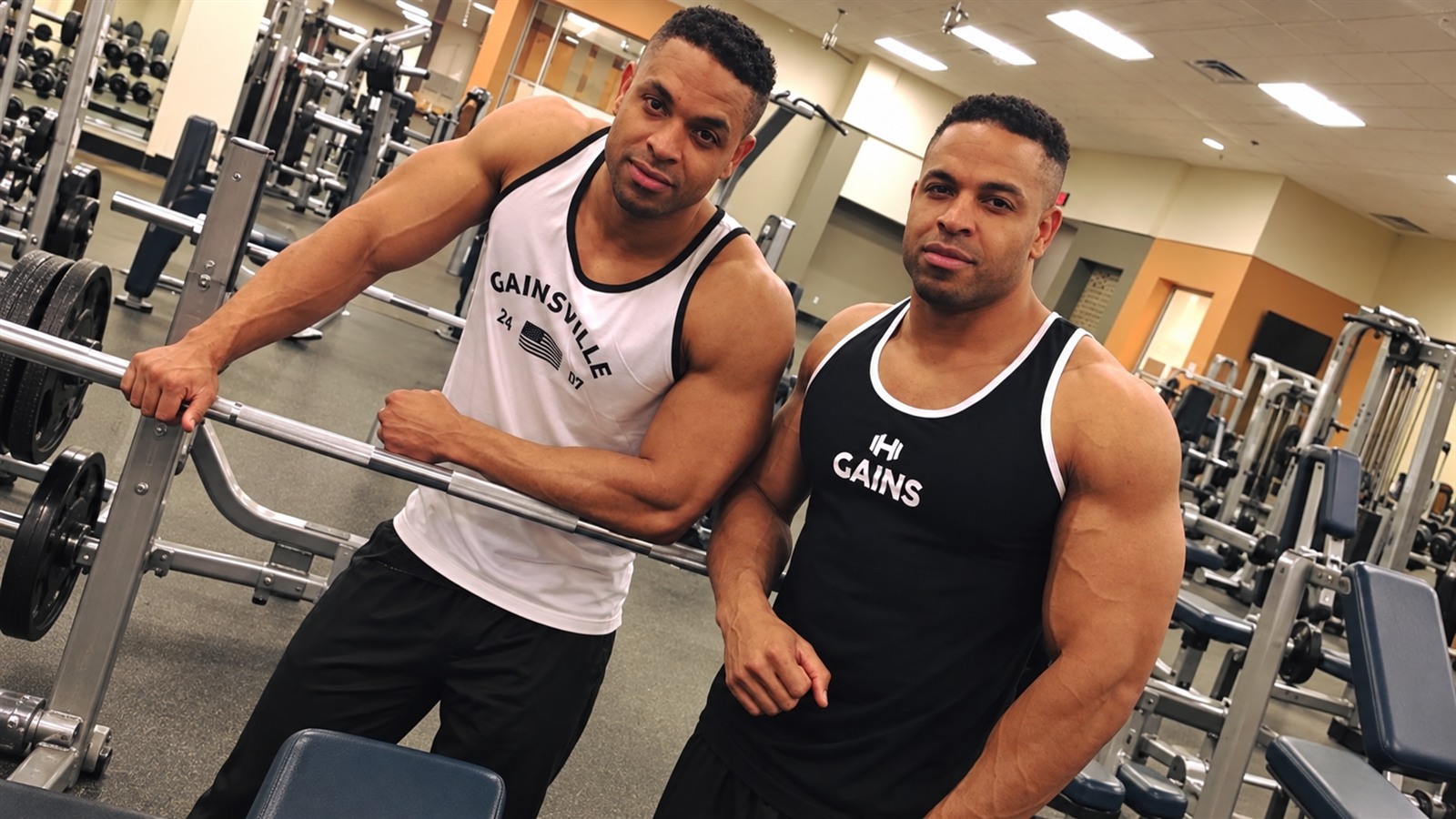
Image note: The featured gym photo is illustrative. The pictured men are not identified as STRUETH participants.
The short answer
The study followed 84 untrained adults from 42 same-sex twin pairs.
Each pair completed three months of resistance training and three months of endurance training, with a three-month washout between the two blocks.
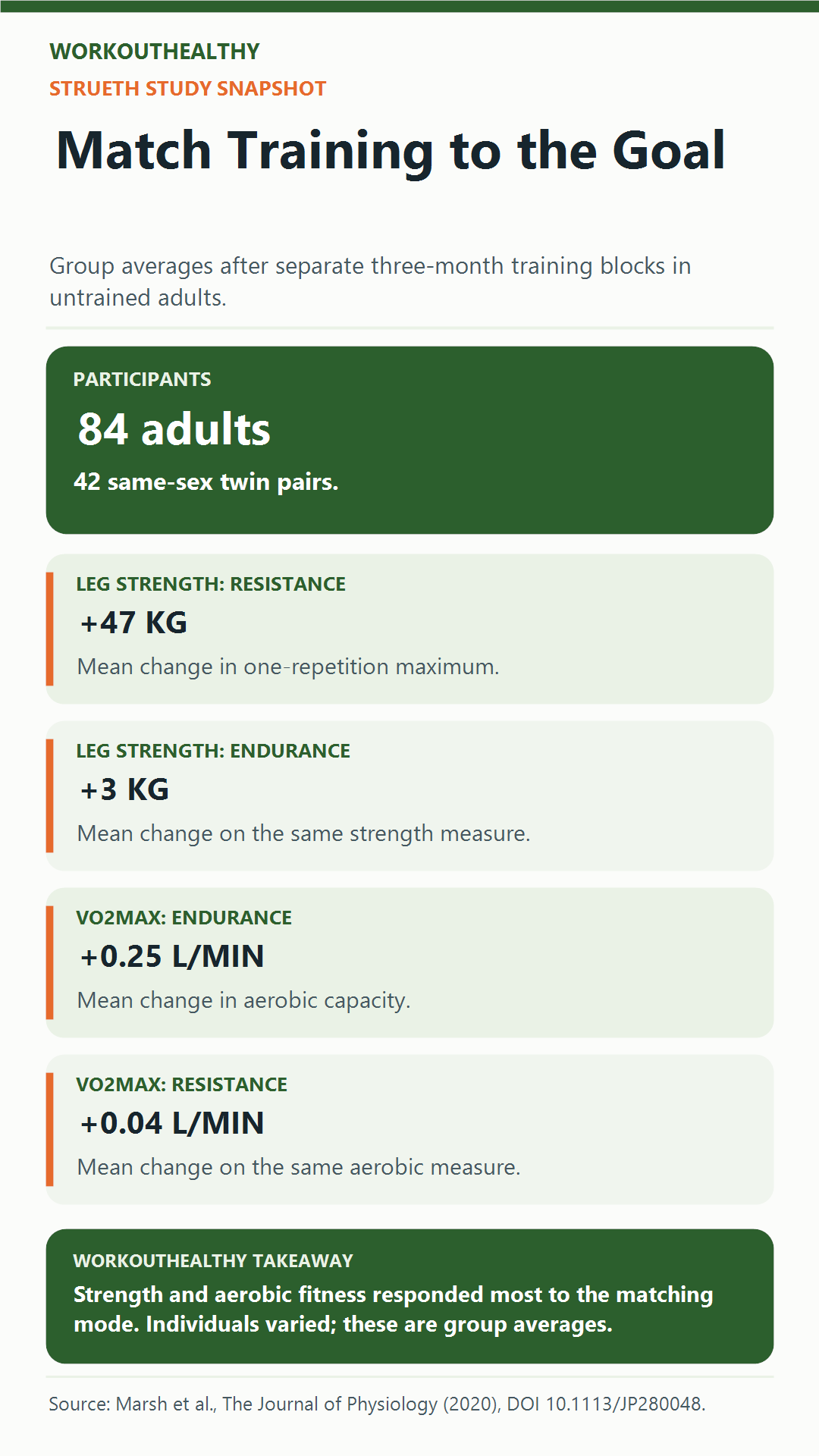
Leg strength increased by an average of 47 kilograms after resistance training and 3 kilograms after endurance training. VO2max increased by 0.25 liters per minute after endurance training and 0.04 liters per minute after resistance training.
Those numbers show strong training specificity at the group level.
They do not mean cardio is useless for strength, lifting is useless for cardiovascular health, or every individual will match the average.
What the study asked
Exercise studies often report an average, but two people can finish the same program with different measured changes.
Researchers want to know how much of that variation is a stable biological difference, how much reflects the program, and how much comes from ordinary measurement and day-to-day noise.
Twins provide a useful comparison because identical twins share nearly all their DNA, while fraternal twins share less genetic variation on average.
Training both members of a pair under similar conditions can help separate genetic resemblance from shared and unshared environmental influences.
The STRUETH team went further by exposing the same people to two distinct modes.
That crossover design allowed the researchers to ask whether someone who changed little after one program also changed little after the other.
How the trial worked
The participants were 30 monozygotic pairs and 12 dizygotic pairs, with an average age of about 25 years. They were untrained at the start, and twins trained in pairs.
One block emphasized resistance exercise and the other emphasized endurance exercise.
The three-month washout reduced carryover, although it could not erase every skill, behavior, or physiological change from the first block.
The primary outcomes were leg strength measured by a one-repetition maximum and cardiorespiratory fitness measured by VO2max. These are different capacities, so the most relevant comparison is whether the matching program changed its matching outcome.
The design was randomized and crossed over, but it was not a test of every possible program. It compared specific supervised resistance and endurance prescriptions in young, untrained adults over a limited period.
What changed
Resistance training produced the much larger average gain in leg strength.
Endurance training produced the much larger average gain in VO2max, which is exactly what the principle of specificity would predict.
A higher percentage of participants met the study’s response criterion for strength after resistance work and for VO2max after endurance work.
Changes within the same person were not correlated across the two modes, so a small change in one outcome did not forecast a small change in the other.
The social caption says resistance training increased leg strength by 47 kilograms and endurance barely moved it, while endurance raised VO2max by 0.25 liters per minute.
Those figures accurately describe the group averages, but the spread around each average was large.
The resistance strength change had a standard deviation of 29 kilograms, and the endurance VO2max change had a standard deviation of 0.26 liters per minute.
Some variation reflects real differences, while some can reflect test familiarity, biological fluctuation, adherence, and measurement error.
What rescue really means
The paper used the idea that low responders to one mode may be rescued by an alternate mode.
In practical terms, a participant who changed little on the outcome favored by one block could still improve on the outcome favored by the other.
That is encouraging, but the word rescue can sound stronger than the evidence.
Switching from endurance work to lifting changes both the stimulus and the main outcome expected to improve, so it is not surprising when strength begins to rise.
The study does not show that someone whose squat stalled should abandon resistance training for cycling and expect the squat to jump.
It shows that being a low responder on one measure under one program does not define the person’s entire capacity to adapt.
A useful response is outcome specific.
Someone can gain aerobic fitness without much strength, gain strength without much lean mass, or improve technique while a body-composition scan barely changes.
Why specificity matters
Training adaptations follow the demands practiced.
Heavy resistance work gives the nervous system and muscles repeated opportunities to produce force, while endurance work gives the cardiovascular and muscular systems repeated opportunities to sustain oxygen-dependent effort.
That does not require choosing one mode forever.
Our guide to combining lifting and cardio in the same week explains how both can fit when health, strength, and conditioning all matter.
The key is deciding which outcome has priority during the current block.
A plan built mainly around easy cycling should not be judged by a maximal squat test, and a low-volume lifting plan should not be judged mainly by a race time.
For a broader health goal, both modes can be valuable even when one does not maximize the other’s signature outcome.
Our review of cardio, strength, and heart health shows why the choice is not simply one versus the other.
What the twins revealed about genes
Identical twins showed significant resemblance for some training changes, including strength after resistance training and VO2max after endurance training. The correlations were not perfect, and the modeling also pointed to shared and unshared environmental contributions.
The authors concluded that genes may play a smaller role in training adaptation than older cross-sectional estimates suggested.
Another possibility is that genetic resemblance in a single snapshot does not translate directly into resemblance after a specific intervention.
This is not evidence that genes do not matter.
It is evidence against turning a family resemblance or consumer genetic score into a precise forecast of one person’s next training block.
A related 1998 twin study found genetic influence on selected strength outcomes, but it used a short elbow-flexor program in young men.
Different exercises, outcomes, ages, environments, and analysis methods can produce different estimates.
What the body composition paper added
A second STRUETH analysis examined lean mass and fat mass in the same 84 participants. Both modes produced favorable average changes, but resistance training increased lean mass more than endurance training.
Eighty-four percent met the paper’s positive-response criterion for lean mass after resistance training, compared with 58% after endurance training. Fat-mass response rates were 56% for resistance and 66% for endurance, and that difference was not statistically significant.
The body-composition analysis again found higher cross-sectional resemblance than resemblance in training changes.
Shared environment had a large influence, which keeps sleep, food intake, daily movement, adherence, and other behaviors in the practical conversation.
Why responder labels are difficult
A before-and-after change contains the training effect plus normal biological variation and measurement error.
If a threshold ignores those sources, a person can be labeled a responder or non-responder because of noise near the cutoff.
A 2021 systematic review found that only 9 of 149 included studies statistically estimated true interindividual differences in trainability. Less conservative thresholds and larger average changes inflated reported response rates.
A 2024 meta-analysis of VO2max studies with non-exercising comparison groups found that most observed variation in change scores was attributable to measurement error.
It did not find strong evidence for stable, clinically meaningful differences in VO2max trainability across single interventions.
These later findings do not invalidate STRUETH’s group averages or crossover observations. They do mean that one disappointing test should not become a permanent identity.
A practical plateau audit
- Name one outcome. Choose strength, VO2max, lean mass, skill, or another measurable target rather than the vague goal of getting fitter.
- Check specificity. Confirm that the program repeatedly practices the capacity used in the test.
- Verify exposure. Count completed sessions, useful weekly volume, progression, and whether effort matched the plan.
- Standardize the test. Use the same equipment, warm-up, time of day, and testing procedure when possible.
- Look beyond one result. Review several weeks of performance, symptoms, and recovery before changing the plan.
- Change one major variable. Adjust mode, dose, exercise selection, or priority while keeping the rest interpretable.
A detailed record makes that audit possible.
Our guide to keeping a training log that changes what you do focuses on the variables that help distinguish a plateau from an unusually bad day.
How to change the stimulus
If strength is the target and endurance work dominates the week, add a progressive resistance block rather than merely making cardio harder.
Use stable compound and accessory exercises, enough rest to preserve performance, and a load or repetition progression that can be measured.
If cardiorespiratory fitness is the target and lifting dominates the week, add structured aerobic work.
A mix of steady sessions and appropriately dosed intervals can improve the amount of work the heart, lungs, blood vessels, and muscles can sustain.
If both matter, keep both and alter emphasis rather than deleting a mode.
Two or three focused sessions for the priority capacity and a smaller maintenance dose for the other is often easier to recover from than trying to maximize everything at once.
Do not switch solely because one week felt flat.
A change makes more sense after a consistent block, repeated measurements, reasonable recovery, and evidence that the current stimulus no longer advances the selected outcome.
Pain, dizziness, chest pressure, fainting, or an unexplained drop in capacity is not a programming puzzle. Those signs deserve medical evaluation, especially when they are new or worsening.
Limits of the study
The sample was relatively small, young, untrained, and composed of twins willing to complete two supervised blocks. The findings may not transfer directly to older adults, trained athletes, people with chronic disease, or unsupervised programs.
Three months can reveal early adaptation but not a lifetime ceiling. Strength tests also improve through practice, and VO2max testing contains technical and day-to-day variation.
The washout helped the crossover design, but prior training can leave retained skill or behavior. Twins trained together, which improved control while also increasing the shared environment the study was trying to understand.
Finally, response classifications depend on the threshold chosen. A participant just below a cutoff may not be meaningfully different from one just above it.
The bottom line
The STRUETH twin study showed that resistance training was the stronger tool for leg strength and endurance training was the stronger tool for VO2max.
A low response to one mode did not lock a person into low response across every mode and outcome.
Use that result as permission to test a better-matched stimulus, not as proof that genetics are irrelevant or that every plateau requires a new program.
Define the outcome, verify the dose, measure it more than once, and change the plan deliberately.
Get the next evidence check.
Five practical fitness stories worth your time, every Friday.
One email a week. No product pitches. Unsubscribe in one click.
References
- Marsh CE, et al. Fitness and strength responses to distinct exercise modes in twins: the STRUETH study. The Journal of Physiology. 2020.
- Thomas HJ, et al. Studies of Twin Responses to Understand Exercise Therapy: Body Composition. Medicine & Science in Sports & Exercise. 2021.
- Bonafiglia JT, et al. Approaches used to estimate interindividual differences in trainability and classify individual responses. Frontiers in Physiology. 2021.
- Renwick JRM, et al. Standard deviation of individual response for VO2max following exercise interventions. Sports Medicine. 2024.
- Voisin S, et al. Statistical considerations for exercise protocols aimed at measuring trainability. Exercise and Sport Sciences Reviews. 2019.
- Williamson PJ, et al. Inter-individual responses of maximal oxygen uptake to exercise training. Sports Medicine. 2017.
- Thomis MA, et al. Strength training: importance of genetic factors. Medicine & Science in Sports & Exercise. 1998.
- Zempo H, et al. Heritability estimates of muscle strength related phenotypes. Scandinavian Journal of Medicine & Science in Sports. 2017.
- Crisafulli DL, et al. Responsiveness of functional performance and muscle strength, power, and size to resistance training. Sports Medicine and Health Science. 2024.
Medical disclaimer: This article is for general information only and is not medical advice. If you have an injury, ongoing pain, or a medical condition, talk to a doctor or physical therapist before you change how you train or eat.