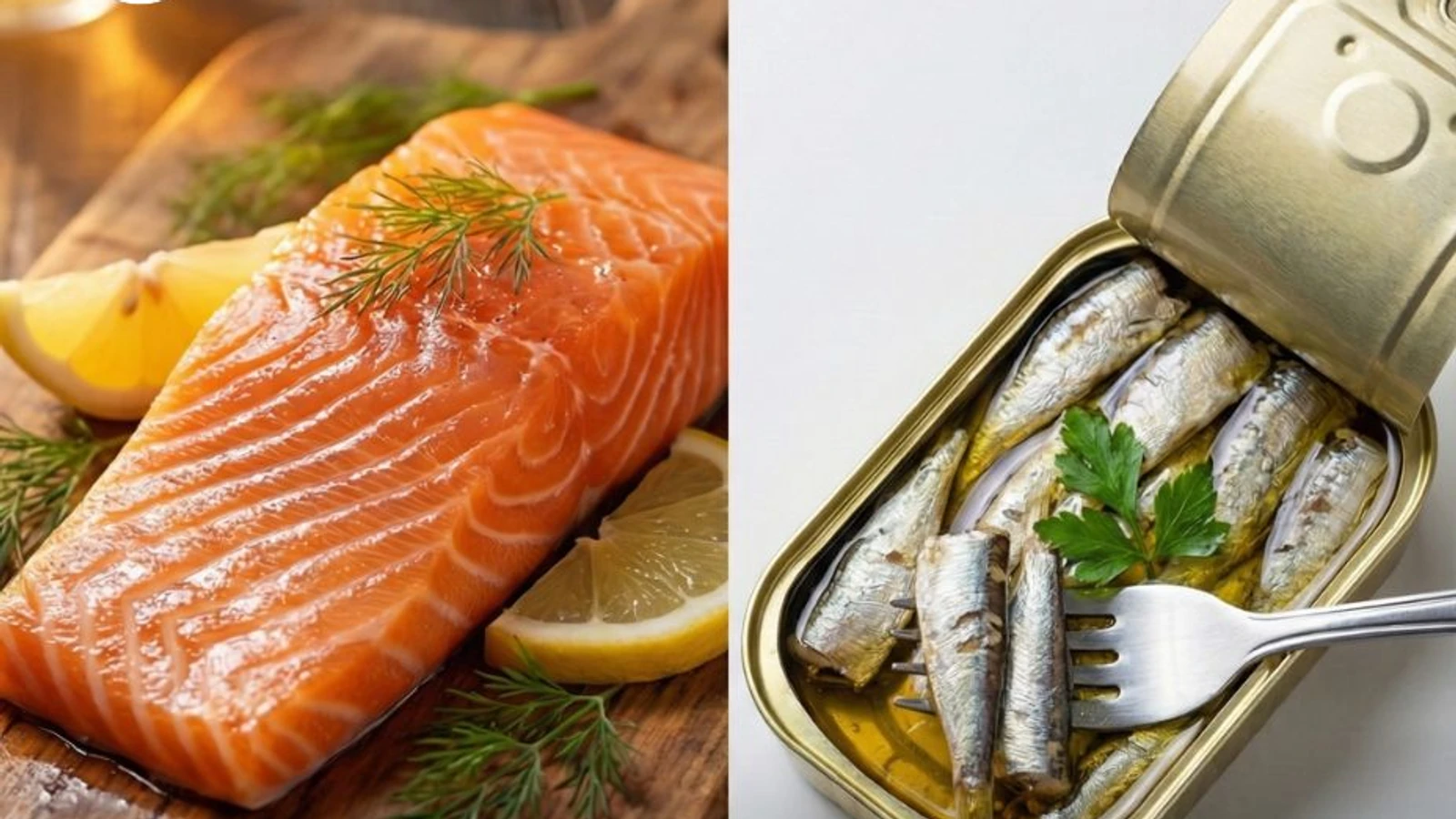

SMASH fish stands for salmon, mackerel, anchovies, sardines and herring. It is a useful shopping reminder for oily fish, but the word “mackerel” needs a species name before you can use it as a mercury guide.
The FDA and EPA fish chart lists Atlantic and Pacific chub mackerel among its Best Choices, Spanish mackerel as a Good Choice, and king mackerel as a Choice to Avoid for people who might become or are pregnant or breastfeeding and for children. SMASH is a mnemonic, not an official safety category.
SMASH Fish Chart: Check the Species First
The mercury categories below come from the FDA and EPA chart revised in October 2021 and checked for this article on October 22, 2026. They are designed especially for pregnancy, breastfeeding and childhood; preparation notes come from food labels and the sources below, not from the mercury category.
| Fish on the label | FDA/EPA category | Useful shopping check |
|---|---|---|
| Sardines | Best Choice | Soft edible bones add calcium; boneless cans do not offer the same amount. Compare sodium across sauces and packing liquids. |
| Atlantic mackerel | Best Choice | Look for “Atlantic” on the package or ask the fish counter for the species. |
| Pacific chub mackerel | Best Choice | Do not assume every Pacific mackerel label identifies this exact species. |
| Spanish mackerel | Good Choice | The FDA/EPA advice gives Good Choices a different serving frequency for pregnancy and childhood. |
| King mackerel | Choice to Avoid | This high-mercury fish does not become a low-mercury option because its name begins with mackerel. |
| Anchovies | Best Choice | Cured or brined products can add substantial sodium to a dish. |
| Salmon | Best Choice | Wild and farmed salmon can both provide EPA and DHA; compare sourcing and preparation on their own merits. |
| Herring | Best Choice | Fresh, smoked and pickled versions differ in sodium and other ingredients. |
If a menu or can says only “mackerel,” the acronym cannot tell you which row applies. Ask for the species, especially when you are following pregnancy or child mercury guidance.
What Oily Fish Adds, and What It Cannot Promise
Oily fish can supply EPA and DHA omega-3 fats, protein, vitamin B12, selenium and other nutrients. The American Heart Association recommends two servings of fish a week, particularly fatty fish, within an overall heart-healthy pattern.
That recommendation does not mean every SMASH fish produces the same result or that eating fish will “drastically” lower inflammation, improve memory or make skin glow. The NIH Office of Dietary Supplements describes a more mixed evidence base for individual outcomes, including cognition.
Fish outside the acronym also have value. Cod, pollock, mussels and many other seafood choices can supply protein or nutrients, and many appear on the FDA’s Best Choices list even when they contain less EPA and DHA than oily fish.
Five Fish, Five Practical Details
Sardines: Check the Bones and the Label
Sardines are small fish in the Best Choices category and are often affordable in shelf-stable cans. If calcium is the reason you are buying them, choose a version with soft edible bones and compare the Nutrition Facts panels rather than assuming every sardine can is equivalent.
Mackerel: The Species Changes the Mercury Answer
Atlantic and Pacific chub mackerel are Best Choices, Spanish mackerel is a Good Choice, and king mackerel is a Choice to Avoid in the FDA/EPA chart. The broad claim that all five SMASH fish are low in mercury fails at this letter of the acronym.
Anchovies: Small Fish, Often a Salty Ingredient
Anchovies complete the acronym and are a Best Choice for mercury. A little can season vegetables, beans, pasta or a dressing, but cured and brined versions make label comparison useful for anyone managing sodium.
Salmon: Compare Wild and Farmed Fairly
Salmon is a Best Choice in the federal mercury chart. A study comparing wild and farmed Atlantic salmon found both provided EPA and DHA, with differences in total fat and measured contaminants that do not support a blanket “wild is always cleaner” rule.
Cost, taste, availability and production practices can still matter. A wild or farmed label alone cannot answer every nutrition or sustainability question.
Herring: Preparation Changes the Meal
Herring is a Best Choice for mercury. Fresh or frozen herring, smoked herring and pickled herring may fit very different sodium or ingredient needs, so compare the actual product rather than treating the species name as the whole nutrition label.
A Simple Two-Meal Shopping Plan
A practical way to use the general heart-health advice is to choose one oily fish meal and one other seafood meal during the week. The second can be another SMASH fish or a lower-mercury lean fish, shellfish or bivalve that suits your budget and preference.
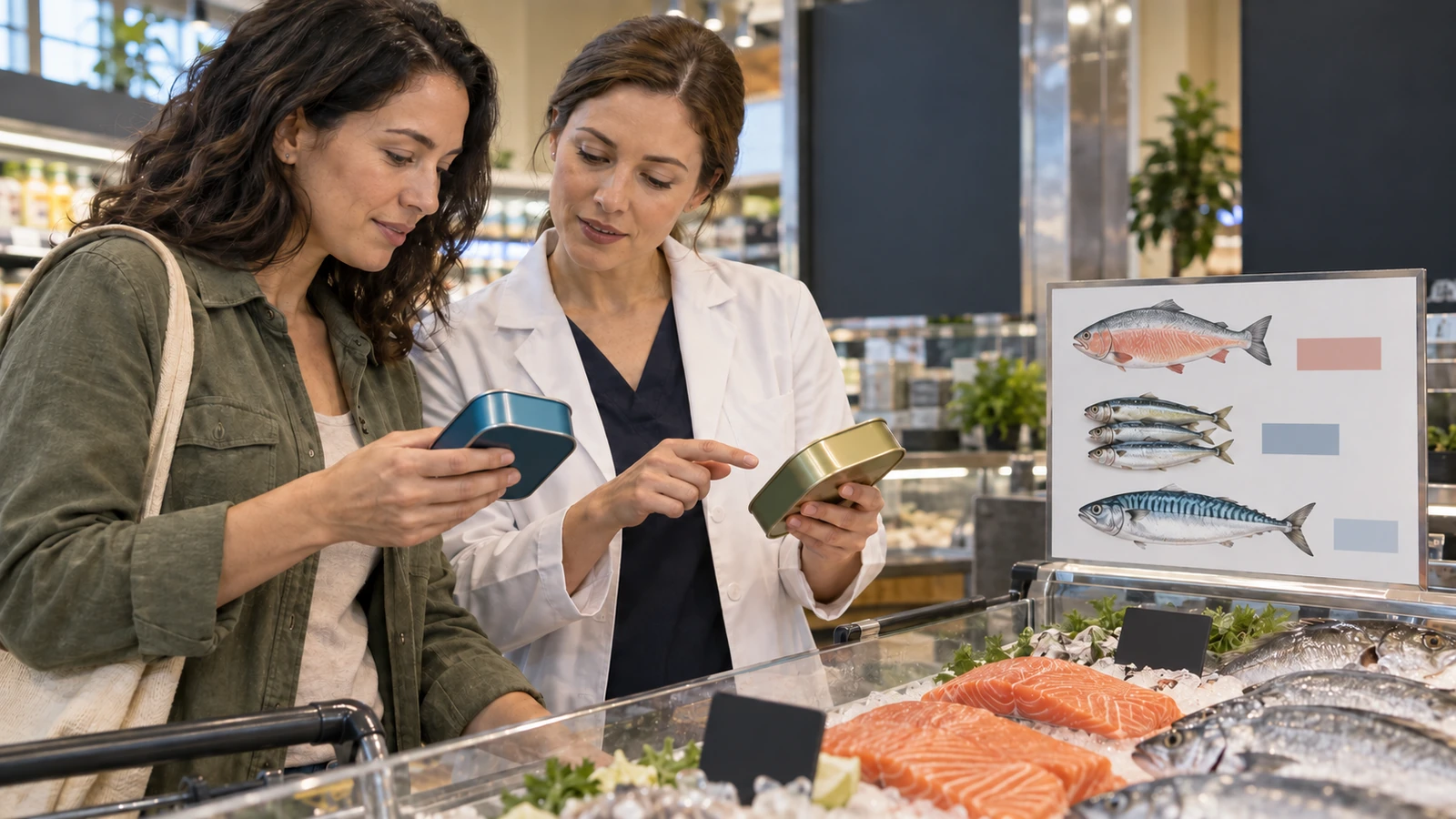
- Identify the exact fish. If the label says mackerel, check which species it is before using the FDA/EPA chart.
- Compare the preparation. Canned, smoked, cured and pickled products can differ substantially in sodium.
- Make the rest of the meal count. Vegetables, beans, whole grains or other foods can add the variety that a single fish cannot provide.
- Check current sourcing details when sustainability matters. Stock, location, harvest method and farm practices vary within a species; NOAA Fisheries provides current background.
For more on how a single nutrient fits the full eating pattern, see our guide to protein needs. Fish does not have to carry the whole diet.
Pregnancy, Children and Fish Caught Locally
The FDA/EPA advice says people who might become or are pregnant or breastfeeding can choose two to three four-ounce servings each week from Best Choices, or one serving from Good Choices. Children have smaller age-based serving sizes and are advised to choose two Best Choice servings each week.
For fish caught by family or friends, check the local advisory before treating the fish like a store-bought Best Choice. The federal guidance says that when there is no advisory, those following its pregnancy and child advice should eat only one serving of the local catch and no other fish that week.
People with fish allergy or a medical diet should seek individualized advice. Food safety guidance also matters for raw, undercooked and refrigerated smoked seafood, especially during pregnancy.
Bottom Line
SMASH helps you remember five oily fish; the real decision is species, preparation and life stage. Atlantic and Pacific chub mackerel are not interchangeable with king mackerel, and no acronym replaces the current FDA/EPA chart or local catch advice.
Get the next evidence check.
Five practical fitness stories worth your time, every Friday.
One email a week. No product pitches. Unsubscribe in one click.
Sources
- FDA and EPA, Advice About Eating Fish, revised October 2021, checked October 22, 2026.
- American Heart Association, Fish and Omega-3 Fatty Acids.
- NIH Office of Dietary Supplements, Omega-3 Fatty Acids.
- Jensen and colleagues, 2020 comparison of wild and farmed Atlantic salmon.
- NOAA Fisheries, Sustainable Seafood.
Medical note: This article is general nutrition information. If you are pregnant or breastfeeding, buying fish for a child, managing a fish allergy or following a therapeutic diet, use current public-health advice and a qualified clinician or dietitian for individual decisions.