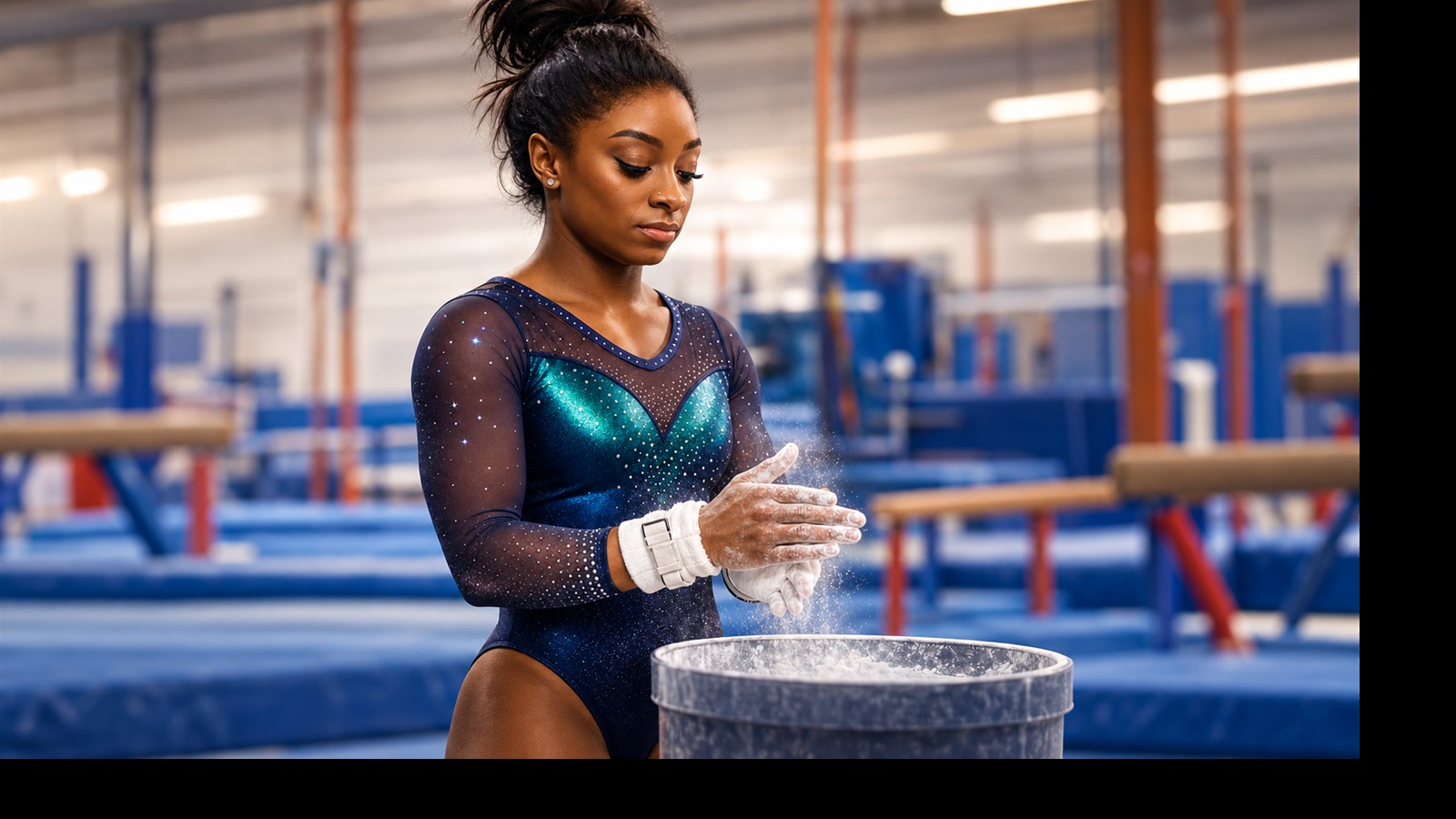

I say put mental health first.
Because if you don’t, then you’re not going to enjoy your sport and you’re not going to succeed as much as you want to.
Simone Biles
Simone Biles said these words on one of the biggest stages in sports, at a moment when the world was watching her closely.
Her message was simple, and it reached far beyond gymnastics.
Who Simone Biles Is
Biles is an American gymnast and one of the most decorated athletes in the history of her sport.
She has won 30 World Championship medals, more than any other gymnast.
She has also won 11 Olympic medals, including seven golds.
At the 2024 Paris Olympics, she won gold in the team, all around and vault events, plus silver on floor.
Where the Quote Comes From
Biles spoke these words at a news conference during the Tokyo Olympics in July 2021.
NPR published a transcript of her remarks.
She had just withdrawn from the team final, and she later pulled out of several individual finals as well.
She later explained that she was dealing with “the twisties,” a mental block in which gymnasts lose their sense of where they are in the air while twisting.
In a sport with high flips and hard landings, that loss of air awareness can be dangerous.
She still returned later in those Games to win a bronze medal on the balance beam, adding to the team silver.
The short version, “Put mental health first,” is often shared on its own, but the full statement explains her reasoning.
From Tokyo to a Competitive Return
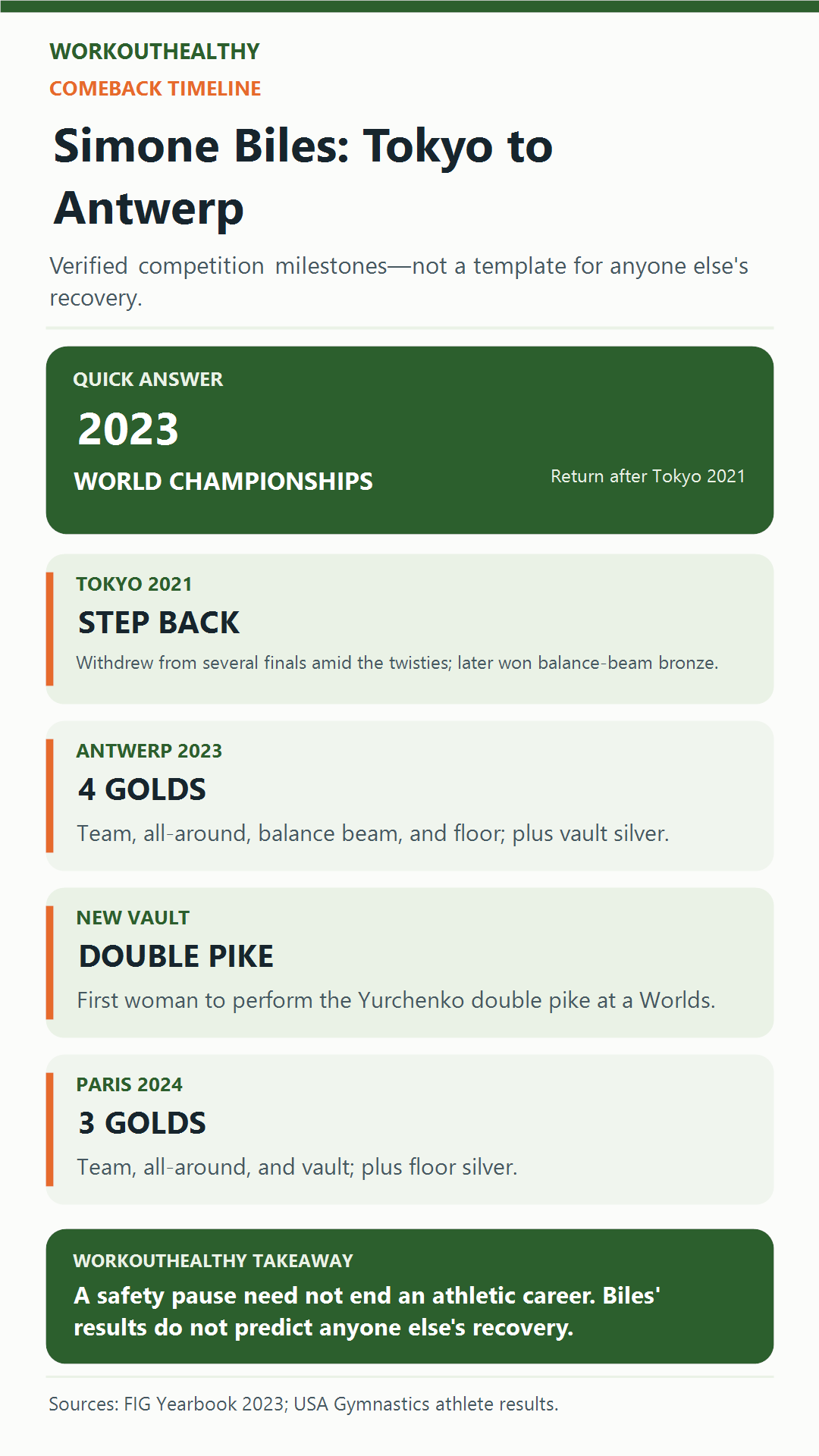
At the Tokyo Olympics in 2021, Biles withdrew from the team final and several individual events after experiencing the “twisties.” In gymnastics, losing reliable awareness of body position while turning in the air can make a landing dangerous. She was not making an abstract point about motivation. She was responding to a safety problem in a sport where timing and spatial orientation matter on every high-level skill.
She later competed in the balance-beam final and won bronze. That detail matters because her Tokyo story was not a simple choice between quitting and winning. It was a series of event-specific decisions about what she could safely do at that moment. Her public comments also made clear that mental well-being belonged in the performance conversation, rather than outside it.
Biles returned to elite competition in 2023. At the World Championships in Antwerp, she won gold with the U.S. team and in the individual all-around, balance beam, and floor exercise, plus silver on vault. The International Gymnastics Federation recorded another technical milestone: during qualification, she completed a Yurchenko double pike vault, becoming the first woman to perform it at a World Championships. The skill was later named for her in the gymnastics code. Those documented results support the post’s broad point that her return included demanding skills; they do not reveal every step of her private recovery or training process.
At the Paris Olympics in 2024, Biles added team, all-around, and vault gold and floor silver. Those medals are a continuation of the timeline, not proof that stepping back automatically produces a stronger comeback for everyone. Athletes’ circumstances, medical needs, and support systems differ.
What the Comeback Does—and Does Not—Show
The most useful lesson is not “take a break and you will win.” It is that a pause for safety or mental health does not erase an athlete’s future. Biles’ results demonstrate what was possible for Biles, supported by elite coaching, skill progression, and her own choices. They cannot establish a universal treatment plan for anxiety, trauma, or the twisties.
For a recreational exerciser, the analogy is narrower. If a movement feels unsafe, technique is deteriorating, or training stress is overwhelming, it is reasonable to stop, scale back, and ask for qualified help. A coach can assess a technical issue. A licensed clinician can address persistent mental-health symptoms. Neither a social post nor a famous athlete’s experience should substitute for individualized advice.
“Pushing through” and “giving up” are not the only options. Someone may change the exercise, reduce difficulty, switch sessions, or return in stages. The correct choice depends on the problem and the person. Biles’ example invites that conversation; it does not settle it for anyone else.
What Her Words Mean for Athletes
Biles did not frame mental health as separate from performance.
She linked the two directly.
In her words, ignoring mental health means you will not enjoy your sport or succeed as much as you want.
Read that way, protecting your mind is not a step away from competing well.
It is part of what makes competing well possible.
That is our interpretation, and it matches the choice she made in Tokyo.
Her decision also sparked wide public discussion about athletes, pressure and well being.
By speaking openly, she showed that even the most successful athletes face mental challenges.
Her return to win multiple golds in Paris three years later added another chapter to that story.
Putting Your Well Being First in Training
Most people are not competing at the Olympics, but training still affects how you feel.
Exercise can be a positive part of life, and it works best when it does not become a source of constant stress.
Here are general ways to keep your well being in the picture.
- Check in before you train. Ask yourself how you feel physically and mentally, and adjust the session if needed.
- Allow flexible days. A lighter workout, a walk or a rest day can be the right call.
- Keep enjoyment in the plan. Include activities you actually like, not only ones you feel you should do.
- Watch the pressure you put on yourself. Goals should motivate you, not overwhelm you.
- Talk to someone. Share how you are feeling with a friend, coach or family member.
- Get professional support when needed. A doctor or licensed mental health professional can help if stress, anxiety or low mood persist.
Stepping back is not the same as giving up.
Biles took a step back in Tokyo and later returned to the top of her sport.
For regular exercisers, a short break or a change in routine can also help you come back with more energy.
It also helps to notice when training stops feeling like something you choose.
If workouts start to feel like a burden you dread every day, that is worth paying attention to.
Adjusting your plan is a smart response, not a failure.
Mind First, Then Performance
Simone Biles has shown what an athlete can achieve at the highest level.
Her Tokyo message adds that success and enjoyment depend on caring for your mind first.
Put your mental health first, and give yourself the best chance to enjoy the work and reach your goals.
Learn more about how we cover celebrity fitness.
For a different first-person take on enjoying movement, see Miley Cyrus on running for joy. Our Nabela Noor health story also separates one person’s experience from general advice.
References
- NPR. (2021, July 28). Transcript: What Simone Biles said after withdrawing from Olympics team final. https://www.npr.org/sections/tokyo-olympics-live-updates/2021/07/28/1021683296/in-her-words-what-simone-biles-said-after-her-withdrawal
- International Gymnastics Federation. (2023). FIG Yearbook 2023: Antwerp World Championships recap.
- USA Gymnastics. Simone Biles athlete results and profile.
This article is for general informational purposes only and is not a substitute for professional medical advice, diagnosis, or treatment. If you are struggling with your mental health, reach out to a doctor or a licensed mental health professional.