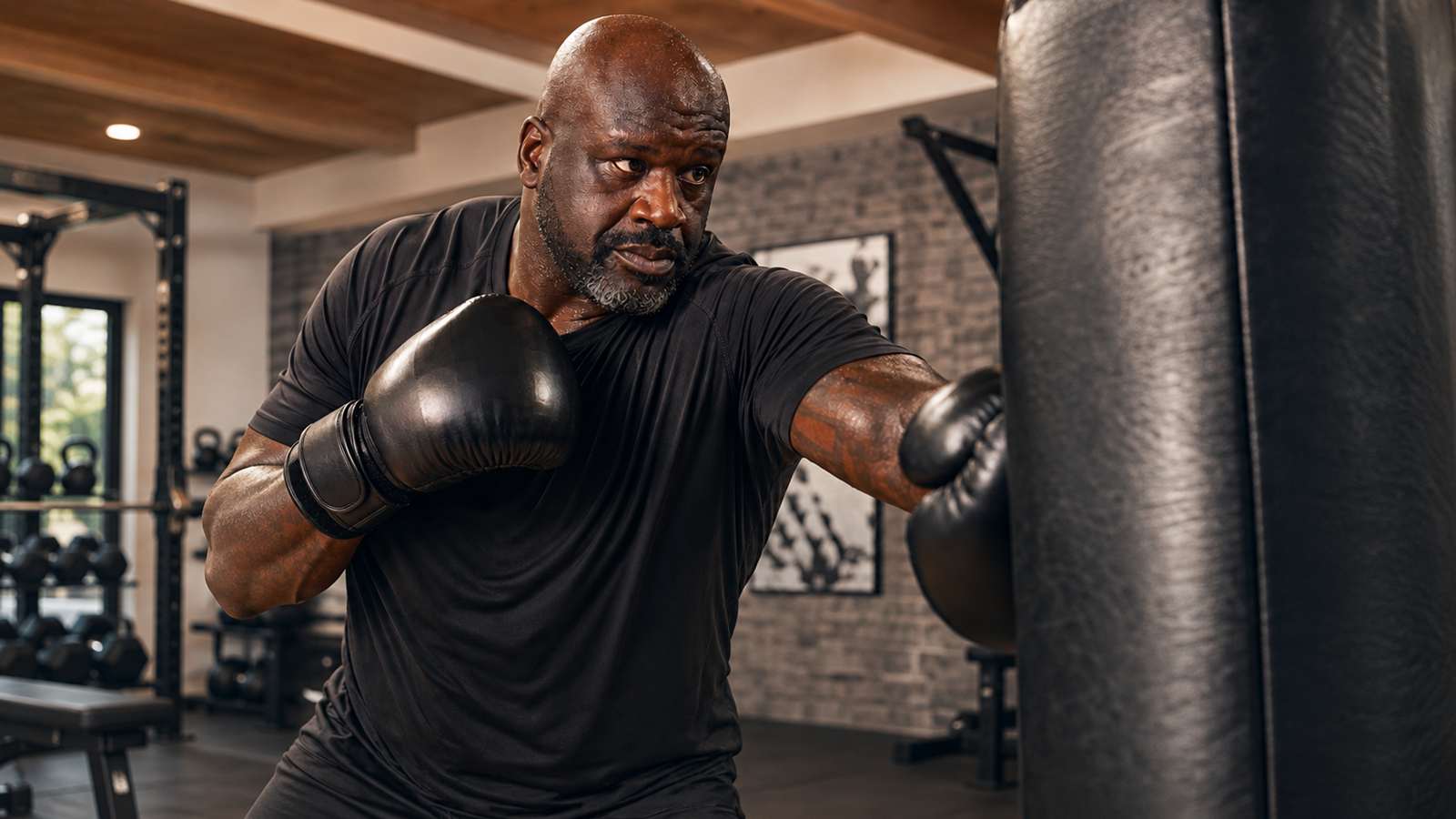

Shaquille O’Neal has repeatedly discussed rebuilding his health after his weight reached about 415 pounds during the pandemic. He changed his eating, returned to regular cardio and strength training, and later said he had lost 55 pounds.
A viral caption says he did it without medication and now has an eight-pack. Both claims need updating. In 2023, O’Neal joked that he had a five-pack and wanted more definition. In June 2026, he publicly disclosed that a doctor prescribed Zepbound for moderate obstructive sleep apnea and that the treatment also helped him lose some weight.
The Reported Weight Change Happened Over Time
Men’s Health reported that O’Neal’s weight reached roughly 415 pounds during the pandemic. By late 2021, he had cleaned up his diet, resumed regular training, and lost almost 50 pounds.
In a 2023 Entertainment Tonight interview, he said the change had reached 55 pounds. He described looking in the mirror, disliking how he felt, and struggling to walk up stairs.
These numbers are self-reported and the exact timeline varies across interviews. They are useful for understanding his story, but they are not an independently audited clinical record.
His Routine Included Cardio and Strength
Men’s Health described O’Neal training four days per week for about an hour. The sessions included roughly 20 minutes of cardio and 40 minutes of strength work.
That is different from the caption’s claim that 20 minutes of intense cardio was the entire workout. He also used resistance training and later discussed elliptical and bike work.
The structure is ordinary in a useful way. A repeatable mix of aerobic and strength training can support health without trying to recreate an NBA practice.
His Diet Changed Too
O’Neal has described eating less processed fast food and fewer large sandwiches while emphasizing meals such as fruit, salad, and protein. Those changes can reduce energy intake and improve food quality, but no short list explains the full result.
Body weight changes when energy intake and expenditure remain imbalanced over time. Appetite, sleep, medication, health conditions, body size, and adherence all influence that process.
A seven-foot retired athlete also has needs that cannot be copied from a headline. Portion size and nutrient targets should fit the individual.
The Eight-Pack Claim Was a Joke Taken Literally
In 2023, O’Neal joked that he had a five-pack and “seven more packs to go” because he wanted to post a shirtless photo. The comment was playful, not an anatomical report.
The viral caption changes that into a confirmed eight-pack at age 51. The source does not support it.
Visible abdominal definition depends on body fat distribution, abdominal development, skin, lighting, posture, and genetics. It is not a necessary marker of improved cardiovascular or metabolic health.
The No-Medication Claim Is No Longer Accurate
In June 2026, O’Neal became part of an Eli Lilly campaign about obstructive sleep apnea. He said a doctor prescribed Zepbound and that it made a difference in his treatment journey while also helping him lose some weight.
Zepbound is tirzepatide, a prescription medicine with effects on appetite and energy intake. It is approved for chronic weight management in eligible adults and for moderate-to-severe obstructive sleep apnea in adults with obesity.
The disclosure does not mean medication caused the earlier 55-pound loss or erased the role of training and diet. It means the current story cannot honestly say no medication has ever been involved.
The Commercial Context Must Be Clear
O’Neal’s 2026 disclosure appeared in a campaign paid for by the drug’s manufacturer. That gives the public his direct account, but it is also marketing.
A company press release can accurately state regulatory information and trial results while emphasizing benefits more than an independent clinical review would. Readers should use the prescribing information and a qualified clinician for decisions.
No celebrity campaign can determine whether a medication is appropriate for another person.
Sleep Apnea Is More Than Snoring
O’Neal said he had long dismissed fatigue, loud snoring, gasping, and trouble focusing. He later learned that he had moderate obstructive sleep apnea.
OSA involves repeated partial or complete collapse of the upper airway during sleep. It can reduce sleep quality and contribute to daytime sleepiness and other health risks.
Loud snoring alone does not establish the diagnosis. A clinician and an appropriate sleep test are needed. Treatment can include positive airway pressure, oral appliances, surgery, weight management, medication in eligible patients, and other individualized approaches.
Medication and Lifestyle Are Not Opposites
Zepbound’s approved use includes a reduced-calorie diet and increased physical activity. O’Neal has described continuing exercise and changing how he eats while using the medication.
The common argument that success must be either natural effort or medication creates a false choice. A person can use medical treatment while practicing demanding behaviors.
The relevant questions are safety, eligibility, benefit, side effects, cost, adherence, and what happens when treatment changes.
Medical monitoring also matters during substantial weight loss. Clinicians may review blood pressure, glucose, sleep symptoms, gastrointestinal effects, hydration, gallbladder risk, and other concerns based on the person and treatment. Resistance training and adequate protein can help support lean tissue, but they do not remove the need for follow-up.
A scale change should be interpreted beside function. Better stair tolerance, more restorative sleep, improved laboratory values, easier daily movement, and preserved strength may matter more than reaching a celebrity’s target number.
A Practical Retired-Athlete Framework
Former athletes often have a large gap between what they once tolerated and what their current routine supports. A sustainable return can be simpler than the old program.
- Begin with medical context. Address symptoms such as severe breathlessness, daytime sleepiness, chest pain, or joint limitations.
- Use repeatable cardio. Walk, cycle, swim, or use an elliptical at a pace that can be recovered from.
- Lift two or three days. Train major movement patterns without trying to reclaim old numbers immediately.
- Progress gradually. Add time, load, or intensity one variable at a time.
- Track function. Stairs, sleep, energy, and consistency can matter more than abdominal visibility.
This framework is general. O’Neal’s size, injury history, and sleep apnea make professional guidance especially relevant to his own program.
Twenty Minutes of Cardio Can Be Useful
A 20-minute session can contribute to weekly aerobic activity, especially when repeated several times. It does not have to be all-out to provide value.
Our guide to cardio and strength for heart health shows why moderate work and resistance training can complement each other.
Someone returning after inactivity can begin with shorter sessions and accumulate time. High-intensity intervals are optional and may be inappropriate when symptoms or joint limitations have not been evaluated.
Strength Work Protects More Than Appearance
Resistance training can help preserve muscle, strength, and daily function during weight loss. That is especially important for older adults and very large individuals who want to remain capable while body mass decreases.
Our review of repetition ranges for strength and muscle explains how training can be challenging without requiring maximal loads.
Machines, supported rows, presses, step-ups, and carries can be selected around joint history. Boxing drills may be enjoyable conditioning, but the verified routine does not depend on them.
Do Not Copy the Food List
Lean protein, fruit, and vegetables can fit a balanced plan, but bread or a club sandwich is not automatically the cause of weight gain. Total pattern and portion matter.
Very aggressive restriction can increase hunger, reduce training quality, and make long-term adherence harder. A dietitian can help when body size, medication, sleep apnea, diabetes risk, or other conditions make the plan more complex.
The goal is a pattern that supports health and can be repeated, not a moral division between clean and dirty foods.
Weight-loss goals can also change as health improves. A number chosen for a television interview may not remain the best target after clinical measurements, strength, sleep, and quality of life are considered. The maintenance plan deserves as much attention as the initial loss.
The Updated Story Has More Than One Tool
Shaquille O’Neal has described a real effort to improve his health. He returned to regular cardio and strength training, changed his diet, and reported losing roughly 50 to 55 pounds after reaching about 415.
He did not verify an eight-pack, and his later Zepbound disclosure means the no-medication story is outdated. The drug became part of treatment for diagnosed sleep apnea and also affected his weight, according to his account.
The honest lesson is not that one food list, 20 minutes of cardio, or one prescription transformed him. It is that health changes can involve training, nutrition, sleep evaluation, and medical care at the same time.
Get the next evidence check.
Five practical fitness stories worth your time, every Friday.
One email a week. No product pitches. Unsubscribe in one click.
References
- Men’s Health. Shaquille O’Neal’s training and diet at 50.
- Us Weekly. O’Neal on losing 55 pounds and struggling with stairs.
- Eli Lilly. O’Neal’s Zepbound and sleep apnea campaign disclosure.
- Healthline. Independent medical context on O’Neal’s disclosure.
Medical disclaimer: This article is for general information only and is not medical advice. If you have an injury, ongoing pain, or a medical condition, talk to a doctor or physical therapist before you change how you train or eat.