
Most people have a gym moment they would like to replay with a different ending. A bar rolls farther than expected, a treadmill starts too fast, or a resistance band snaps back at exactly the wrong time. The seven scenarios in the companion Facebook post are imagined, familiar mishaps—not reports about identified people. They are funny in the way a harmless near-miss can be funny. They are also useful reminders that a quick reset often prevents a repeat.
The goal here is not to shame anyone for making a mistake. A welcoming gym is one where a person can ask how equipment works, choose a lighter option, and laugh at an awkward moment after checking that everyone is okay. When an event causes an injury, it is no longer entertainment; stop, get help, and follow the facility’s safety process.
1. The dramatic deadlift bounce
Imagine finishing a deadlift, losing control of the bar, and watching it bounce or roll across a platform. The slap of plates on the floor might draw every head in the room. A dropped bar is not automatically a failure—some lifting contexts permit controlled drops—but a bar that unexpectedly travels into a walkway is a real hazard. The comedy belongs to the surprise, not to the possibility of a crushed foot.
The practical reset is to check the lifting area before the set. Are the plates secured? Is the platform clear? Is the load one you can move with control today? If grip is the limiting factor, consider grip practice, a more appropriate weight, or the equipment rules of your facility. Keep bystanders out of the potential path of a moving bar. If a lift gets away, do not chase it into someone else’s space; alert people and let it settle.
2. The treadmill that starts like a race
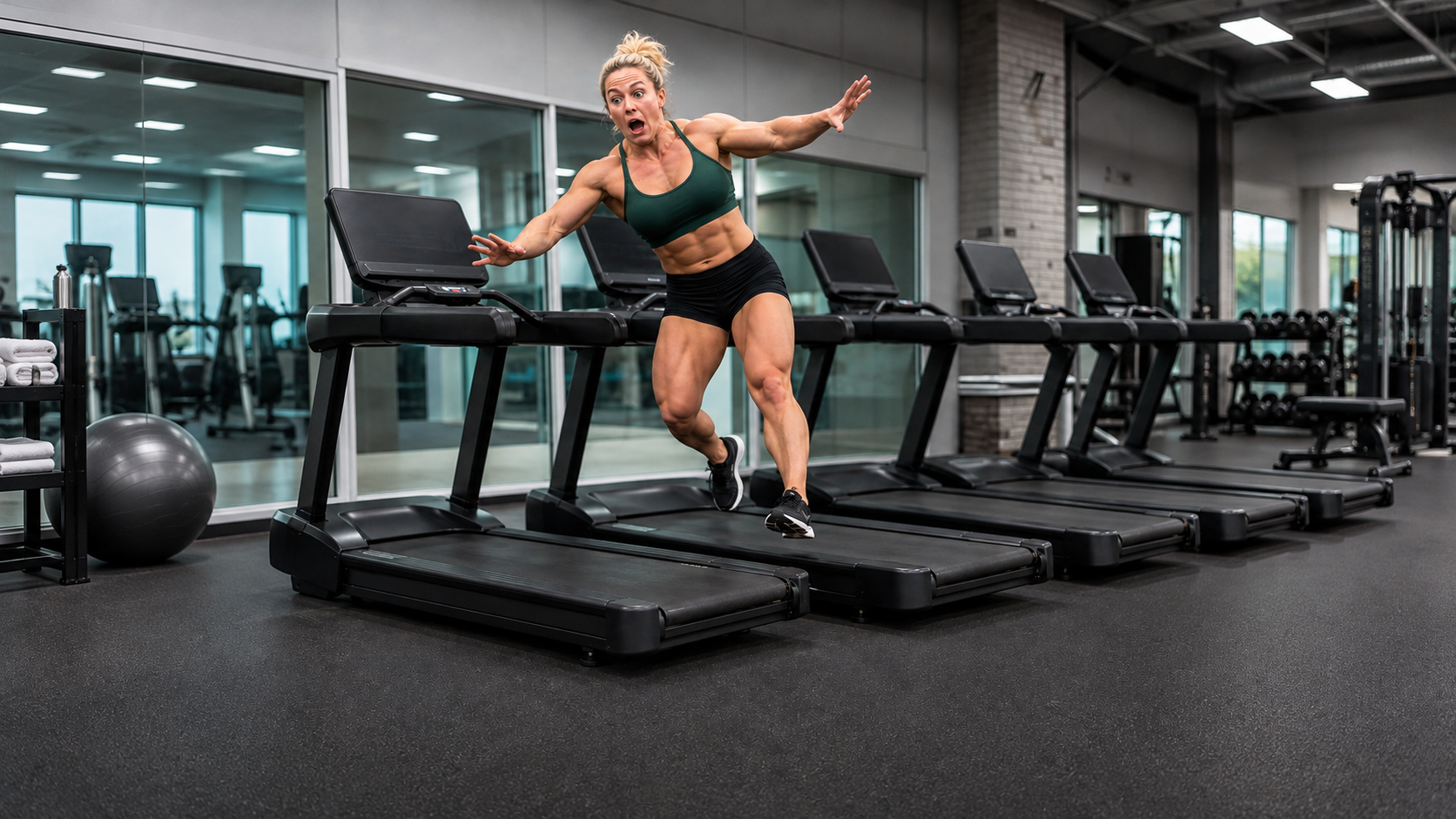
A treadmill can make a simple speed-setting mistake feel spectacular. A person steps onto a moving belt, reaches for a control, and realizes the selected pace is far above a comfortable start. The safest version of this story ends with an immediate stop and no injury. The risk rises when someone tries to save face by continuing at a pace they cannot control.
Before starting, stand on the side rails if the machine design and instructions allow it, locate the stop control and safety clip, and begin at an easy pace. Increase speed in small steps after you find a stable rhythm. If you are unfamiliar with a console, ask staff for a quick demonstration. Treadmills differ; a setting that felt fine on another machine may not feel the same today. Never treat a belt that is accelerating away from you as a challenge to overcome.
3. The box jump that meets the edge
The box is supposed to be an object you land on, not an obstacle your shins encounter. A missed jump can happen when the height exceeds a person’s current ability, fatigue changes takeoff, or the landing space is not clear. The story is often retold with a laugh, but a hard edge can cause genuine injury.
A lower step-up or small platform can train the same confidence without making height the main event. Check that the box is stable, leave room around it, and decide whether the jump still belongs in the workout after your legs are tired. A smooth, repeatable landing is worth more than a dramatic attempt for an audience. If contact with the box causes pain or swelling, pause and assess instead of immediately trying again.
4. The mysterious protein shake
Not every gym fail involves a moving machine. Reaching for a bottle that looks like yours and discovering someone else’s drink is an awkward, human moment. It also touches basic hygiene and boundaries. The right response is an apology, a replacement if appropriate, and a way to distinguish your bottle next time. This is one of the rare scenarios where the lesson does not involve technique or training load.
A clearly marked bottle and a consistent place for it can prevent the mix-up. Keep food and drinks away from shared equipment surfaces where spills create slip hazards. If you are the person whose bottle was taken, it is reasonable to discard the drink. The joke should remain about the mistake, not about making someone else feel unreasonable for caring.
5. The full-length mirror that looks like an exit
Most gyms use mirrors to help people see movement and open up a room. In a distracted moment, a reflection can be mistaken for a path. Walking toward it with complete confidence makes for a story that gets repeated for years. A crowded or unfamiliar layout can make the moment more likely.
The lesson is pleasantly simple: slow down between sets. Put your phone away while moving through a busy floor, look for door frames and clear routes, and give other members room to pass. Equipment can change locations; a glance at the room is more useful than relying on yesterday’s map. If someone bumps into a surface, check for pain or dizziness rather than laughing first.
6. The resistance band that snaps back
Bands seem harmless because they are light and portable. But a stretched band stores energy. If an anchor slips, a handle breaks, or grip is lost, it can recoil toward the face, hands, or bystanders. A band snapping back in a group class may look like slapstick from across the room; up close it is a reason to stop the exercise.
Inspect bands for wear, follow the maker’s anchoring instructions, and keep the line of pull clear of faces and other people. Use a resistance level you can control at both ends of the movement. If the band has visible damage or the anchor feels uncertain, replace or reposition it rather than testing your luck. An instructor can offer a safer setup or a different exercise that achieves the same training goal.
7. The self-cheer with silent headphones
The final scenario is pure social comedy: someone loudly cheers a personal best, then discovers the headphones were not playing and everyone heard. Unlike a flying bar, the only real hazard is embarrassment. It can also be the kind of moment that makes a gym feel human. Most members are focused on their own sets, and a quick smile can defuse it.
Not every awkward moment needs a corrective protocol. Enjoying effort, showing some personality, and celebrating progress are part of what keeps people coming back. The kindness rule works both ways: laugh with someone who is laughing, not at someone who is visibly uncomfortable. A little grace makes a training space less intimidating for the next beginner.
Gym culture rule: Check for safety first. Then let the harmless awkward moments be harmless.
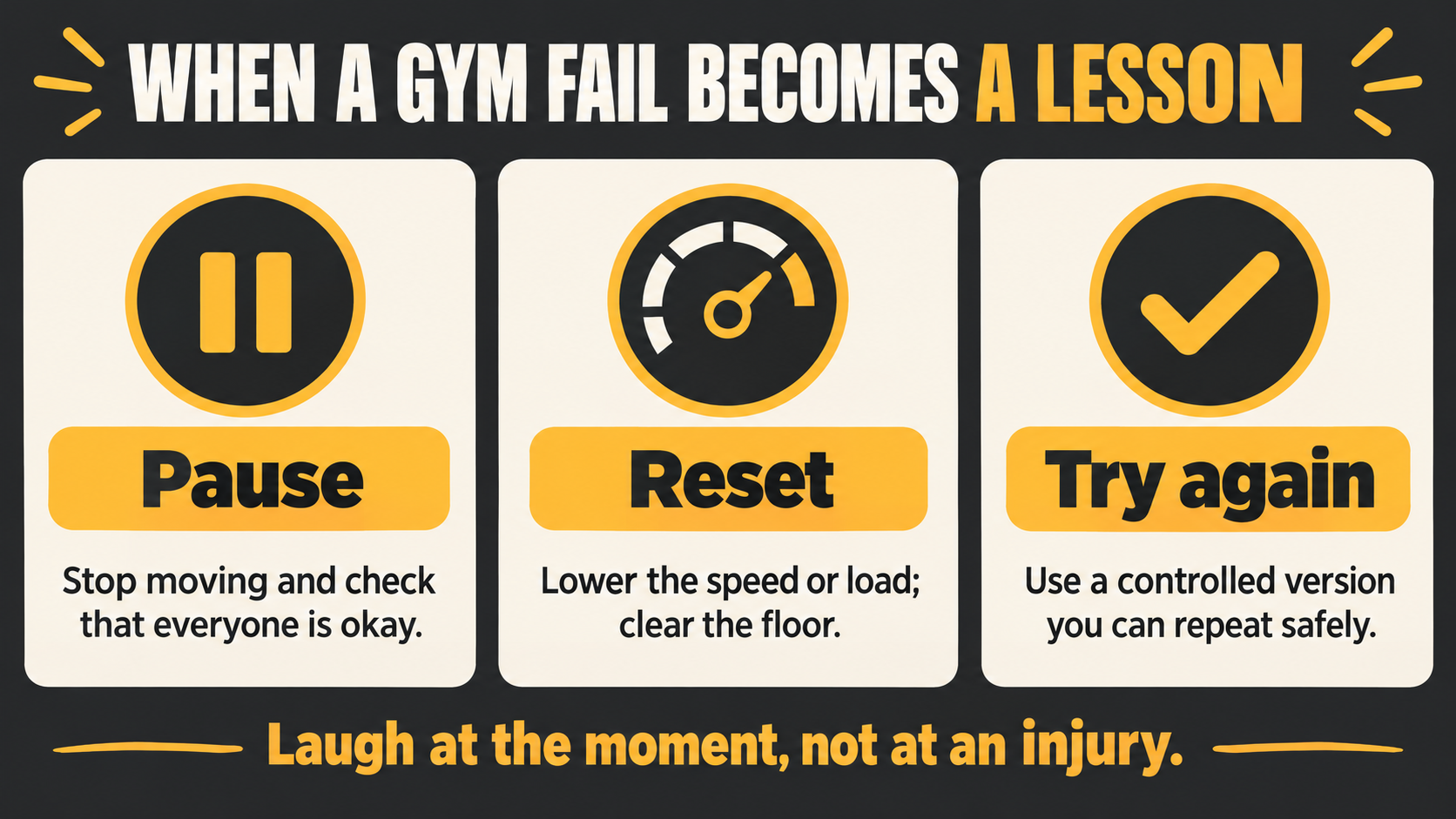
The pause-reset-try-again response
When a mishap happens, pause the activity and check that everyone nearby is okay. If a person is hurt, stop the workout, seek qualified help, and follow the facility’s procedures. If no one is hurt, reset the equipment, clear the area, and identify what actually went wrong. Was the speed too high, the load too heavy, the anchor unsecured, or attention divided?
Only then try again, if it is safe to do so. Make the next version easier to control: lower the load, slow the treadmill, select a shorter jump, or use a more reliable band setup. Repeating the identical failed attempt just to erase an embarrassing moment often adds risk without adding skill. There is no rule that a workout must be completed exactly as first planned.
The same principle applies beyond these seven examples. Our guide to scaling a complex workout emphasizes a repeatable dose over a showy session. For people building strength, our discussion of training principles behind a public routine also separates useful practice from performance for an audience.
Make the room easier for everyone
A good gym environment reduces the cost of asking a basic question. Staff can point out emergency stops, demonstrate a machine, explain where to lift, or replace damaged equipment. Experienced members can offer help without unsolicited criticism. Beginners should not feel that a mistake will become content for someone else’s camera. Respect privacy, especially when a person is upset or injured.
Facilities also have responsibilities: clear walkways, maintained equipment, visible instructions, and staff who can respond when something goes wrong. Individual care matters, but it does not substitute for an environment designed to prevent predictable hazards. If equipment repeatedly malfunctions, report it and choose another station until it is repaired.
Takeaway: The best gym-fail story is one that ends with everyone unhurt—and one small improvement in how the next set is done.
The real punch line
The seven examples are relatable because everyone has moments of distraction, misplaced confidence, or imperfect coordination. None defines a person’s fitness future. The practical message is to stay curious, make quick adjustments, and keep the floor welcoming. A harmless mistake can become a funny story; an unsafe setup deserves a pause, not a dare.
The image paired with this article is an illustration of a treadmill near-miss, not a photograph of a real person’s injury. The listed scenarios are editorial examples based on common gym experiences, not verified accounts of specific incidents. That distinction lets us keep the tone light without pretending someone else’s accident is entertainment.
Safety note: This article is general information. Seek prompt medical attention for injury or concerning symptoms, and follow the instructions and policies for the equipment and facility you use.