
By Chris Pruitt, Certified ASFA Personal Trainer
Roman Reigns did not need to add another layer of muscle to play Akuma in Street Fighter. In a September 2026 Men’s Health interview, the WWE star said the character’s muscular build already fit his usual training. The unfamiliar part was moving with the control a martial arts role demands.
At 41, Reigns says he feels in his physical prime. His account is a reminder that a strong-looking body and the ability to use it in different ways are related, but they are not the same goal.
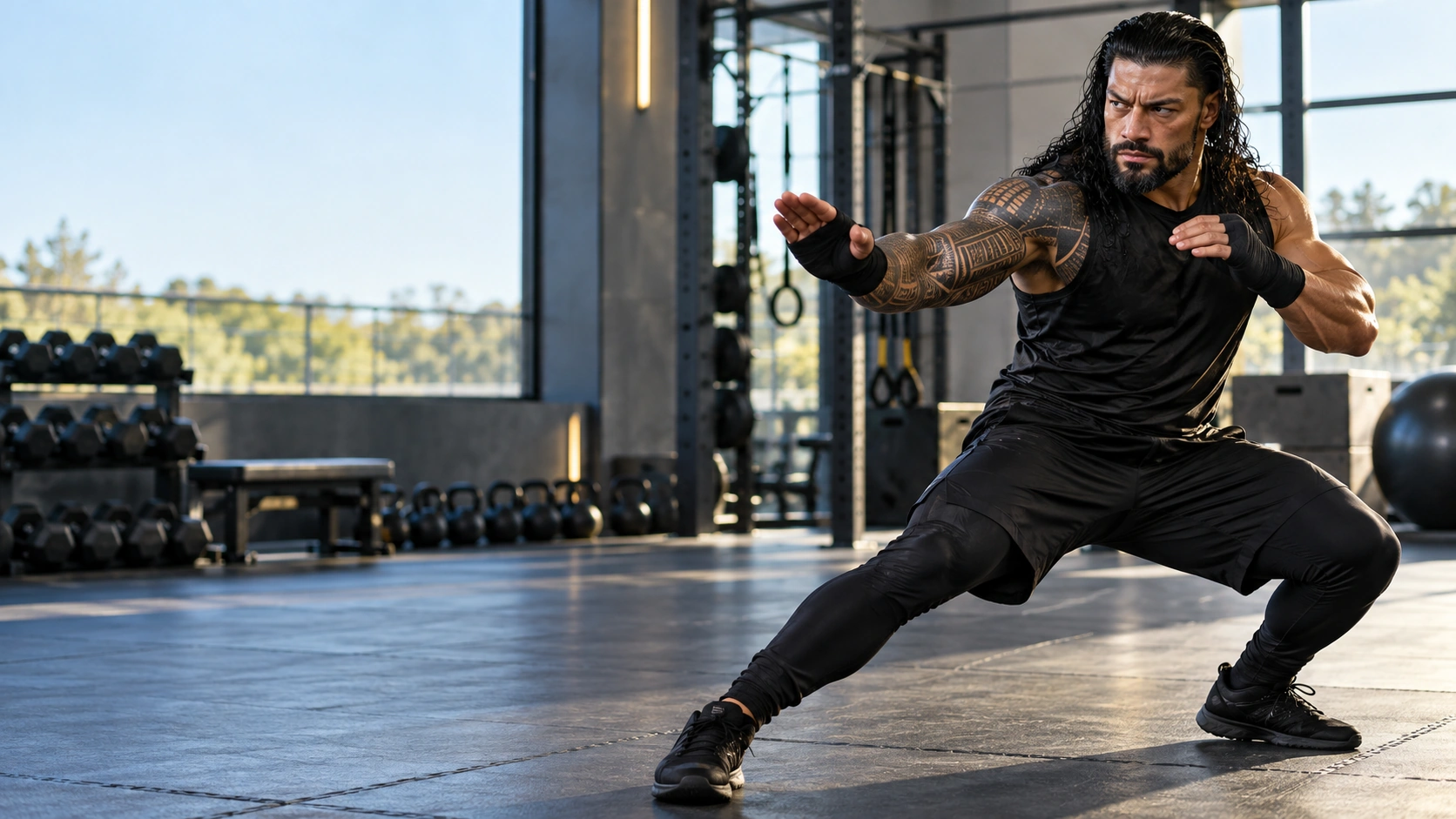
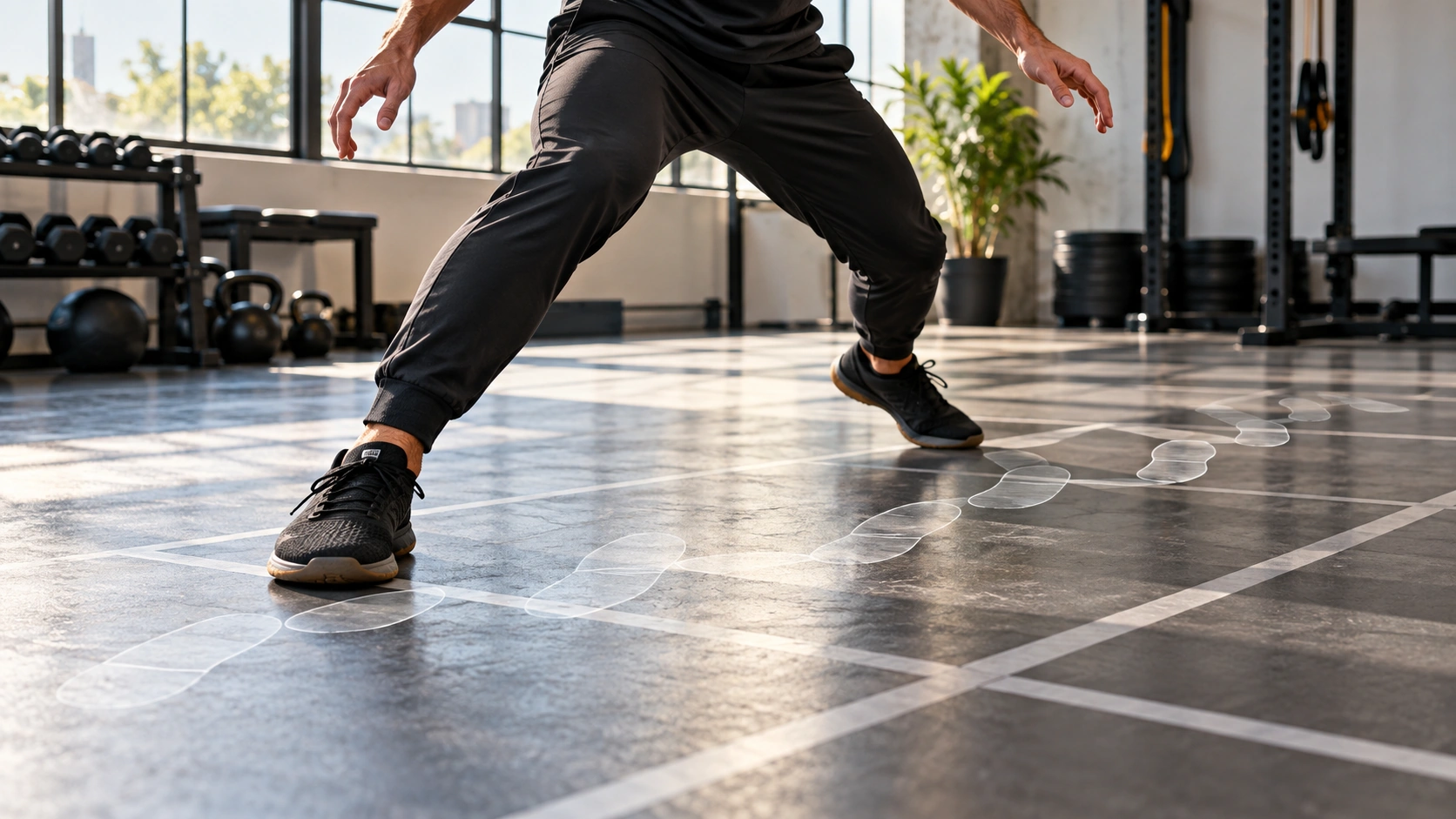
Image note: The featured image is original AI editorial artwork inspired by this interview. It is not a photograph of Reigns’ film preparation.
What did Roman Reigns change for Akuma?
Reigns told Men’s Health that Akuma’s bodybuilder-like build let him stay close to his established regimen. Martial arts added a different demand: holding positions, controlling his balance, and learning more precise footwork.
He described moving from a low, wide stance up onto his toes while coordinating his arms. Those transitions involve isometric work and body control. He compared the precision to a dancer’s. That comparison describes the challenge he felt; it does not mean his training was a ballet program.
His WWE background gave him some transferable skills, but he said martial arts remained a discipline of its own. The interview does not publish a complete Akuma workout, a weekly schedule, or a list of sets and repetitions. Any routine presented as his exact movie program would go beyond what he shared.
Why he does not lift heavy every workout
The session observed by Men’s Health began with mobility work and included high-repetition dumbbell bench presses and curls. The writer reported that Reigns did not use dumbbells heavier than 70 pounds during that particular workout. That is a snapshot of one day, not a limit he follows in every session.
Reigns said he was stronger when he played defensive line at Georgia Tech, when he was younger and larger. He no longer relies on the explosive Olympic lifts from that period. He still trains for muscle, but he pays attention to how his body responds. He recalled that sore elbows made it difficult to train with his usual intensity during the previous December.
That distinction matters. A lighter day can still be purposeful when it matches the work being done and the person’s recovery. It does not establish that every 41-year-old should use his weights, repetitions, or schedule.
Looking strong and moving well
Reigns explained that an action performer needs to look convincing and move convincingly. Large muscles alone would not make a fight sequence feel fluid if the performer could not control stances, steps, and changes of direction.
For everyday training, the useful idea is broader than movie preparation. Resistance work develops strength and muscle. Practice with balance, movement quality, and comfortable range of motion can complement it. A person does not need to train like Akuma to care about both.
Our total-body mobility guide offers other ways to explore controlled movement. Choose movements that fit your ability and setting rather than copying a celebrity’s workload.
What Reigns said about his physical prime and body image
Reigns told Men’s Health that he considers himself in his physical prime at 41. In the same interview, he described noticing details about his appearance that he wishes looked different. He used the phrase “body dysmorphia” conversationally while discussing the inner critic that can come with an appearance-focused career.
That is his description of his experience, not a clinical diagnosis we can make from an interview. The two ideas can coexist: someone can feel capable and still be self-critical in the mirror. His comments give a more human picture than a physique photo alone.
Three practical takeaways from his approach
- Match training to the task. Reigns needed footwork and positional control for Akuma in addition to his existing muscle. Your task might be carrying equipment safely, lifting with better technique, or staying active between strength sessions.
- Use feedback from your body. He adjusts when joints feel beat up instead of assuming every day should be a maximum-effort day. Persistent pain or a new injury deserves a more individual assessment.
- Keep claims in proportion. One observed 70-pound-dumbbell session does not reveal his full program, and his physique cannot be reduced to a single exercise or movie role.
These are editorial lessons from the interview, not Reigns’ prescribed routine. If you try unfamiliar footwork or low stances, begin with a comfortable range and stable footing. A coach can help tailor movement to your goals and limitations.
The takeaway
Roman Reigns already looked the part of Akuma. The new work, as he described it, was making his size move with precision. His account of footwork, isometric control, mobility, and listening to his body makes the training story more interesting than another claim about lifting heavier.
Source
- Ebenezer Samuel. “Roman Reigns Is Ready for His Close-Up.” Men’s Health, September 30, 2026. Interview with Roman Reigns.