
Robert Downey Jr. is 61 years old. He is still playing Tony Stark in Marvel films, still doing his own stunt work in parts, and still training hard.
What has changed is the goal. He is no longer chasing the biggest, most chiseled version of himself for a camera.
He is training to keep moving well for decades. That shift has a name in sport science circles: longevity training.
Who Robert Downey Jr. Is and the Real Context Behind the Shift
Downey built his Iron Man body starting in 2007, at age 41. Trainer Brad Bose put him through a traditional muscle building program, and Downey added more than 20 pounds of muscle for the role.
That was one chapter. It was not the whole story.
Since 2003, Downey has also trained under Eric Oram, a master level instructor in Traditional Wing Chun kung fu.
Oram has been his fight choreographer and movement coach on more than a dozen films.
Their relationship began not long after Downey’s own well documented struggle with addiction. He has described a moment of clarity on July 4, 2004, when he says he knew his old way of living was over.
Martial arts training became part of how he rebuilt his life, not just his body.
That context matters. It explains why his fitness approach was never purely about looking a certain way on screen.
Now in his sixties, Downey has talked about favoring functional fitness, core strength, and agility over simply adding size.
Multiple outlets covering his training, including Generation Iron and Men’s Health Australia, describe the same shift: away from bulk, toward movement that holds up over time.
Downey is not slowing down professionally either. He appeared alongside other original Avengers cast members at the 2026 Oscars, and he is set to return as Doctor Doom in the upcoming Avengers: Doomsday. That workload alone requires a body that can handle physically demanding filming schedules well into his sixties, not just a body built to look good for a poster.
What Longevity Focused Training Actually Means
In sport science, “longevity training” is not a brand name or a single workout style.
It describes training aimed at extending how long a person can move well, not just how they look at one point in time.
Three measurements come up again and again in this research. The first is cardiorespiratory fitness, often estimated through VO2 max, a measure of how much oxygen your body can use during hard exercise.
The second is muscular strength. The third is muscle mass and how it is distributed across the body.
A simple version of the second measurement, grip strength, has become a popular shorthand in longevity research because it is easy to test and correlates closely with overall body strength.
A large 2009 meta-analysis in JAMA, led by researcher Satoru Kodama, pooled data on cardiorespiratory fitness.
It found fitness was one of the strongest predictors of all-cause mortality among healthy men and women.
People with low fitness had meaningfully higher death rates than people with moderate or high fitness, even after accounting for other health factors.
A separate 2018 review in the Archives of Physical Medicine and Rehabilitation looked at muscular strength specifically.
Researchers led by Antonio García-Hermoso analyzed data from nearly 2 million people. They found stronger individuals had a consistently lower risk of dying during the study periods than weaker individuals.
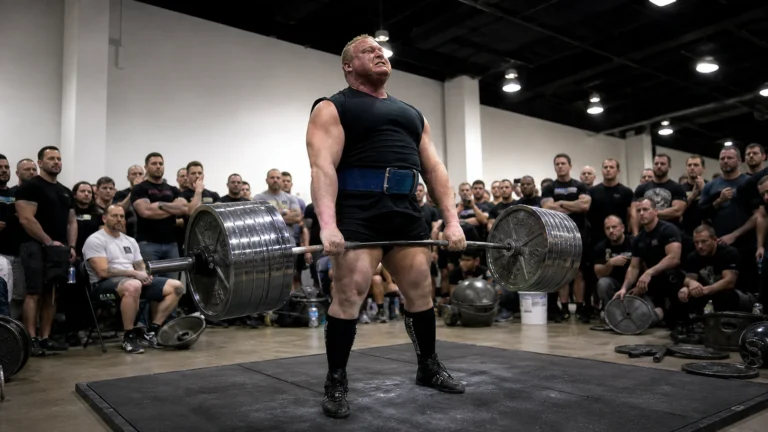
Bodybuilding style training optimizes for a different target: visible muscle size, or hypertrophy. Longevity training optimizes for a mix of strength, aerobic capacity, mobility, and balance instead.
Those goals can overlap. A person can build some muscle while also training their heart and lungs. But when programs have to make tradeoffs, a purely aesthetic program leans toward more isolation exercises and higher training volume for specific muscles. A longevity focused program leans toward compound movements, varied intensity, and more attention to joints and connective tissue.
The Mechanism: Why This Differs From Pure Aesthetics Training
Muscle size and muscle function are not the same thing, and they do not decline at the same rate with age.
Research on aging bodies has found that power, the ability to produce force quickly, tends to decline faster than raw strength as people get older.
Strength itself tends to decline faster than muscle size.
That means a person can look muscular while losing the fast, coordinated strength needed to catch themselves after a stumble, or push up from a low chair.
Pure aesthetics training does not specifically target that gap. Longevity focused training does, through drills that emphasize speed, balance, and multi-joint coordination.
The National Strength and Conditioning Association’s 2019 position statement on resistance training for older adults was led by researcher Maren Fragala.
It recommends including power specific exercises at lighter loads and higher speeds, separate from traditional heavy strength work.
It also emphasizes multijoint, functional movement patterns over single muscle isolation.
This is the same logic behind Downey’s reported training split: full body and functional movement sessions built around suspension trainers, sandbags, kettlebells, and bodyweight work, rather than a bodybuilding style routine built around isolating one muscle group per day.
How It Compares to His Earlier, More Physique Focused Marvel Training
The 2008 version of Downey’s training had a clear, narrow goal: look like Iron Man on camera within a matter of months.
That kind of program often uses higher training volume, more isolation work, and an aggressive calorie surplus to build visible size relatively quickly.
It works well for a defined deadline. It is harder to sustain for decades.
Reports on his current routine describe a five day structure: a lower body day, an upper body day, a full body day, and two days built around yoga and martial arts movement, with weekends off.
That is a meaningfully different shape than a classic five or six day bodybuilding split.
The martial arts component also does work a standard lifting program does not. Wing Chun emphasizes balance, relaxed and efficient movement, and reaction speed, the same qualities that tend to fade first with age.
None of this means Downey has abandoned strength work. He still trains with weighted pull-ups, dips, presses, and squats. The difference is what those lifts are built to serve.
Nutrition tells a similar story. A 2007 style bulking phase, built around a large calorie surplus to add muscle quickly, is a short term tool. A longevity minded approach tends to favor steadier, protein sufficient eating that supports training without the extremes of a bulk or an aggressive cut.
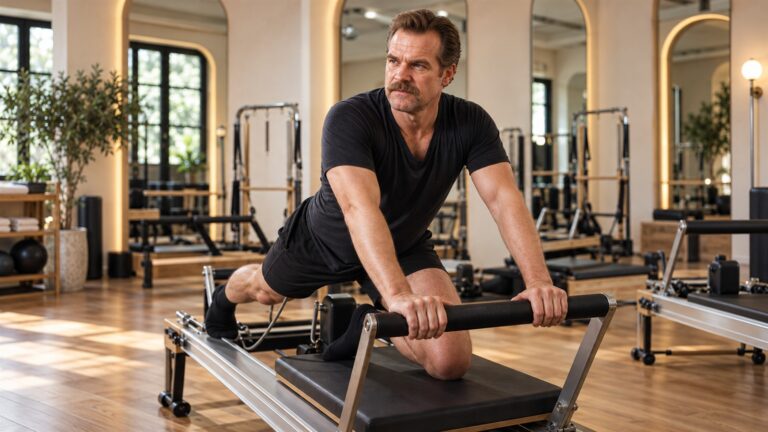
Recovery habits shift too. Our earlier look at Pilates and mobility work for older adults covers some of the same low impact, joint friendly territory Downey’s yoga and martial arts days are built around.
Common Mistakes People Make When Training for Longevity
The biggest mistake is treating longevity training as an excuse to stop lifting heavy things entirely.
Strength itself is one of the most consistently protective factors in the research, and it does not maintain itself through light activity alone.
A second mistake is skipping the cardiorespiratory piece. Many strength focused lifters avoid harder cardio work because it is uncomfortable or because they fear it will interfere with muscle gains. The mortality data does not support skipping it.
A third mistake is ignoring power and speed work. Slow, controlled strength training is valuable, but it does not automatically train the fast, reactive strength that prevents falls later in life.
A fourth mistake is copying a celebrity’s exact routine without adjusting for personal history. Downey has decades of martial arts training behind his current program. Someone starting from zero needs a much more gradual entry point into the same general ideas.
A fifth mistake is neglecting recovery. Downey’s own routine includes two dedicated recovery and mobility days a week. Training every day at high intensity, with no structured lighter days, raises injury risk without adding much extra benefit.
Downey is far from the only public figure whose approach has shifted with age. Our earlier fact check on George Foreman’s comeback training found a similar pattern: patience and gradual progression mattered more than any single trick.
Who Should Be Cautious
Anyone new to exercise, especially after age 40 or with an existing heart condition, should get medical clearance before starting a program that mixes hard cardio intervals with heavy strength work.
People with joint problems, prior injuries, or osteoporosis should have a physical therapist or doctor help design the specific movements, since some functional and power exercises put more stress on joints than slow, controlled lifting does.
Anyone recovering from surgery or a recent injury should treat “functional training” as a goal to build toward gradually, not a starting point.
People on blood pressure or heart medications should ask their doctor about safe intensity levels, since some medications change how the body responds to hard effort.
A Practical Guide to Training for Longevity
Start with a baseline check. If you are over 40, sedentary, or have a known health condition, talk with a doctor before beginning a new program that includes vigorous exercise.
Train strength two to three times a week. Focus on compound, multijoint movements such as squats, hinges, presses, and rows rather than single muscle isolation exercises.
Add dedicated power work once you have a strength base. This can be as simple as a controlled jump, a fast step up, or a medicine ball throw, done for low reps with full recovery between sets.
Build real aerobic capacity, not just short bursts. Aim for most weeks to include both easier, sustained cardio sessions and at least one or two harder efforts, following general public health guidance of roughly 150 minutes of moderate activity or 75 minutes of vigorous activity weekly, alongside your strength work.
Include balance and mobility work on purpose. Options include yoga, tai chi, or martial arts basics, or simple single leg balance drills done for a few minutes several times a week.
Schedule real recovery days, not just lighter training days. Two full recovery focused days a week, similar to Downey’s reported routine, gives joints and connective tissue time to adapt.
Track function, not just appearance. Can you carry groceries up a flight of stairs without stopping? Can you get up off the floor without using your hands? Those questions matter more for long term health than how a mirror looks.
Consider the mental side too. Strength training has links to brain health as well as physical function. Our piece on whether lifting weights keeps your brain young covers that research in more depth.
Progress slowly and expect the plan to change. A program built for a person in their twenties needs real adjustment for a person in their fifties or sixties, in load, recovery time, and how quickly intensity increases.
Robert Downey Jr. did not arrive at this approach overnight. It came from more than two decades of martial arts training layered onto traditional strength work, adjusted as his body and his goals changed.
He is not alone among aging public figures making this same trade. Our look at Christie Brinkley’s routine at 63 found the same underlying pattern: consistency over decades, not a single dramatic transformation.
The training itself is not a secret. The patience behind it is the harder part to copy.
References
- Generation Iron, “Robert Downey Jr.’s Training at 61: How the Marvel Star Built His Iron Man Physique”
- Men’s Health Australia, “How Robert Downey Jr Trains At 61 To Maintain Superhero Fitness”
- Fitness Volt, “Robert Downey Jr.’s Iron Man Workout and Diet Routine”
- Jacked Gorilla, “Robert Downey Jr.’s Workout Routine & Diet (2026)”
- Wikipedia, “Eric Oram,” background and training timeline with Robert Downey Jr.
- Listeners Digest, “Robert Downey Jr. on Acting, Wing Chun, and Recovery”
- Kodama S, Saito K, Tanaka S, et al. “Cardiorespiratory fitness as a quantitative predictor of all-cause mortality and cardiovascular events in healthy men and women: a meta-analysis.” JAMA, 2009;301(19):2024-2035
- García-Hermoso A, Cavero-Redondo I, Ramírez-Vélez R, Ruiz JR, Ortega FB, Lee DC, Martínez-Vizcaíno V. “Muscular Strength as a Predictor of All-Cause Mortality in an Apparently Healthy Population.” Archives of Physical Medicine and Rehabilitation, 2018;99(10):2100-2113.e5
- Fragala MS, Cadore EL, Dorgo S, Izquierdo M, Kraemer WJ, Peterson MD, Ryan ED. “Resistance Training for Older Adults: Position Statement From the National Strength and Conditioning Association.” Journal of Strength and Conditioning Research, 2019;33(8):2019-2052
This article is for general information only and is not personal medical advice. Talk with a doctor before starting a new exercise program, especially if you are new to exercise, are over 40, or have an existing health condition.