
Who Lupita Nyong’o Is and Why She Is Speaking Up Now
Lupita Nyong’o won an Academy Award for her first major film role, in “12 Years a Slave,” in March 2014.
Since then she has starred in “Black Panther,” the “Star Wars” sequel trilogy, and Jordan Peele’s “Us.”
Nyong’o is 43 years old as of this writing, and she is alive, working, and using her public platform for something new.
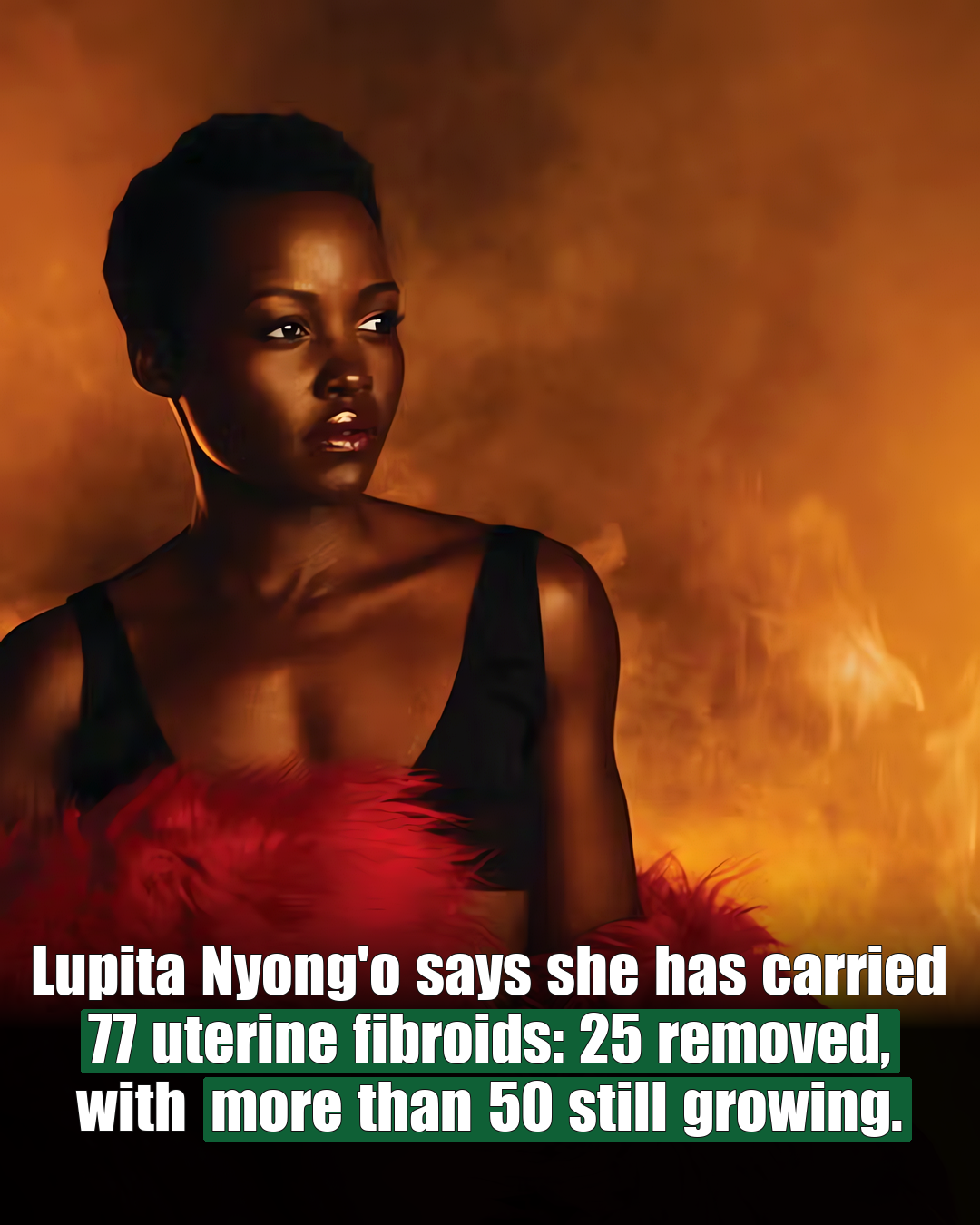
In July 2025, she went public with a health story she had carried privately for more than a decade: her ongoing experience with uterine fibroids.
In March 2026, she took it a step further and launched the Make Fibroids Count campaign with the Foundation for Women’s Health, pushing for legislation to expand research funding and improve early detection.
This article looks at what uterine fibroids actually are, what Nyong’o has said about living with them, and what current research shows about their connection to physical activity.
What Actually Happened: 30 Fibroids, Then 77
Nyong’o has said her fibroids journey began the same year as her biggest professional triumph.
“In March 2014, I won an Academy Award. That same year, I discovered that I had uterine fibroids. 30 fibroids.”
Lupita Nyong’o, quoted by E! News
She underwent surgery to remove all 30 of the noncancerous growths.
When she asked her doctor how to prevent them from coming back, the answer was not encouraging.
“You can’t. It’s only a matter of time until they grow again.”
Lupita Nyong’o, recounting her doctor’s response, to E! News
That prediction turned out to be accurate.
About ten years after her first surgery, Nyong’o’s fibroids returned in far greater numbers.
She has since disclosed that she has had 77 fibroids total, with 25 of them surgically removed in her most recent procedure.
She has described losing dangerous amounts of blood before that diagnosis was caught, a detail that underscores how serious fibroid symptoms can become when they go untreated.
Her Own Words
Nyong’o has been direct about how isolating this experience felt before she started talking about it publicly.
“I could not believe that women were partially or wholly losing their reproductive organs because of this noncancerous tumor situation.”
Lupita Nyong’o, on the Commonwealth Fund podcast, March 2026
She has also pushed back on the idea that a common health problem should be treated as an unremarkable one.
“Just because something is common doesn’t make it normal.”
Lupita Nyong’o, on the Commonwealth Fund podcast, March 2026
Her broader message has centered on rejecting silence around women’s reproductive pain.
“We must reject the normalization of female pain.”
Lupita Nyong’o, quoted by E! News
She has framed her openness as something she hopes helps other women feel less alone.
“You’re not alone. Speaking up has really, really been beneficial to me.”
Lupita Nyong’o, on the Commonwealth Fund podcast, March 2026
What Uterine Fibroids Actually Are
Uterine fibroids, also called uterine leiomyomas, are noncancerous growths that form in or on the wall of the uterus.
They are extremely common. Research summarized by the NIH’s StatPearls clinical reference estimates that 50 to 70 percent of women will develop fibroids by menopause.
The cumulative rate is even higher in Black women, reaching as high as 80 percent, compared to 50 to 70 percent in white women, according to the same source.
Black women also tend to develop fibroids earlier, present with larger growths, and experience higher rates of related anemia, a pattern researchers have documented for years but still do not fully understand.
Fibroid symptoms vary widely from person to person, but common ones include heavy or prolonged periods, pelvic pressure, frequent urination, and, in some cases, fertility problems.
Fibroids are the only identifiable fertility issue in an estimated 2 to 4 percent of women who experience infertility, according to the StatPearls reference.
Despite how common fibroids are, they remain underfunded in medical research relative to their impact, which is a central argument behind Nyong’o’s advocacy work.
Why Treatment Is More Complicated Than It Sounds
Fibroid treatment is not one size fits all, and that is part of why Nyong’o’s advocacy work focuses on research funding rather than a single fix.
Some women with small, symptom free fibroids need no treatment at all beyond regular monitoring.
Others use hormonal medication to manage heavy bleeding and pain without surgery.
For fibroids that are large, numerous, or causing serious symptoms, surgical options range from a myomectomy, which removes the fibroids while leaving the uterus intact, to a hysterectomy, which removes the uterus entirely.
Nyong’o has had myomectomies rather than a hysterectomy, which preserves fertility but, as her own experience shows, does not guarantee the fibroids will not grow back.
Newer, less invasive procedures also exist, including uterine fibroid embolization, which cuts off blood supply to the fibroids without open surgery.
Part of what campaigns like Make Fibroids Count are pushing for is more research comparing these options directly, since much of the current evidence is thinner than most patients would expect for such a common condition.
What Research Says About Exercise and Fibroids
Nyong’o has not spoken publicly about a specific exercise routine tied to her fibroids, and this section is not about her personal training habits.
It is about what the science actually shows regarding physical activity and fibroid risk, since that question comes up often for women managing this condition.
A 2025 systematic review and meta-analysis published in Health Science Reports, led by Marcela Birolim, pooled data from 15 studies on physical activity and uterine fibroids.
Eleven of those studies were combined into a formal meta-analysis.
The researchers found that women who engaged in more intense physical activity had a modestly lower likelihood of having fibroids, with an odds ratio of 0.86.
Lower levels of general activity showed a much weaker, not statistically significant, association with fibroid risk.
The review also noted that physical activity may help ease some fibroid related symptoms, though the researchers described this evidence as limited.
Their overall conclusion was that increased physical activity is associated with a slight decrease in fibroid risk, and they called for more focused research to clarify exactly how much activity, of what kind, actually helps.
What This Evidence Does Not Prove
An odds ratio of 0.86 is a real but modest association, not a guarantee that exercise prevents fibroids.
Most of the studies in the Birolim review were observational, meaning they can show a pattern without proving that activity itself caused the lower fibroid rates.
It is possible that other factors linked to a physically active lifestyle, like diet, body composition, or access to healthcare, explain part of the association.
The review also could not say definitively whether exercise helps once fibroids have already formed, versus only lowering the odds of developing them in the first place.
Nyong’o’s own case makes this limitation obvious. Her fibroids returned a decade after they were surgically removed, exactly as her doctor predicted, regardless of anything she did in between.
That is a useful reminder that fibroids are driven heavily by genetics and hormones, and no amount of exercise can be assumed to prevent them entirely for everyone.
Who Should Talk to a Doctor First
Anyone with heavy or prolonged periods, unusual pelvic pain, or pressure that interferes with daily life should bring it up with a doctor rather than assuming it is a normal part of having a period.
Anyone who has lost enough blood to feel dizzy, unusually fatigued, or short of breath should seek medical attention promptly, since severe fibroid bleeding can lead to anemia.
Women with a family history of fibroids, or who are part of groups shown to have higher fibroid rates, may benefit from talking to their doctor about screening even before symptoms become severe.
Anyone who has had fibroids surgically removed should ask their doctor about a realistic follow up schedule, since regrowth, as Nyong’o’s story shows, is common enough to plan for.
Women trying to conceive who have known fibroids should talk to a reproductive specialist about whether and how their specific fibroids might affect fertility, since not all fibroids affect pregnancy the same way.
None of this article is a substitute for an actual pelvic exam, imaging, or a personalized treatment plan from a qualified OB GYN.
How to Advocate for Your Own Reproductive Health
Track your symptoms. Writing down period length, flow, and pain levels over a few cycles gives your doctor real data instead of a vague impression.
Ask direct questions. If a doctor tells you heavy pain or bleeding is normal, it is fair to ask what “normal” actually means and how it was determined.
Get a second opinion when something feels off. Nyong’o’s own account describes years of confusion before her diagnosis, and a second set of eyes can catch what a first exam misses.
Build movement into your routine where you can. The research above suggests a modest benefit from more intense activity, and staying active also supports cardiovascular and bone health regardless of fibroid status.
Recover from surgery on your body’s timeline, not a calendar. If you have had a myomectomy or similar procedure, our piece on what real recovery from major surgery actually takes covers how gradual a safe return to activity usually needs to be.
Start with walking once you are cleared. Gentle daily walking is often one of the first activities doctors approve after abdominal surgery, and our guide to how many miles you should walk a day can help you set a reasonable starting point.
Talk about it. Nyong’o’s own words make the case better than any statistic: speaking up has been part of what helped her, and it can help other women recognize their own symptoms sooner.
Support the push for better research. Fibroids affect the majority of women at some point in their lives, yet research funding has historically lagged far behind that scale, which is exactly what campaigns like Make Fibroids Count are trying to change.
References
- Commonwealth Fund, “Lupita Nyong’o Is Done Accepting Fibroids as Normal,” March 2026: commonwealthfund.org
- E! News, “Lupita Nyong’o Shares Uterine Fibroids Diagnosis”: eonline.com
- PEOPLE/Yahoo, “Lupita Nyong’o Recalls ‘Losing Dangerous Amounts of Blood’ Due to 77 Painful Fibroids”: yahoo.com
- Barjon, K., Kahn, J., & Singh, M. (2025). Uterine Leiomyomata. In StatPearls [Internet]. StatPearls Publishing: ncbi.nlm.nih.gov
- Birolim, M. M., Souza, S. C. S., Rodrigues, R., da Silva, D. F., Martínez-Vizcaíno, V., & Mesas, A. E. (2025). The association between physical activity and uterine leiomyoma and its symptoms: A systematic review and meta-analysis. Health Science Reports, 8(2), e70487. doi.org/10.1002/hsr2.70487
This article is for general informational purposes only and is not a substitute for professional medical advice, diagnosis, or treatment. If you have symptoms of uterine fibroids, or any concerns about your reproductive health, talk to a qualified OB GYN or healthcare provider.