
Use this guide to match leg circulation exercises to the question you are asking. Read the symptom guidance before the movement examples, then compare the research outcomes.
Keep the movement examples, disease-care questions and research measurements in separate parts of your notes. Use the first-screen warning guidance before considering a routine.
Check concerning symptoms before trying a routine
Seek emergency care for a suddenly cold, painful, pale, numb or weak limb. The Society for Vascular Surgery identifies sudden loss of limb blood flow as a medical emergency, rather than something to exercise away.
According to the CDC’s blood-clot guidance, new swelling, unexplained pain, warmth or discoloration needs prompt medical assessment. Sudden breathing difficulty, chest pain, coughing blood or fainting needs immediate medical help.
Those signs do not establish a diagnosis, and their absence does not rule out a clot. If symptoms are new or unexplained, ask for assessment rather than using an exercise response to decide whether circulation is normal.
Match the question to the kind of help needed
| Situation | What this article can explain | What requires individual care |
|---|---|---|
| Long periods sitting without a new concerning symptom | Public-health movement-break examples and their evidence limits | Any existing activity restrictions or personal clot-risk plan |
| Known peripheral artery disease | Why structured exercise belongs in treatment | The prescribed program, symptom targets and medical treatment |
| Persistent unexplained numbness | Why an exercise list cannot identify its cause | Clinical assessment |
| Coldness or symptoms in a residual limb after amputation | Why intact-ankle examples are not a rehabilitation plan for that limb | The vascular and rehabilitation team’s assessment |
This table describes the limits of general information. It does not assign a diagnosis, clear anyone for exercise or replace an existing treatment plan.
Three simple movement options for prolonged sitting
The CDC seated examples below address prolonged sitting. Follow existing activity restrictions.
1. Seated heel raises
- Keep your toes on the floor while seated.
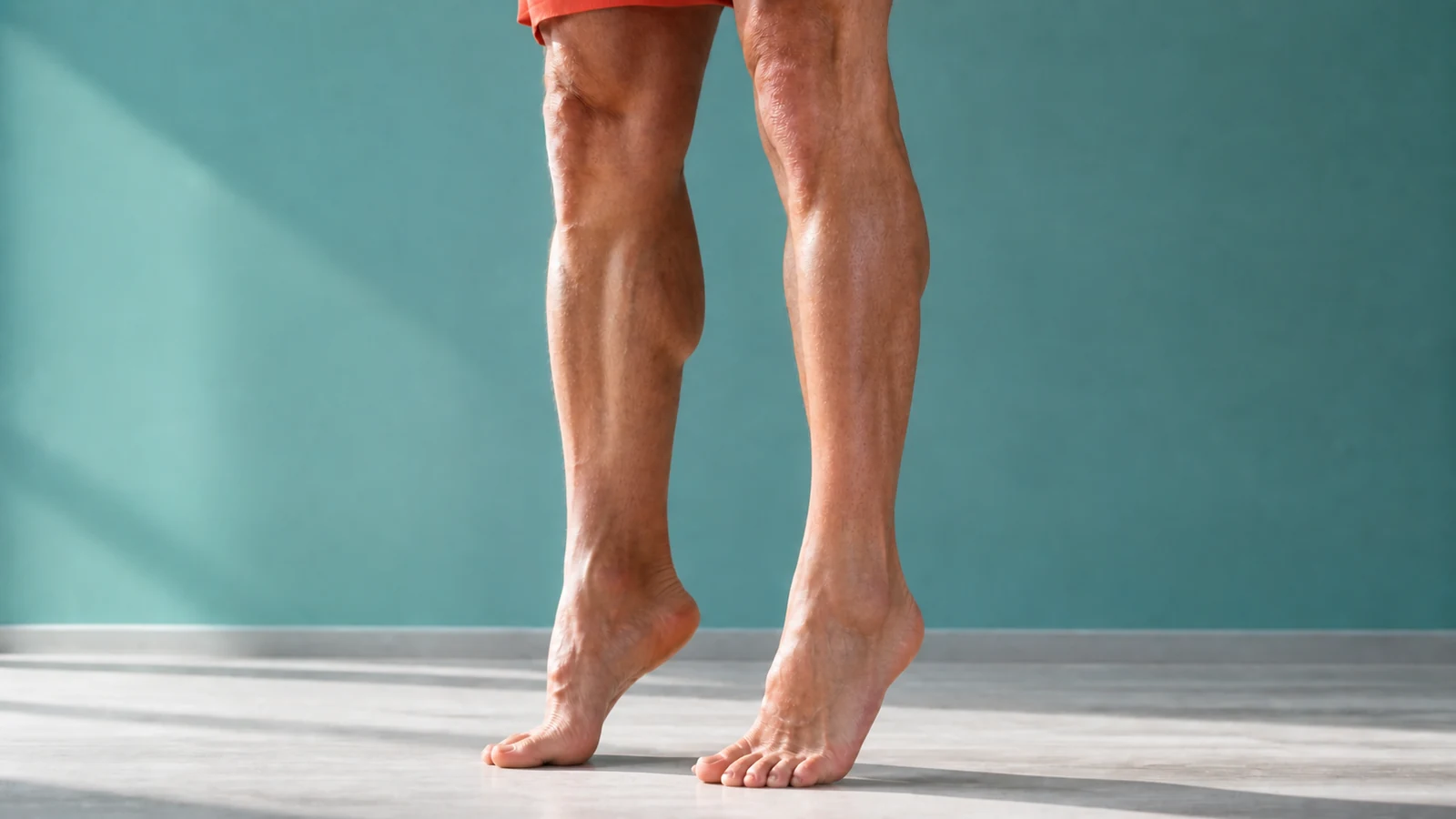
- Raise your heels, then lower them.
Stay seated for these examples; the guidance does not set a universal repetition target.
2. Seated toe raises
- Keep your heels on the floor.
- Lift your toes, then lower them.
The CDC also includes tightening and releasing the leg muscles. Respect your movement restrictions.
3. Walking breaks when appropriate
For sitting during travel longer than four hours, the CDC advises getting up and walking every one to two hours. This is travel advice, not a disease-specific walking prescription.
Before a long trip, people at increased clot risk should discuss prevention with their clinician. CDC’s travel guidance also says to follow prescribed anticoagulant instructions; exercise does not replace medication.
What leg-movement studies actually measured
For each row, write the population, measurement and follow-up beside the result. Ask which clinical question that measurement can answer.
| Study | What was measured | Useful limit |
|---|---|---|
| Toya and colleagues, 2016 | Immediate common-femoral-vein flow velocity across ankle-pump conditions in ten men | Not a test of long-term habits, blocked-artery treatment or a universal home dose |
| Hitos and colleagues, 2007 | Popliteal-vein flow during sitting and leg exercises in 21 healthy adults | Improved measured flow does not prove fewer clinical blood clots |
| Padberg and colleagues, 2004 | A six-month structured calf program in 31 people with chronic venous insufficiency; both groups received compression | Calf-pump measures improved, but reflux and quality-of-life scores did not |
The Padberg trial tested an additional structured intervention, not occasional calf raises in isolation. It therefore cannot justify replacing prescribed compression or other venous care with a short exercise list.
Before comparing routines, record how the exercises, participants and measurements differed. Leave an untested repetition count or treatment question unanswered.
Why artery disease needs its own program
Peripheral artery disease concerns narrowed arteries, while the vein-flow experiments above examined blood returning through veins. A favorable venous measurement is not evidence that an arterial blockage has opened.
The 2024 AHA/ACC guideline summary identifies structured exercise as core care for peripheral artery disease, including supervised therapy and structured community or home programs. It also distinguishes chronic symptoms from acute limb ischemia.
If you already have peripheral artery disease, ask how your prescribed program handles walking, rest and symptoms. Neither a general instruction to push through all pain nor a blanket prohibition on all walking discomfort captures that individualized care.
What to bring to an appointment
A short description can be more useful than saying only that circulation feels poor. Record what happens without deliberately provoking a symptom or delaying urgent care.
- Which leg or part of the limb is affected
- Whether the change started suddenly or gradually
- What you were doing when it appeared
- Any swelling, color, temperature or sensation change
- Your current diagnosis, recent surgery and prescribed treatment
For example, “new left-calf swelling after a trip” raises a different question from “my usual seated stiffness improves when I move.” Those descriptions help communicate the problem; they do not tell you which diagnosis you have.
After amputation, describe changes in the actual residual limb and current equipment to the rehabilitation team. A generic exercise requiring an intact foot should not be assumed to fit that situation.
How to use a movement-break reminder
Once the movement is appropriate for your situation, connect a reminder to the period of sitting you are trying to interrupt. Keep the purpose clear: a travel movement break is different from a prescribed vascular rehabilitation session.
Simple planning note: “During the journey, follow my agreed movement and medication plan; note when I can safely stand or walk.”
Record what was practical rather than chasing an unsupported circulation percentage. If symptoms change, seek the appropriate assessment instead of increasing the exercise dose.
The practical takeaway
Keep the movement, its purpose and any existing care plan together in your notes. Bring unresolved symptoms or activity restrictions to the appropriate treating team.
Keep the movement, its purpose and the evidence separate. Better flow in a small experiment is useful information, but it is not proof of a clot cure or a universal circulation workout.
Fitness disclaimer: This article provides general information about leg movement and vascular exercise, not a diagnosis or personal treatment plan. Follow your clinician’s instructions and seek prompt or emergency care for the warning signs described above.