
Kumail Nanjiani’s physique changed visibly while he prepared to play Kingo in Marvel’s Eternals. The photograph he shared in December 2019 became a shorthand for a dramatic “one-year transformation,” but the more useful story is what made that year possible and what it cost him.
Nanjiani credited a professional team and unusually generous resources. Later interviews also described the discomfort of having his body become a public topic. His experience offers lessons about organized training without offering a realistic template for every reader.
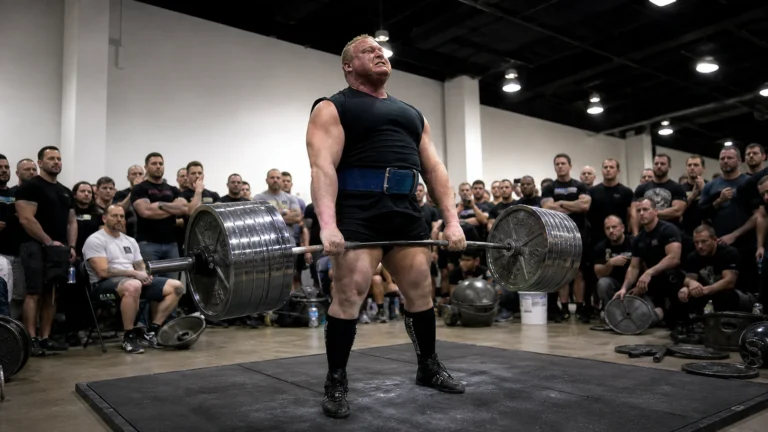
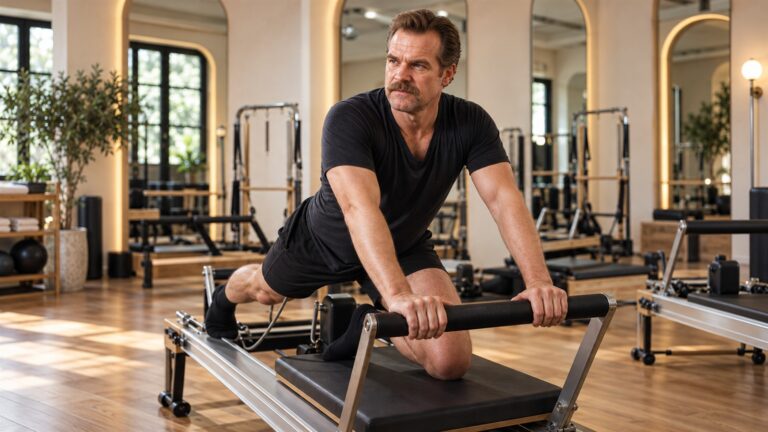
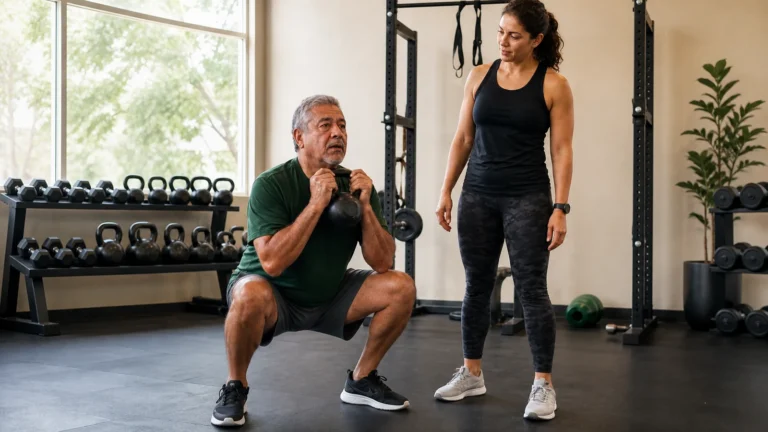
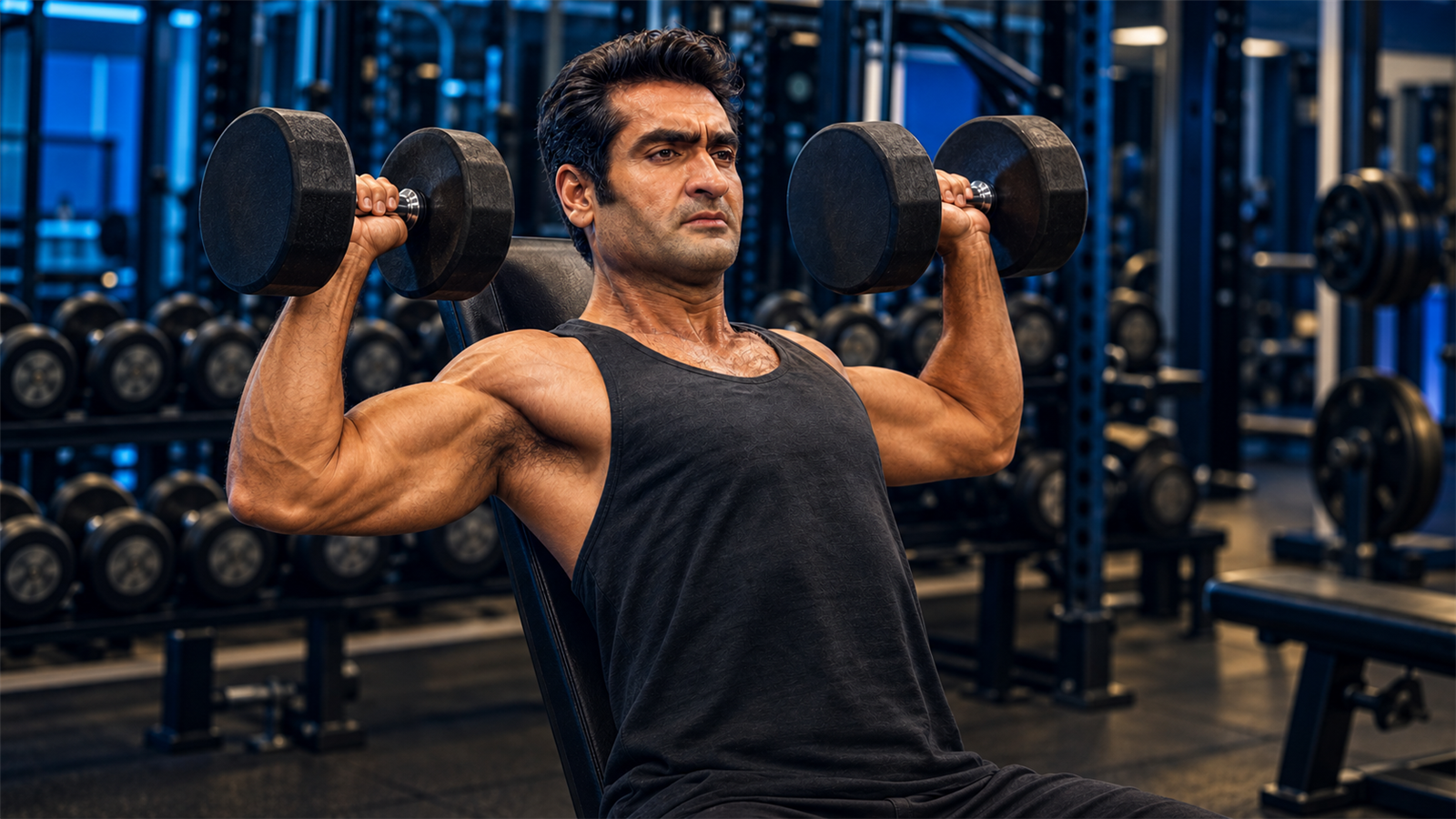
Visual note: the featured gym scene is an editorial illustration adapted from WorkoutHealthy’s Facebook creative. It does not document a particular Nanjiani workout.
What Nanjiani Said About the Transformation
After being cast in Eternals, Nanjiani decided that he wanted to change how he looked for the role. In his original December 2019 Instagram post, he said he had spent a year with trainers and nutritionists whose work was paid for by a major studio.
That acknowledgment matters. A year of coaching, meal planning, and time devoted to a film role is a different starting point from squeezing workouts around a normal job, caregiving, and an ordinary food budget.
He did not claim that an ordinary person needs a Marvel-sized budget to get stronger. He made a narrower point: the particular look and timeline in the viral photograph depended on help most people do not have.
The original Instagram post is the best source for his own account. Interviews published afterward add detail, but they should not be mistaken for a complete training log.
The Studio-Supported Year Was More Than a Workout Split
In a 2020 Men’s Health profile, Nanjiani described meals planned by a studio chef and delivered throughout the week. The same reporting described training around work, on weekends, and with on-call support during filming.
That does not establish a single, reproducible daily routine. We do not have reliable public records of every set, calorie target, or recovery decision across the entire year.
Some published workout templates attach precise exercises and rep schemes to his name. Those may describe sessions with a particular coach, but they should not be presented as the one secret behind the result.
The factors we can confidently identify are sustained resistance work, a structured food environment, professional feedback, time, and a highly specific appearance goal. Their combined effect is the story.
His earlier training also mattered. Nanjiani noted that coach Lance Callahan had helped him build a foundation for years before the Marvel preparation. The headline “one year” therefore does not mean one year from zero training history.
What Training Research Supports
A 2026 American College of Sports Medicine position stand synthesized 137 systematic reviews involving more than 30,000 participants. Across those studies, progressive resistance training improved strength and muscle size compared with doing no resistance exercise.
The review did not identify one magical equipment type, set structure, or periodization plan that consistently dominated. For healthy adults, a repeatable program and enough work to progress matter more than copying a celebrity’s exact calendar.
For strength, the review found advantages from heavier loads, a complete range of motion, two to three sets, and at least two weekly sessions. Greater weekly volume was associated with more hypertrophy, but that does not turn a high-volume film-preparation plan into the right starting point for a beginner.
Recovery capacity, experience, injury history, and available time set the practical ceiling. Start with movements you can perform and repeat well; increase work gradually as your body adapts.
WorkoutHealthy’s strength plan after 40 offers a more accessible framework for building consistency without chasing a camera-ready deadline.
Nutrition Structure Is Useful; Extreme Rules Are Optional
A structured nutrition plan can make it easier to eat enough to support training and to manage changes in body weight. Planning meals, understanding portions, and including protein-containing foods are transferable habits.
What is not transferable is assuming a studio chef, meal deliveries, or constant calorie accounting must be part of the process. Nanjiani described a tightly managed food environment because he was preparing for a role, not writing a public health prescription.
Even the label “cheat day,” which appeared in a 2020 interview, can turn normal eating into a cycle of restriction and guilt. Most people will be better served by meals they enjoy, adequate nourishment, and room for social life.
If tracking food helps you make informed choices without distress, it can be one tool. If it becomes rigid, stressful, or compulsive, a registered dietitian can help build a less burdensome approach.
Visible abs are also influenced by body-fat level, lighting, posing, and the timing of a photograph. They are not a required outcome of successful strength training.
The Body-Image Cost Was Part of His Account
Nanjiani told Men’s Health that he began scrutinizing flaws even while seeing visible abdominal definition. In a later GQ profile, he said public discussion of his body had become increasingly uncomfortable.
These are his reported experiences, not grounds to diagnose him. They are a reminder that praise for a dramatic appearance change can coexist with pressure, self-consciousness, and a complicated relationship with food.
Film photographs also freeze a temporary look. A person can be stronger, healthier, and better supported without maintaining a peak photo-shoot condition all year.
WorkoutHealthy’s article on running for joy rather than a smaller body explores another way to judge exercise by lived experience instead of appearance.
A Realistic Strength Framework for Ordinary Schedules
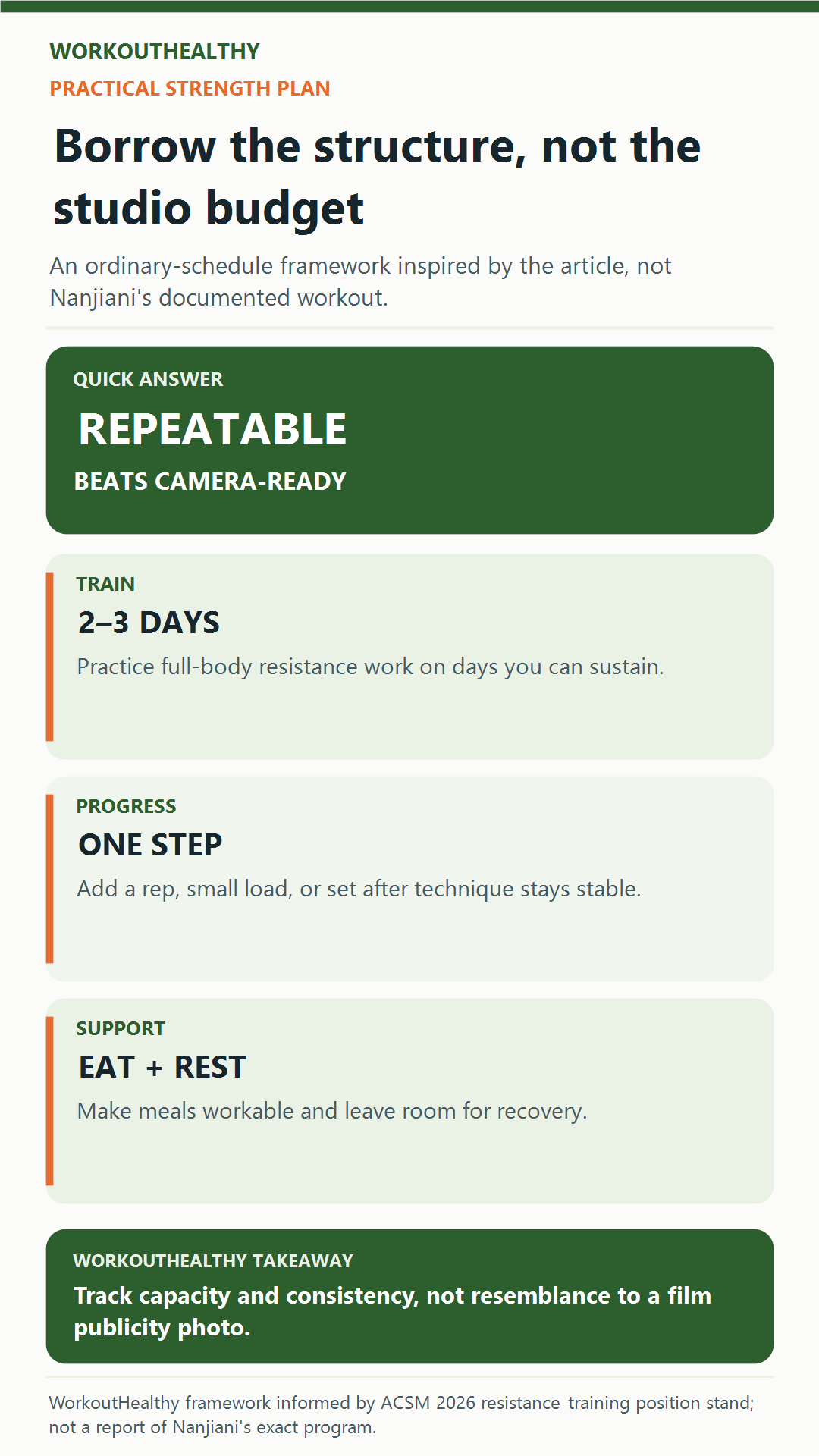
Use Nanjiani’s story to borrow the structure, not the pressure. A simple plan can have three parts: regular resistance sessions, ordinary meals that support them, and a way to notice progress beyond a mirror.
Choose two or three training days. Cover a squat or leg-press pattern, a hinge, a push, a pull, and trunk work across the week. Machines and free weights can both serve those patterns. Begin with a manageable number of sets and a load you can control.
Progress one variable at a time. Add a repetition, a little resistance, or an additional set when technique stays stable. Keep a brief log so the trend is visible over weeks rather than judging one workout.
Make food predictable without making it punitive. Build meals around foods you can access and enjoy. Protein, produce, and sufficient energy support training, but there is no need to imitate a film studio’s meal schedule.
Plan for interruptions. Travel, deadlines, and family life will change a week. A shorter session is useful when a full one is unavailable; returning after a break is more important than maintaining a perfect streak.
Track outcomes that matter to you. A heavier controlled lift, better stamina, improved confidence with a movement, or easier daily tasks are useful signs. No single photo captures all of them.
Our discussion of strength tests and longevity also explains why one measurement cannot stand in for overall health.
A sample week might put a full-body session on Monday and Thursday, then use Saturday for an optional shorter session or a walk. The days are examples, not a claim about Nanjiani’s schedule. A newcomer can practice each movement with comfortable loads, leave a few repetitions in reserve, and adjust only after the work becomes repeatable.
Someone already training regularly may need more weekly sets to continue building muscle. That is a reason to measure recovery and progress, not an instruction to jump straight to a high-volume plan. If soreness, sleep disruption, or dread consistently rises while performance falls, reduce the demand and examine the rest of the week.
Food planning can be equally ordinary: decide what lunch will be before a busy workday, keep a protein-rich option available, and eat enough to support the training you actually perform. A log can reveal patterns, but the log should serve the person, not become a test of virtue.
What the Viral Photo Cannot Tell Us
A photograph cannot reveal Nanjiani’s exact body composition, training volume, calorie intake, sleep, or medical history. It cannot establish that everyone could achieve the same appearance with enough effort.
Nor can an outsider infer drug use or a diagnosis from his physique. Those claims require evidence that the image does not supply.
The public record does support that he worked hard and had uncommon support. Holding both facts together is more honest than either dismissing his effort or selling the result as a universal one-year challenge.
For most readers, the durable goal is to build capacity and a routine they can live with. A sustainable year of training may look less dramatic on a feed and be more valuable in daily life.
The Takeaway
Kumail Nanjiani’s Marvel preparation combined long-term training experience, a year of focused work, coaching, structured meals, and studio resources. He also described body-image strain after the transformation became public.
Copy the parts that scale: regular resistance work, gradual progress, practical food planning, and respect for recovery. Leave the film deadline and photo-based standard where they belong.
References
- Kumail Nanjiani, Instagram post about preparing for Eternals, December 2019.
- Brian Raftery, “Kumail Nanjiani Can Do Anything,” Men’s Health, 2020.
- Clay Skipper, “How Kumail Nanjiani Got Huge,” GQ, 2021.
- “Kumail Nanjiani on Carbs, Cheat Days, and Going Viral,” Interview, 2020.
- Currier BS and colleagues, ACSM position stand on resistance training, Medicine & Science in Sports & Exercise, 2026.
Note: This article is general fitness information, not medical or nutrition advice. Consult a qualified professional for individualized guidance, especially if you have an injury, medical condition, or distress around eating or exercise.