
Dead hang benefits are clearest for grip practice. A supported hang also exposes the shoulders to an overhead position, but a comfortable feeling is not proof that it fixes posture, treats back pain or protects a shoulder from injury.
That does not mean hanging literally puts spinal discs back in place or fixes posture in a few seconds. The useful case for dead hangs is simpler: they are a scalable grip and overhead-tolerance exercise when your shoulders are healthy enough for the position.
Quick answer: healthy adults who can reach overhead comfortably can try a feet-assisted hold on a secure bar and stop for sharp pain, tingling, numbness or instability. The timed holds below are editorial examples for adjusting effort, not a clinically tested prescription.
A dead hang is an exercise, not a chiropractic reset button.
Dead hang benefits: what is measured and what is only proposed
| Claim | What the evidence supports | Practical meaning |
|---|---|---|
| Grip capacity | An eight-week study in 26 advanced climbers found better climbing-specific grip endurance after some hangboard programs. A separate trial of 30 enrolled climbers, with 27 completing, found a weighted-hang program improved measured grip strength more than climbing alone. | Hanging can train grip, but these athlete results do not set a beginner’s dose or prove benefit from a full-body bar hang. |
| Overhead-position tolerance | The shoulder and grip must bear load in an overhead position. The cited climbing trials do not show that a standard dead-hang plan improves shoulder pain in desk workers. | Treat it as a position to learn and scale, not a shoulder treatment. |
| Posture, discs and back pain | The hanging training trials above did not measure disc changes, desk posture or lasting back-pain relief. | A pleasant stretch may be real for an individual; a posture cure or spinal repair claim is unproven. |
| Movement break | The four-minute break below is our editorial routine. It has not been tested against walking or other desk breaks. | Use the bar only if it adds a comfortable option; movement variety is the broader goal. |
A dead hang is an isometric task for the fingers and forearms. It also asks the shoulder complex to tolerate an overhead position while the rest of the body stays relatively still.
The clearest direct training evidence comes from climbing, not office workers. In an eight-week trial by López-Rivera and González-Badillo, 26 advanced climbers used different hangboard programs on small edges; the maximal- and intermittent-hang groups improved climbing-specific grip endurance.
That study does not tell a beginner to copy a climber’s loading. The participants were highly trained, the holds were demanding, and the outcome was climbing-specific grip endurance rather than neck pain, low-back pain, or desk posture.
For a general exerciser, the practical benefits are exposure and capacity. A short, controlled hang can train grip, familiarize the shoulders with overhead loading, and create a clear break between long periods of sitting.
Grip endurance also matters for pull-ups, carries, rows, and many recreational activities. If those are your goals, hanging can be one tool alongside rows, pulldowns, carries, and targeted forearm work.
None of those benefits require a heroic duration. A 10-second hold that feels steady is more useful than a 60-second struggle that changes your shoulder position and leaves your fingers opening involuntarily.
Hanging time is also influenced by hand size, bar diameter, skin condition, body mass, chalk, and previous grip training. Comparing your number with a stranger’s number can therefore confuse several variables with strength or health.
A thicker or slippery bar may shorten the hold without changing shoulder capacity. Record the setup if you want to monitor progress, and repeat the same setup before drawing conclusions.
What it cannot prove about your spine or posture
Social posts often describe hanging as spinal decompression, disc rehydration, or a posture fix. Those phrases sound precise, but the dead-hang training study did not measure spinal discs, vertebral spacing, pain relief, or long-term posture.
Gravity does create traction through the body during a full hang. That mechanical fact is not the same as evidence that a brief hang treats a back condition or reverses the effects of sitting.
Posture is also not one frozen ideal. People naturally change positions throughout the day, and discomfort can be influenced by workload, sleep, stress, previous injury, and how long one position is held.
The better desk strategy is movement variety. Stand, walk, reach, change your chair setup, and use a hang only if it is a comfortable option.
If the movement gives you temporary relief, that experience is valid. Just describe it accurately: the hang felt good for you today, rather than claiming it repaired a disc or permanently corrected alignment.
Persistent back or neck symptoms deserve a proper assessment. Our guide to gym injury prevention and recovery explains why pain management works better when the plan matches the person and the problem.
Choose a shoulder position you can control
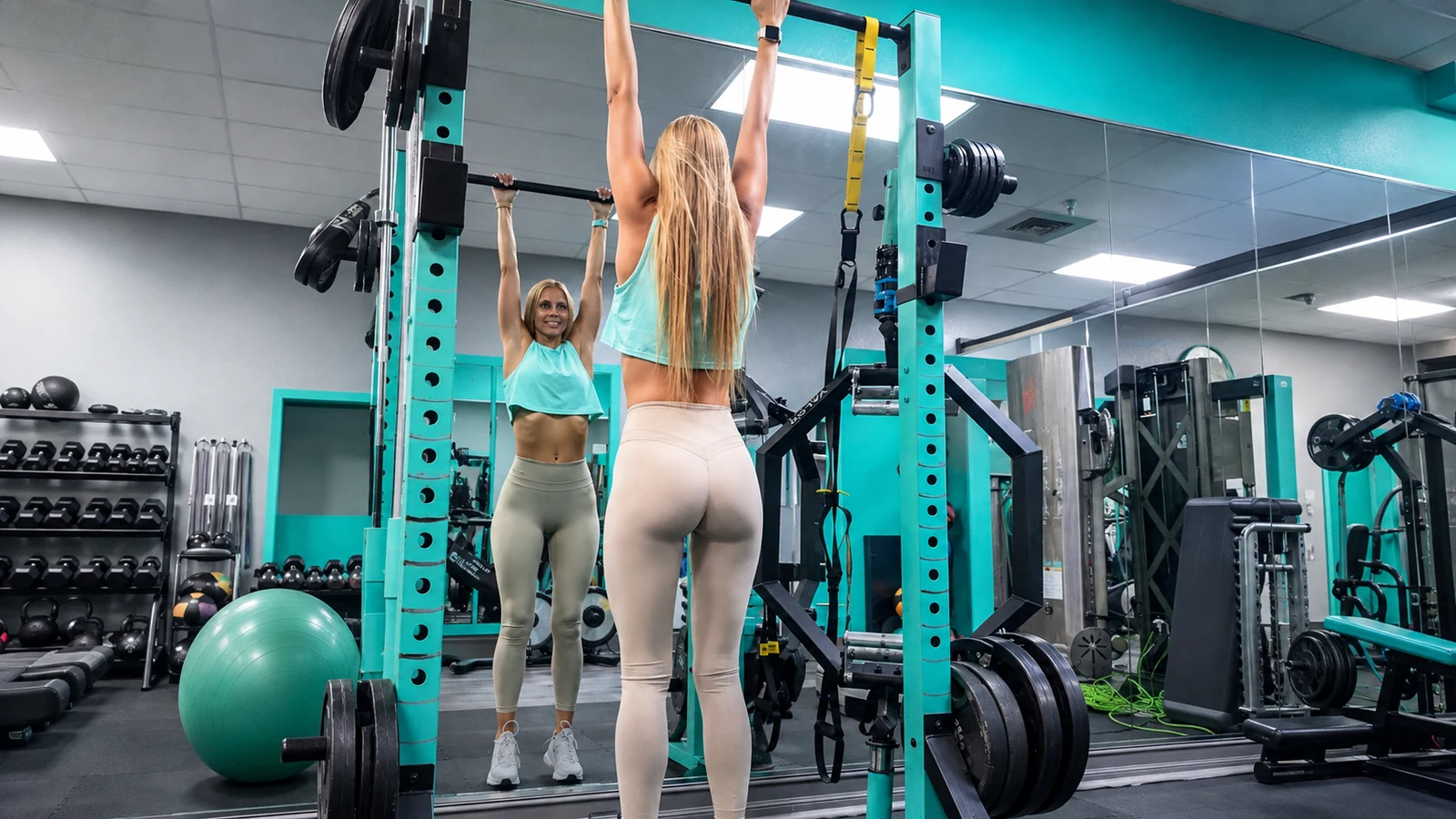
A passive hang lets the shoulders rise toward the ears as the body settles under the bar; an active hang keeps more shoulder-blade and upper-back tension. Neither is automatically the safer choice for every shoulder. Start feet-assisted and use the position you can control without pain rather than copying a rigid cue from a video.
Start with hands slightly wider than shoulder width on a stable bar. Use a box or bench under your feet so you can unload your body instantly.
Let the elbows stay straight without forcing them into an uncomfortable end range. Keep breathing and avoid clenching your jaw or kicking your legs to extend the clock.
A mild stretching sensation can be normal. Sharp shoulder pain, a catching sensation, spreading symptoms, numbness, tingling, or a feeling that the joint may slip are stop signs.
Grip choice also matters. A standard overhand grip is easy to reproduce, but neutral handles may feel better for some shoulders and wrists.
If a full bodyweight hang is uncomfortable, reduce the load with your feet. That is not a lesser exercise; it is the version that lets you control the dose.
Use comfort, position and grip control to decide whether to continue a supported hold. No trial in desk workers establishes a universal number of seconds or sets.
The WorkoutHealthy desk-break protocol
This is an original starting framework, not a clinically validated treatment. Use it as a decision tool for healthy, pain-free shoulders.
First, take a two-minute walk or perform several easy shoulder circles. The goal is to change position before you add load.
Second, place a secure step under a pull-up bar and perform a 10-second feet-assisted hold. Keep enough weight through your legs that the upper body feels calm.
Third, step down and note three things: shoulder comfort, hand sensation, and breathing. All three should return to normal immediately.
Fourth, repeat for two or three total holds with at least 30 seconds between them. End the mini-session while every repetition still looks the same.
Fifth, walk for another minute instead of sitting immediately. The whole break takes roughly four minutes and includes more movement than the hang alone.
Use a simple traffic light. Green means no pain, steady control, and normal sensation; yellow means unexpected tightness or rapid grip loss, so reduce the next dose; red means pain, neurological symptoms, or instability, so stop.
Desk breaks should not depend on having gym equipment nearby. On days without a bar, use a short walk, wall slides, or comfortable reaching in several directions to create the same basic goal of changing position.
The repeatable habit is the break itself. The dead hang is one optional ingredient, which keeps the routine useful during travel, busy workdays, and periods when the shoulders need a different choice.
This framework deliberately avoids promising decompression. Its purpose is to give you a repeatable movement break with a built-in exit.
How to progress without chasing a record
Progress one variable at a time. You can add five seconds to a hold, add one set, reduce foot assistance, or eventually add load, but combining all of those changes makes the response harder to read.
Two or three short sessions in a week are one possible way to practice, but no trial here establishes an ideal frequency for beginners. Stop before your grip fails or your shoulder position changes.
Once a short supported hold feels controlled, decide what you actually want. Longer holds emphasize time under grip load, harder variations change the strength demand, and pull-up practice builds a different skill; none requires reaching a particular time threshold first.
For general strength, pair hangs with controlled pulling. Our overview of floor presses and bench presses also shows how exercise selection can match a joint’s comfortable range rather than forcing one universal version.
If grip is the limiting factor, carries and rows can provide a large training effect without the same overhead demand. The best exercise is the one that loads the target while respecting your current mobility and injury history.
A timer should document the session, not control it. Stop when position or sensation changes even if the planned interval has not ended.
The right dose leaves you more confident in the position, not more suspicious of your shoulder.
Who should skip or modify dead hangs
Do not use dead hangs as a self-treatment for a recent shoulder dislocation, acute rotator-cuff injury, unexplained arm numbness, severe hand pain, or a condition for which a clinician has limited overhead loading.
People with hypermobility may need more active control and less time at end range. People with painful arthritis, recent surgery, or nerve symptoms may need a different exercise entirely.
Bodyweight is also a real load. A feet-assisted hang can reduce it substantially while preserving the setup and grip practice.
If you are unsure, a qualified coach can help with setup, but pain or neurological symptoms belong with a licensed medical professional. Our guide to hiring a personal trainer explains what a trainer can and cannot appropriately handle.
Use a bar rated for your weight and installed according to its instructions. Doorway bars, wet hands, loose benches, and clutter under your feet add risks that have nothing to do with exercise programming.
Clear the area before you start and step down under control. Never jump from a long hang when your grip is exhausted.
The bottom line
A dead hang can train grip and give you a controlled way to practice an overhead position. Evidence does not support presenting it as a quick spinal repair or universal posture treatment.
Start assisted, use short holds, and progress only when your shoulders and hands stay comfortable. For a long workday, use hangs as one optional movement break alongside walking and changing position.
Get the next evidence check.
Five practical fitness stories worth your time, every Friday.
One email a week. No product pitches. Unsubscribe in one click.
References
López-Rivera, E., & González-Badillo, J. J. (2019). Comparison of the effects of three hangboard strength and endurance training programs on grip endurance in sport climbers. Journal of Human Kinetics, 66, 183-195. Study.
Saul et al. (2021). Hangboard training in advanced climbers: A randomized controlled trial. Scientific Reports. Study.
This is general fitness information, not an individual exercise or treatment prescription. A clinician should assess pain, numbness, instability or a recent shoulder injury before you use an overhead hang.