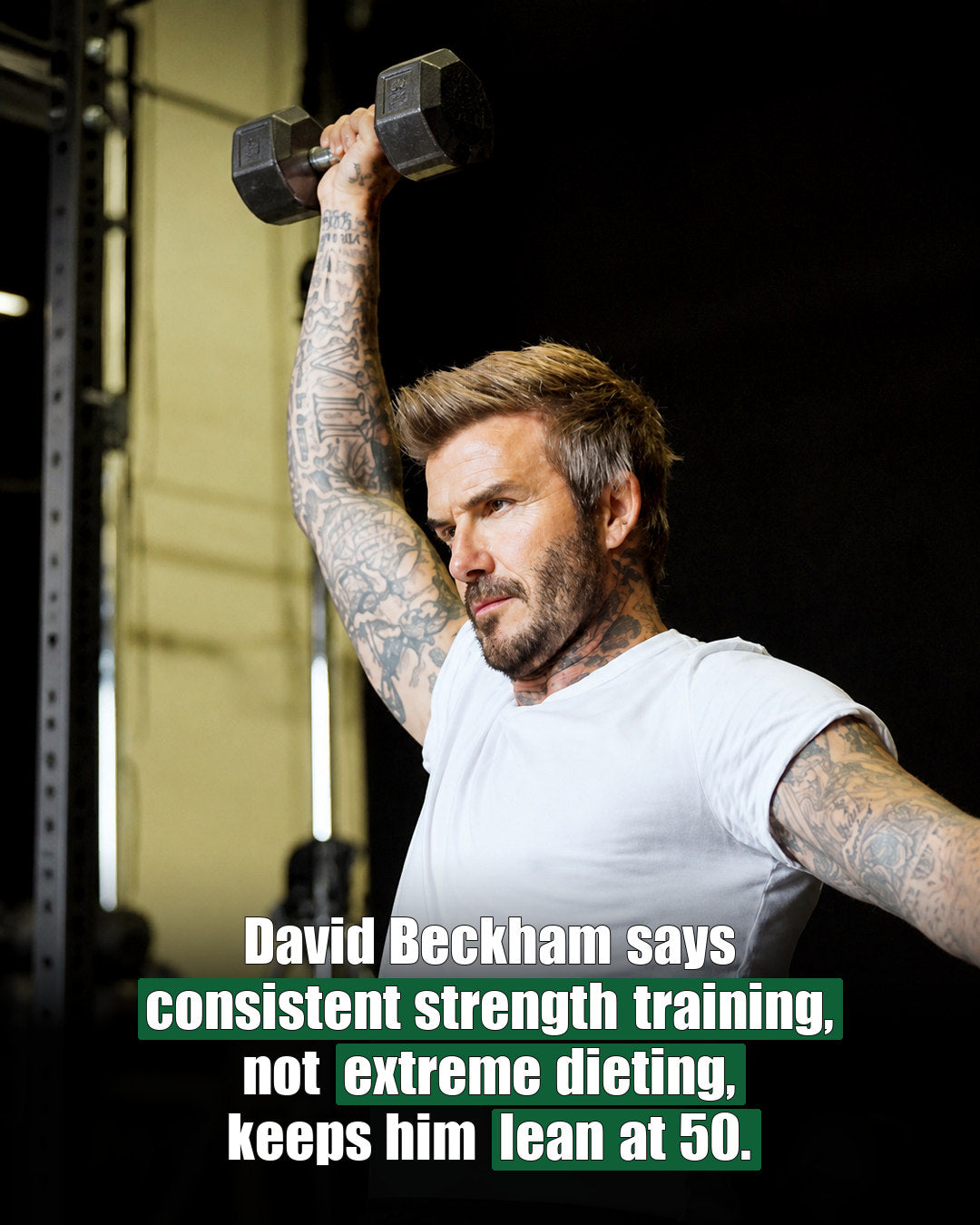

David Beckham spent two decades as one of the most watched athletes on earth. For nearly all of that time, he barely trained his upper body.
Now retired and in his 50s, that has changed. Beckham has talked openly about building strength he never needed as a player, and why he finally started.
His story is a useful case study in how training needs shift once a career built around one specific skill set ends, and what the science says about strength training later in life.
Who David Beckham Is and Why His Training Made News
Beckham is a former England captain and one of the most recognized footballers in the sport’s history.
He played for Manchester United, Real Madrid, LA Galaxy, and several other top clubs before retiring in 2013.
He turned 50 in May 2025 and is now 51.
He remains highly visible through business ventures, including ownership of Inter Miami CF. He is also visible through his family life with his wife Victoria and their four children.
Recent coverage of his fitness routine, including a detailed Men’s Health interview and a June 2026 profile of his morning habits, drew attention because of how different his current training looks from his playing days.
Beckham is not alone in this kind of shift. Other public figures well past their 40s and 50s, like Christie Brinkley in her 60s and Vanna White in her late 60s, have also talked publicly about adjusting their training as they age.
What His Training Actually Looks Like Now
According to reporting on his routine, Beckham wakes at 6 a.m. consistently, wherever he is. He starts with coffee or matcha tea and walks the family dog before the day gets going.
He trains with a coach named Bobby Rich. He and Victoria train together five to six times a week, often in a home gym.
His sessions include dumbbell bench presses, lower abdominal work, and battle rope intervals, according to reporting on his home gym routine.
He has also described doing pushups and pullups as part of his regular training, movements that get almost no attention in a typical footballer’s program.
Beckham gets eight to nine hours of sleep most nights, which he has described as non-negotiable rather than a luxury he sometimes skips.
He also takes his daughter Harper Seven to school most mornings around 7:30, fitting his training around a fairly normal parenting schedule despite his fame and business commitments.
Personal trainer Adrián Abad, who has analyzed Beckham’s public routine, put it simply: “What makes the difference is not just one single thing, but the set of well structured habits.”
That framing matters. No single exercise or supplement explains Beckham’s current fitness. It is the combination of consistent sleep, daily movement, and structured strength training that adds up.
Beckham’s Own Words on Why He Changed His Training
Beckham has explained the shift in his own words, connecting it directly to problems that developed during his playing career.
He told Men’s Health: “The strength work that I do for my core and upper body helps with the backaches that I’ve got.”
He continued: “When I was playing, the only strength work I did was on my legs.”
That is a striking admission from a professional athlete.
For 20 years at the highest level of football, his training almost entirely skipped half of his body.
He has also been candid about how weak that left him in specific ways. He said: “I hated pullups with a passion. I could literally only do two or three, three at most.”
Reporting on his training also notes that he has built visibly more chest size than at any point in his playing career, a direct result of finally training that part of his body with intent.
That kind of visible change in a specific area after years of neglect is a common pattern in strength training.
A muscle group that gets consistent, direct work responds, even later in life and even after decades of being mostly ignored.
The Exercise Science Behind Training a Retired Athlete’s Body Differently
Professional footballers train for what their sport actually demands. Football is overwhelmingly a lower body and cardiovascular sport, built on running, sprinting, cutting, and kicking.
Upper body and core strength matter for a footballer too, mostly for balance, contact, and injury resistance.
But they were never the priority. Many players’ programs, like Beckham’s own, gave that area minimal direct attention as a result.
Once a career like that ends, the demands on the body change completely. Posture, back health, and general functional strength become more important than any sport specific skill.
A 2020 review in the journal Frontiers in Physiology, by researchers Endo, Nourmahnad, and Sinha, looked closely at resistance training and aging.
It found that lean muscle mass decreases substantially as people move further into their 60s and beyond.
The review also found that resistance training remains genuinely effective at counteracting that muscle loss.
That holds even though the body’s response to training becomes somewhat less robust with age.
It makes consistent strength work more, not less, important heading into later decades of life.
How This Compares to His Playing Days Training
As a professional, Beckham’s training was built entirely around football performance. Leg strength, conditioning, and skill work dominated his schedule, and upper body training was, by his own account, essentially absent.
That approach made sense for maximizing performance on the field for two decades. It was not designed with long term joint health or balanced total body strength in mind.
His current approach flips that priority. Total body strength, core stability, and posture now matter more than sport specific output, since he is no longer training to win matches.
This shift is common among retired athletes across many sports, not unique to Beckham. Bodies trained hard for one narrow purpose for decades often need deliberate, different work once that purpose ends.
It also mirrors a broader pattern seen across midlife fitness more generally. Public figures like Gabrielle Union in her 50s have similarly described shifting their training focus as their bodies and goals changed with age.
Common Mistakes People Make Copying a Celebrity Routine at Midlife
A common mistake is assuming someone starting strength training in their 50s should jump straight into heavy compound lifts.
Beckham himself started from a real weakness, only able to do two or three pullups at most.
Another mistake is ignoring the eight to nine hours of sleep Beckham treats as central to his results.
Training without adequate recovery blunts progress at any age. Recovery capacity also tends to shrink further as people get older.
People also tend to compare their own starting fitness level to a former professional athlete’s baseline.
That comparison is a mistake.
Beckham spent decades building a high level of general fitness. Most people starting a program in their 50s simply do not already have that base to work from.
Who Should Be Cautious Starting Strength Training in Their 50s
Anyone with an existing back injury or chronic back pain should get a doctor’s or physical therapist’s guidance before starting a new strength program, even one built around bodyweight movements.
People who have not done regular structured exercise in years should start conservatively and build up gradually, rather than trying to match a battle rope and heavy dumbbell session on day one.
Anyone with cardiovascular risk factors, joint replacements, or other significant medical history should get medical clearance before starting a new resistance training program.
People managing high blood pressure or a heart condition should also ask a doctor specifically about high intensity intervals, like the battle rope work Beckham does, since bursts of very intense effort raise heart rate and blood pressure quickly.
A Practical How-To: Building Total Body Strength Later in Life
Readers inspired by Beckham’s shift can build toward a similar, balanced approach with a gradual, structured plan.
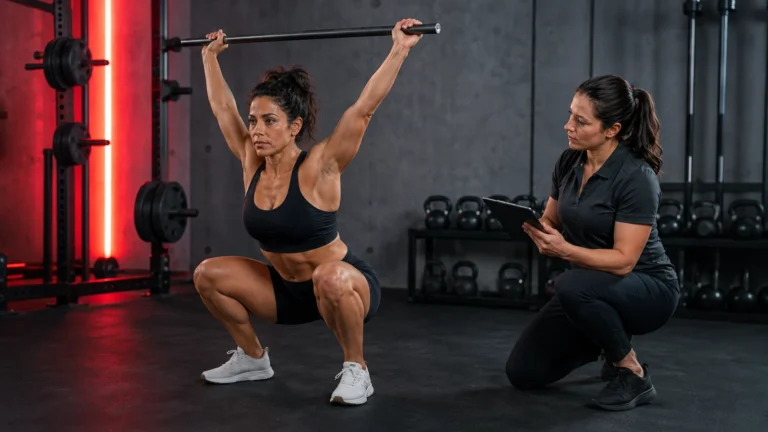
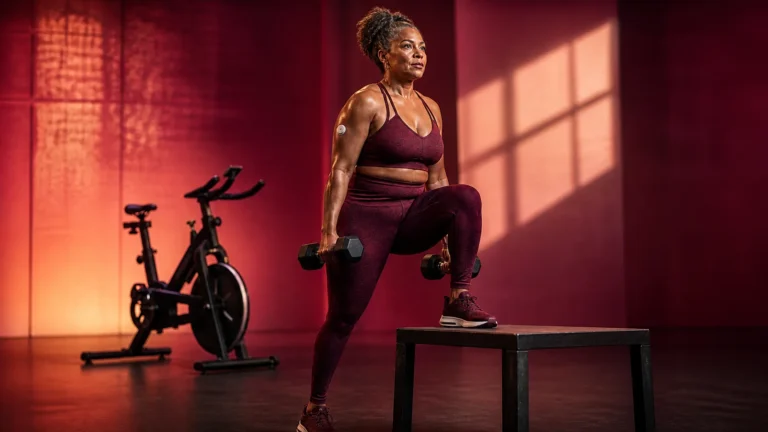
- Start upper body work with assisted or modified movements, like incline pushups or resistance band rows, if a full pushup or pullup is not yet possible.
- Add core specific work, like planks or controlled lower ab exercises, two to three times a week.
- Include short, intense conditioning intervals, similar to battle ropes, once a base level of strength is established.
- Train both upper and lower body regularly, rather than defaulting to whatever movements feel most familiar.
- Protect seven to nine hours of sleep as part of the training plan itself, not as a separate, optional habit.
- Progress slowly, adding difficulty every few weeks rather than every session, especially when returning to strength training after years away from it.
- Work with a qualified coach or physical therapist for the first several sessions if you have never done structured strength training, so someone can check your form early.
- Keep a simple log of what you did each session, since tracking progress over months matters more than any single workout.
Beckham’s transformation was not really about looking different at 51. It was about training the parts of his body his old career left behind, and the research backs why that shift matters as much as it does.
References
Men’s Fitness, “David Beckham Could Only Do a Few Pullups. Here’s How He Built His Chest,” February 26, 2025, sourced from a Men’s Health interview.
HOLA! USA, “David Beckham’s Morning Routine at 51: An Expert Breaks Down the Habits Keeping Him Fit,” June 19, 2026, featuring analysis from personal trainer Adrián Abad.
Endo, Y., Nourmahnad, A., and Sinha, I. (2020). “Optimizing Skeletal Muscle Anabolic Response to Resistance Training in Aging.” Frontiers in Physiology, 11, 874.
This article is for general information only and is not personalized medical or fitness advice. Talk with a doctor before starting a new strength training program, especially if you have an existing injury or chronic health condition.