
Daniel Humm runs one of the most acclaimed kitchens in the world.
He is the chef and owner of Eleven Madison Park, which has held three Michelin stars since 2011 and topped the World’s 50 Best Restaurants list in 2017.
Long before service starts each day, Humm has reportedly logged miles through New York City, according to Runner’s World.
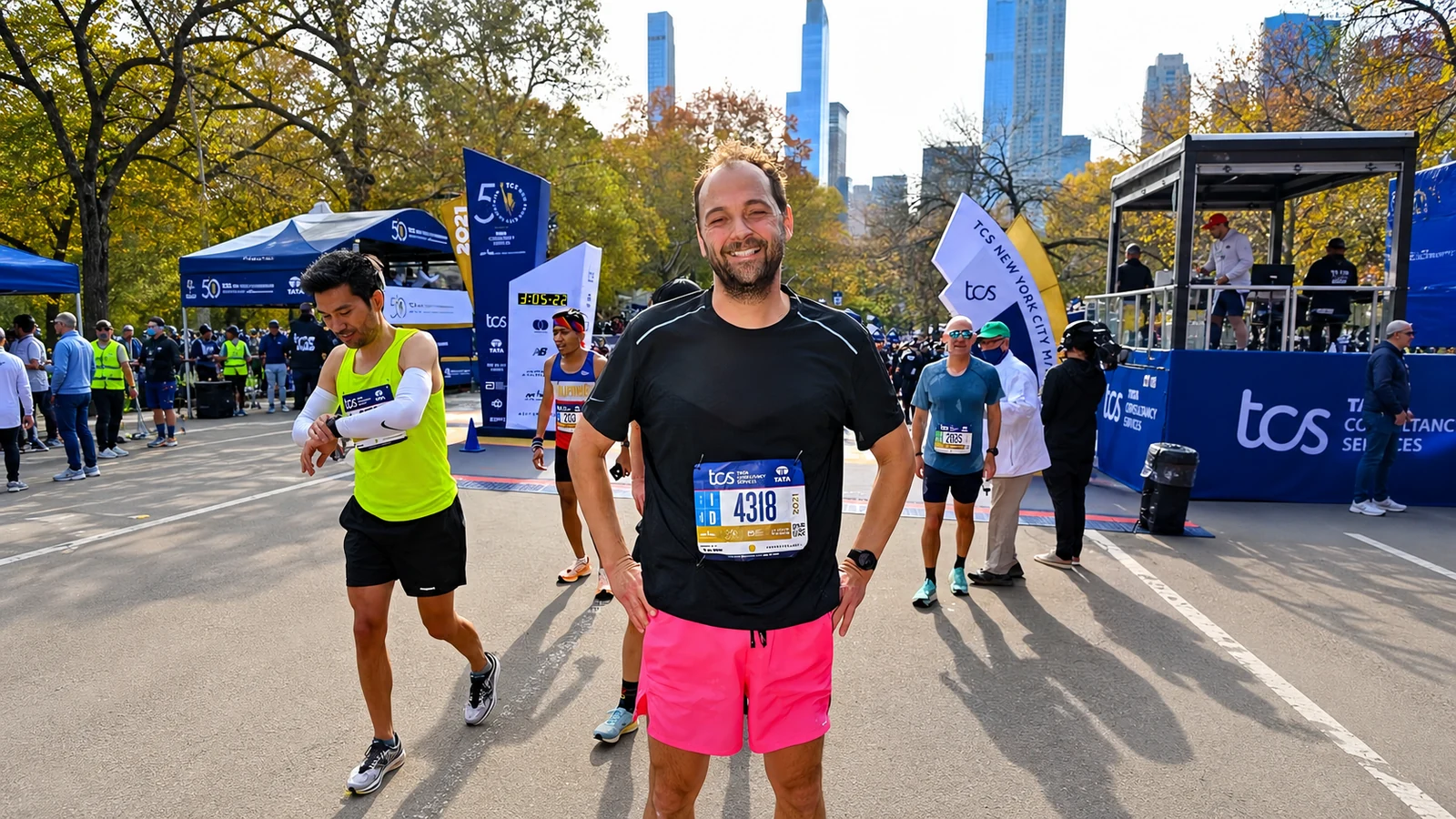
He has run the New York City Marathon more than once, including an early personal best under three hours, per that same reporting.
Before cooking became his career, Humm raced mountain bikes competitively.
That athletic background never fully left him.
He now leads his own informal running club through the city, pairing early morning miles with one of the most demanding restaurant schedules in fine dining.
Who Is Daniel Humm
Humm was born in Switzerland in 1976 and moved to the United States in 2003.
He built his American reputation at Campton Place in San Francisco before moving to New York.
He took over as executive chef at Eleven Madison Park in 2006.
In 2011, he and business partner Will Guidara bought the restaurant from Danny Meyer’s Union Square Hospitality Group.
Humm became sole owner in 2019.
In 2021, he made the striking decision to move Eleven Madison Park to an entirely plant-based menu, citing concerns about climate change and overfishing.
The restaurant became the first plant-based restaurant to hold three Michelin stars in 2022.
In October 2025, it reintroduced select animal proteins alongside plant-based dishes.
Humm also co-founded Rethink Food, a nonprofit focused on food access, which produced thousands of meals daily for underserved communities during the pandemic.
That resume alone describes an unusually demanding professional life, long before any mention of marathon training.
Running a three-Michelin-star kitchen typically means service that stretches late into the night, menu development that never really stops, and a level of public scrutiny most professions do not face.
Layering a serious running habit on top of that schedule is not a small commitment.
It requires the kind of early morning hours that most people would rather spend sleeping after a closing shift the night before.
Most people who train regularly say they prefer morning workouts over evening ones, and a schedule built around early kitchen prep may make that timing less a preference than a necessity.
From Competitive Cycling to a Professional Kitchen
Before he ever ran a professional kitchen, Humm raced mountain bikes at a competitive level, according to Runner’s World’s reporting on his fitness background.
That kind of endurance background does not simply disappear when a career changes direction.
Research on cross-training between cycling and running backs this up directly.
A widely cited 2009 review in Sports Medicine, by researchers Gregoire Millet, V.E. Vleck, and D.J. Bentley, examined the physiological differences and overlaps between cycling and running.
The review found that cycling builds a strong aerobic base, meaning a well developed heart and lung capacity for sustained effort, even though the specific muscle recruitment and impact forces differ from running.
That aerobic base transfers reasonably well when a former cyclist takes up running.
The muscles and joints still need to adapt to running’s repeated impact, but the underlying cardiovascular engine does not have to be built again from nothing.
For someone with Humm’s reported cycling background, a shift into serious running would plausibly come with a real head start most true beginners don’t have.
A Reported Personal Best Under Three Hours
A marathon finish under three hours is a serious achievement, generally out of reach for the vast majority of recreational runners.
It typically requires an average pace close to 6 minutes and 52 seconds per mile, held for the entire 26.2 mile distance.
This specific figure comes from Runner’s World’s reporting and has not been independently verified against an official race results database for this article.
It is presented here as reported, not as an independently confirmed record.
Whatever the precise number, running the New York City Marathon more than once while operating one of the country’s most demanding restaurants points to an unusually disciplined personal routine.
A sub-three-hour marathon is roughly the standard many committed amateur runners spend years chasing without ever reaching it.
Reaching that level typically requires structured speed work, not just easy mileage, along with real attention to recovery and race-day fueling.
Whether or not the exact time holds up to closer scrutiny, the broader picture Runner’s World describes, a chef with a genuine competitive running background layered on top of his cycling past, is consistent with everything independently verifiable about his schedule and public persona.
Leading His Own Running Club
Humm reportedly leads an informal running group through the city, according to Runner’s World.
Group runs like this are common in the running world generally, and they tend to serve a purpose beyond company on the road.
Group and partner-based training is associated with better consistency, since a scheduled group run is harder to skip than a solo one planned only in your own head.
For someone running a restaurant with the intensity Eleven Madison Park requires, that kind of built-in accountability may matter even more than it does for the average runner.
A demanding job makes it easy to let training slide when no one is expecting you.
Why Morning Miles and Kitchen Leadership Might Share a Mechanism
Restaurant kitchens, especially at the top of fine dining, are high-pressure environments by design.
Long shifts, physical demands, and the need for constant precision all add up to significant occupational stress.
A major review in Sports Medicine, by researchers Matthew Stults-Kolehmainen and Rajita Sinha, examined how stress interacts with exercise behavior across a large body of research.
The review found that for people who already treat exercise as part of their identity, exercise tends to function as a stable outlet even during high-stress periods, rather than being one of the first things cut.
Separately, a 2016 review in Brain Plasticity, by researchers Julia Basso and Wendy Suzuki, looked specifically at what a single session of exercise does to mood, cognition, and brain chemistry in the hours that follow.
The review found that even one bout of aerobic exercise was associated with short-term improvements in mood and certain measures of attention and executive function.
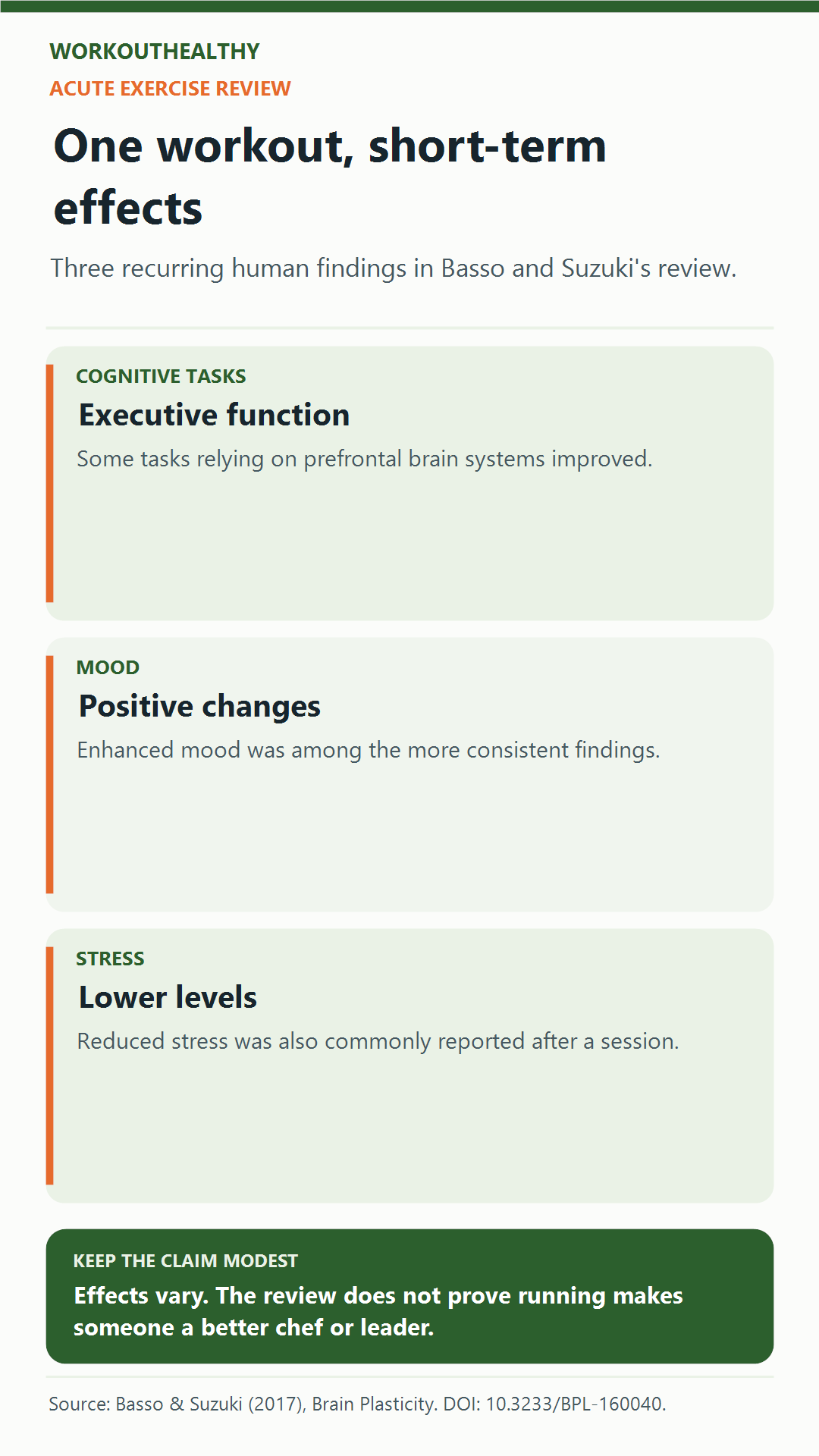
For a chef about to lead a high-stakes dinner service, that kind of short-term cognitive boost from an early run is a plausible, evidence-backed reason to protect the habit rather than skip it on a busy morning.
What This Evidence Doesn’t Prove
None of this research proves that running specifically caused Humm’s success as a chef.
Correlation between a demanding career and a disciplined personal habit is not the same as one causing the other.
Plenty of people succeed at the highest level of their field without any structured exercise routine at all.
What the research does support is a more modest claim: for someone who already runs, keeping that habit through a demanding season of life is associated with real, measurable benefits to mood, stress management, and consistency.
That is a smaller claim than “running made him a great chef,” but it is the one the evidence actually backs.
Common Mistakes People Make Trying to Add Running to a Demanding Job
The most common mistake is trying to schedule runs around a job’s demands instead of protecting a fixed time slot for them.
A schedule that depends on “whenever there’s time” tends to produce zero consistent training days, not just fewer of them.
A second mistake is running at a hard effort every single time, rather than keeping most runs easy and saving harder efforts for specific workouts.
A third mistake is skipping strength training entirely in favor of running mileage alone, which raises the risk of overuse injury over a long training block.
A fourth mistake, especially relevant for anyone in a physically demanding job already, is not accounting for how much a long shift on your feet adds to overall fatigue before training even begins.
How to Build an Early Morning Running Habit Around a Demanding Schedule
Pick a consistent wake time and treat it the same way you would treat an early meeting you cannot reschedule.
Lay out running clothes and gear the night before to remove any friction that could talk you out of it at 5 a.m.

Start with a distance that feels almost too easy, since underestimating early is far better than burning out in the first two weeks.
Add one rest day and one easy day for every hard effort day, especially if your job already involves hours on your feet.
Find a running partner or group for at least one run a week, since accountability tends to matter more than motivation on the hardest mornings.
Build in a proper taper before any race, cutting volume in the final two weeks so you arrive rested, not just fit.
Fuel the run appropriately for your job, since someone about to stand for a 12 hour shift needs different recovery nutrition than someone heading home to rest.
Who Should Talk to a Doctor First
Anyone starting a new running routine after years of inactivity should get medical clearance first, particularly with a history of heart disease or high blood pressure.
People in physically demanding jobs that already involve long hours on their feet should talk to a doctor about total daily load before adding serious running mileage on top of it.
Anyone experiencing chest pain, unusual shortness of breath, or joint pain that doesn’t improve with rest should see a doctor before continuing to train.
References
- Millet, G. P., Vleck, V. E., & Bentley, D. J. (2009). Physiological differences between cycling and running: Lessons from triathletes. Sports Medicine, 39(3), 179-206. https://doi.org/10.2165/00007256-200939030-00002
- Stults-Kolehmainen, M. A., & Sinha, R. (2014). The effects of stress on physical activity and exercise. Sports Medicine, 44(1), 81-121. https://doi.org/10.1007/s40279-013-0090-5
- Basso, J. C., & Suzuki, W. A. (2016). The effects of acute exercise on mood, cognition, neurophysiology, and neurochemical pathways: A review. Brain Plasticity, 2(2), 127-152. https://doi.org/10.3233/bpl-160040
- Runner’s World. Celebrity marathon runners. https://www.runnersworld.com/runners-stories/g20704412/celebrity-marathon-runners/
This article is for general informational purposes only and is not a substitute for professional medical advice. Always talk to a qualified healthcare provider before starting a new exercise program, especially if you have an existing health condition. Individual results from any training approach can vary.