
Lucy Wyndham-Read’s video promises a simple deal.
Just seven minutes of standing exercise a day, and you support healthy aging.
That is an appealing trade, especially for anyone who feels like real fitness requires an hour at the gym.
So does the actual science back up a short daily routine like this one?
We dug into the real research on short bursts of exercise, sometimes called “exercise snacks,” to find out.
What the Video Claims
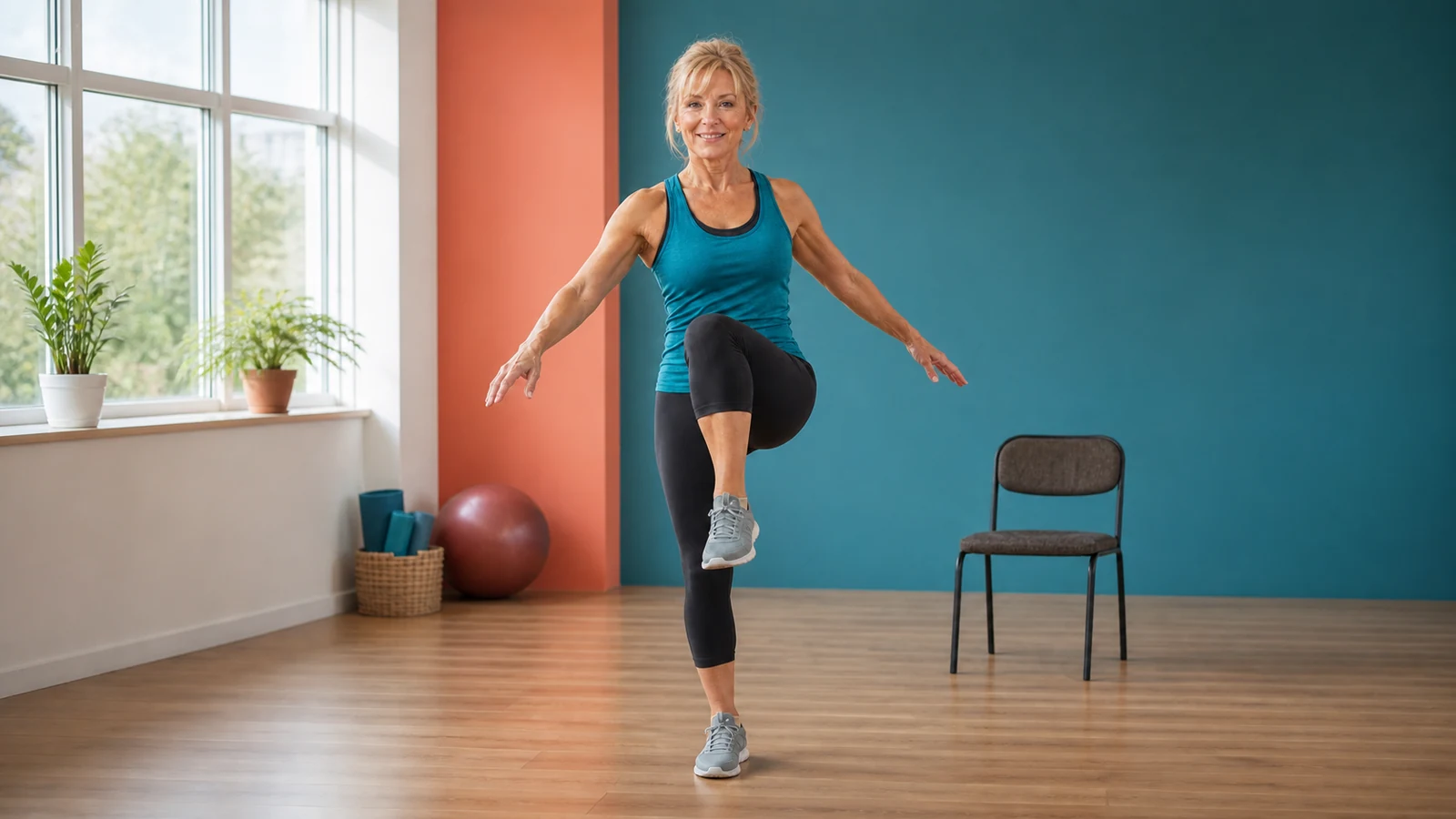
In the video, Lucy Wyndham-Read leads a 7-minute standing workout aimed at older adults.
She frames it as a daily habit that supports healthy aging, better mobility, and heart health.
The routine itself is low-impact and does not require getting down on the floor.
That detail matters, because floor transitions can be a real barrier for many older exercisers.
The video does not cite a specific study.
It does not need to for the exercises themselves to be reasonable.
But the claim that just seven minutes a day meaningfully supports healthy aging deserves a closer look at the evidence.
What the Research Actually Shows About Short Daily Exercise
Researchers have studied brief bouts of exercise for years, often under the name “exercise snacks.”
An exercise snack is a short burst of movement, usually one to five minutes, repeated a few times across the day.
The idea grew out of research on high intensity interval training.
It was later adapted for people who cannot, or will not, do one full workout session.
A 2022 review in Exercise and Sport Sciences Reviews summarized how these short bouts affect the body (Islam et al., 2022).
The review explained that brief vigorous bouts can improve cardiorespiratory fitness and blood sugar control.
This can happen even without a single continuous workout block.
The proposed mechanism is fairly simple.
Short bursts of harder effort still stress the heart and muscles enough to trigger adaptation, especially in people starting from a low fitness level (Islam et al., 2022).
A few minutes of harder effort, repeated through the day, can matter more than most people assume.
The Large Study Behind the “Few Minutes a Day” Idea
The strongest evidence for short daily activity comes from a large 2022 study published in Nature Medicine.
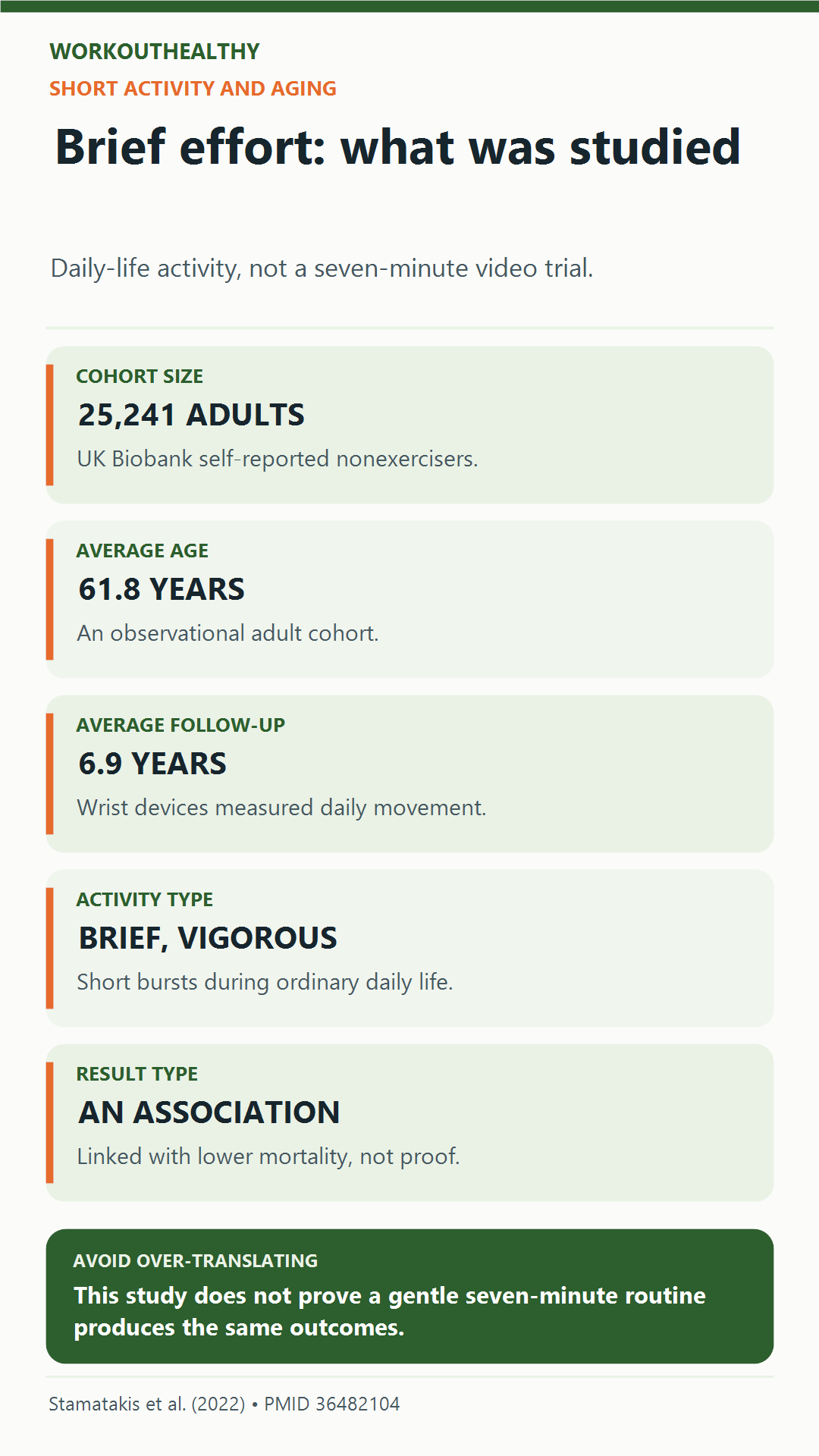
Researchers led by Emmanuel Stamatakis tracked more than 25,000 adults who did not exercise on purpose (Stamatakis et al., 2022).
Everyone in the study wore an activity tracker on their wrist.
The researchers looked for brief, vigorous bursts of activity that happened naturally during daily life.
Think of a fast walk to catch a bus, or a quick set of stairs carrying groceries, the same kind of effort we break down in our four-flight stair test article.
The researchers named this pattern vigorous intermittent lifestyle physical activity, or VILPA.
The study followed people for nearly seven years.
People who logged just two to three short bursts a day, adding up to roughly three to four minutes total, had a meaningfully lower risk of dying from any cause (Stamatakis et al., 2022).
The reduction in cardiovascular death risk was especially striking.
People with a typical pattern of about three short bursts a day showed roughly 48 to 49 percent lower cardiovascular mortality risk compared with people who logged none (Stamatakis et al., 2022).
That is a large effect from a genuinely small daily time investment.
It lines up well with the core idea behind Wyndham-Read’s video, that short, repeated effort adds up over time.
Do Short Workouts Actually Build Fitness in Real Trials?
Observational studies like the VILPA research show a strong association.
They cannot prove on their own that the short bursts alone caused the lower mortality risk.
People who naturally move in quick bursts might also be healthier for other reasons entirely.
Randomized controlled trials help fill that gap.
In a trial, researchers actually assign people to a routine and measure what changes.
One such trial, led by Jonathan Little’s group, tested a program of very brief sprint intervals done three times a day (Little et al., 2019).
Sedentary adults did short bouts of hard cycling, separated by hours, instead of one longer workout.
After four weeks, this “exercise snack” approach measurably improved participants’ aerobic fitness (Little et al., 2019).
The gains were similar to what a single, longer daily training session tends to produce in early weeks of a program.
That trial focused on younger sedentary adults, not specifically older adults.
Its results cannot be applied to every age group without some caution.
Still, it is real experimental evidence that short, repeated bouts of harder effort can build fitness, not just correlate with it.
What the Evidence Says Specifically About Older Adults
A 2024 scoping review in Sports Medicine looked specifically at exercise snacks in adults and older adults (Jones et al., 2024).
The review pulled together 32 separate studies on this general topic.
It found that these brief activity patterns appeared feasible and appeared safe for most people who tried them (Jones et al., 2024).
That matters, because a program only works if people can actually stick with it.
The same review was more cautious about fitness results in older adults specifically.
Trial evidence in this age group showed only modest improvements in measured fitness.
It did not show dramatic transformation (Jones et al., 2024).
The authors also noted that evidence remains limited for older adults managing chronic health conditions.
In plain terms, short daily activity looks promising and realistic.
The research on older adults specifically is still thinner than the research on younger, healthier groups.
Feasible and safe is real progress, but it is not the same claim as proven to transform fitness in every older adult.
What This Evidence Does Not Prove
None of these studies prove that Lucy Wyndham-Read’s specific 7-minute routine produces these exact results.
No study tested her particular sequence of standing exercises.
The research supports the broader pattern behind the video.
Short bursts of activity, done consistently, is the pattern being tested, not this one specific workout.
The mortality numbers from the Stamatakis study also come from an observational cohort, not a controlled experiment.
Researchers adjusted for many factors.
They still cannot fully rule out that healthier people were simply more likely to move in quick bursts to begin with.
The fitness gains from the Little et al. trial came from cycling sprints, not standing bodyweight movements.
Different exercise types can produce different results, even at a similar intensity.
Finally, none of this research claims that seven minutes replaces broader activity guidelines.
A short daily routine is a genuine, evidence supported addition to an active life.
It is not a full substitute for regular walking, strength work, and general daily movement.
Common Mistakes People Make With Short Daily Workouts
The biggest mistake is treating “short” as “easy” and barely raising effort at all.
The research on exercise snacks and VILPA specifically involves bouts that feel genuinely hard.
A light stretch is not what these studies measured.
A second common mistake is skipping the warmup because the session feels too short to need one.
Cold muscles and joints are more prone to strain, even during a brief routine.
Some people also expect one short routine to replace strength training entirely.
Older adults still benefit from resistance training for muscle, bone, and even brain health.
That holds true alongside any short cardio focused routine.
Another mistake is skipping the routine entirely on a bad day instead of adjusting the intensity.
A gentler version most days beats a perfect version some days.
Finally, people sometimes ignore joint pain or dizziness because the workout looks mild on video.
A routine’s short length does not make new or worsening symptoms something to push through.
Who Should Check With a Doctor First
Anyone starting a new exercise routine after a long period of inactivity should talk to a doctor first.
This matters even more for a routine described as supporting healthy aging, since that language often targets older adults.
People with diagnosed heart disease need medical guidance before adding vigorous bursts of effort, the same caution we describe in our sauna and heart health article for other brief cardiovascular stressors.
The same goes for uncontrolled high blood pressure or a recent cardiac event.
The VILPA research specifically measured vigorous intensity activity, which raises heart rate and blood pressure quickly (Stamatakis et al., 2022).
People with balance problems, joint replacements, or a recent fall should also get individualized advice.
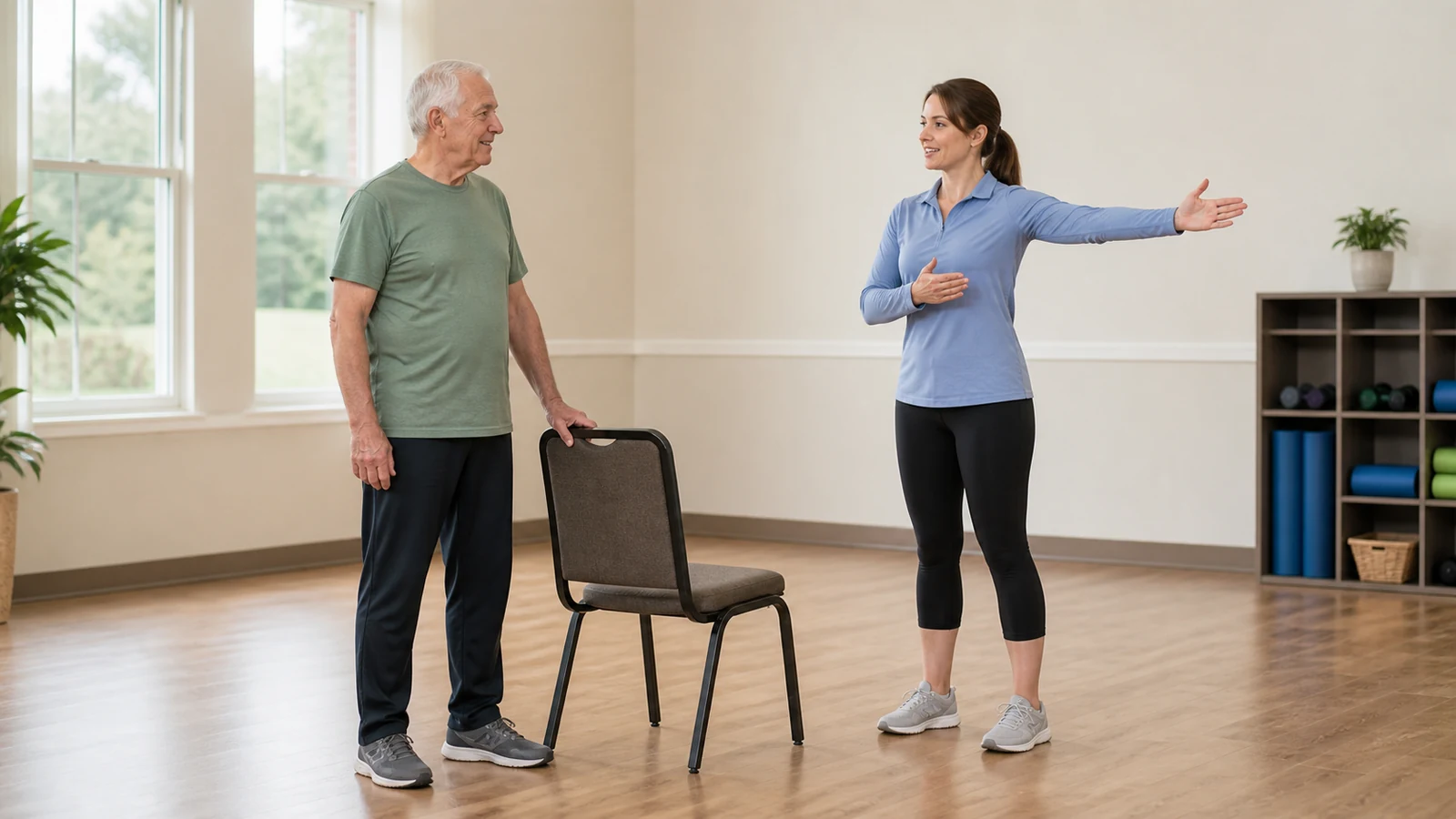
A physical therapist can adapt exercises like the ones in the video to a person’s specific mobility and strength level.
Anyone managing diabetes, osteoporosis, or a chronic lung condition should ask a clinician how brief vigorous bouts fit their treatment plan.
These conversations take a few minutes.
They can prevent a serious setback later.
Practical Takeaway
The research supports a real, useful idea.
Short bursts of harder effort, done consistently, can support cardiovascular health as people age.
A 7-minute daily routine like the one in the video is a reasonable way to apply that idea.
Consistency matters more than any single day’s performance.
Aim to raise your effort enough that talking becomes harder for at least part of each short session.
Pair a short daily routine with regular walking and some strength training across the week.
That combination lines up with what the research actually supports.
No single exercise does everything on its own.
Pay attention to how your joints and breathing feel during the routine.
Adjust the intensity rather than skipping the day entirely.
Small, repeatable habits tend to outperform ambitious plans that quietly get abandoned.
Watch the Original Video
Want more like this? Subscribe to WorkoutHealthy Insider for practical explanations behind popular fitness claims.
References
Islam, H., Gibala, M. J., & Little, J. P. (2022). Exercise snacks: A novel strategy to improve cardiometabolic health. Exercise and Sport Sciences Reviews, 50(1), 31 to 37. https://doi.org/10.1249/JES.0000000000000275
Jones, M. D., Clifford, B. K., Stamatakis, E., & Gibbs, M. T. (2024). Exercise snacks and other forms of intermittent physical activity for improving health in adults and older adults: A scoping review of epidemiological, experimental and qualitative studies. Sports Medicine, 54(4), 813 to 835. https://doi.org/10.1007/s40279-023-01983-1
Little, J. P., Langley, J., Lee, M., Myette-Côté, E., Jackson, G., Durrer, C., Gibala, M. J., & Jung, M. E. (2019). Sprint exercise snacks: A novel approach to increase aerobic fitness. European Journal of Applied Physiology, 119(5), 1203 to 1212. https://doi.org/10.1007/s00421-019-04110-z
Stamatakis, E., Ahmadi, M. N., Gill, J. M. R., Thøgersen-Ntoumani, C., Gibala, M. J., Doherty, A., & Hamer, M. (2022). Association of wearable device measured vigorous intermittent lifestyle physical activity with mortality. Nature Medicine, 28(12), 2521 to 2529. https://doi.org/10.1038/s41591-022-02100-x
This article is for general information only and is not medical advice. If you have an injury, ongoing pain, or a medical condition, talk to a doctor or physical therapist before you change how you train or eat.