
Cold exposure changes how the body makes heat. Shivering is the obvious response, but it is not the only one. Adults also have small deposits of brown adipose tissue, often called brown fat, that can help generate heat without visible shaking. That biology is real. The popular leap from “brown fat turns on” to “a cold plunge melts fat” is much less secure.
The practical difference matters. A mild cold-room experiment lasting hours is not the same exposure as a short plunge into icy water. Studies of heat production do not automatically demonstrate weight loss. And a person’s brown-fat activity cannot be judged by how comfortable a shower feels.
What brown fat does differently
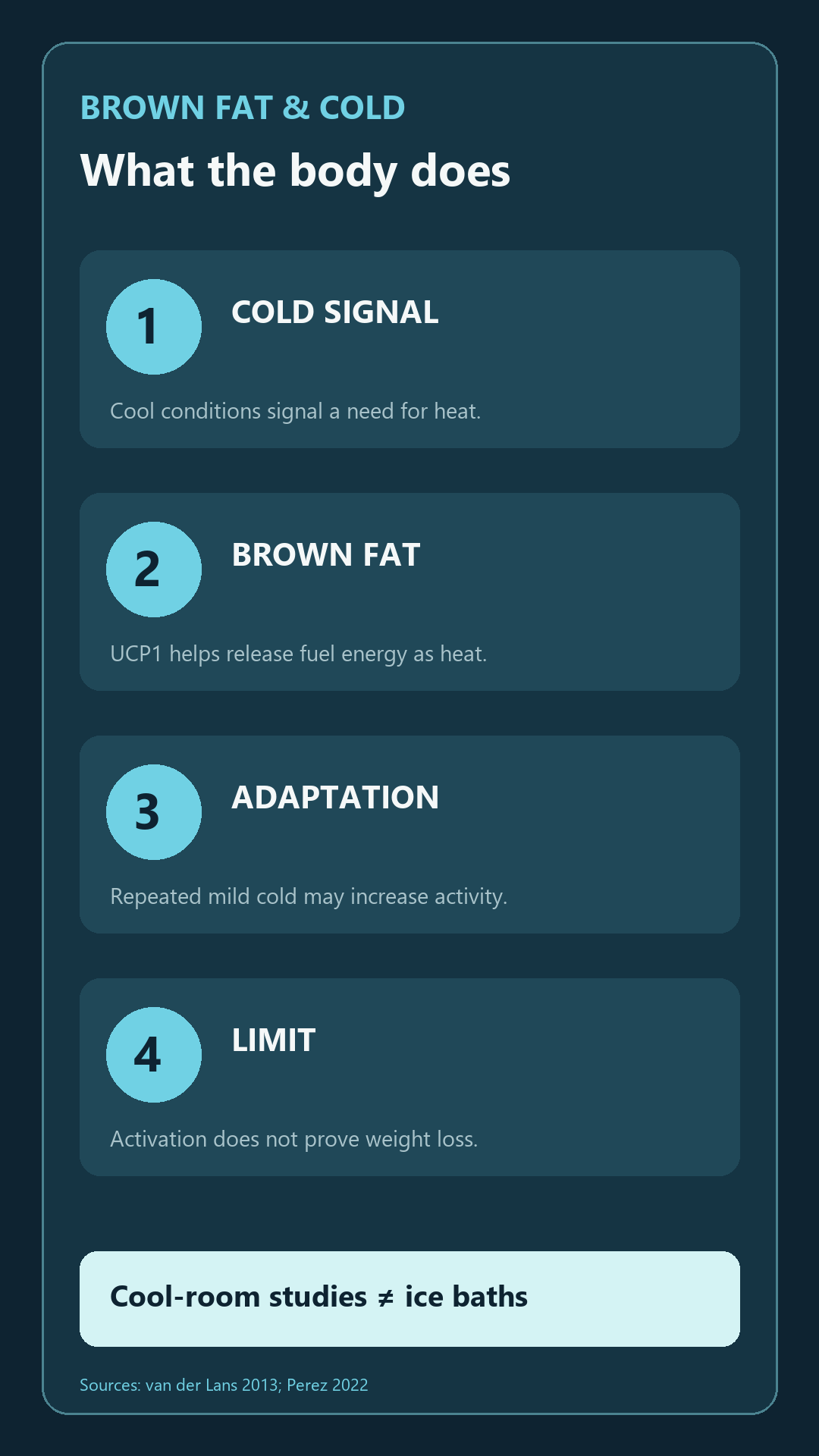
Most body fat is white adipose tissue, which stores energy and performs other important endocrine functions. Brown adipose tissue is built for heat production. Its cells contain many mitochondria and the protein UCP1, which allows some energy from fuel to be released as heat instead of captured for cellular work. Cold signals from the nervous system can activate this system. The result is non-shivering thermogenesis: heat production without the conspicuous muscle contractions of shivering.
That phrase does not mean brown fat is the sole source of non-shivering heat, nor does it mean shivering stops altogether. Muscles, blood-vessel changes, clothing, movement, and behavior all help regulate temperature. The body mixes responses according to the cold dose and the person. A comfortable winter walk and an ice bath ask very different things of the cardiovascular and respiratory systems.
In laboratory studies, researchers often measure brown-fat activity with imaging that tracks uptake of a glucose tracer. Tracer uptake is a useful signal but is not a direct readout of all heat produced or all fat burned. Interpreting a scan as a daily calorie counter would oversimplify the physiology.
Do adults really have brown fat?
Yes. A human imaging study examined volunteers in warm and cold conditions and found cold-activated brown-fat deposits near the collarbone and spine in a subset of participants. Histology confirmed brown fat in these regions. The study also showed why a universal claim is risky: detectable activity varied by age and other characteristics, and a warm-condition scan did not show the same signal.
The amount and detectability of brown fat vary widely. An older person, someone taking certain medications, or a person with different body composition may not respond like a healthy young volunteer. Imaging protocols matter too; failing to detect activity is not necessarily proof that there is none. Research on the topic is valuable precisely because individual responses are not uniform.
Brown fat is not a hidden reserve that anyone can simply “unlock” with willpower. Most adults have much less of it than small rodents, whose dramatic laboratory responses fueled many early headlines. Human findings should be read as human findings, with the actual study size and exposure method in view.
Can repeated mild cold change the response?
A 10-day human cold-acclimation experiment found higher brown-fat activity alongside increased non-shivering thermogenesis. Participants also reported feeling warmer and more comfortable in the cold and less shivery after the protocol. This is the best support for the Facebook post’s narrower claim that repeated exposure can shift the body’s response. It is still a small, controlled physiology study, not a guarantee that any daily cold shower will reproduce the result.
Other studies have used cool rooms for weeks, sometimes with temperature and exposure duration tightly managed. Some reported increases in brown-fat activity or cold-induced energy expenditure. But protocols, participants, and measurement methods differ. Even when a study shows an adaptation, it does not establish the safest or most useful routine for the general public.
Feeling less shocked by cold is not a brown-fat test. Habituation, expectations, breathing, and changes in other heat-making pathways may contribute.
A subtle point is that an acclimated person may shiver less while remaining better at producing heat. That does not mean the body has become immune to cold injury. Temperature regulation still has limits. The post’s “quieter pathway” is a reasonable description of a measured physiological adaptation, provided it is not sold as a guaranteed personal result.
How large is the energy-use effect?
Cold can raise energy expenditure, but the size depends heavily on temperature, duration, body size, clothing, shivering, and brown-fat activity. In one study of 173 adults exposed to short-term mild cold, the median increase in resting energy expenditure was 74 kilocalories per day when expressed as a daily rate; the range of individual responses was broad. That figure is a rate estimated during the test, not 74 extra calories guaranteed from a short cold shower.
A systematic review of acute cool-room experiments reported higher energy expenditure and brown-fat activity under the studied conditions. Pooling studies is useful, but it does not turn different lab exposures into one prescribed calorie target. Some protocols involve hours in cool air. A quick plunge, especially one with intense shivering, is physiologically different.
Do not confuse “the body used more energy while cold” with “the body lost that much fat.” Fuel can come from several sources, food intake can change later, and total daily energy balance depends on the whole day. The published studies do not validate the idea that a short plunge is a meaningful fat-loss shortcut.
Why activation does not equal weight loss
A useful weight-loss treatment must produce a meaningful, repeatable effect over time with acceptable safety and adherence. Brown-fat research has not cleared that bar for casual cold exposure. Reviews of human interventions describe intriguing activity and metabolic responses but limited evidence of substantial, durable body-weight change. Some trials are very small and short. Others select volunteers who already have detectable brown-fat activity, which makes generalizing difficult.
Compensation matters too. A person may eat more after cold exposure, move less later, or simply experience a small increase in expenditure relative to normal variation. A small physiological change can be scientifically important without becoming a practical weight-management strategy. That is why the Facebook post is right to call the extra energy use modest, and why this article avoids converting a lab result into a promise.
For long-term health, regular physical activity and a sustainable eating pattern have a much stronger evidence base. If the goal is physical resilience, strength and aerobic training are more reliable investments than pursuing a temperature extreme. Our guide to why strength training matters during weight loss discusses preserving function rather than chasing a single metabolic trick.
Brown-fat activation is a measurable biological response. A safe and effective cold-based weight-loss program has not been established from it.
Is a cold plunge the same as the cold-room studies?
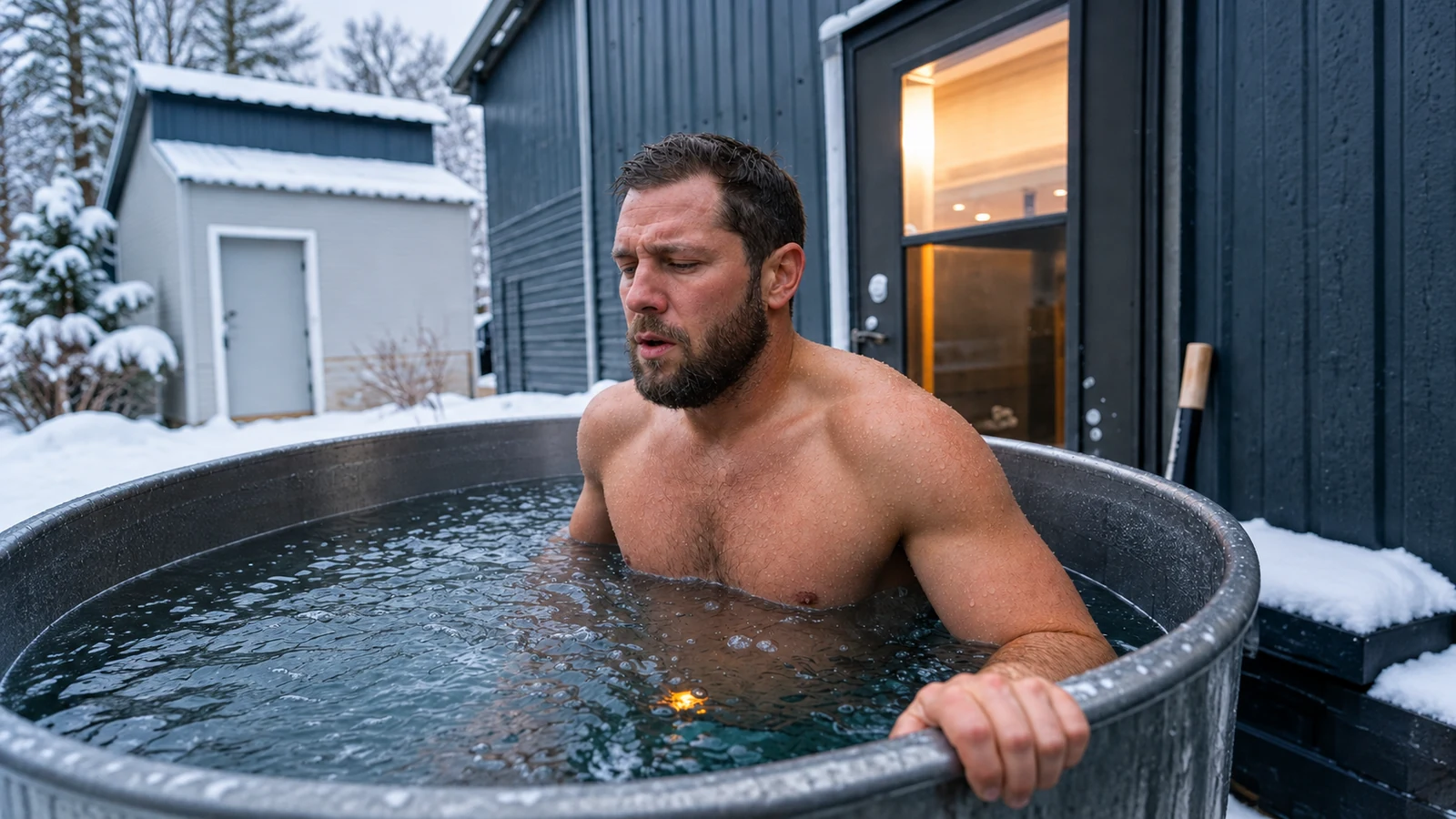
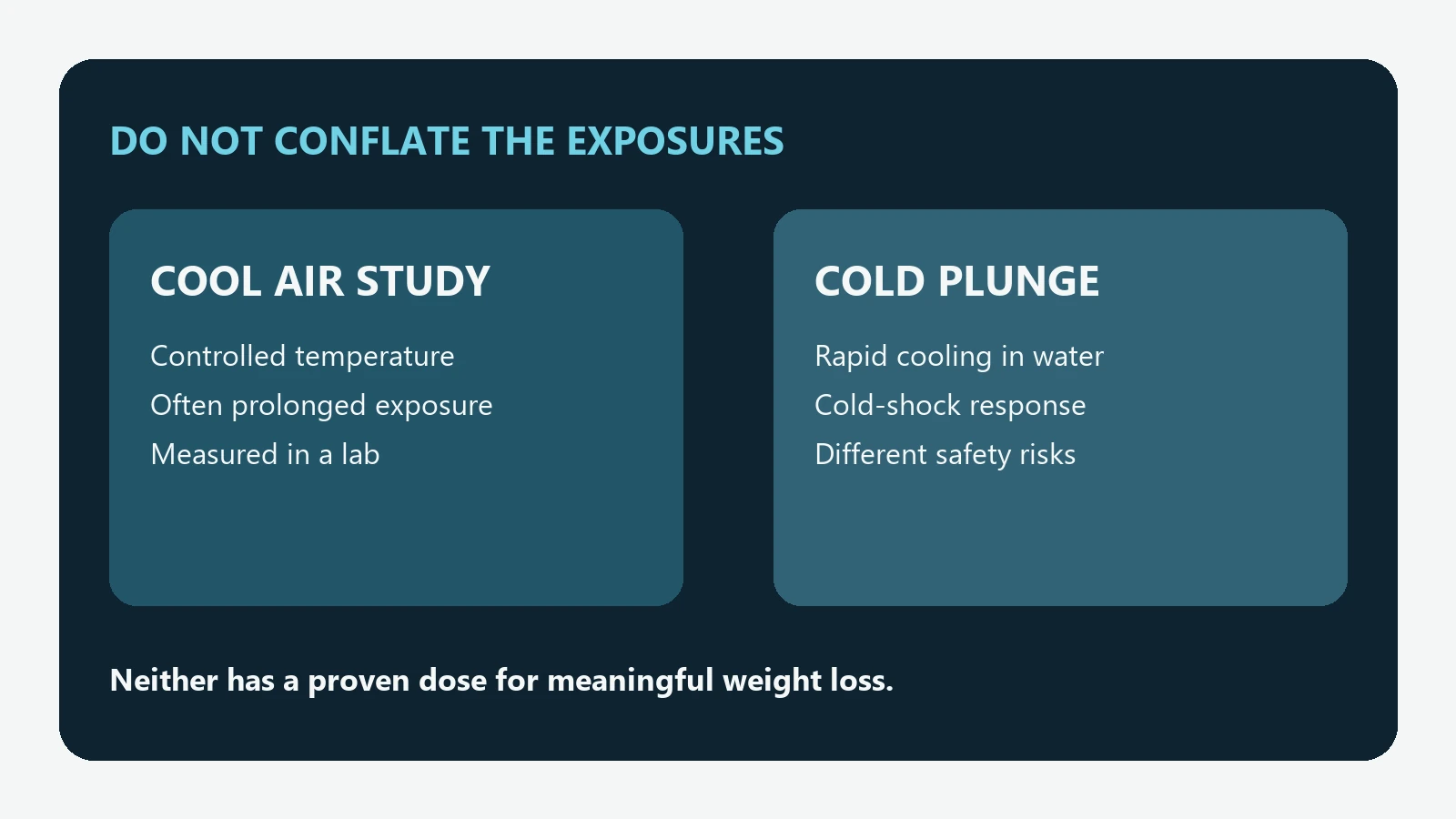
No. Cold air and cold water remove heat at very different rates. Water immersion can trigger a rapid “cold shock” response, including gasping, faster breathing, and cardiovascular changes. The size of the response depends on water temperature, immersion depth, duration, experience, and health status. Mild indoor cooling studies designed to avoid strong shivering should not be used as proof that an ice bath is the best way to activate brown fat.
The study cited in the original Facebook caption is a systematic review of post-exercise cryotherapy and recovery. That is a different question from brown-fat thermogenesis. A recovery study may tell us something about soreness or performance but cannot by itself establish a fat-burning mechanism or a safe personal plunge protocol. The brown-fat studies and reviews listed below are better sources for the article’s central claim.
There is also a training-timing issue. Repeated cold-water immersion immediately after lifting may blunt some strength-training adaptations in certain research settings. If your priority is building muscle, do not assume that a plunge after every session is harmless just because it feels refreshing. Read our cold plunge after lifting evidence review for that separate tradeoff.
A cool outdoor walk, a slightly cooler room, and a controlled shower may be more approachable ways to learn personal tolerance. None has a proven dose that reliably changes body weight through brown fat. Choose cold exposure, if at all, for a reason you value besides a promised calorie burn.
What safety limits matter?
Cold-water immersion is not risk-free. A review of short immersions in healthy participants found increases in heart rate, blood pressure, and respiratory minute volume. People with known cardiovascular, circulation, or respiratory conditions should discuss the activity with a clinician before trying it. A person with no known condition should still avoid sudden, unsupervised extremes.
If you choose to experiment, favor gradual exposure, a way to exit quickly, and someone nearby for water immersion. Never practice breath-holding or forced hyperventilation in or near water. Leave the cold and seek appropriate help for chest pain, severe breathlessness, dizziness, confusion, loss of coordination, or persistent numbness. These are safety boundaries, not a recipe for a particular temperature or duration.
Do not use the ability to endure discomfort as the measure of success. Some people may find a cold shower invigorating; others may find it unpleasant or unsafe. The physiological evidence gives no reason to override your health needs or skip evidence-based exercise and nutrition habits.
The takeaway
Brown fat helps adults make heat without visible shivering, and repeated controlled cold exposure can increase its measured activity in some studies. The response varies, the energy effect is generally modest in practical terms, and cold-water immersion adds distinct risks. There is no good reason to treat a plunge as a shortcut to fat loss. If you like cold exposure, keep the dose conservative and the goal honest: an optional experience, not a replacement for training, food, sleep, or medical care.
Sources
- van der Lans and colleagues, 2013, 10-day cold-acclimation study.
- Saito and colleagues, 2009, imaging and histological evidence of adult brown fat.
- Mengel and colleagues, 2022, variation in thermogenic response to mild cold.
- Tabei and colleagues, 2024, systematic review of cold-induced brown-fat activity and metabolic markers.
- Perez and colleagues, 2022, intervention review and weight-loss limitations.
- Bleakley and Davison, 2010, physiological responses to cold-water immersion.