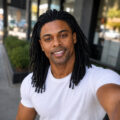
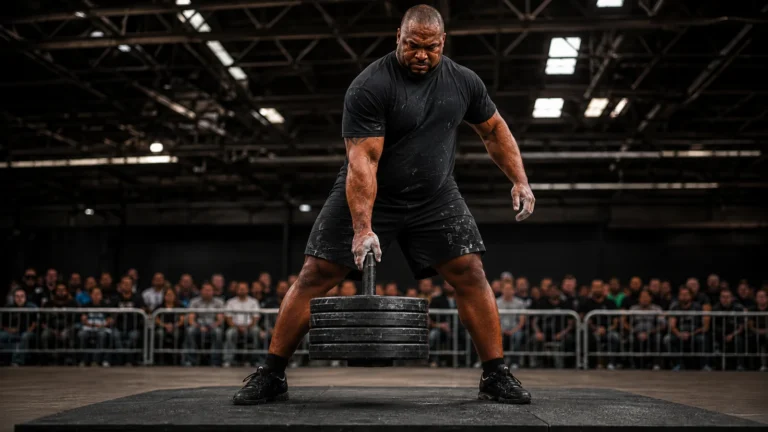
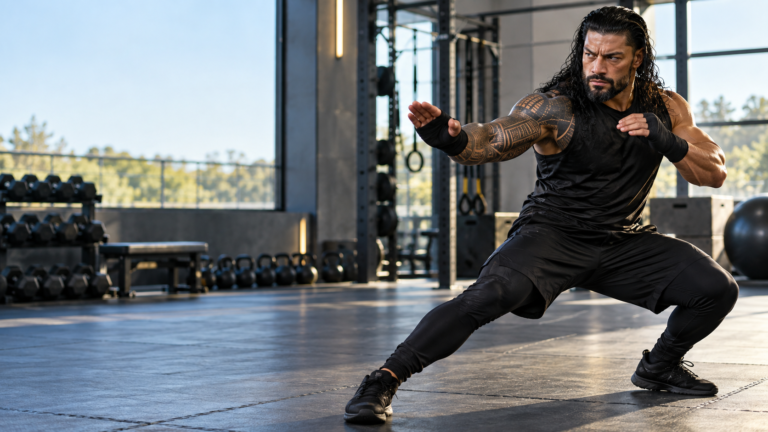
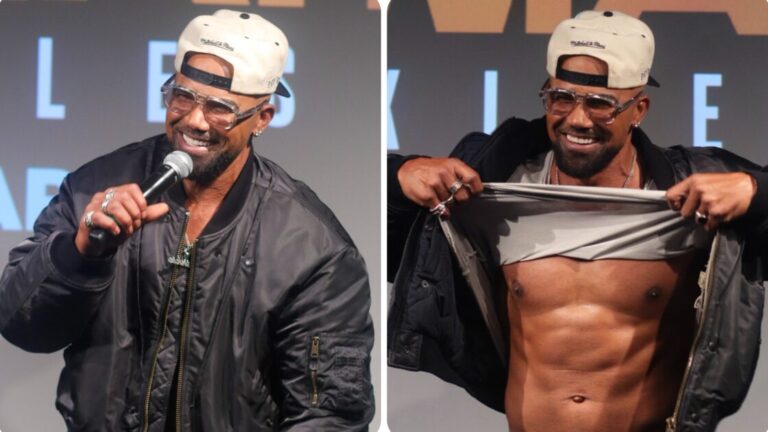
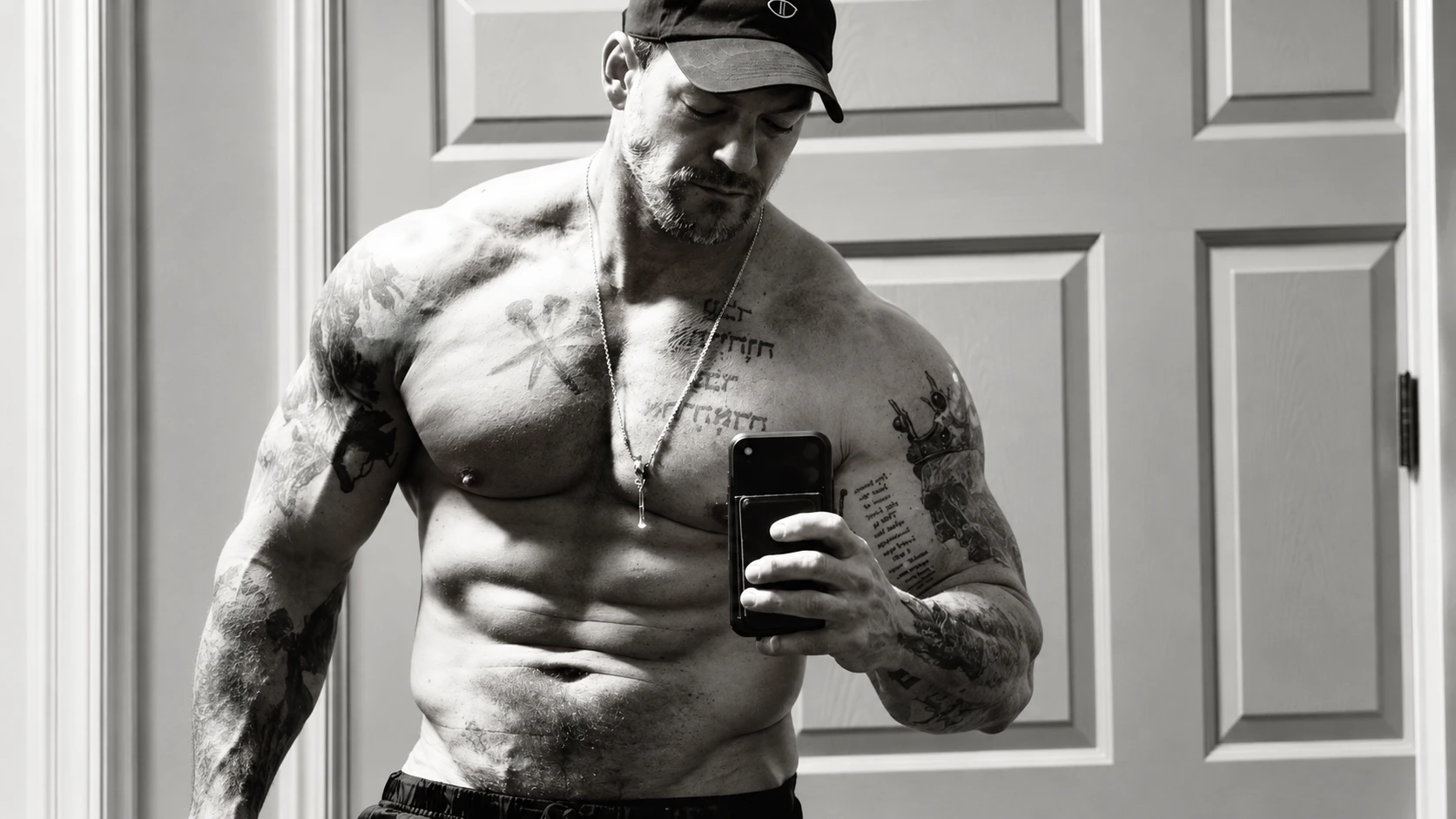
Alan Ritchson’s shirtless mirror selfie gives fans another look at the physique behind Reacher. The more useful fitness story is an approach he has described in an earlier interview: a high repetition target rather than a constant chase for the heaviest weight.
That makes the Alan Ritchson workout worth examining. A memorable number can help organize a session, but it cannot explain a physique on its own. Here is the reported approach, what research can tell us about it, and a sensible way to experiment with higher reps.
What Ritchson said about his high-rep training
In a September 21, 2026 Men’s Journal report drawing on his earlier interview with Thomas DeLauer, Ritchson described aiming for four sets of 25 repetitions on an exercise. He acknowledged that some sets end closer to 15 reps.
The account describes a preference for manageable loads and an aesthetic goal, with bodyweight work, cardio and weights appearing across his training. It also reports a session structure involving high-volume core work and 20–30 minutes of cardio before lifting. These are descriptions of his own training, not a complete exercise-by-exercise program.
The interview predates the selfie. The image does not establish which routine he is following today, and the reported rep target does not prove what caused his size.
Four sets of 25: what the number tells you
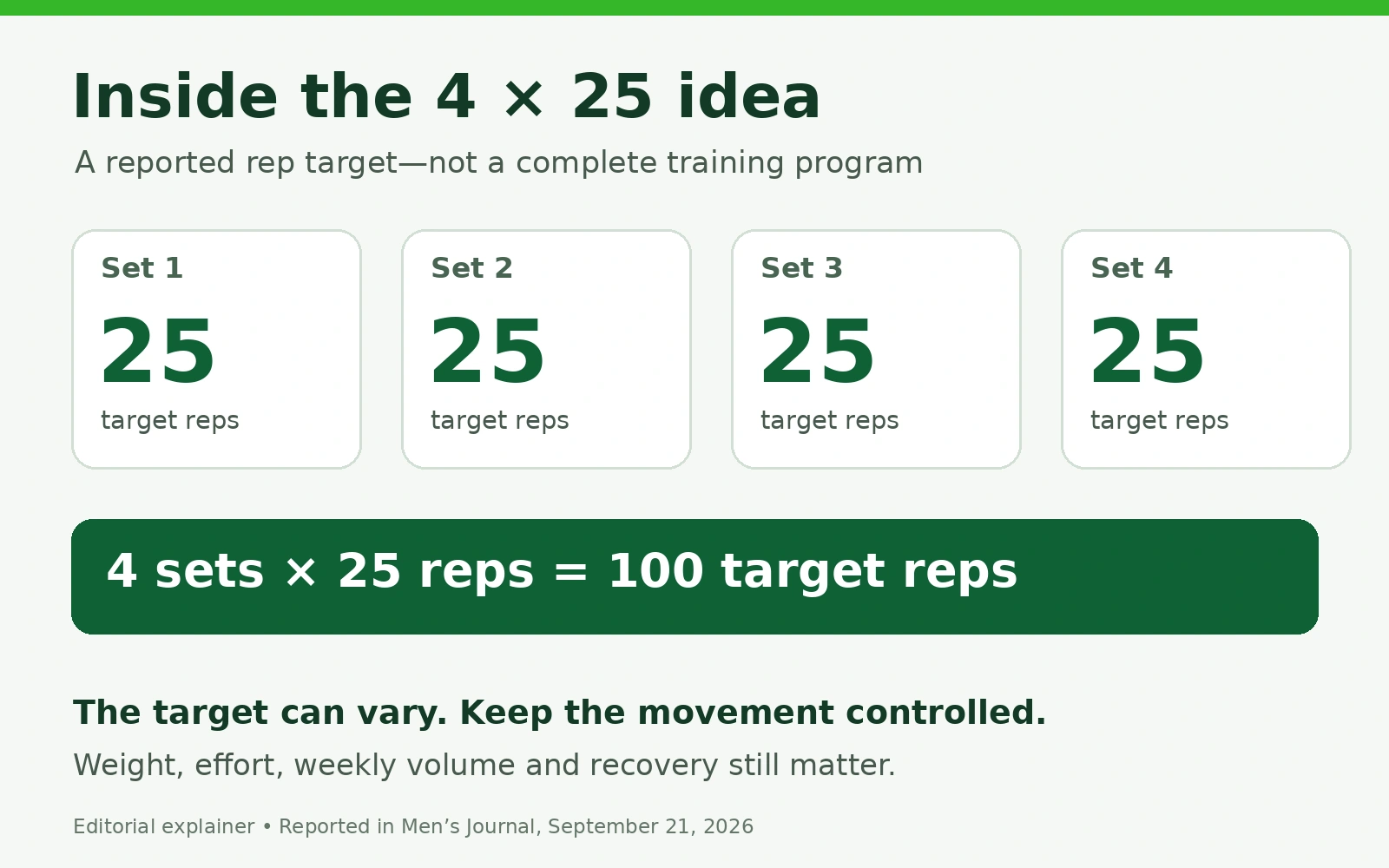
Four multiplied by 25 equals 100 target repetitions for one exercise. That is easy to remember. It is much less informative than a full training log.
Consider two people completing that same total. One might finish every set comfortably with a light weight. The other might use a challenging load and need longer rests to maintain clean movement. The repetition count matches; the effort does not.
A useful log therefore records the exercise, resistance, completed reps, rest and how difficult the final repetitions felt. Write down what actually happened rather than adjusting technique to make the planned number look complete.
Can higher reps build muscle?
Yes. A 2021 review in Sports found that muscle growth can occur across a broad range of loads. Sufficient effort matters, particularly with lighter resistance; many studies used sets taken to failure under supervised conditions. Those findings do not establish 25 reps as an optimal target.
The review also distinguishes muscle size from maximum strength: heavier loading generally has an advantage for improving performance on heavy strength tests. A routine should reflect the outcome you want.
Higher reps can take longer and feel uncomfortable. Lower resistance also does not automatically make an exercise free of injury risk. The research supports flexibility in loading, rather than a guarantee that a particular rep scheme will produce a celebrity’s results.
The context behind a celebrity physique
Ritchson’s history matters. In his February 2024 Men’s Health cover interview, he described a longstanding bodyweight training habit. He also disclosed doctor-prescribed testosterone replacement therapy after the demands of the first season and said it helped him maintain his gains.
That disclosure is part of the context, not a recommendation to seek hormone treatment. A celebrity’s appearance combines personal circumstances that a rep prescription cannot reproduce. The useful question is which training principle fits your goal and current capacity.
How to try higher reps without copying a movie-star workload
The following is an editorial example for an otherwise healthy adult already familiar with resistance training. It is not Ritchson’s routine or a program tested in the cited review.
- Choose one familiar exercise. A seated cable row or a machine press makes the experiment straightforward. Keep the setup and range of motion consistent so you can compare sessions.
- Replace a little existing work. Try two working sets of 15–20 reps instead of adding four new sets to a full workout. Begin with a load that lets you control every repetition and finish with a small number of clean reps still possible.
- Rest enough to repeat good movement. Start with roughly two minutes between sets and extend that if needed. Breathlessness should not force you to rush the next set.
- Record the result. For example: 18 reps on the first set, 16 on the second, with the same resistance and consistent technique. Those numbers are more useful than an unrecorded promise to do 25.
- Progress one variable. If the sets become comfortable, add a rep or make a small resistance increase at a later session. Avoid increasing resistance, sets and frequency together.
If you cannot maintain your usual movement, end the set and adjust the load or target. Pain is a reason to stop and reassess the exercise rather than push toward a number.
For a bodyweight option, our push-up progression guide explains ways to change difficulty as your capacity improves. Pick a variation you can control before trying to extend the set.
Judge the experiment over several sessions. Are you performing more clean repetitions at the same load? Is the exercise still manageable alongside the rest of your training? If not, reduce the demand or choose a different rep range. A target should help you train consistently, not dictate every workout.
Frequently asked questions
Is this Alan Ritchson’s complete Reacher workout?
No. The available interview account describes preferences and parts of his training. It does not provide a complete weekly program with exercises, loads, rest periods and progression.
Should I use this target on every exercise?
There is no need to apply one rep range to everything. Select exercises and loads around your goal, technique and ability to recover, and begin with a modest change.
Does a pump prove that muscle is growing?
A temporary pump is not a measurement of lasting growth. Track repeatable performance and longer-term changes rather than judging a session by appearance alone.
Do I need testosterone replacement therapy to try higher reps?
No. A rep range is a training choice. Decisions about hormone treatment require individual medical assessment and should not be based on a celebrity’s disclosure.
Sources
- Alan Ritchson’s Instagram post — source of the selfie used for the editorial adaptation.
- Thomas DeLauer’s interview with Alan Ritchson — the earlier conversation referenced in the training report.
- Men’s Journal, September 21, 2026 — reporting on Ritchson’s rep target and training preferences.
- Men’s Health, February 27, 2024 — training history and his TRT disclosure.
- Schoenfeld, Grgic, Van Every and Plotkin, 2021 — “Loading Recommendations for Muscle Strength, Hypertrophy, and Local Endurance: A Re-Examination of the Repetition Continuum.” Sports, 9(2), 32. doi:10.3390/sports9020032.