
Henry Cavill did not build his Superman physique with one cinematic workout. His preparation combined heavy strength work, conditioning, high food intake during mass-building phases, and close coaching.
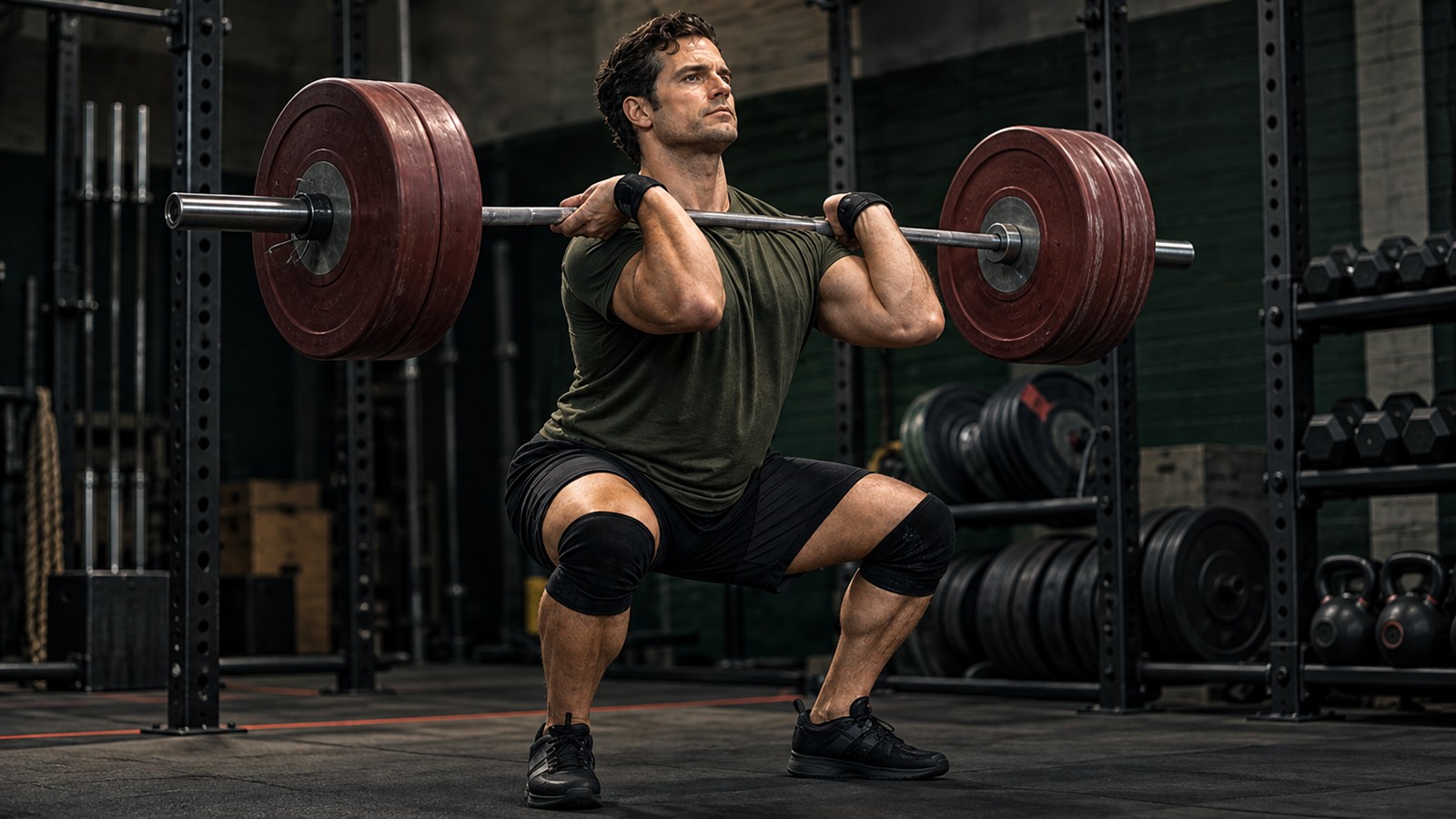
Olympic-lifting variations were part of that process. Muscle & Fitness’s account of the program describes a bulking phase centered on movements that train muscle, strength, speed, and coordination together.
The important distinction is that technical lifts served a larger role. They were not magic exercises, and they were not learned by copying a movie-star routine alone.
What Cavill Was Training For
The role demanded visible size, strength, work capacity, and the ability to perform repeated takes under long production days.
A film physique is also temporary and specific. Lighting, costume, camera angles, meal timing, and short-term presentation strategies affect what appears on screen.
Why Coaches Use Olympic-Lifting Variations
Movements such as cleans, snatches, and jerks require the athlete to produce force quickly. That explosive quality is different from slowly grinding through a heavy repetition.
Coaches may use full lifts, pulls, or simplified variations depending on the athlete’s skill and goal. The version matters less than whether it can be performed safely and progressed.
Technical Skill Comes Before Load
Olympic lifts move the bar fast and ask the athlete to receive it in precise positions. Small timing errors become more important as weight increases.
A qualified coach can teach stance, grip, bar path, receiving position, and safe ways to miss. Beginners often start with a dowel, an empty bar, or pulls from a controlled position.
Mobility limitations at the ankles, hips, shoulders, or wrists may call for a different variation. Forcing a textbook position before the body is ready adds risk without improving the result.
Explosive Lifts Were Only One Piece
Cavill’s preparation also used foundational strength and conditioning. Squats, presses, pulls, carries, rowing, and structured circuits can build much of the required base.
This matters because people often chase the most unusual detail of a celebrity program. The basics usually account for more of the result.
Our article on a minimalist kettlebell approach shows the opposite strategy: fewer movements practiced repeatedly. Both approaches rely on quality and progression.
Muscle, Power, and Conditioning Need Different Doses
Hypertrophy work creates enough volume to challenge muscle. Maximal strength work emphasizes heavy force production. Power training emphasizes speed. Conditioning supports repeated effort and recovery.
One exercise cannot maximize every quality at once. A well-built program decides which quality matters most in a phase and keeps the others with smaller doses.
The Calorie Story Needs Context
Reports of very high calorie intake during superhero preparation attract attention. Those numbers reflected a large actor training for hours under professional supervision during a mass-building phase.
They are not general recommendations. Energy needs depend on body size, training volume, goals, and health. Someone who wants to gain muscle usually benefits from a modest surplus, adequate protein, and regular monitoring.
What About Dehydration Before Shirtless Scenes?
Actors and physique athletes sometimes use short-term manipulation of water, carbohydrate, and food volume to look sharper for a specific moment.
That appearance is temporary and the methods can be risky. Dehydration is not a healthy fat-loss strategy and should not be copied for ordinary training or social-media photos.
A Safer Way to Borrow the Training Idea
Most people do not need the full Olympic lifts to train power. Medicine-ball throws, controlled kettlebell swings, low-level jumps, or lighter jump squats may be easier to learn when appropriate.
Anyone who wants to learn cleans or snatches should work with a coach and earn the receiving positions before chasing load.
Grip and trunk strength support nearly every heavy lift. Our review of grip strength and health explains why this quality has value beyond movie preparation.
The Bottom Line
Henry Cavill’s Superman training used Olympic-lifting variations because they develop explosive force, coordination, and athletic intent. They worked inside a broader program of strength, size, conditioning, nutrition, and recovery.
The lesson is not to perform a snatch because Superman did. It is to match the exercise to the goal, learn technical movements properly, and respect the support that made an extreme film transformation possible.