Chance Mitchell deadlifted 373.5 kilograms, about 823.4 pounds, at a bodyweight of 92.1 kilograms, about 203 pounds, on June 9, 2022. The lift set the International Powerlifting Federation men’s 93 kg Classic Open deadlift world record and helped Mitchell win the 93 kg class at the IPF World Classic Powerlifting Championships in Sun City, South Africa.
The result was a world record on the day, but it is no longer the current mark. Aimene Ibrahim El Khalil Nouari raised the record to 380 kilograms in November 2025.
Mitchell had no successful deadlift after his opener. He added 21 kilograms anyway, made the world record on his second attempt, and moved into first place.
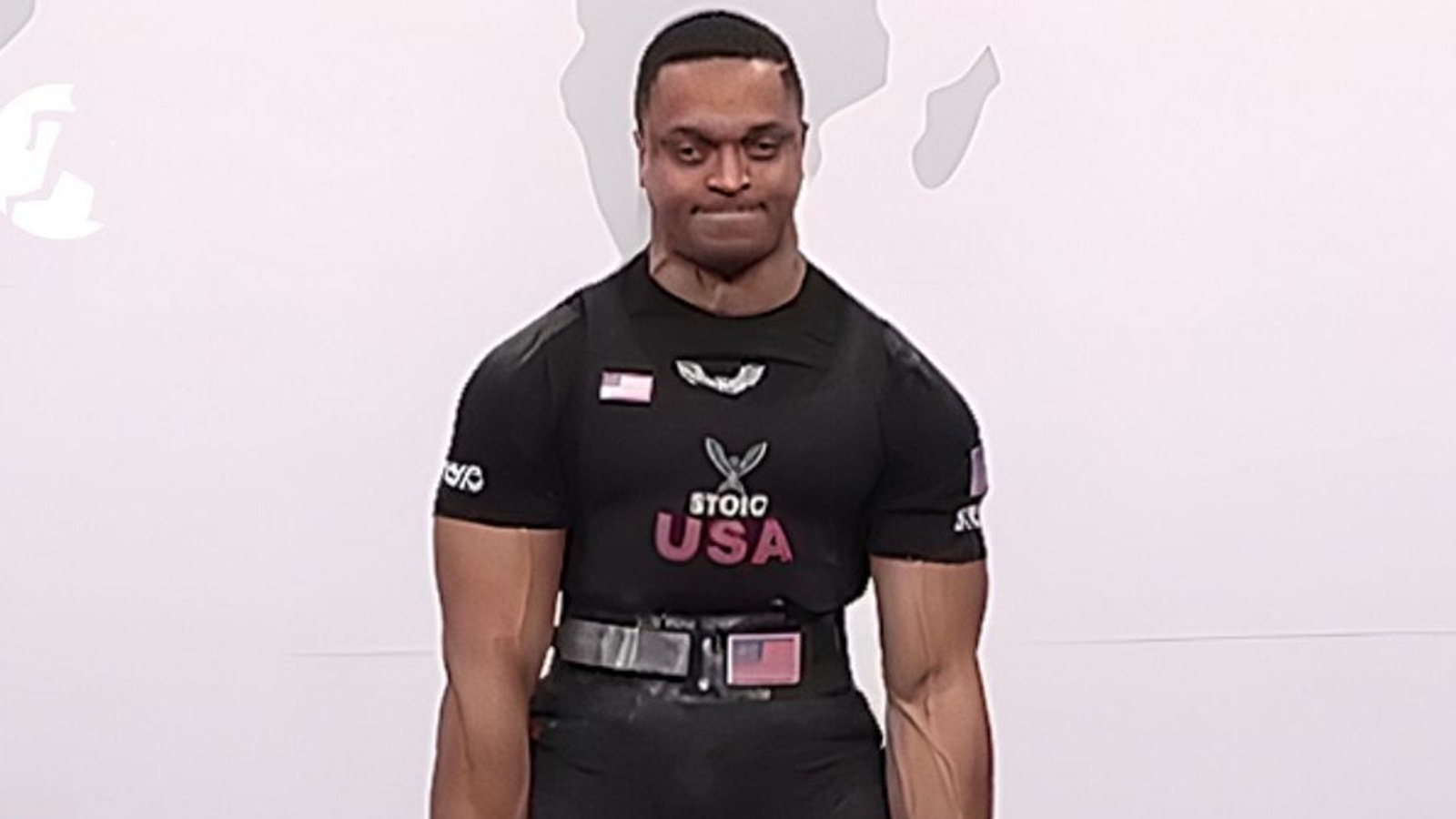
The Official Result Was 373.5 Kilograms
The IPF’s meet recap and the OpenPowerlifting result record agree on the important numbers.
| Meet detail | Verified result |
|---|---|
| Athlete | Chance Mitchell, United States |
| Meet | 2022 IPF World Classic Powerlifting Championships |
| Class | Men’s 93 kg Classic Open |
| Bodyweight | 92.1 kg, about 203 lb |
| Best squat | 315 kg |
| Best bench press | 190 kg |
| Best deadlift | 373.5 kg, about 823.4 lb |
| Total | 878.5 kg |
| Place | First |
The deadlift was just over 4.05 times his measured bodyweight. Ratios do not decide powerlifting meets, but they help show why an 823-pound pull in the 93 kg class drew so much attention.
The Exact World Record Lift Is on Video
The short clip shows the specific second attempt, not a different 823-pound pull from training or another federation. An official replay of the full session also remains available through the IPF recap.
That source chain matters because Mitchell had lifted 383 kilograms at the Powerlifting America Nationals earlier in 2022. It was a heavier result, but it was not the lift that established this IPF world record.
He Recovered From Two Missed Openers
Mitchell’s day was not a smooth nine-for-nine performance. He missed his opening 290-kilogram squat on depth, then increased the weight and successfully completed 305 and 315 kilograms.
The same pattern returned in the deadlift. His 352.5-kilogram opener moved quickly, but the referees rejected it after downward movement at the top. With no successful deadlift on the board, Mitchell called for 373.5 kilograms.
That was an unusually aggressive 21-kilogram increase. He completed it, set the record, and jumped into the lead. His final 383.5-kilogram attempt did not pass his knees.
The failed third attempt is useful context. The record was close to the edge of what Mitchell could produce that day, not an effortless lift followed by a larger success.
What Classic Powerlifting Actually Means
The social caption calls the pull raw and says there were no wraps. In IPF terminology, the division was Classic rather than Equipped.
Classic rules exclude supportive squat and deadlift suits and do not allow knee wraps, but athletes may use approved equipment such as a lifting belt, wrist wraps, and knee sleeves. Calling the lift raw is common shorthand. Saying it was done with no supportive equipment of any kind would be inaccurate.
The IPF also operates an anti-doping program. A result in a tested federation should not be turned into a claim that testing can prove an athlete has never used a prohibited substance. The verified statement is that Mitchell competed under the IPF’s testing and technical rules.
The Record Stood Until November 2025
Goodlift’s IPF record progression lists Mitchell’s 373.5-kilogram mark on June 9, 2022, and a later 380-kilogram record by Aimene Ibrahim El Khalil Nouari on November 25, 2025.
That gave Mitchell the record for more than three years. The newer mark changes the present tense, not the history. Mitchell remains the athlete who set the 373.5-kilogram standard and won the world title with it.
Record reporting is strongest when it separates what happened from what remains current. Our review of Joshua Cheptegei’s 10,000-meter world record uses the same approach: verify the performance first, then check the live record table before calling someone the holder.
What Lifters Can Learn Without Copying the Attempt
The dramatic lesson is Mitchell’s willingness to go up after a miss. That is not automatically the useful lesson for a local meet or a normal training day.
His first attempts moved with enough speed that the failures were technical rather than obvious strength limits. He also had an elite training history, a coach and handlers, and a specific championship calculation behind the jumps.
For most lifters, the safer takeaways are less theatrical:
- Choose openers you can complete under strict judging even on an imperfect day.
- Practice the commands and finish position, not only moving the bar from the floor.
- Change a planned attempt only when the previous lift provides clear information.
- Keep technical work repeatable instead of treating every hard session like a record attempt.
Mitchell’s recovery under pressure was exceptional, but ordinary progress still comes from training that can be repeated. That is also the core of Sydney Hunter’s practical strength advice.
The accurate record statement is precise: Chance Mitchell pulled 373.5 kilograms at 92.1 kilograms bodyweight on June 9, 2022, set the IPF men’s 93 kg Classic Open deadlift record, and won the world championship. The mark remained in the progression until it was raised to 380 kilograms in 2025.
Get the next evidence check.
Five practical fitness stories worth your time, every Friday.
One email a week. No product pitches. Unsubscribe in one click.
References
- International Powerlifting Federation. (2022). World Classic 2022, 93 kg class recap.
- International Powerlifting Federation. (2022). Chance Mitchell 373.5-kilogram deadlift world record footage.
- OpenPowerlifting. (2026). Chance Mitchell competition history.
- Goodlift. (2026). IPF men’s 93 kg Classic Open deadlift record progression.
- International Powerlifting Federation. (2026). IPF technical rules.
- International Powerlifting Federation. (2026). IPF anti-doping and clean sport information.
Medical disclaimer: This article is for general information only and is not medical advice. If you have an injury, ongoing pain, or a medical condition, talk to a doctor or physical therapist before you change how you train or eat.