Stool color usually changes for ordinary reasons, including food, medicine, and how quickly material moves through the gut.
A few colors deserve more attention because they can reflect bleeding or a problem with bile flow.
Color alone cannot diagnose the cause.
Lighting, toilet-bowl color, food pigments, supplements, and medicines can all change what a person thinks they see. A useful observation therefore includes more than a color label: note the consistency, whether the change happened once or repeatedly, any pain or fever, and recent changes in diet or medication. That fuller pattern gives a clinician better information and reduces the risk of either dismissing a warning sign or panicking over an ordinary variation.
The useful skill is knowing which changes can be watched, which should be discussed with a clinician, and which need urgent care.
This guide explains the biology without turning a bathroom observation into a home diagnosis.
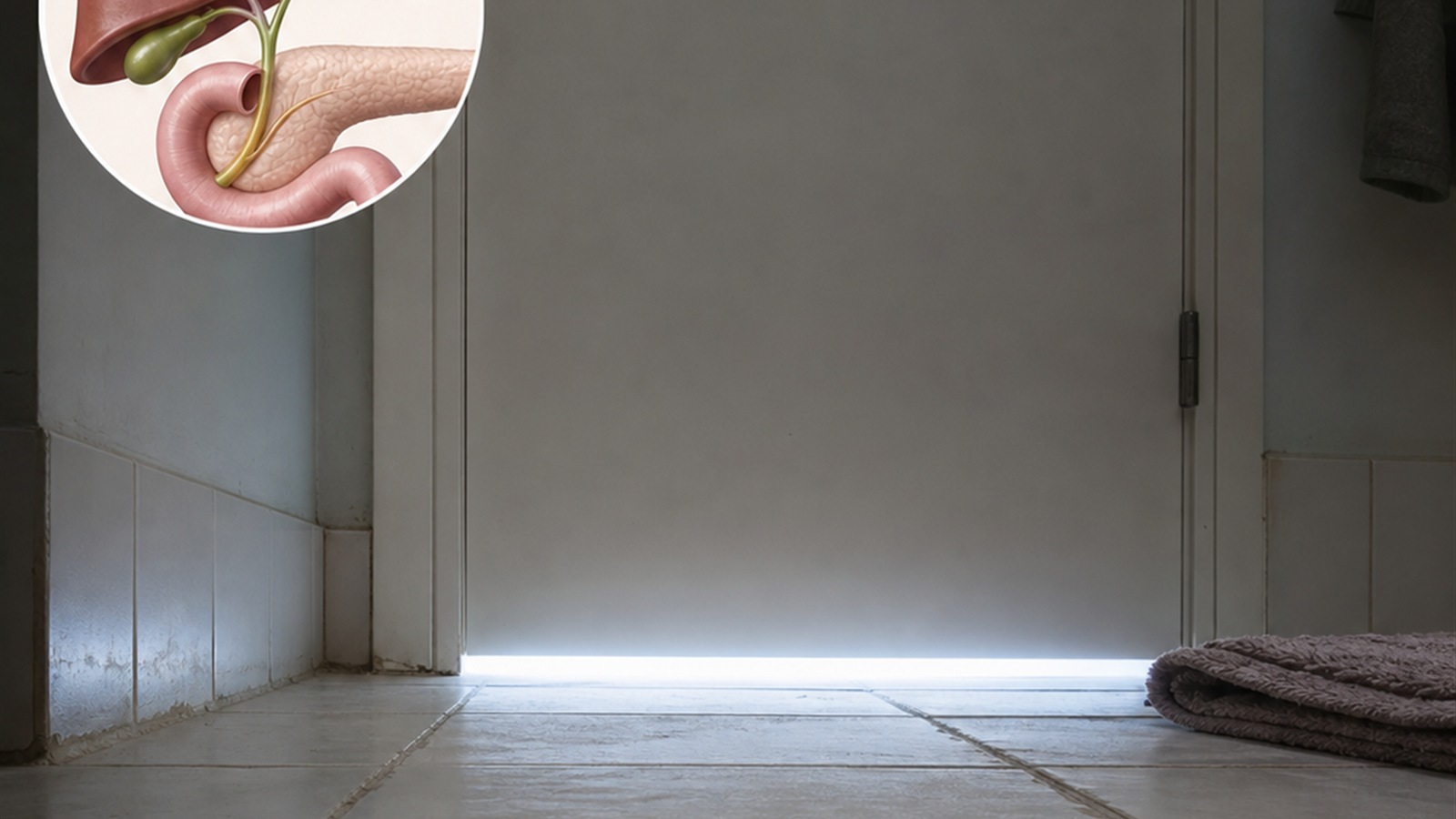
Why Brown Is the Usual Color
Brown is produced by a chain that begins with old red blood cells.
Hemoglobin is broken down, bilirubin is processed by the liver, and bile carries pigments into the intestine.
Gut bacteria and digestive chemistry transform those pigments as stool moves through the colon.
The final result is usually some shade of brown.
Green can also fall within a typical range, especially when transit is faster or green foods and coloring are present.
Because food and medicines change appearance so easily, one unusual bowel movement often has a simple explanation.
The pattern matters more than one isolated color.
Persistent change, repeated bleeding signs, pain, fever, jaundice, weakness, or dizziness changes the level of concern (Mayo Clinic, 2024).
Green Stool Usually Reflects Speed
Bile begins as a yellow-green fluid and normally changes color as it travels through the digestive tract.
When material moves quickly, there may be less time for that breakdown.
Diarrhea can therefore produce green stool.
Leafy vegetables, food dyes, and iron supplements can also contribute.
Green by itself is usually less concerning than black, bright red, or pale stool.
The surrounding symptoms remain important.
Severe diarrhea, dehydration, high fever, blood, intense abdominal pain, or a change in mental state needs medical attention.
Children, older adults, pregnant people, and anyone with a weakened immune system can become dehydrated more quickly (National Institute of Diabetes and Digestive and Kidney Diseases [NIDDK], n.d.).
Pale, Clay, or White Stool
Light-colored stool can mean that too little bile pigment is reaching the intestine.
One possible cause is a blockage in the bile ducts.
Liver, gallbladder, or pancreatic problems can also affect bile flow.
Some medicines and contrast agents can create a temporary pale appearance, so context matters.
Pale stool becomes more concerning when it persists or appears with yellow skin or eyes, dark urine, fever, itching, nausea, or right-upper abdominal pain.
Those combinations can signal a problem that needs prompt medical evaluation.
The Facebook caption called pale stool “classically” linked to blocked bile flow.
That is a useful warning, but it is not a diagnosis.
A clinician may need blood tests and imaging to identify the actual cause (Cleveland Clinic, n.d.; Mayo Clinic, 2024).
Black and Tarry Stool
Black, tarry stool with a strong odor can reflect blood that has been digested during its path through the upper gastrointestinal tract.
This finding is called melena.
Bleeding may come from the esophagus, stomach, or first part of the small intestine.
Ulcers, inflammation, enlarged veins, tears, and other conditions can cause it.
Iron tablets, bismuth medicines, activated charcoal, black licorice, blueberries, and some foods can also darken stool without bleeding.
The distinction is not always reliable by sight.
Black tarry stool, dizziness, fainting, vomiting blood, coffee-ground vomit, shortness of breath, or weakness requires urgent medical evaluation (MedlinePlus, 2024; NIDDK, n.d.).
Color is a clue, not a conclusion. Urgency comes from the color, texture, repetition, and the symptoms beside it.
Red Stool and Visible Blood
Bright red blood often points to bleeding lower in the digestive tract, including the colon, rectum, or anus.
Hemorrhoids and small tears are common explanations, but infection, inflammatory bowel disease, polyps, diverticular disease, and cancer are also possible.
Beets, cranberries, tomato products, red gelatin, and food coloring can make stool look red.
That similarity is why guessing from color is risky.
Blood mixed through the stool, clots, repeated bleeding, black stool, abdominal pain, fever, faintness, or a large amount of blood should be assessed promptly.
Even a small recurring amount deserves discussion with a healthcare professional.
Testing can distinguish blood from pigment and help locate the source (MedlinePlus, 2024).
Yellow, Greasy, or Foul-Smelling Stool
Yellow stool can come from food or faster transit, but a greasy, floating, difficult-to-flush pattern can suggest excess fat in the stool.
That pattern is called steatorrhea.
It may occur when fat is not being digested or absorbed normally.
Celiac disease, pancreatic disorders, bile-flow problems, and other conditions are among the possibilities.
One bowel movement after a high-fat meal is not enough to identify malabsorption.
A recurring pattern with unintentional weight loss, nutrient deficiencies, abdominal symptoms, or fatigue deserves medical evaluation.
The clinician may review diet, medicines, travel, infection risk, and family history before ordering tests.
Our article on walking and the gut microbiome explains why digestive health is broader than any single symptom.
A Four-Question Triage Rule
A color change can be organized with four questions.
First, is there a plausible food, dye, supplement, or medicine explanation?
Second, did the change happen once or persist across several bowel movements?
Third, is the stool black and tarry, visibly bloody, or pale and clay colored?
Fourth, are there symptoms such as pain, jaundice, fainting, fever, vomiting, weakness, or dehydration?
WorkoutHealthy’s practical rule is that a concerning color plus a concerning symptom should lower the threshold for urgent medical advice.
This is not a diagnostic score.
It is a way to avoid two common errors: panicking over one food-related change or dismissing a repeated warning sign.
When uncertain, a clinician can test for blood and evaluate liver, gallbladder, pancreatic, or intestinal causes.
What to Record Before You Call
Write down when the change started and how many times it occurred.
Note the exact color, whether the stool was tarry, greasy, watery, or formed, and whether blood appeared on paper, the surface, or mixed through it.
List recent foods, supplements, iron, bismuth, antibiotics, blood thinners, and other medicines.
Record pain location, fever, nausea, vomiting, dark urine, jaundice, dizziness, weakness, weight change, or recent travel.
A photograph may help a clinician when it can be stored and shared privately.
Do not post it publicly for diagnosis.
Good notes shorten the path from a vague description to an appropriate evaluation.
They also help identify whether the change is resolving or becoming a pattern.
When to Seek Urgent Care
Seek immediate medical help for black tarry stool or substantial red blood, especially with fainting, dizziness, weakness, shortness of breath, confusion, severe pain, vomiting blood, or coffee-ground vomit.
Those combinations can signal acute gastrointestinal bleeding or shock (NIDDK, n.d.).
Pale stool with jaundice, dark urine, fever, chills, itching, nausea, or right-upper abdominal pain also needs prompt assessment.
Severe diarrhea with dehydration, repeated vomiting, high fever, blood, or severe pain should not be managed only by watching the color.
Call a clinician for a persistent unexplained change even when symptoms are milder.
Screening history, age, family history, pregnancy, medication use, and chronic conditions may change the recommended timing.
What Stool Color Can and Cannot Tell You
Stool color can indicate that food, transit time, bile, medicine, or blood may be involved.
It cannot identify the exact diagnosis on its own.
Brown and green are commonly normal.
Pale, clay, or white stool can reflect reduced bile.
Black tarry stool can reflect upper gastrointestinal bleeding.
Bright red blood can reflect lower bleeding, while foods and medicines can mimic several of those colors.
Use stool color to decide what to notice and report, not to name a disease at home.
Normal stool also varies in shape, frequency, and consistency.
A color change can be less meaningful than a major change in bowel habits that persists.
Constipation, diarrhea, mucus, urgency, or incomplete emptying may require a different evaluation even when the color looks typical.
Age, screening history, family history, and recent antibiotic use can change what a clinician considers important.
Do not use a color chart to delay care for worsening symptoms.
Online photographs also differ because lighting, camera processing, toilet water, and display settings change appearance.
Describe the pattern in plain terms and include the symptoms around it.
If the clinician asks for a sample or testing, follow those instructions rather than trying to identify the cause visually.
The most useful observation is one that moves the conversation toward appropriate care.
The least useful is a confident home diagnosis based on one color alone.
Medication lists matter because anticoagulants, anti-inflammatory drugs, iron, and bismuth can change either risk or appearance.
Do not stop a prescribed medicine because stool changed color unless the prescribing clinician gives that instruction.
Bring the complete list, including supplements and over-the-counter products, to the evaluation.
That detail can help separate harmless discoloration from a warning sign that needs testing.
WorkoutHealthy takeaway: watch the pattern, check the surrounding symptoms, and get prompt help when bleeding or blocked bile may be involved.
For a broader look at metabolic health habits, see our guide to insulin-resistance habits.
References
Cleveland Clinic. (n.d.). Bilirubin test: Understanding high vs. low levels and causes.
Mayo Clinic. (2024, October 10). Stool color: When to worry.
MedlinePlus. (2024, June 11). Black or tarry stools.
National Institute of Diabetes and Digestive and Kidney Diseases. (n.d.). Symptoms and causes of gastrointestinal bleeding.
Medical disclaimer: This article is general product information, not medical advice. The equipment described here is not a treatment for any condition. If you have an injury, ongoing pain, or a medical condition, talk to a doctor or physical therapist before using any of it.