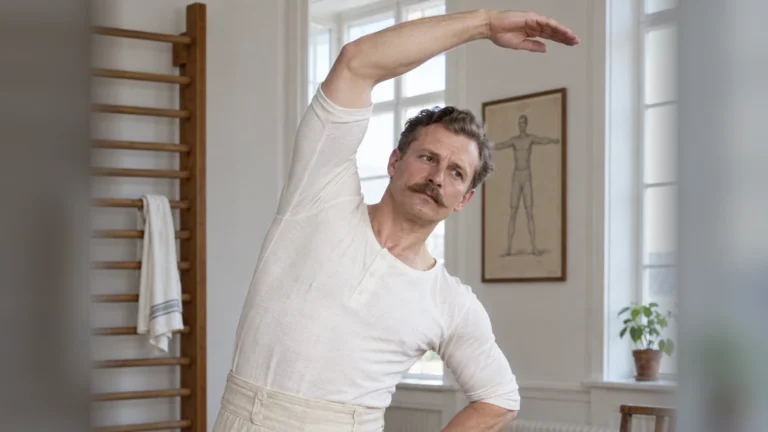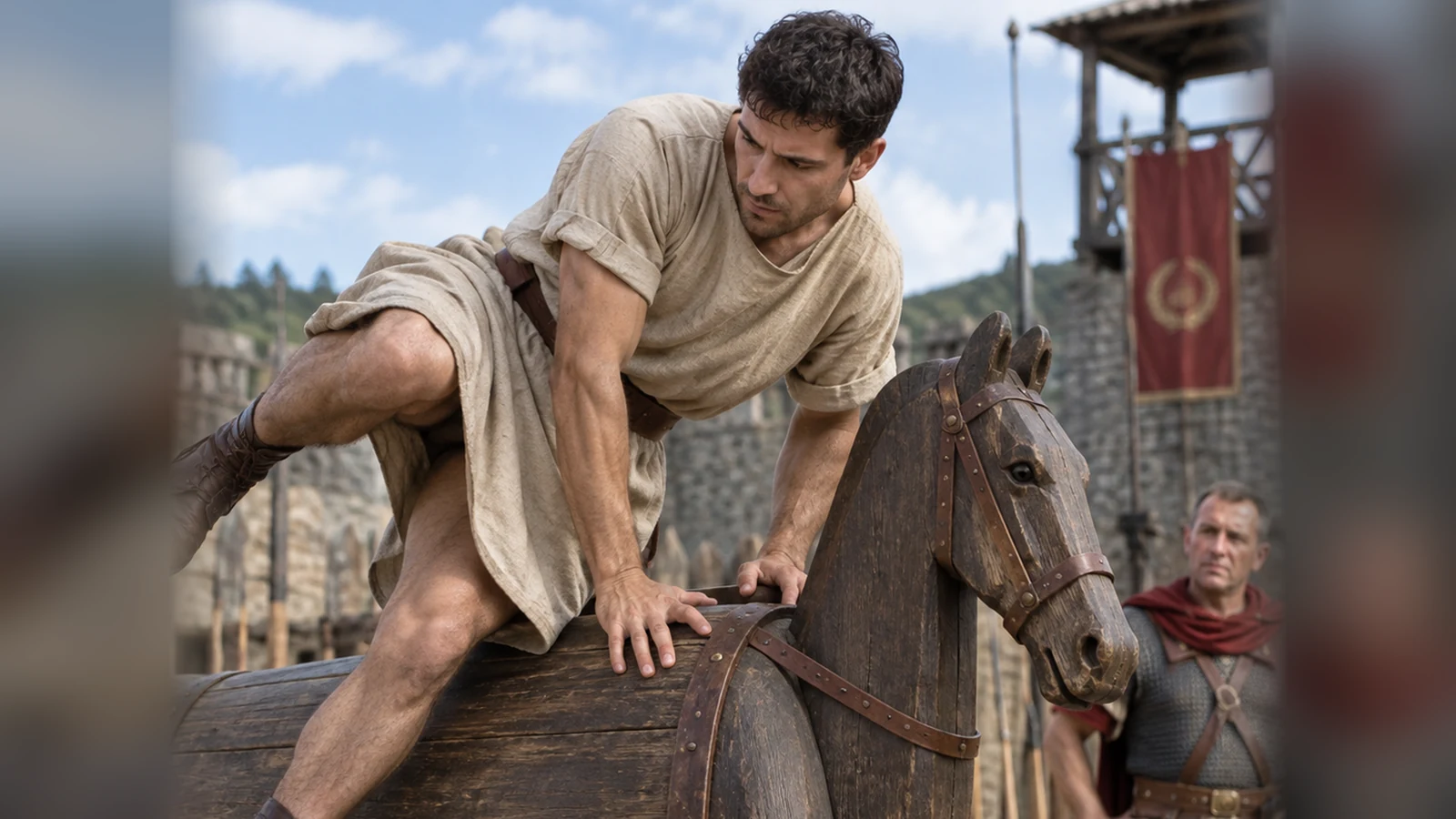

Long before gymnastics had a vault, Roman soldiers practiced on wooden horses.
The drill had a very practical goal: getting onto a real horse quickly, even in full gear.
A popular post says the Roman writer Vegetius had recruits vault onto and off a wooden horse so they could mount fast in armor.
That is close to what his text says, with one small correction about who invented the drill.
Who Vegetius Was
Vegetius was a writer of the late Roman Empire.
His best known work is De Re Militari, often translated as The Military Institutions of the Romans.
John Clarke’s 1767 English translation dates the work to AD 390.
Vegetius was not describing his own new system.
He was looking back at how earlier Roman armies trained, and he noted that some of those habits had faded in his own day.
That matters for the popular claim.
Vegetius reported the wooden horse drill. He did not create it.
What the Text Actually Says
The wooden horse appears in a short Book I chapter titled “To Be Taught to Vault.”
“The young soldiers were taught to vault on them at first without arms, afterwards completely armed.”
Vegetius says the ancients made both veterans and recruits practice vaulting constantly.
The wooden horses were kept under cover in winter and set out in the field in summer.
Soldiers learned to mount and dismount on either side.
They did it with drawn swords or lances in their hands.
Vegetius also admits the practice had survived to his time, but that little attention was paid to it.
A Smart Progression
The drill had a clear order.
Recruits started without weapons, then practiced again fully armed once the movement was learned.
That is the same logic coaches use today. Learn the skill first, then add load and pressure.
Practicing from both sides also mattered.
In battle, a soldier could not always choose which side of the horse was free.
Holding a drawn sword or lance while mounting added one more real world demand to the practice.
The Rest of the Recruit Program
Vaulting was only one part of Roman basic training in Vegetius’ account.
- Marching. Recruits were expected to cover twenty miles in five summer hours at the common military step.
- Running and leaping. Running prepared soldiers to charge, and leaping helped them get across ditches.
- Swimming. Every young soldier, without exception, was to be taught to swim in the summer months.
- The post. Recruits attacked a six foot post in the ground as if it were an enemy.
- Carrying loads. Recruits carried at least sixty pounds, not counting their arms, while marching in ranks.
Each drill matched a task a soldier would actually face.
Vegetius also says the ancients made veterans keep practicing vaulting, not just recruits.
Skills that matter in an emergency need regular refreshers, even for experienced people.
What Research Says About Specific Training
Modern sports science calls this idea specificity.
Your body adapts most to the kind of work you actually practice.
A classic 1993 review by Behm and Sale in Sports Medicine looked at resistance training and movement speed.
It found that the greatest strength gains tend to occur at or near the speed used in training.
It also noted that the intent to move fast may matter more than the actual speed achieved.
The authors described both nervous system and muscle changes behind this effect.
For a soldier, that points to a clear lesson. If you need to mount quickly, practice mounting quickly.
What the Comparison Does Not Prove
Behm and Sale studied strength training speed, not horse vaulting.
No modern study has tested Vegetius’ wooden horse drill.
Specific practice also does not mean general fitness is useless.
Vegetius himself paired the vaulting drill with marching, running, swimming, and load carrying.
Research on general strength backs up that balance.
A 2016 review by Suchomel, Nimphius, and Stone in Sports Medicine looked at muscular strength and athletic performance.
The authors wrote that much research supports greater strength improving jumping, sprinting, and change of direction.
Stronger athletes also performed better on sport specific tasks.
The review noted that greater strength may also lower injury risk.
The best programs mix a solid general base with plenty of practice on the real task.
How to Use the Wooden Horse Idea
- Name the real task. Write down exactly what you want to be able to do, like climbing a wall or lifting a child.
- Practice that movement. Include the actual skill, or a close copy of it, in your sessions.
- Start unloaded. Learn the pattern with no extra weight, just as recruits vaulted without arms first.
- Add realistic load. Once the pattern is smooth, add the gear or weight you will really carry.
- Train both sides. Real life rarely lets you pick your favorite side.
- Keep a base. Pair skill practice with general strength and conditioning.

For an example of task specific training, see how Ryan Gosling trained like a stuntman for The Fall Guy.
Another example is how Benson Boone’s backflip takes more training than it looks like.
Common Mistakes
- Only doing general workouts. Gym fitness does not automatically transfer to a specific skill.
- Adding gear too early. Loading a messy movement can lead to injury.
- Ignoring the weak side. One sided practice leaves gaps.
- Copying military loads. Sixty pound marches are not a starting point for most people.

Who Should Be Careful
Vaulting, jumping, and loaded marching stress the shoulders, knees, back, and feet.
People with joint problems, back pain, or balance issues should get guidance before trying similar drills.
Build any load carrying slowly, and use a pack that fits well.
The Bottom Line
Vegetius did describe Roman recruits vaulting onto wooden horses, first unarmed and then fully armed, from either side.
He presented it as an older Roman practice he wanted revived.
Modern research on specificity supports the core idea: practice what you need to perform.
Build a base, then train the real task, step by step.
Want more stories like this? Subscribe to WorkoutHealthy Insider for practical explanations behind popular fitness claims.
References
- Behm, D. G., & Sale, D. G. (1993). Velocity specificity of resistance training. Sports Medicine, 15(6), 374 to 388. https://doi.org/10.2165/00007256-199315060-00003
- Suchomel, T. J., Nimphius, S., & Stone, M. H. (2016). The importance of muscular strength in athletic performance. Sports Medicine, 46(10), 1419 to 1449. https://doi.org/10.1007/s40279-016-0486-0
- Vegetius. (1767). The military institutions of the Romans (De re militari) (J. Clarke, Trans.). Internet Archive. https://archive.org/stream/pdfy-sOkC3FmoLlr4C6zz/The+Military+Institutions+Of+The+Romans+[De+Re+Militari]_djvu.txt
This article is for general information only and is not medical advice. If you have an injury, ongoing pain, or a medical condition, talk to a doctor or physical therapist before you change how you train or eat.