
Tom Brady played in the NFL until he was 45 years old.
He has credited much of that long career to habits that happen away from the field.
His 2017 book, The TB12 Method, treats water, sleep, and food as core parts of training, not extras.
Some of that advice is well supported. Some of it goes further than the science can follow.
This article sorts out which parts hold up and how to use them without overdoing it.
What The TB12 Method Says
The TB12 Method: How to Achieve a Lifetime of Sustained Peak Performance was published by Simon & Schuster in September 2017.
Brady described the book as the result of years of work on his own approach to training and recovery.
A 2020 Maxim summary of the updated edition lists several of its core recommendations.
- Sleep. Keep a regular bedtime and get at least eight hours of sleep a night.
- Hydration. Drink water with electrolytes daily, aiming for half your body weight in ounces.
- Food. Eat real, mostly plant based food, and limit foods the book links to inflammation, such as fast food and processed food.
- Pliability. Brady’s term for soft, flexible muscle, which he treats as a missing piece of most training plans.
Pliability is a separate topic, so this article focuses on sleep, water, and food.
Who Tom Brady Is
Tom Brady was drafted by the New England Patriots in 2000 as the 199th overall pick.
He won six Super Bowls with New England and a seventh with the Tampa Bay Buccaneers.
He retired for good in early 2023 after 23 NFL seasons.
Playing at that level into his mid 40s is rare for any position, which is why people pay attention to his habits.
What Sleep Research Shows
The sleep part of Brady’s advice has solid support.
In a 2011 study, Cheri Mah and colleagues at Stanford asked 11 college basketball players to aim for at least 10 hours in bed each night.
The players ended up sleeping about 111 minutes more per night than before.
Their sprint times improved from 16.2 seconds to 15.5 seconds.
Free throw and three point shooting accuracy each rose by about 9 percent.
Reaction time got faster, and the players reported more vigor and less fatigue.
The study was small and had no separate control group, so it should be read as encouraging rather than final.
Sleep is not a break from training. It is the part of training where the work gets turned into results.
What Hydration Research Shows
Water matters for performance, especially in the heat.
The American College of Sports Medicine’s 2007 position stand on fluid replacement is a widely used guide on this topic.
It warns that losing too much body water during exercise can hurt endurance performance, particularly in warm conditions.
It also warns about the opposite problem.
Drinking far more than you lose can lead to hyponatremia, a dangerous drop in blood sodium.
That is why the position stand favors individual fluid plans over one fixed rule for everyone.
Where TB12 Goes Too Far
The book’s hydration claims drew some of the strongest pushback.
In the book, Brady wrote that he no longer gets sunburned and credited the amount of water he drinks.
Fox News reported in September 2017 that the CDC does not list drinking water as a way to prevent sunburn.
Sunscreen, protective clothing, hats, and shade are the recommended tools.
A registered dietitian quoted in that report also cautioned that Brady’s fluid needs differ from the average person’s.
The half your body weight in ounces rule is also a rule of thumb, not a research based target.
Needs change with body size, heat, sweat rate, and activity level.
On food, eating mostly whole, plant based foods fits general healthy eating advice. Specific claims about single foods and inflammation are less well supported.
How to Build Recovery Into Your Week
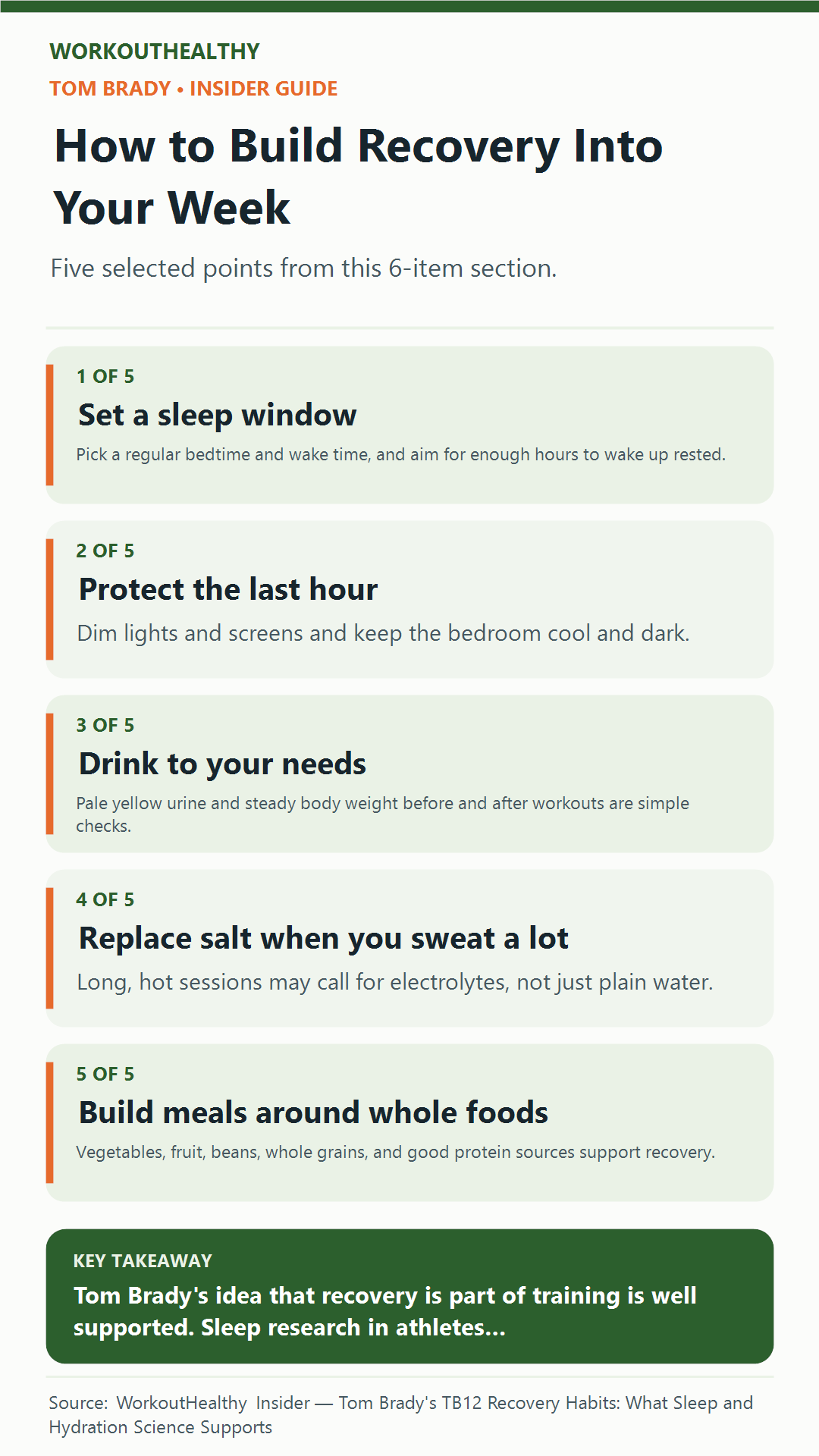
- Set a sleep window. Pick a regular bedtime and wake time, and aim for enough hours to wake up rested.
- Protect the last hour. Dim lights and screens and keep the bedroom cool and dark.
- Drink to your needs. Pale yellow urine and steady body weight before and after workouts are simple checks.
- Replace salt when you sweat a lot. Long, hot sessions may call for electrolytes, not just plain water.
- Build meals around whole foods. Vegetables, fruit, beans, whole grains, and good protein sources support recovery.
- Plan real rest. Our look at whether rest days build muscle explains how recovery and training work together.
Staying strong as you age takes more than recovery habits. Our strength plan for your 40s covers the training side.
For another athlete’s simple fueling habit, see what the research says about Dwayne Johnson’s rice and protein shake.
Common Recovery Mistakes
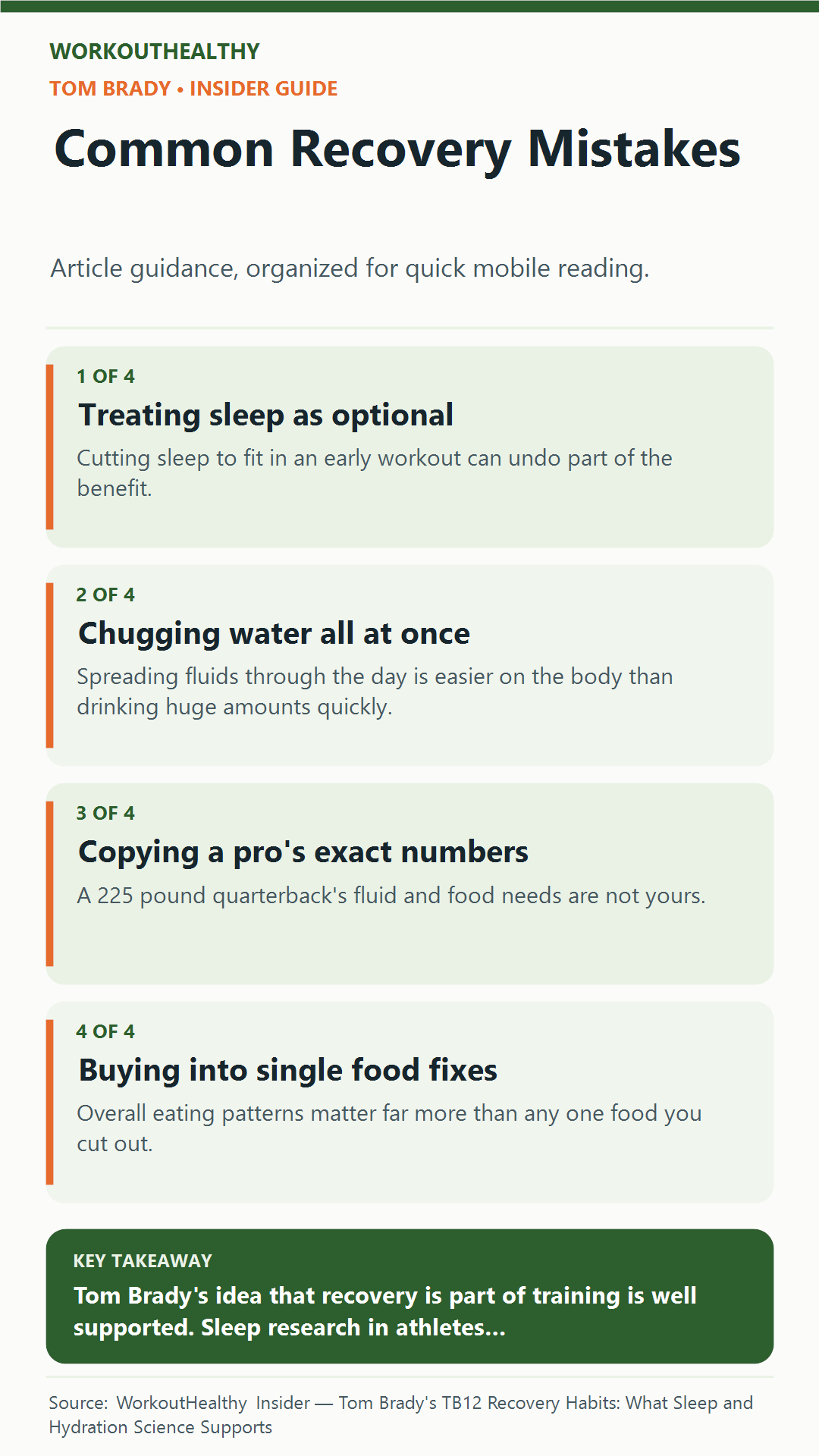
- Treating sleep as optional. Cutting sleep to fit in an early workout can undo part of the benefit.
- Chugging water all at once. Spreading fluids through the day is easier on the body than drinking huge amounts quickly.
- Copying a pro’s exact numbers. A 225 pound quarterback’s fluid and food needs are not yours.
- Buying into single food fixes. Overall eating patterns matter far more than any one food you cut out.
Who Should Be Careful
People with heart failure, kidney disease, or other conditions may have fluid limits set by their doctor.
Follow that guidance over any general rule.
Endurance athletes should not force down large amounts of plain water during long events.
If you snore loudly, stop breathing at night, or feel exhausted despite enough time in bed, talk to a doctor about a sleep evaluation.
The Bottom Line
Tom Brady’s idea that recovery is part of training is well supported.
Sleep research in athletes backs his focus on getting enough rest.
Hydration clearly matters, but more water is not always better, and it will not prevent sunburn.
Take the core habits from TB12, and leave the extreme claims behind.
Want more stories like this? Subscribe to WorkoutHealthy Insider for practical explanations behind popular fitness claims.
References
- American College of Sports Medicine, Sawka, M. N., Burke, L. M., Eichner, E. R., Maughan, R. J., Montain, S. J., & Stachenfeld, N. S. (2007). Exercise and fluid replacement. Medicine & Science in Sports & Exercise, 39(2), 377 to 390. https://doi.org/10.1249/mss.0b013e31802ca597
- Brady, T. (2017). The TB12 method: How to achieve a lifetime of sustained peak performance. Simon & Schuster.
- Fox News. (2017, September 22). Tom Brady says drinking water prevents sunburn, Twitter calls him out. https://www.foxnews.com/lifestyle/tom-brady-says-drinking-water-prevents-sunburn-twitter-calls-him-out
- Mah, C. D., Mah, K. E., Kezirian, E. J., & Dement, W. C. (2011). The effects of sleep extension on the athletic performance of collegiate basketball players. Sleep, 34(7), 943 to 950. https://doi.org/10.5665/SLEEP.1132
- Maxim. (2020, August 4). 12 takeaways from Tom Brady’s updated TB12 book that could change your life.
This article is for general information only and is not medical advice. If you have an injury, ongoing pain, or a medical condition, talk to a doctor or physical therapist before you change how you train or eat.