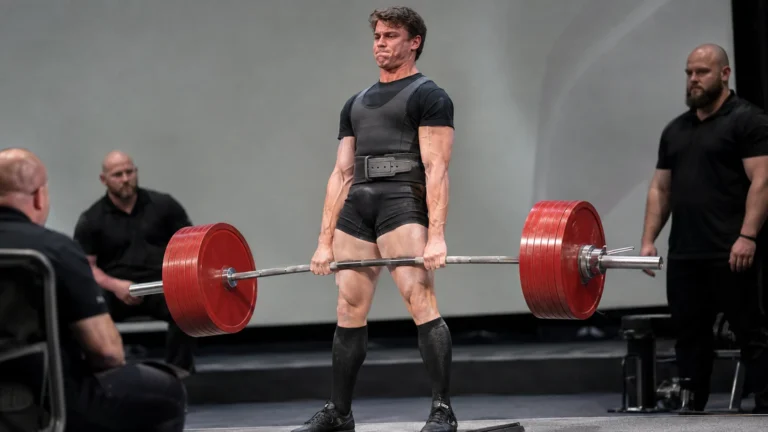

Dwayne Johnson recently showed a simple change to his pre-workout routine: jasmine rice blended with protein powder. He described it as a fast-digesting option that leaves him ready for his working sets.
The idea sounds refreshingly basic beside the elaborate supplement stacks often attached to celebrity training. It is also easy to misunderstand. A personal shake can solve a timing problem for one experienced athlete without becoming the best formula for every lifter.
Quick answer: rice supplies carbohydrate, protein powder supplies amino acids, and blending may make the combination easier for some people to consume before training. The useful lesson is to match food amount, timing, session demand, and stomach tolerance. Johnson’s portion, training volume, and overall diet are not a universal prescription.
A pre-workout meal should support the session, not become the hardest thing your stomach does that hour.
What Johnson actually shared
Johnson’s August 27 post showed him blending cooked jasmine rice with protein powder before training. He said Cream of Rice had been a long-standing staple and that the blended jasmine rice variation also worked well for him.
That is the documented routine. It does not establish a precise serving, a controlled performance improvement, or a special metabolic effect. It tells us that an experienced, very large athlete found another way to combine carbohydrate and protein before a demanding session.
The viral Facebook caption attached stronger language to the clip, including claims about instant power, less energy used for digestion, and carbohydrates reaching the bloodstream for fuel rather than storage. Those statements simplify a much more individual process.
Food is digested, absorbed, stored, and used according to the whole situation. Meal size, recent meals, training duration, intensity, total energy intake, and muscle glycogen all matter.
Johnson also trains at a scale that is not representative of a typical recreational lifter. His total calorie needs, body mass, schedule, and tolerance have been shaped by decades of training.
This distinction is part of why WorkoutHealthy separates a celebrity’s documented practice from the lesson readers can safely apply. Our celebrity fitness sourcing rules explain that approach.
Why rice can work before training
Cooked jasmine rice is mostly carbohydrate, with relatively little fat or fiber. That combination can make it easier to tolerate than a large, fatty, or very high-fiber meal close to exercise.
Carbohydrate helps maintain blood glucose and contributes to muscle glycogen, the stored carbohydrate used heavily during hard or high-volume work. The value of extra pre-workout carbohydrate rises when the session is long, intense, or performed after a long gap without food.
A person who ate a balanced meal two hours earlier may not need another carbohydrate serving. Someone training early after an overnight fast may notice a larger difference.
Rice is not automatically superior to oats, bread, fruit, potatoes, cereal, or another familiar carbohydrate. It is simply low in several components that commonly slow stomach emptying or trigger digestive discomfort.
The food’s glycemic index is not the only decision. Portion size, mixed ingredients, cooking method, and the person’s response change the practical effect.
Calling one carbohydrate “fast” can also encourage portions that are much larger than the session requires. The purpose is enough available energy, not the highest possible blood sugar response.
What the protein contributes
Protein powder provides a convenient source of amino acids. Consuming protein before or after resistance training can support muscle protein synthesis when the daily protein intake and training stimulus are adequate.
The timing window is wider than social media often suggests. A pre-workout serving does not expire when the final set ends, and a post-workout meal does not need to arrive within minutes for most people.
Daily protein total, distribution across meals, food quality, and consistency matter more than copying the exact clock used by a celebrity.
A shake is useful when appetite, travel, or time makes solid food inconvenient. It is not required for progress. Eggs, yogurt, milk, soy foods, poultry, fish, beans, and other foods can fill the same daily protein role.
Combining carbohydrate and protein can be especially convenient when a person has not eaten for several hours or expects a demanding session. The combination addresses two different jobs: fuel availability and amino acid supply.
It still needs to fit the rest of the day. Adding a large shake on top of an already adequate diet can provide more energy than the goal requires.
Does blending make it faster?
Blending changes texture and reduces the work of chewing. A liquid or semi-liquid meal may feel easier to consume and may leave the stomach faster than a larger solid meal in some situations.
That does not mean every blended food is rapidly digested. Fat, fiber, protein amount, total volume, temperature, and ingredient concentration can all affect gastric emptying and comfort.
Rice and protein powder can also become thick. A very concentrated shake may sit heavily even when its ingredients are considered simple.
The most reliable test is practical and repeatable. Use a modest portion during ordinary training, record how the warm-up and first working sets feel, and note fullness, reflux, cramping, or urgent bathroom needs.
Do not test a new formula before a competition, long event, or unusually hard session. Familiarity is a performance tool because it reduces gastrointestinal surprises.
The absence of discomfort does not prove a performance advantage. It only confirms that the option is tolerable enough to compare with other meals.
The clock-and-tolerance filter
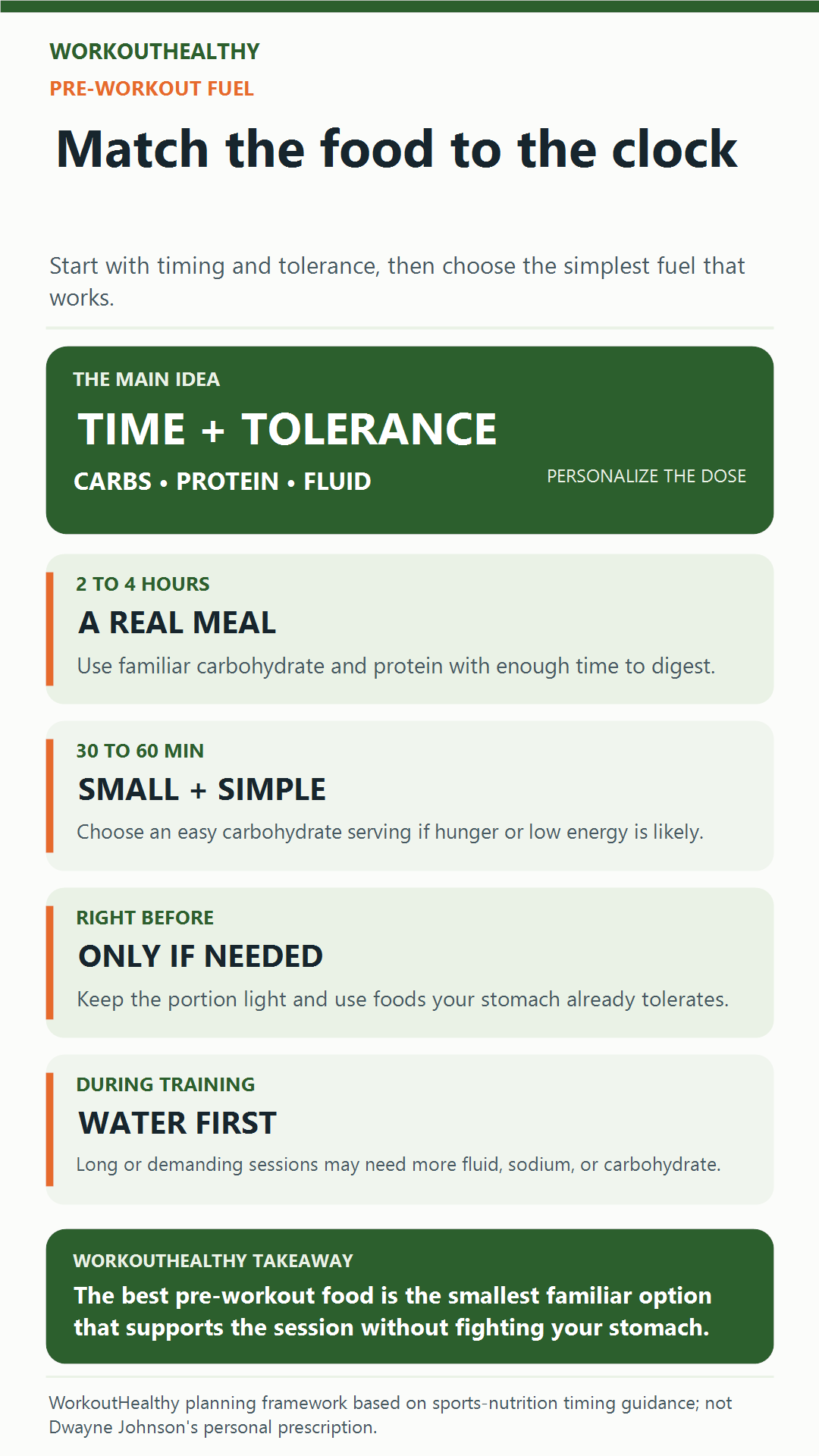
WorkoutHealthy’s clock-and-tolerance filter starts with the time available before training, then narrows the food choice by session demand and personal tolerance.
Two to four hours before: use a normal meal with a familiar carbohydrate source, protein, and an amount of fat and fiber you tolerate. This window gives a larger meal more time to settle.
Thirty to sixty minutes before: choose a smaller, simpler carbohydrate serving when hunger or low energy is likely. Add a modest protein serving if it fits comfortably and helps meet the day’s intake.
Right before: eat only when it solves a known problem. A small familiar option is more useful than forcing a meal because the clock says it is time.
During training: water is enough for many sessions under an hour. Longer, hotter, or higher-volume sessions may require more attention to fluid, sodium, and carbohydrate.
This is a WorkoutHealthy planning framework, not Johnson’s reported protocol. It converts one celebrity example into decisions a normal trainee can actually test.
The right pre-workout portion is large enough to help and small enough to disappear from your attention.
How to choose a practical portion
Begin with the session, not the celebrity. A short technique workout and a two-hour high-volume leg session do not have the same fuel demand.
If a full meal is three hours away from training, keep the meal familiar and balanced. If only forty-five minutes remain, reduce the amount and complexity.
For a rice-and-protein shake, start smaller than the serving you think you can tolerate. Record the cooked rice amount, protein amount, liquid volume, and timing.
Use the same version for three comparable sessions. Rate energy during the warm-up, performance in the main work, stomach comfort, and hunger afterward.
Change one variable at a time. Add a little carbohydrate if energy repeatedly fades. Reduce volume or move the shake earlier if fullness interferes with bracing or movement.
Do not turn a personal experiment into a daily obligation. If a normal meal works, the shake is only another option in the rotation.
Recovery after training remains part of the picture. Our guide to rest days and muscle growth explains why more fuel cannot replace enough recovery.
Who should use more caution
People with diabetes or another condition affecting blood glucose should not assume a fast carbohydrate strategy is appropriate. Medication, timing, and monitoring can change the safest plan.
Kidney disease, food allergies, gastrointestinal disorders, and a history of disordered eating also deserve individualized guidance.
Protein powders vary in ingredients and quality. Check the label for allergens, stimulant blends, sugar alcohols, and doses that may cause digestive problems.
A powder is not automatically safer because it looks simple. Third-party testing can reduce contamination risk, especially for drug-tested athletes.
Large amounts of caffeine are a separate decision. Johnson has discussed stimulant-containing intra-workout products in other contexts, but that does not make caffeine part of this rice-and-protein idea.
Keep the experiment focused. If the question is whether rice and protein feel better than another meal, do not add a new stimulant, supplement, and hydration formula at the same time.
Readers looking at other celebrity food routines can see the same method in our fact-check of Mark Wahlberg’s breakfast routine.
The bottom line
Dwayne Johnson’s blended jasmine rice and protein powder is a documented personal variation on a familiar sports-nutrition idea. It combines carbohydrate with protein in a form he finds easy to use before hard training.
The practical lesson is not to match his serving. Match the food to your clock, session, and stomach. Start with a small familiar portion and compare it across ordinary workouts.
Start here: pick one pre-workout option you already tolerate, write down when you ate it, and rate energy and comfort after three similar sessions.
This article is for general educational purposes and is not a substitute for individualized medical or nutrition advice.