
Bebe Rexha built her career on big, unmistakable pop hooks, from “Meant to Be” to “I’m a Mess” to her own headlining tours.
For years, tabloids and social media accounts also spent time commenting on her body, often in cruel and inaccurate ways.
In 2023, Rexha gave that commentary an actual medical answer.
She shared that she had been diagnosed with polycystic ovary syndrome, a hormonal condition commonly known as PCOS.
The diagnosis reframed months of public speculation about her changing appearance into something much simpler: a documented health condition, not a lifestyle choice.
Rexha has continued releasing music and touring since sharing the diagnosis, treating it as one part of her story rather than the whole thing.
She joined a growing list of public figures willing to name PCOS specifically, rather than leaving fans to guess at vague references to “health struggles.”
That specificity matters, because PCOS remains widely underdiagnosed, with many women going years without a clear answer for their symptoms.
What PCOS Actually Is
Polycystic ovary syndrome is one of the most common hormonal conditions affecting women of reproductive age.
The Centers for Disease Control and Prevention estimates it affects roughly six to twelve percent of women in that age group.
PCOS involves an imbalance in reproductive hormones, and it often overlaps with insulin resistance, meaning the body needs more insulin than usual to keep blood sugar steady.
Common symptoms include irregular periods, unexplained shifts in weight and muscle mass, acne, excess hair growth, and small cysts on the ovaries.
Not everyone with PCOS has every symptom, and severity varies enormously from person to person.
That variation is part of why the condition is so often misunderstood by people who only see its outward, physical signs.
Doctors generally diagnose PCOS using a combination of at least two of three criteria: irregular ovulation, elevated androgen hormones, and the characteristic pattern of small follicles on the ovaries seen on ultrasound.
A woman can have PCOS without visibly matching every stereotype associated with the condition, which is part of why public disclosures like Rexha’s carry real educational value.
In Rexha’s Own Words
Rexha has said publicly that the diagnosis helped explain physical changes she had already been facing harsh comments about.
Rather than staying quiet, she chose to speak about it and push back on criticism of her appearance.
She has described PCOS as something that affected her weight, her energy, and her mood, consistent with how the condition is generally described by endocrinologists.
Her decision to speak publicly added her voice to a wider, ongoing conversation about hormonal health and body image in the entertainment industry.
She has framed the disclosure less as an explanation owed to critics and more as information that might help other women recognize their own symptoms sooner.
What the Research Says About Exercise and PCOS
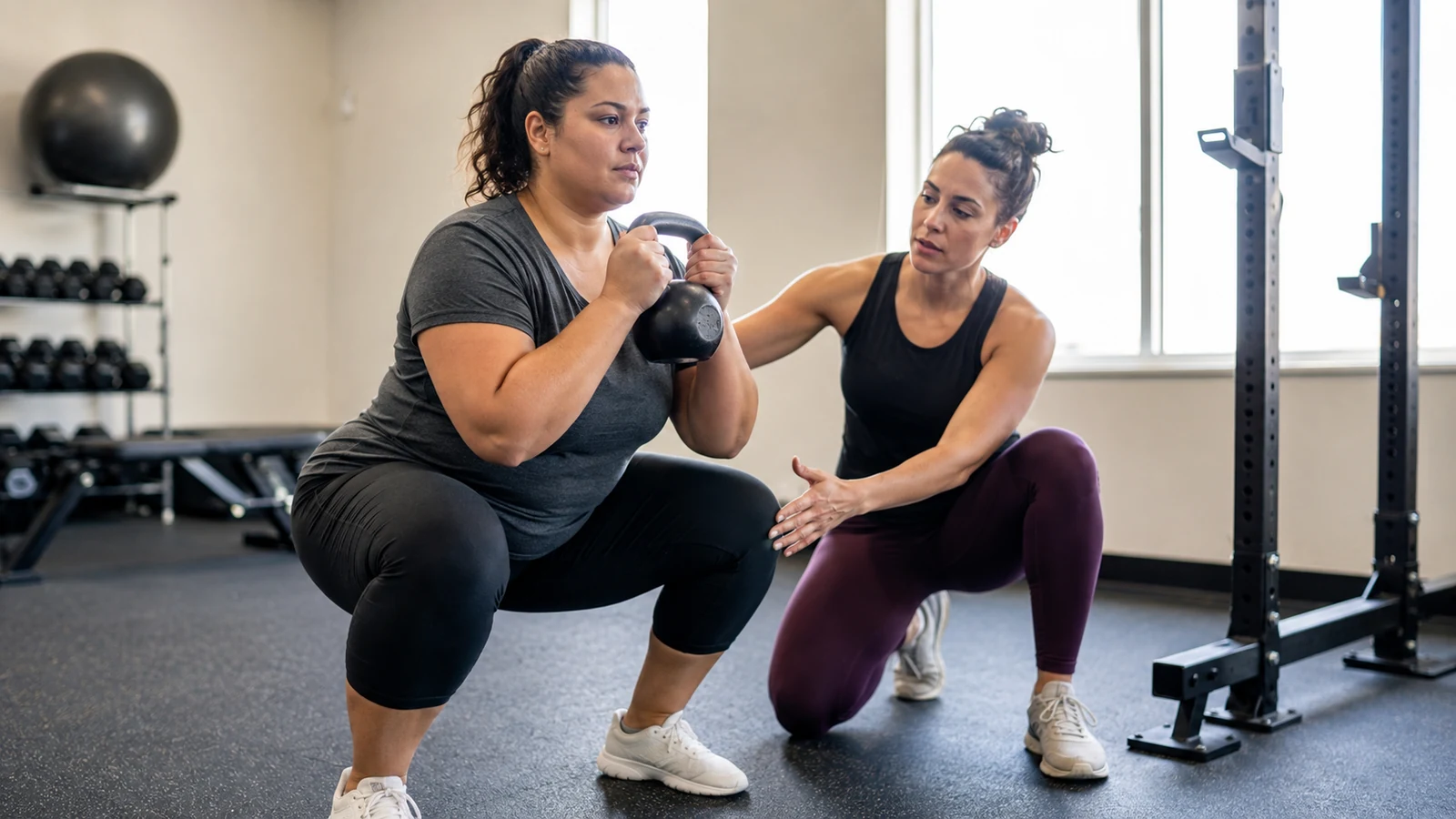
PCOS research has grown substantially over the past decade, and exercise shows up as a consistent, low risk part of managing it.
A 2019 systematic review and meta analysis published in the journal Systematic Reviews looked specifically at exercise interventions for women with PCOS.
The review found that structured exercise programs improved insulin resistance, body composition, and reproductive hormone markers compared to no intervention (Kite et al., 2019).
Both aerobic exercise and resistance training showed benefits, and combining the two appeared to help more than either alone in some of the included trials.
The effects were generally modest rather than dramatic, which matches how PCOS is understood clinically: manageable, but not something exercise alone cures.
Exercise is one tool among several, alongside nutrition changes and, for many women, medication prescribed by a physician.
Why Insulin Resistance Is the Key Piece
Insulin resistance sits at the center of PCOS for a large share of women who have it.
When cells respond less efficiently to insulin, the pancreas produces more of it to compensate.
Higher circulating insulin can push the ovaries to produce more androgens, the hormones linked to some of PCOS’s more visible symptoms.
This is part of why exercise, which improves how efficiently muscle cells use insulin, keeps showing up as a recommended piece of PCOS management.
Even modest improvements in insulin sensitivity can have a meaningful downstream effect on hormone balance for some women.
This is not guaranteed for every person, since PCOS has more than one underlying driver, but it is a well established general mechanism.
PCOS and Mental Health
The emotional side of PCOS gets far less attention than the physical symptoms, even though the research on it is substantial.
A 2017 systematic review and meta analysis published in the journal Human Reproduction pooled data across dozens of studies on PCOS and mental health.
It found significantly higher rates of moderate to severe depressive and anxiety symptoms among women with PCOS compared to women without it (Cooney et al., 2017).
Some of that gap likely comes from the biology of the condition itself, and some of it plausibly comes from years of public and personal commentary about appearance.
Framing PCOS purely as a cosmetic issue misses a real, documented mental health dimension that clinicians now consider part of standard care.
Public figures speaking candidly about the diagnosis, the way Rexha has, can make that mental health piece easier for other women to bring up with their own doctors.
The 2023 International Guideline
In 2023, a large international panel led by researcher Helena Teede published an updated evidence based guideline for diagnosing and managing PCOS.
The guideline was developed with input from clinicians, researchers, and women living with PCOS across dozens of countries (Teede et al., 2023).
It reinforced exercise and healthy lifestyle habits as first line strategies, alongside medical treatment where needed.
It also pushed back directly against framing PCOS symptoms as a simple matter of willpower or personal choice.
The guideline specifically calls out weight stigma and body shaming as barriers that can keep women from seeking care.
That detail matters directly for a public figure who has been the target of exactly that kind of commentary.
How This Compares to General Health Guidance
The exercise recommendations for women with PCOS are not drastically different from general public health guidance.
Most guidelines point toward roughly 150 minutes of moderate activity a week, combined with resistance training on two or more days.
What changes for PCOS is the emphasis, not the basic structure.
Consistency over months tends to matter more than intensity for improving insulin sensitivity and hormone markers.
Crash diets or extreme exercise regimens are specifically discouraged in PCOS guidance, since they can worsen hormonal irregularity rather than fix it.
Slow, sustainable change is treated as the more effective approach across nearly every major guideline on the condition.
Who Should Talk to a Doctor First
Anyone experiencing irregular periods, unexplained weight changes, or excess hair growth should talk to a doctor before assuming the cause.
PCOS is diagnosed through a combination of symptoms, blood tests, and sometimes an ultrasound, not through appearance alone.
Women already diagnosed with PCOS should check with a doctor before starting an intense new exercise program, especially if they also have diabetes, high blood pressure, or a heart condition.
Some medications used to manage PCOS, including certain birth control formulations or insulin sensitizing drugs, can interact with how the body responds to exercise.
A doctor or a registered dietitian can also help sort out which specific symptoms are driven by PCOS and which might have a separate cause, and for anyone building a new workout routine around a diagnosis, it is worth reading about whether a personal trainer is the right next step.
Self diagnosing hormonal conditions from social media symptom lists is genuinely risky, since several other conditions share overlapping symptoms with PCOS.
What This Evidence Does Not Prove
None of this research proves that exercise alone can resolve PCOS for every woman who has it.
The 2019 review found real, measurable benefits, but the improvements varied a lot between individual studies and individual women.
PCOS has multiple different underlying patterns, and what helps one woman’s specific hormone profile will not necessarily help another’s.
Exercise also cannot substitute for medical treatment in women with more severe insulin resistance or fertility concerns tied to PCOS.
The honest picture is that exercise is a genuinely useful, low risk piece of a broader plan, not a standalone fix.
A Practical Starting Point
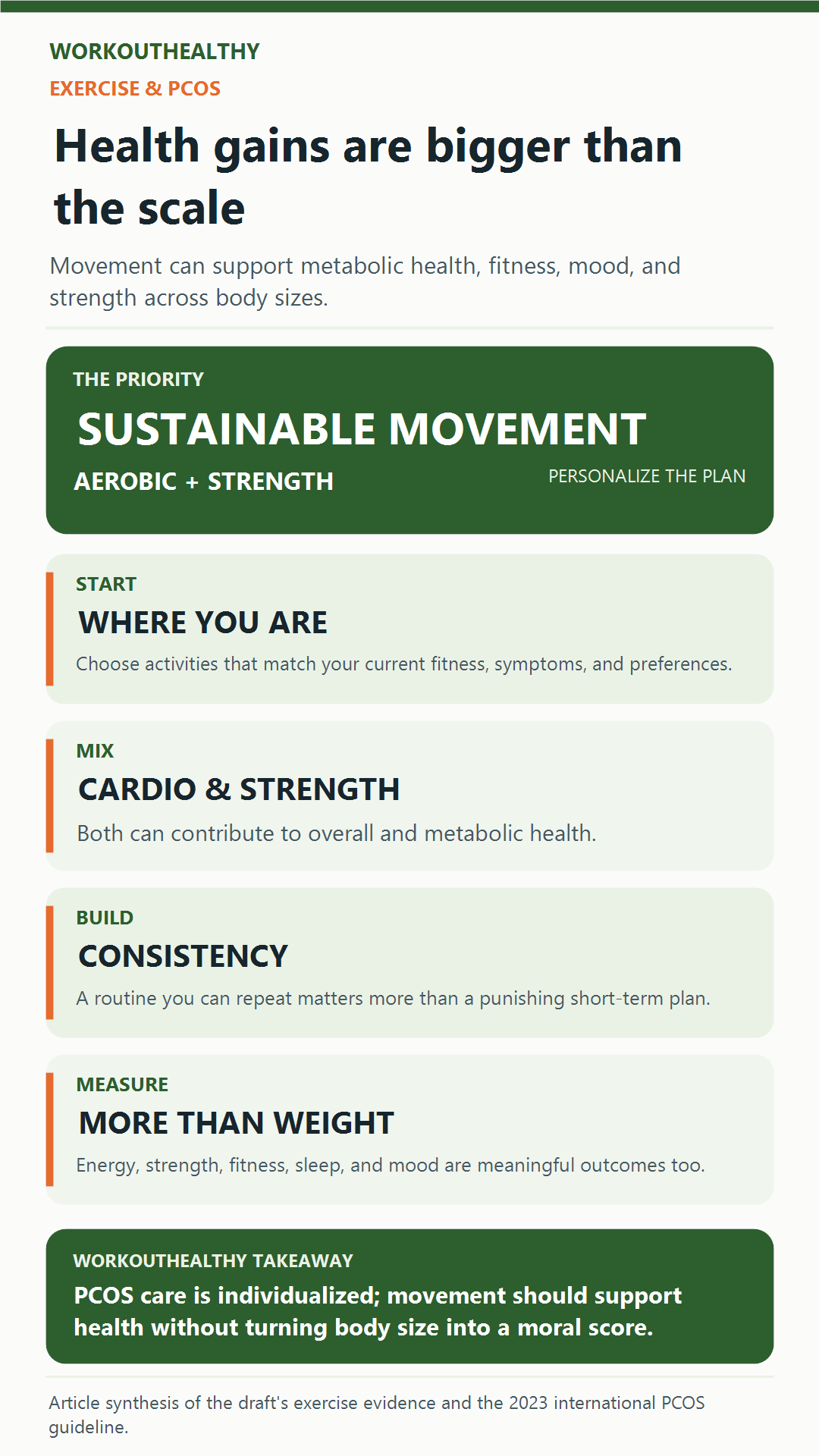
Start with a combination of activities rather than picking just one type of exercise.
Aim for two to three days of resistance training, working the major muscle groups with weights, bands, or bodyweight movements.
Add two to three days of moderate cardio, like brisk walking, cycling, or swimming, for twenty to thirty minutes at a time.
Track symptoms alongside activity, including period regularity, energy levels, and mood, rather than only tracking the scale.
Give any new routine at least twelve weeks before judging whether it is helping, since hormonal changes tend to move slowly.
Work with a doctor or endocrinologist to check hormone and blood sugar markers periodically, so progress can be measured with real data instead of guesswork.
If a workout or diet plan promises to fix PCOS quickly, treat that as a warning sign rather than encouragement.
Sleep is worth paying attention to as well, since poor sleep can worsen insulin resistance independent of diet and exercise.
Aim for a consistent bedtime and wake time rather than chasing a single perfect number of hours.
Stress management, including the kind of quiet reset a walk or a stretching session can provide, is not a minor add on for PCOS.
Elevated stress hormones can interact with the same insulin and androgen pathways already under strain in PCOS, so a calmer routine can support the physical plan rather than sit apart from it, and a consistent bedtime built around better sleep habits and caffeine timing can reinforce that same effort.
References
Cooney, L. G., Lee, I., Sammel, M. D., & Dokras, A. (2017). High prevalence of moderate and severe depressive and anxiety symptoms in polycystic ovary syndrome: A systematic review and meta analysis. Human Reproduction, 32(5), 1075 to 1091. https://doi.org/10.1093/humrep/dex044
Kite, C., Lahart, I. M., Afzal, I., Broom, D. R., Randeva, H., Kyrou, I., & Brown, J. E. (2019). Exercise, or exercise and diet for the management of polycystic ovary syndrome: A systematic review and meta analysis. Systematic Reviews, 8(1), 51. https://doi.org/10.1186/s13643-019-0962-3
Teede, H. J., Tay, C. T., Laven, J. J. E., Dokras, A., Moran, L. J., Piltonen, T. T., Costello, M. F., Boivin, J., Redman, L. M., Boyle, J. A., Norman, R. J., Mousa, A., & Joham, A. E. (2023). Recommendations from the 2023 international evidence based guideline for the assessment and management of polycystic ovary syndrome. The Journal of Clinical Endocrinology & Metabolism, 108(10), 2447 to 2469. https://doi.org/10.1210/clinem/dgad463
This article is for general informational purposes only and is not medical advice.
Talk with a doctor, endocrinologist, or registered dietitian before making changes to your exercise or nutrition routine, especially if you have or suspect you may have PCOS or another hormonal condition.