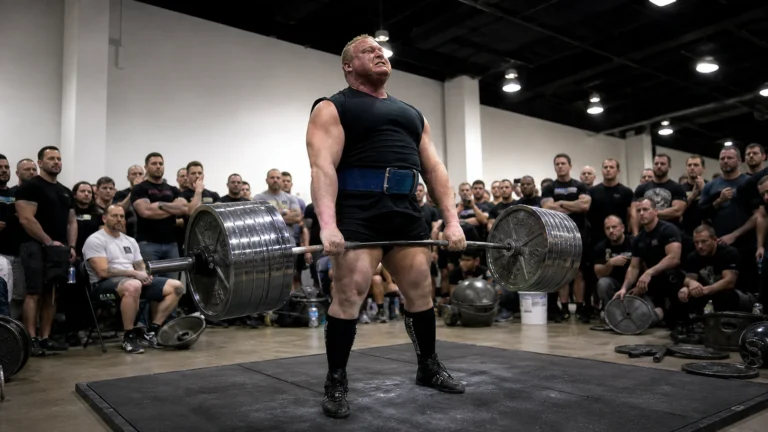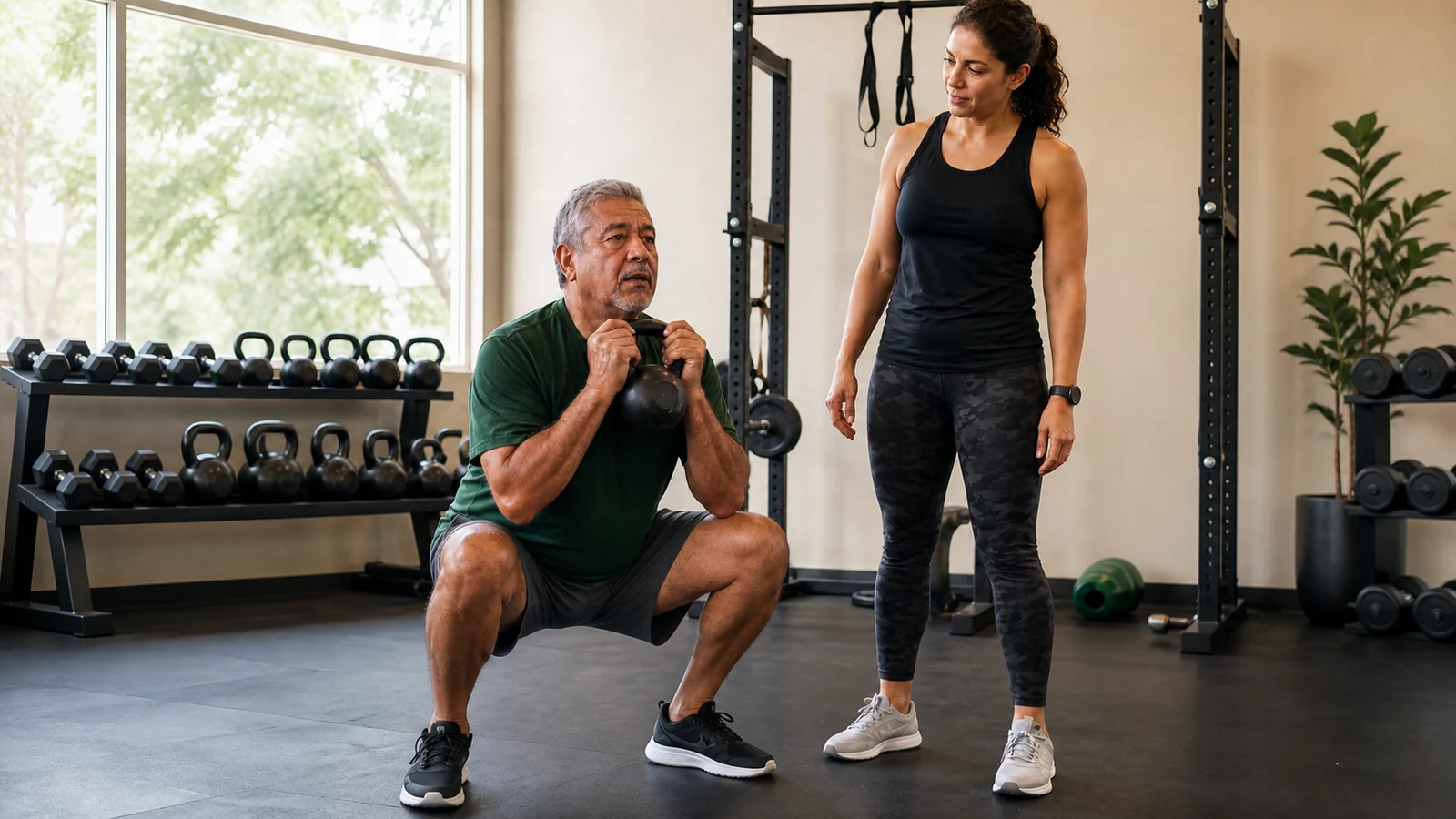

A YouTube video called “Why Resistance Training Is the Key to Longevity (Backed by Science)” makes a bold claim.
It argues that lifting weights can add real years to your life.
That deserves a real check against the published research.
This article does not look at resistance training and longevity in a general way.
It looks specifically at dose response studies.
Those are studies that track how much and how often people train, then compare that to their actual risk of dying.
That is a much more useful question than “does lifting weights help.”
What the Video Claims
The video presents resistance training as one of the most powerful tools for living longer.
It frames this benefit as going beyond muscle size or gym performance.
The video points to scientific research to support this claim.
It does not walk through the specific studies behind that claim in its title.
This article checks that claim against real, published research instead of taking it at face value.
What Real Research Shows About the Minimum Effective Dose
The strongest evidence on this question comes from a 2022 review in the British Journal of Sports Medicine.
Researchers pooled results from many long-term cohort studies that tracked muscle-strengthening activity and death rates (Momma et al., 2022).
People who did some form of muscle-strengthening activity had a lower risk of dying from any cause during the study period.
The risk reduction was around 10 to 20 percent compared to people who did none at all.
The same review found similar drops in risk for cardiovascular disease and total cancer.
The biggest drop in risk showed up at about 30 to 60 minutes of muscle-strengthening activity per week.
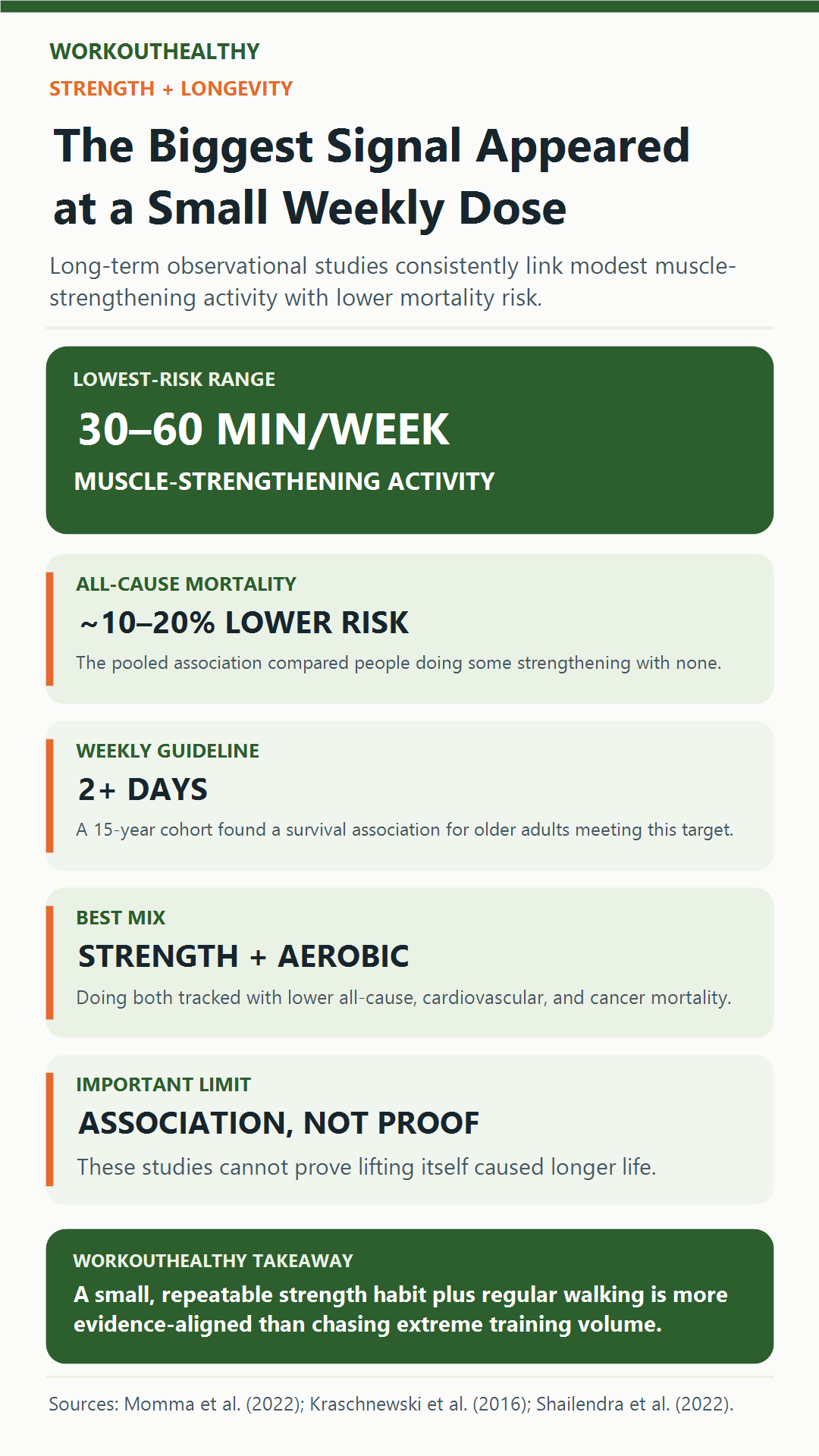
That is a small amount, roughly two short sessions.
The biggest drop in death risk in this research showed up at a small, achievable amount of weekly strength training, not an extreme one.
Past that point, the picture gets less clear.
The review found what researchers call a J-shaped pattern.
Risk drops quickly at low to moderate amounts of training.
Above that point, the added benefit becomes harder to measure in the data.
The authors were honest that the effect of very high training volumes on mortality is still unclear.
This matters because it means more is not automatically better once you pass a fairly modest threshold.
It also means a person does not need to train for hours to get most of the protective effect this research found.
What Real Research Shows About Meeting the Twice Weekly Guideline
A separate 2016 study followed a large group of US adults aged 65 and older for 15 years (Kraschnewski et al., 2016).
Researchers checked who met the standard guideline of strength training on two or more days per week.
Only about 1 in 10 older adults in the study actually met that guideline.
The people who did had 46 percent lower odds of dying from any cause during the follow up period.
That number held up even after researchers adjusted for other health habits and medical history.
It also held up separately from aerobic exercise like walking or cycling.
In other words, strength training was not just standing in for a generally active lifestyle.
It showed its own independent link to survival in this dataset.
A 46 percent difference is a large number for an observational study.
Large numbers like this deserve some caution, which this article covers later.
But the consistency between this study and the dose response review above is worth noting.
Both point toward the same basic guideline: a couple of sessions a week, not a heavy daily habit.
What Real Research Shows About Muscle Itself, Not Just the Habit
Some research skips the workout question and looks straight at muscle mass in the body.
A 2014 study took a different approach and measured relative muscle mass directly.
Researchers tracked a large sample of older adults to see who survived over time (Srikanthan & Karlamangla, 2014).
People with more relative muscle mass for their body size had better survival odds.
This suggests that muscle itself, not just the act of training, may be part of what protects health.
That fits with what resistance training actually does to the body over months and years.
It builds and preserves the tissue that this study links to survival.
A broader 2022 systematic review pulled together many studies specifically on resistance training and mortality risk (Shailendra et al., 2022).
It reached a similar general conclusion to the muscle-strengthening review above.
People who did resistance training tended to have a lower risk of death than people who did not.
The exact size of the benefit varied across the studies included.
But the direction of the finding was consistent across a wide range of study designs and populations.
Three separate lines of evidence now point the same way.
A dose response review, a long-term cohort study, and a muscle mass study all land on the same basic idea.
Training your muscles, and having more of them, tracks with a lower risk of dying during the years researchers were watching.
What Real Research Shows About Combining Strength Training With Cardio
The same 2022 dose response review also looked at combining exercise types.
It compared people who did both muscle-strengthening activity and aerobic exercise to people who did neither (Momma et al., 2022).
People who did both had a lower risk of all-cause, cardiovascular, and total cancer mortality than people who did neither.
This does not mean resistance training alone is not useful.
The research above already shows a benefit from strength training by itself.
It means the two types of exercise are not competing with each other.
A short walk and a short strength session in the same week are not wasted effort layered on top of each other.
They appear to work through at least partly different pathways in the body.
Readers who already track their daily walking may find this useful context.
Our breakdown of daily steps and mortality risk covers the walking side of this same question.
The practical version of this finding is simple.
You do not have to choose between lifting and cardio to protect your health.
The research suggests doing some of both is better than doing only one, and much better than doing neither.
The Mechanism
None of this happens by magic, and researchers have a reasonably clear idea of why muscle matters this much.
Skeletal muscle is not just tissue for lifting things.
It is one of the body’s largest stores of protein and one of its most active metabolic tissues (Wolfe, 2006).
Muscle soaks up a large share of the sugar you eat after a meal.
More muscle generally means better blood sugar control over time.
Muscle is also where the body pulls amino acids from during illness, injury, or long hospital stays.
People with more muscle mass going into a health crisis tend to have more reserve to draw on.
Strength training also protects joints and bones by loading them in a controlled way.
Stronger legs and a stronger core lower the risk of a fall in daily life.

Falls are one of the more direct paths from an injury to a serious decline in older adults.
None of these mechanisms alone fully explains a mortality number in a cohort study.
Together, they give a believable biological story for why the pattern shows up again and again.
What This Evidence Does Not Prove
This is the section a lot of fitness content skips, and it matters.
Every study cited so far is observational.
Researchers watched groups of people over time rather than randomly assigning some to lift weights and others not to.
None of these studies can prove that lifting weights caused people to live longer. They can only show that strength training and longer survival showed up together, again and again, across different groups of people.
That gap matters because healthier people are simply more likely to start and keep up strength training in the first place.
Someone with early, undiagnosed heart or lung disease is less likely to be lifting weights twice a week.
Researchers try to adjust for this with statistics, but they cannot remove it completely.
A true randomized trial that tracks people for years and measures actual deaths is very hard to run.
It would need thousands of participants followed for a decade or more.
No study of that size and length currently exists for resistance training and mortality.
The dose response curve above also has real uncertainty at higher volumes.
The review’s own authors said the effect of very high amounts of training was unclear, not proven safe or proven risky.
Finally, these studies mostly measured activity at one point or a few points in time.
People’s real habits change year to year in ways a study cannot always capture.
Given all that, here is the honest summary.
Resistance training is strongly linked to lower mortality risk, but it is not proven beyond doubt to cause it.
Common Mistakes
The first common mistake is treating this research as permission to train at extreme volumes.
The data above does not support the idea that more is always better.
The second mistake is doing the opposite and assuming a single session counts as enough for the year.
The studies above measured a regular weekly habit, not an occasional workout.
A third mistake is skipping the legs and core to focus only on arms and chest.
Fall prevention and mobility research points strongly toward training the whole body, especially the lower body.
A fourth mistake is never increasing the weight or effort over time.
Muscle adapts to a stimulus and then needs a slightly bigger one to keep adapting.
A fifth mistake is confusing soreness with progress.
Consistent, moderate effort over months matters more than how sore a single workout leaves you.
A sixth mistake is quitting after a few weeks because results feel slow.
The mortality research above reflects years of sustained habit, not a short program.
Who Should Be Extra Careful
Anyone new to exercise with a diagnosed heart condition should talk to a doctor before starting a strength program.
The same goes for people with uncontrolled high blood pressure.
People with osteoporosis or a history of fracture should get guidance on which movements and loads are safe for their bones.
Anyone recovering from a recent surgery, including joint replacement, needs individual guidance.
Follow your surgeon’s or physical therapist’s timeline instead of a general workout plan.
People managing diabetes should know that exercise can affect blood sugar and may need to adjust medication timing with their care team.
Older adults who are frail or have had a recent fall need a careful starting point.
Supervised, low-load training is safer than jumping straight into a standard gym routine.
Pregnant readers should get individual guidance from an obstetric provider before starting a new strength routine.
None of this means these groups cannot benefit from resistance training.
Some of the research above involved older adults with real health limitations.
It means the starting point and the supervision should match the person’s actual health status.
A Practical Takeaway
Start with two sessions a week that cover the major muscle groups, including legs, back, chest, and core.
That matches the guideline used in the 46 percent finding above, not a more extreme routine.
Keep each session to a length you can actually sustain for years, not just for one motivated month.
Aim for moderate, controlled effort rather than maximum weight on every set.
Add a short walk or other light cardio on the days you are not lifting.
The combined activity research above suggests that pairing works better than either alone.
If you are new to strength training, get some hands on help early.
A few sessions with a qualified trainer or physical therapist can teach you safe form.
Progress slowly by adding small amounts of weight or a few more reps every few weeks.
Readers who want a lifelong example of this kind of consistency can look at Edith Connor’s record-setting decades of training.
Resistance training connects to brain health too, though that is a separate body of research.
Our breakdown of lifting weights and brain aging covers that question directly.
If you are weighing strength training against running as your main focus, you are not alone.
See how other readers weighed that same tradeoff.
The overall picture from this research is steady and modest, not extreme.
A small, consistent habit tracks with a meaningfully lower risk of dying during the years researchers have studied.
Watch the video
Want more like this? Subscribe to WorkoutHealthy Insider for practical explanations behind popular fitness claims.
References
Kraschnewski, J. L., Sciamanna, C. N., Poger, J. M., Rovniak, L. S., Lehman, E. B., Cooper, A. B., Ballentine, N. H., & Ciccolo, J. T. (2016). Is strength training associated with mortality benefits? A 15 year cohort study of US older adults. Preventive Medicine, 87, 121 to 127. https://doi.org/10.1016/j.ypmed.2016.02.038
Momma, H., Kawakami, R., Honda, T., & Sawada, S. S. (2022). Muscle-strengthening activities are associated with lower risk and mortality in major non-communicable diseases: a systematic review and meta-analysis of cohort studies. British Journal of Sports Medicine, 56(13), 755 to 763. https://doi.org/10.1136/bjsports-2021-105061
Shailendra, P., Baldock, K. L., Li, L. S. K., Bennie, J. A., & Boyle, T. (2022). Resistance training and mortality risk: A systematic review and meta-analysis. American Journal of Preventive Medicine, 63(2), 277 to 285. https://doi.org/10.1016/j.amepre.2022.03.020
Srikanthan, P., & Karlamangla, A. S. (2014). Muscle mass index as a predictor of longevity in older adults. The American Journal of Medicine, 127(6), 547 to 553. https://doi.org/10.1016/j.amjmed.2014.02.007
Wolfe, R. R. (2006). The underappreciated role of muscle in health and disease. The American Journal of Clinical Nutrition, 84(3), 475 to 482. https://doi.org/10.1093/ajcn/84.3.475
This article is for general information only and is not medical advice. If you have an injury, ongoing pain, or a medical condition, talk to a doctor or physical therapist before you change how you train or eat.