

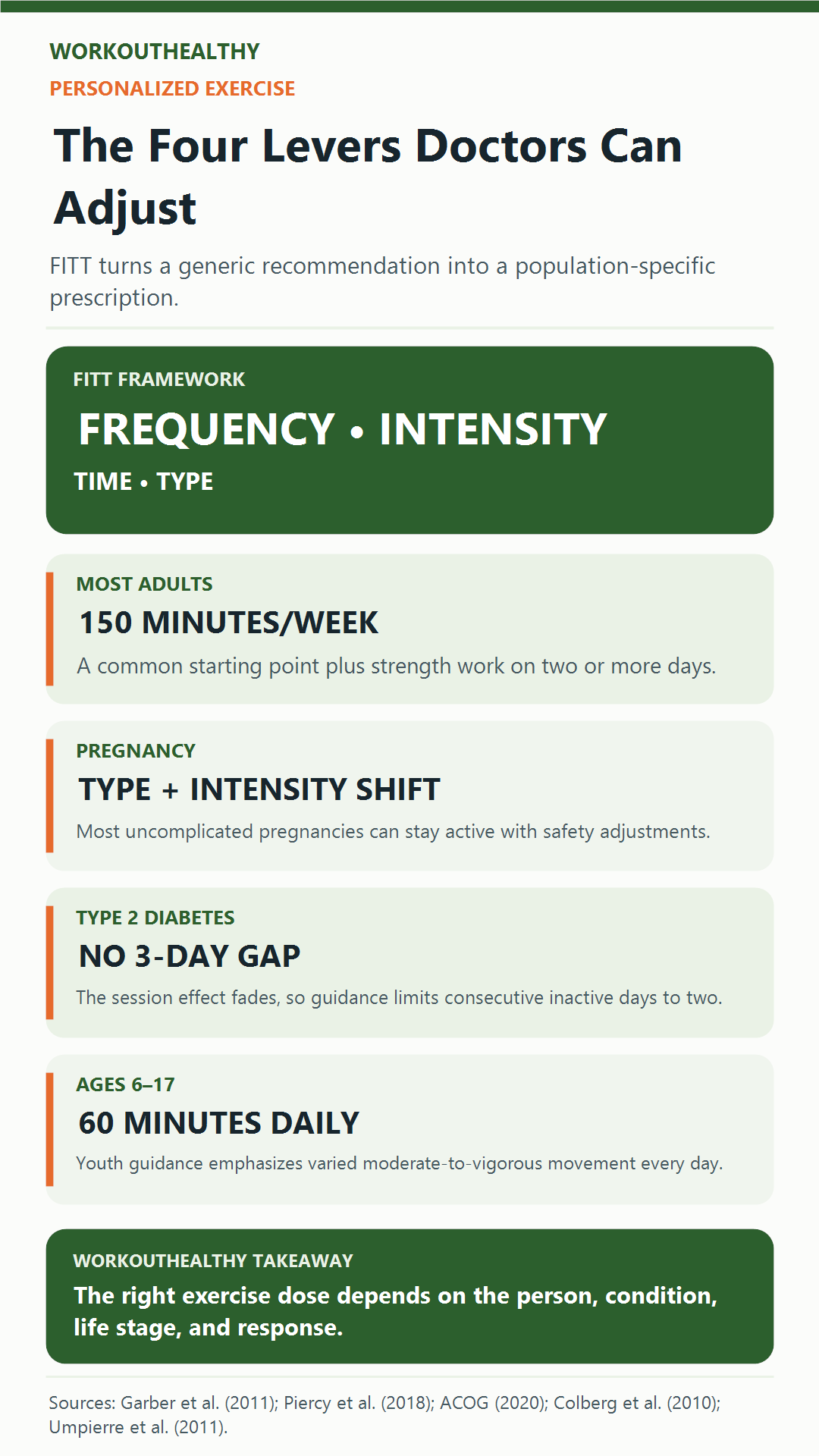
FITT stands for frequency, intensity, time and type. To use it, choose a goal and record how often you move, how hard the activity feels, how long it lasts and what kind of activity you do, then change one variable at a time as your ability and circumstances change.
The presenter and bike scenes are illustrations, not identified clinicians, lecture footage or records of research participants.
The examples below summarize population guidelines and show how the same framework changes across groups. They are not four ready-made prescriptions: pregnancy complications, diabetes medicines, age and prior activity all matter.
What are the four parts of FITT?
| Variable | Question to answer | Example of a useful record |
|---|---|---|
| Frequency | How many days or sessions? | Write down the days you actually moved, rather than assuming a planned session happened. |
| Intensity | How hard was the effort for this person? | Note whether you could talk comfortably, talk but not sing, or speak only a few words. |
| Time | How many active minutes? | Record active walking time separately from breaks and setup. |
| Type | What movement and purpose? | Distinguish aerobic activity, strength work, balance or a sport skill. |
The CDC adult guide gives a weekly goal, not a first-session requirement.
FITT principle examples across four populations
These are guideline examples, not instructions to copy without context. The key is to see which variable changes and why.
| Population and source | Frequency | Intensity | Time | Type and important check |
|---|---|---|---|---|
| Generally healthy adult, CDC | Spread aerobic activity through the week; strength work on two or more days. | Moderate; use the talk test. | Build toward 150 moderate aerobic minutes weekly. | Aerobic and muscle-strengthening activity suited to ability. |
| Uncomplicated pregnancy, ACOG | Spread activity through the week. | Moderate; the talk test can help. | At least 150 aerobic minutes weekly for most uncomplicated pregnancies. | Choose activities with the obstetric team; symptoms or complications change the plan. |
| Type 2 diabetes, ADA 2026 | At least three aerobic days; no more than two consecutive inactive days. Include resistance activity. | Moderate to vigorous, individualized. | Most adults: at least 150 aerobic minutes weekly. The 75-minute vigorous/interval option may suffice for more physically fit individuals. | Agree on monitoring and treatment adjustments with the diabetes team. |
| Children and teens ages 6 to 17, CDC | Daily; vigorous, muscle- and bone-strengthening activity at least three days weekly. | Most movement moderate to vigorous. | At least 60 minutes daily. | Varied, enjoyable, age-appropriate play, climbing, jumping and games. |
Pregnancy safety and diabetes treatment require individual decisions. Ask your care team about insulin, sulfonylureas and glucose monitoring around exercise.
How would someone use FITT without changing everything at once?
Consider a fictional generally healthy adult who has been inactive and chooses a comfortable 10-minute walk on Monday, Wednesday and Friday. The three walks are a starting record, not proof that 30 minutes meets the weekly aerobic guideline or that this schedule suits a person with a medical condition.
| Week’s note | FITT decision | What to check next |
|---|---|---|
| All three walks felt comfortable. | Keep type and easy intensity, and consider adding a little time to one walk. | Was the added time comfortable, and can the schedule be repeated? |
| The person missed two walks because of work. | Change frequency planning before raising intensity. | Which time of day is realistic, and would a shorter bout fit? |
| A new symptom or unusual fatigue appeared. | Pause the progression rather than increasing time or effort. | Seek appropriate medical advice, especially for chest symptoms, fainting or severe breathlessness. |
This small log is an editorial illustration, not a tested protocol. It shows why tracking the actual frequency, intensity, time and type is more useful than copying a generic calendar.
Why the same FITT numbers cannot fit everyone
ACOG lists pregnancy conditions and warning signs that change activity advice. Matching weekly-minute targets do not make exercise choices interchangeable.
The 2026 ADA Standards individualize precautions. Do not change medication using this worksheet.
A 2011 meta-analysis included 47 trials and 8,538 patients with type 2 diabetes, using interventions lasting at least 12 weeks. Its 23 structured-exercise studies averaged a 0.67 percentage-point HbA1c reduction versus controls (95% confidence interval, 0.49 to 0.84 lower), with substantial variation across studies.
Aerobic, resistance and combined programs each improved average HbA1c versus controls; these separate comparisons do not prove combined training is superior. Advice alone showed no HbA1c change, while advice combined with dietary advice did; neither finding sets a personal exercise dose.
The CDC guidance says younger children usually do not need formal weightlifting. Some adolescents may choose structured training.
A generally healthy adult choosing walking can use our pace-based walking guide to connect the goal with ability. It does not set a first-session dose.
What the source lecture can and cannot add
The Zambian Institute of Sport presents a guest lecture about exercise across populations. The examples here draw on the separately linked clinical and public-health guidance.
Watch the original lecture
Questions that turn FITT into a useful plan
- What result matters, and what activity is feasible right now?
- Which days, active minutes and effort level did you actually complete?
- Are symptoms, recovery, medicines, pregnancy status or growth stage changing the choice?
- Which one variable could change next without losing consistency?
Discuss health-condition exercise plans with your clinician. Stop activity and seek urgent care for chest pain, fainting or severe breathlessness; follow your obstetric team’s pregnancy warning-sign advice.
Sources
- CDC, adding physical activity as an adult (2025).
- ACOG, Exercise During Pregnancy FAQ.
- ADA, Standards of Care in Diabetes 2026, physical activity section.
- CDC, child and adolescent physical activity guidelines (2025).
- Umpierre et al. (2011), structured exercise and HbA1c meta-analysis.
This article is general fitness and health information, not an individualized exercise or medical plan. Ask a qualified clinician how activity recommendations apply to pregnancy, diabetes treatment or another diagnosed condition.