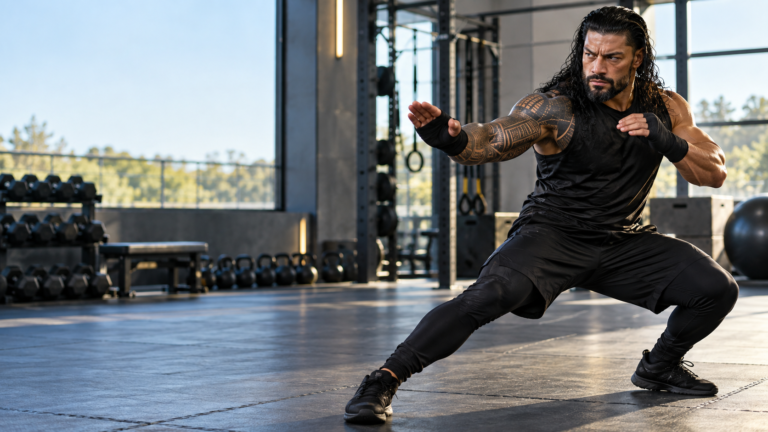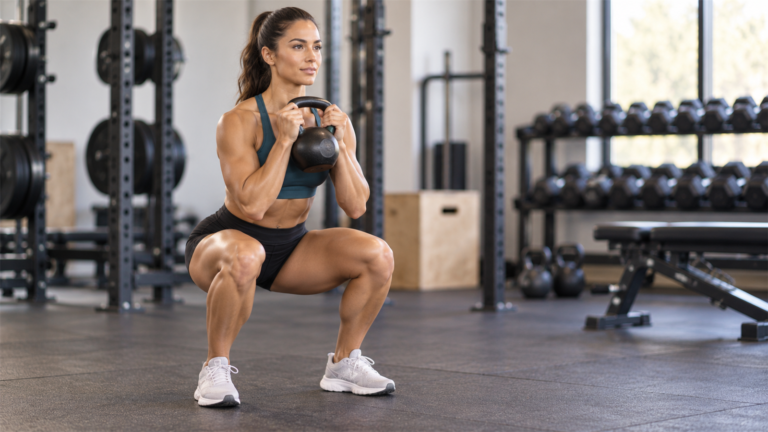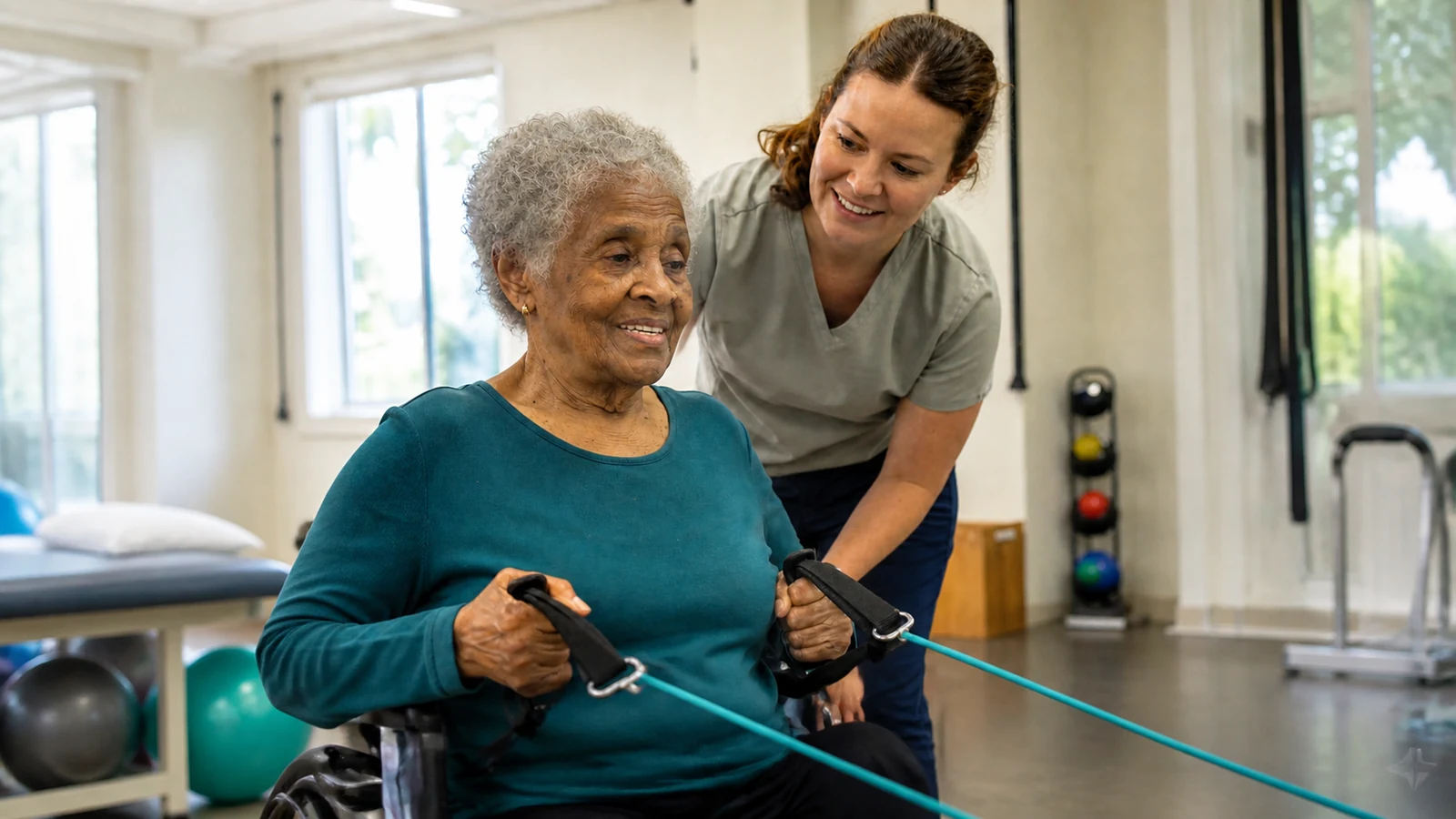

A video titled “The Only 5 Exercises You Need After 70 to Reverse Aging” has been getting shared widely.
It comes from a channel called Psychology Explainer.
That name is worth noting.
Psychology Explainer is a general content channel.
It is not a medical journal, a physical therapy clinic, or an exercise science lab.
So before repeating its claims, we checked the actual research.
Here is what real, peer-reviewed studies say about exercise after age 70.
What the Video Claims
The title makes two big promises.
First, that there are only 5 exercises anyone over 70 needs.
Second, that doing them can “reverse aging.”
Neither claim holds up well under scrutiny.
No single set of 5 moves fits every person over 70.
People in that age range span an enormous range of ability.
Some are still hiking mountains.
Some are recovering from a hip fracture.
Their needs are not the same.
The “reverse aging” language is the bigger stretch.
No workout reverses biological aging.
Aging involves cellular, hormonal, and genetic processes that exercise does not undo.
What exercise can do is different, and honestly more useful.
It can improve strength, balance, and everyday function at any age.
It can lower the risk of falls, disability, and early death.
That is not reversing the clock.
It is making better use of the years you have left.
Treat “reverse aging” as marketing language, not a scientific claim.
What Real Research Shows About Falls and Balance
Falls are one of the biggest threats to independence after 70.
A fall can mean a fracture.
A fracture can mean a hospital stay.
A hospital stay can mean losing independence for good.
This is exactly why researchers have studied fall prevention so heavily.
One Cochrane review pooled 108 randomized controlled trials in community-dwelling older adults, not nursing-home residents (Sherrington et al., 2019).
It covered more than 23,000 participants across 25 countries.
That makes it one of the largest bodies of evidence in aging research.
The researchers compared different exercise types against fall risk.
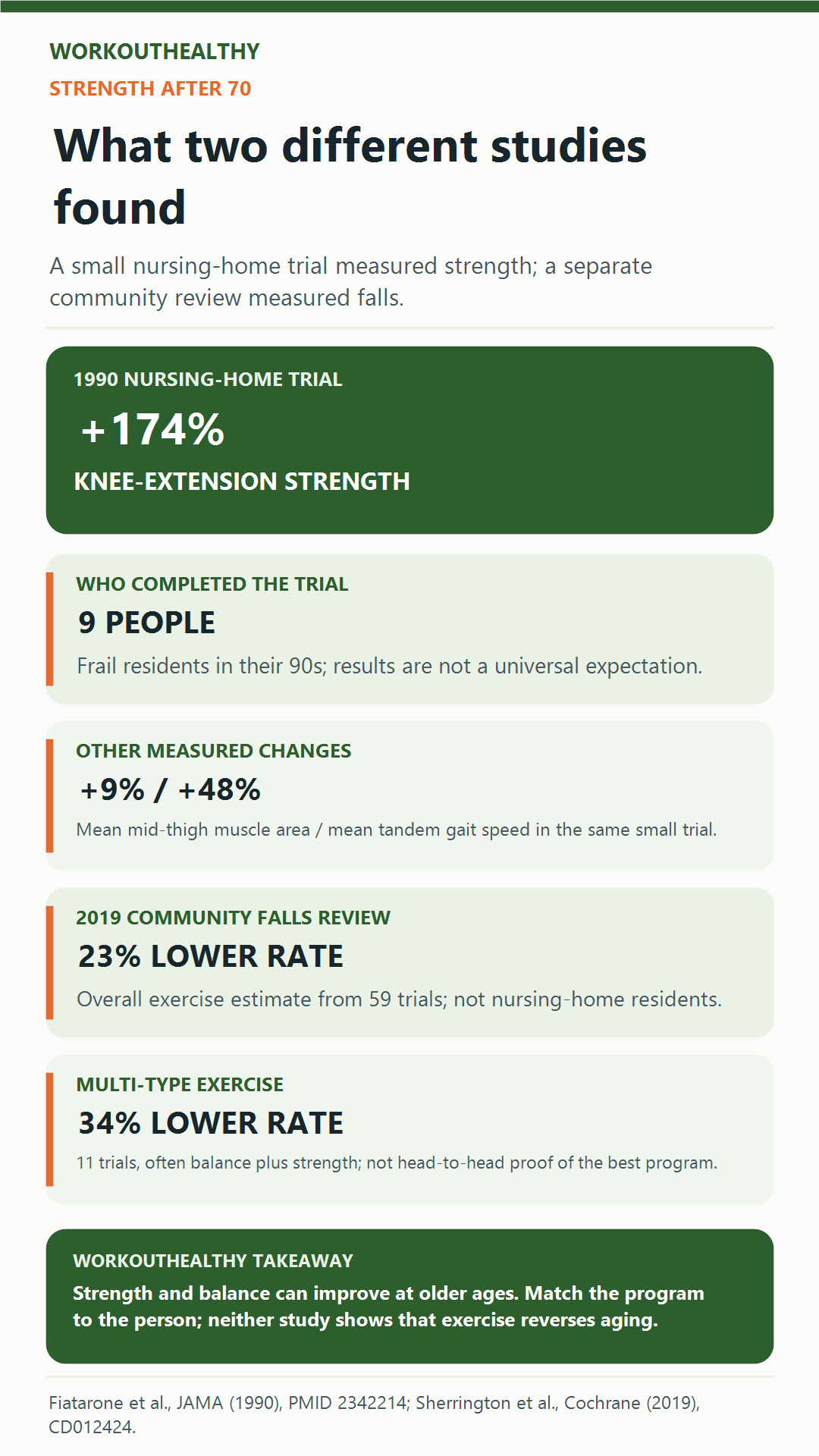
Exercise overall cut the rate of falls by 23 percent.
Programs built mainly around balance and functional training did even better.
Those programs reduced the rate of falls by 24 percent.
Programs combining several exercise types, like balance plus strength, reduced falls by 34 percent.
Walking programs alone did not show that same protective effect.
Across more than 23,000 community-dwelling older adults, exercise programs that challenged balance were associated with fewer falls.
This matters for anyone planning exercise after 70.
Balance work is not optional extra credit.
It is one of the most evidence-backed tools available for staying independent.
The Otago Exercise Programme is one researched example: an individually tailored home programme of strength and balance work for older adults at risk of falling. Its published manual includes ankle-weight exercises and progression, so it is not a fixed five-move, zero-equipment routine. The 1990 nursing-home strength trial and the Otago programme are different research, and their results should not be combined into one claim.
What Real Research Shows About Strength Training in the Oldest Old
Muscle loss with age has a clinical name: sarcopenia.
Age-related muscle loss varies widely by health, activity, nutrition, and illness; it is not the same trajectory for every person over 70.
Some people assume very old adults are too frail to lift weights.
A landmark study tested that assumption directly.
Researchers put nursing home residents through 8 weeks of high-intensity leg strength training (Fiatarone et al., 1990).
Their average age was 90.
Several used canes or walkers to get around.
In the nine participants who completed training, measured strength increased by an average of 174 percent.
Mid-thigh muscle size grew measurably on imaging.
Mean tandem gait speed improved by 48 percent. This 1990 study did not report the stair-climbing result sometimes attributed to a separate later trial.
This remains one of the most cited studies in geriatric exercise science.
It showed that even people in their 90s can build real, measurable strength.
That finding connects to a wider pattern worth understanding.
Unmanaged muscle loss often overlaps with unintentional weight loss in older adults.
Together, those two problems raise frailty risk substantially (a pattern explained in our piece on losing weight and muscle mass).
Progressive strength training can help rebuild strength and muscle, while an older adult with unintended weight loss may also need nutrition and medical assessment.
What Real Research Shows About Functional Independence
Strength and balance matter, but everyday function is the real target.
Can someone get up from a chair without help?
Can they walk to the mailbox and back without stopping?
A major U.S. trial called the LIFE study tested exactly this (Pahor et al., 2014).
Researchers followed 1,635 adults aged 70 to 89.
Everyone in the study had some existing mobility limitation.
Half followed a structured program built around regular walking, plus some lower body strength and balance work.
The other half only received health education sessions.
The structured activity group had an 18 percent lower rate of major mobility disability.
That means fewer people lost the ability to walk a quarter mile unassisted.
Simple, consistent movement made a measurable difference over several years.
Walking volume is one of the easiest habits to track and adjust (see how many miles you should walk a day for a practical benchmark).
Walking speed itself carries meaning beyond just distance.
A separate pooled analysis followed nearly 35,000 older adults and found that faster gait speed predicted longer survival (Studenski et al., 2011).
Some clinicians now treat gait speed as a simple vital sign of aging.
Functional tests like stair climbing capture a similar signal about real world capacity (our four flights stair test breakdown explains how that works).
The Mechanism
Why do these exercise types help so much specifically after 70?
Several biological threads come together.
Aging muscle loses fast twitch fibers faster than slow twitch fibers.
Fast twitch fibers are what let you catch yourself when you stumble.
Resistance training recruits and helps preserve those fibers.
That can help with strength and function, but this mechanism alone does not establish that strength training prevents falls.
Balance training works through a different pathway entirely.
It challenges the nervous system’s ability to sense body position in space.
Practicing balance repeatedly sharpens that sensory feedback loop.
This process is called proprioception.
Better proprioception means faster, more accurate corrections when you trip.
Aerobic activity like walking supports a third distinct pathway.
It maintains cardiovascular capacity, which affects endurance for daily tasks.
There is also a brain component worth mentioning.
Resistance training has been linked to better cognitive markers in older adults, not just stronger muscles (a topic covered in does lifting weights keep your brain young).
These mechanisms help explain why an individualized plan may combine strength, balance, and aerobic work instead of relying on one exercise type.
What This Evidence Does Not Prove
It is worth being honest about the limits of this research.
None of these studies show that exercise reverses aging at a cellular level.
They show improved function, strength, and survival odds.
That is meaningfully different from reversing a biological process.
The Fiatarone study involved only 10 participants.
Its results are striking but should not be generalized without caution.
The LIFE study only included people who already had mobility limitations.
Results could look different for someone already highly active at 70.
The Cochrane review pooled many different exercise programs together.
Not every balance program in it used an identical protocol.
None of these studies tracked people for multiple decades.
Long term outcomes beyond a few years remain less certain.
Exercise also cannot fully offset major disease, poor sleep, or poor nutrition.
It is one important part of healthy aging, not the whole picture.
Common Mistakes
Doing too much too soon is the most common mistake people make.
Someone watches a video and wants fast results.
That urge often leads to soreness, injury, or discouragement.
Skipping a proper warm up is another frequent error.
An easier opening set can help people practice the movement and gauge how they feel before increasing effort.
Choosing high impact moves is risky for many people in this group.
Explosive movements can build real muscle in younger, well trained lifters.
For someone with unstable balance, recent injury, or low exercise capacity, unsupported explosive movements may add avoidable risk. Age alone does not determine whether higher-impact exercise is appropriate.
Ignoring balance work entirely is another common gap.
Many people focus only on strength, or only on cardio.
The research above supports including balance work and appropriately scaled strength work; it does not establish that every mixed program outperforms every single-mode program.
Training completely unsupervised, especially at the start, raises risk for people with existing health conditions.
Comparing your progress to someone decades younger is not helpful either.
Progress at 75 looks different than progress at 35, and that is completely fine.
Who Should Be Extra Careful
Some people need real precautions before starting anything new.
Anyone with a recent fall in the past year should talk to a doctor first.
Anyone with osteoporosis or a prior fracture needs individualized guidance.
People recovering from a joint replacement need a specific, supervised plan.
People with heart disease, uncontrolled blood pressure, or diabetes should get medical clearance before starting.
Anyone with vertigo or a history of dizziness needs balance work adapted carefully, often with supervision nearby.
People taking multiple medications should ask a doctor about interactions with exercise intensity.
A physical therapist can screen for specific fall risk factors before a program even starts.
None of this means exercise is unsafe for older adults in general.
It means the plan should fit the person, not a generic video script.
A Practical Takeaway
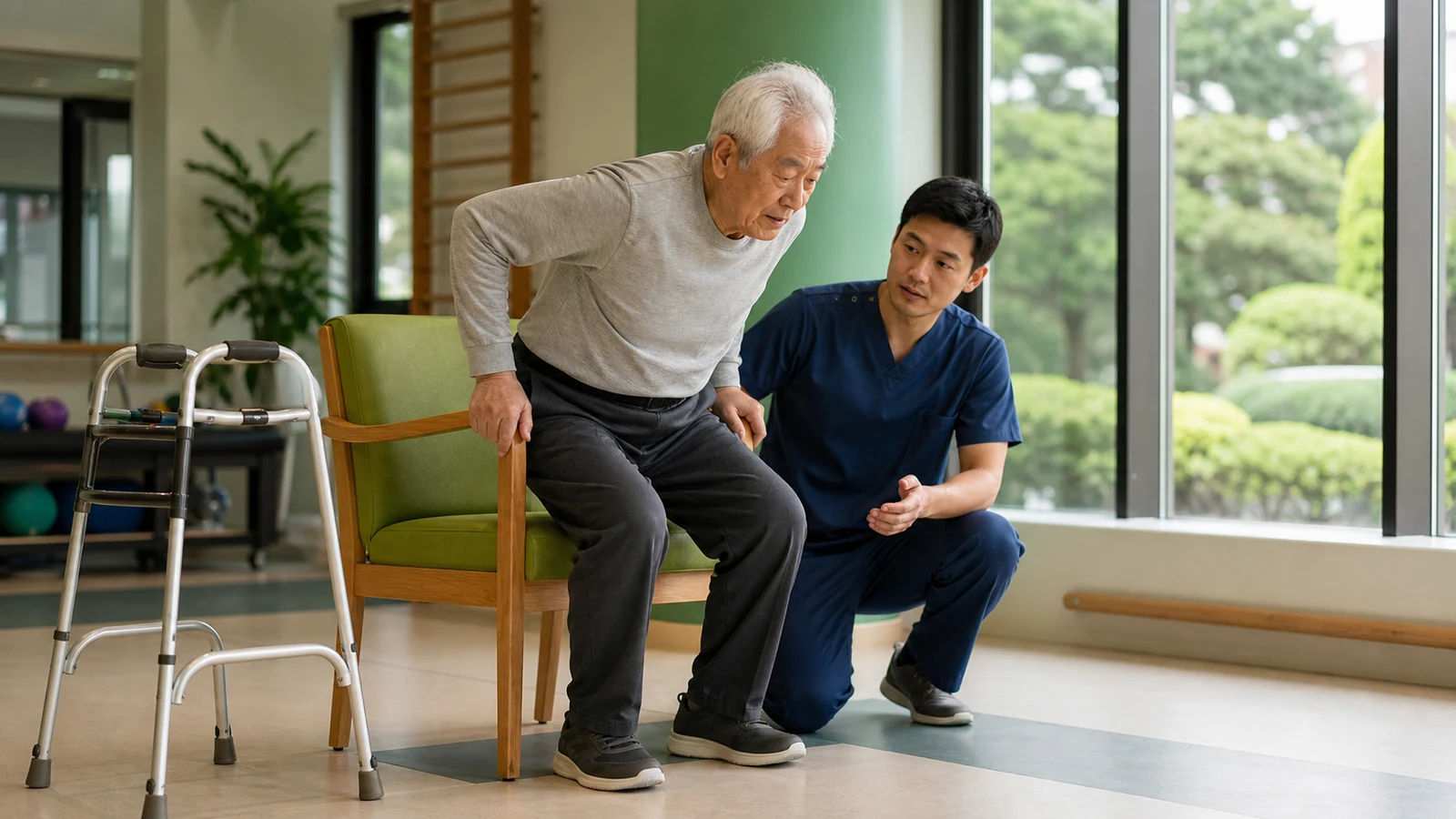
There are no five magic exercises that reverse aging. If you want five simple starting movements without gym equipment, try these as examples of the strength, balance, and mobility categories supported by the wider evidence:
- Supported sit-to-stand: rise from a stable chair, using the armrests if needed, then sit with control.
- Counter-supported heel raise: hold a sturdy counter and lift both heels slowly before lowering.
- Side step: take small steps along a clear counter, keeping a hand close for support.
- Supported tandem stance: stand with one foot partly in front of the other near support; use a wider stance if necessary.
- Easy marching in place: lift each foot only as high as balance comfortably allows, beside stable support.
These are illustrations, not the exercise protocol from the 1990 trial or a substitute for an individualized Otago plan. Stop if you become dizzy or feel chest pain; if you have fallen recently, have unstable balance, or have a medical condition, ask a clinician or physical therapist to adapt the plan before attempting it.
Upper body strength, using light dumbbells or resistance bands.
Aerobic movement, like regular walking at a pace you can sustain.
Mobility work, like gentle stretching for the hips and ankles.
Aim for strength and balance work two to three times a week.
Aim for some form of walking on most days.
Start light and progress slowly over weeks, not days.
Track a simple marker, like how many steps you comfortably manage each day.
Consistency across years matters far more than intensity in any single week.
Age is not automatically a ceiling on what strength training can do.
One striking example is Edith Connor, who holds a Guinness World Record as the oldest competitive female bodybuilder (read her story in our piece on Edith Connor).
Her case will not apply to everyone.
It does show what sustained, well guided training can support later in life.
Watch the video
Want more like this? Subscribe to WorkoutHealthy Insider for practical explanations behind popular fitness claims.
References
Campbell, A. J., & Robertson, M. C. (2003). Otago Exercise Programme to prevent falls in older adults: A home-based, individually tailored strength and balance retraining programme. University of Otago. https://ourarchive.otago.ac.nz/esploro/outputs/book/Otago-Exercise-Programme-to-prevent-falls/9926555676301891
Fiatarone, M. A., Marks, E. C., Ryan, N. D., Meredith, C. N., Lipsitz, L. A., & Evans, W. J. (1990). High-intensity strength training in nonagenarians: Effects on skeletal muscle. JAMA, 263(22), 3029 to 3034. https://doi.org/10.1001/jama.1990.03440220053029
Pahor, M., Guralnik, J. M., Ambrosius, W. T., Blair, S., Bonds, D. E., Church, T. S., Espeland, M. A., Fielding, R. A., Gill, T. M., Groessl, E. J., King, A. C., Kritchevsky, S. B., Manini, T. M., McDermott, M. M., Miller, M. E., Newman, A. B., Rejeski, W. J., Sink, K. M., & Williamson, J. D. (2014). Effect of structured physical activity on prevention of major mobility disability in older adults: The LIFE study randomized clinical trial. JAMA, 311(23), 2387 to 2396. https://doi.org/10.1001/jama.2014.5616
Sherrington, C., Fairhall, N. J., Wallbank, G. K., Tiedemann, A., Michaleff, Z. A., Howard, K., Clemson, L., Hopewell, S., & Lamb, S. E. (2019). Exercise for preventing falls in older people living in the community. Cochrane Database of Systematic Reviews, 1, CD012424. https://doi.org/10.1002/14651858.CD012424.pub2
Studenski, S., Perera, S., Patel, K., Rosano, C., Faulkner, K., Inzitari, M., Brach, J., Chandler, J., Cawthon, P., Connor, E. B., Nevitt, M., Visser, M., Kritchevsky, S., Badinelli, S., Harris, T., Newman, A. B., Cauley, J., Ferrucci, L., & Guralnik, J. (2011). Gait speed and survival in older adults. JAMA, 305(1), 50 to 58. https://doi.org/10.1001/jama.2010.1923
This article is for general information only and is not medical advice. If you have an injury, ongoing pain, or a medical condition, talk to a doctor or physical therapist before you change how you train or eat.